AI & Creation: exploring through images
- Publish On 4 March 2026
- 6 minutes
Artificial intelligence is now establishing itself as a new player in the creative process. It no longer merely assists practices to optimize production, but acts as an amplifier of capabilities. It reconfigures methods, redistributes roles, and blurs the boundaries between design and execution. By automating certain actions and generating shapes and images from masses of data, it is changing the very conditions of invention. What is changing is not only speed and efficiency, but the way creators think, plan, and position themselves in a field where intelligence is now divided between calculation and intention. This portfolio explores how artists, photographers, and architects are embracing this tool to reveal both its powers and its limitations.
AT THE SOURCE OF THE IMAGE
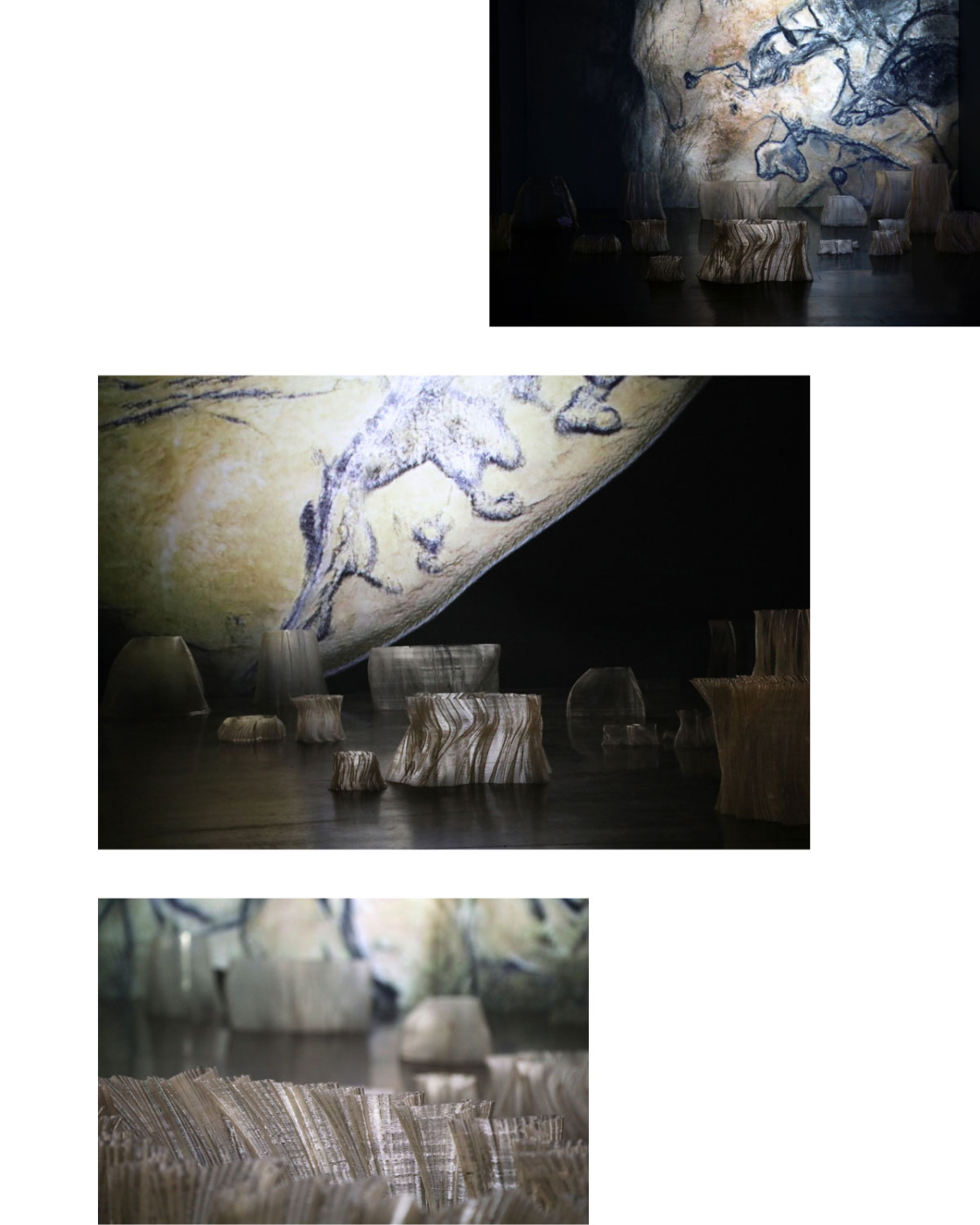
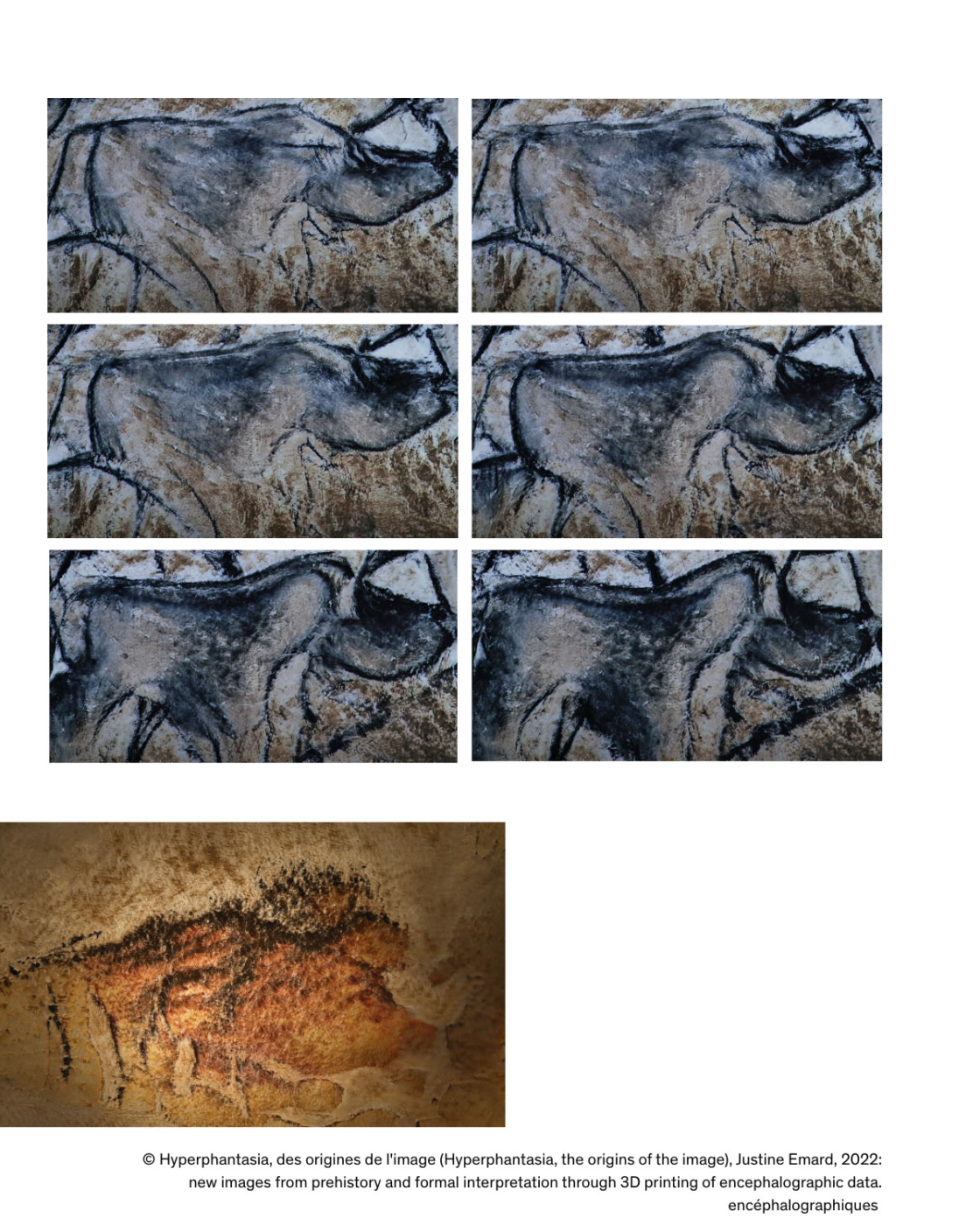
For visual artist Justine Emard, mastering a work based on artificial intelligence requires in-depth knowledge of the database that feeds it, or even creating it yourself. This approach brings art closer to the scientific method. In her project Hyperphantasia, she explores the origin of images, from their mental generation in the visual cortex to the first cave paintings in prehistoric caves.
In her work on these “early databases,” she collaborates with the Space Observatory of the National Center for Space Studies to collect cortical activity from astronauts during their sleep, while also gathering digital readings from the Chauvet Cave.
These traces—scratches, imprints, blown pigments—combined with neural data form a basis that the machine uses to create new forms, offering an atmosphere and an experience rather than a simple reproduced image.
A TRAINED EYE FOR AESTHETICS
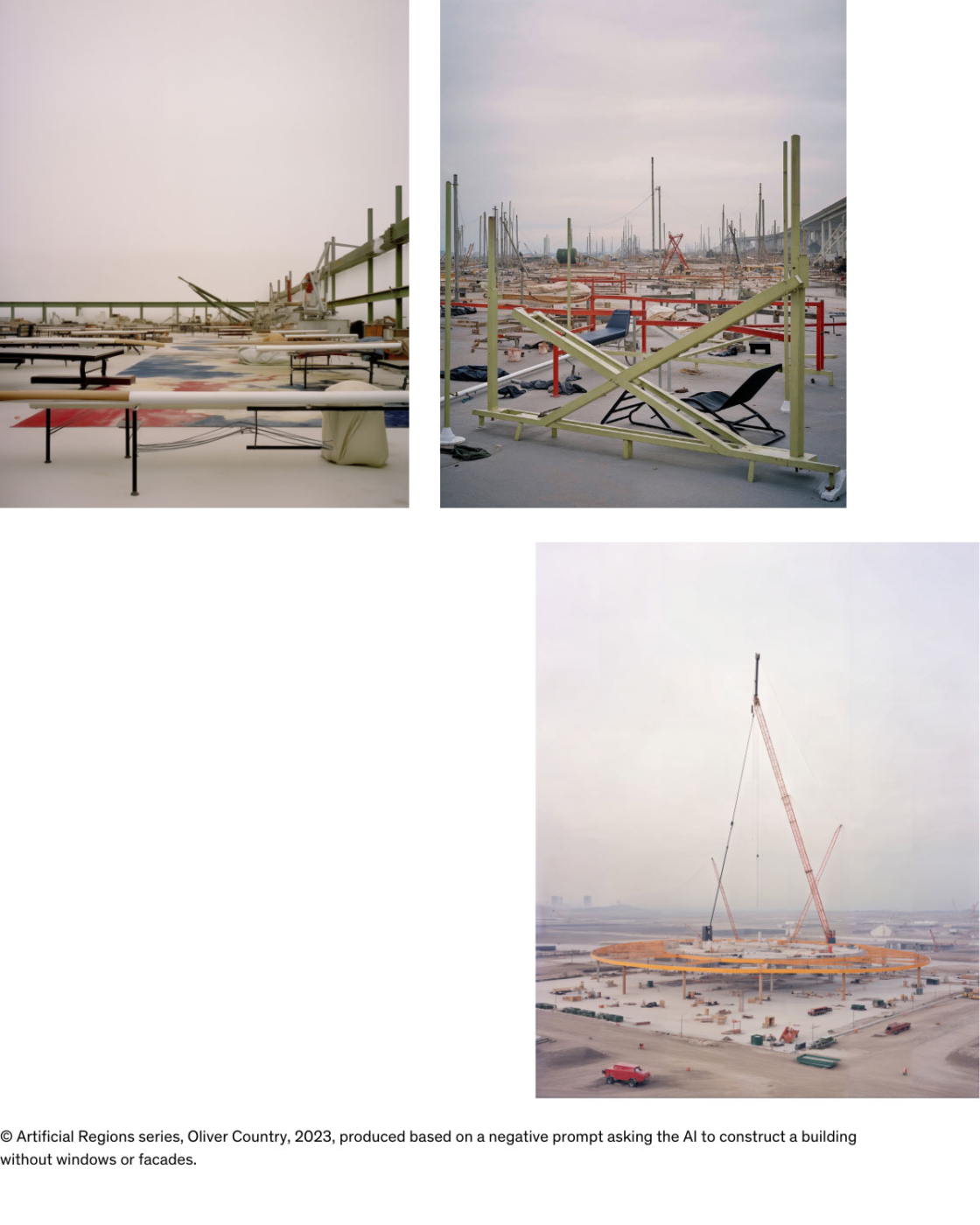
Olivier Campagne, perspectivist and digital image creator, spent seventeen years at ArteFactory before developing an independent practice under two names: his own, for institutional commissions in architecture, and Oliver Country, for hyperrealistic aesthetic experiments. He works with Stable Diffusion, an open model that he trains himself in order to refine targeted aesthetics. With the agreement of photographer Rory Gardiner, he has created a learning game based on several hundred of his images, not to reproduce his style, but to explore renderings and qualities of light that are distinct from those usually generated by AI and to orient the tool towards a more personal expression.
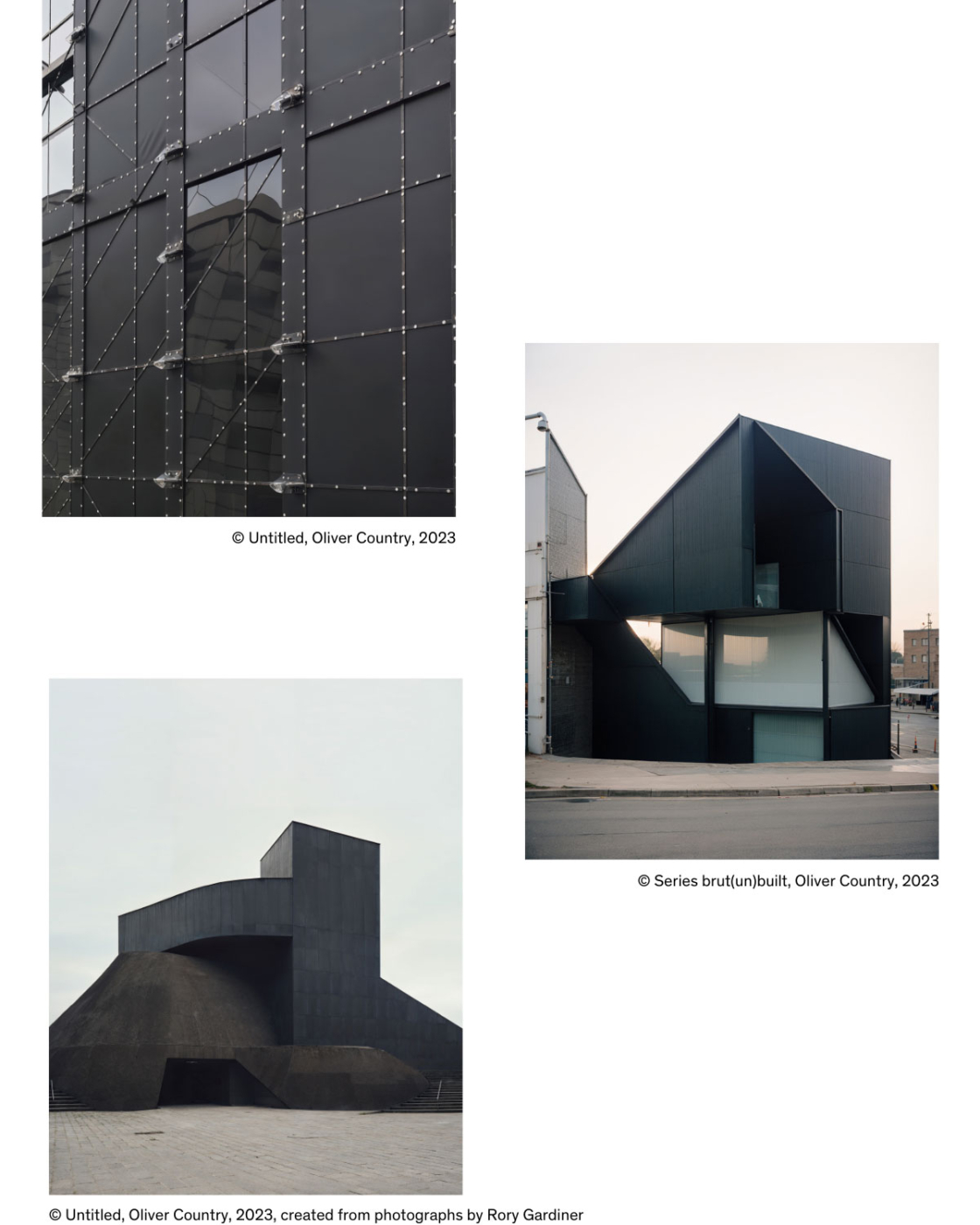
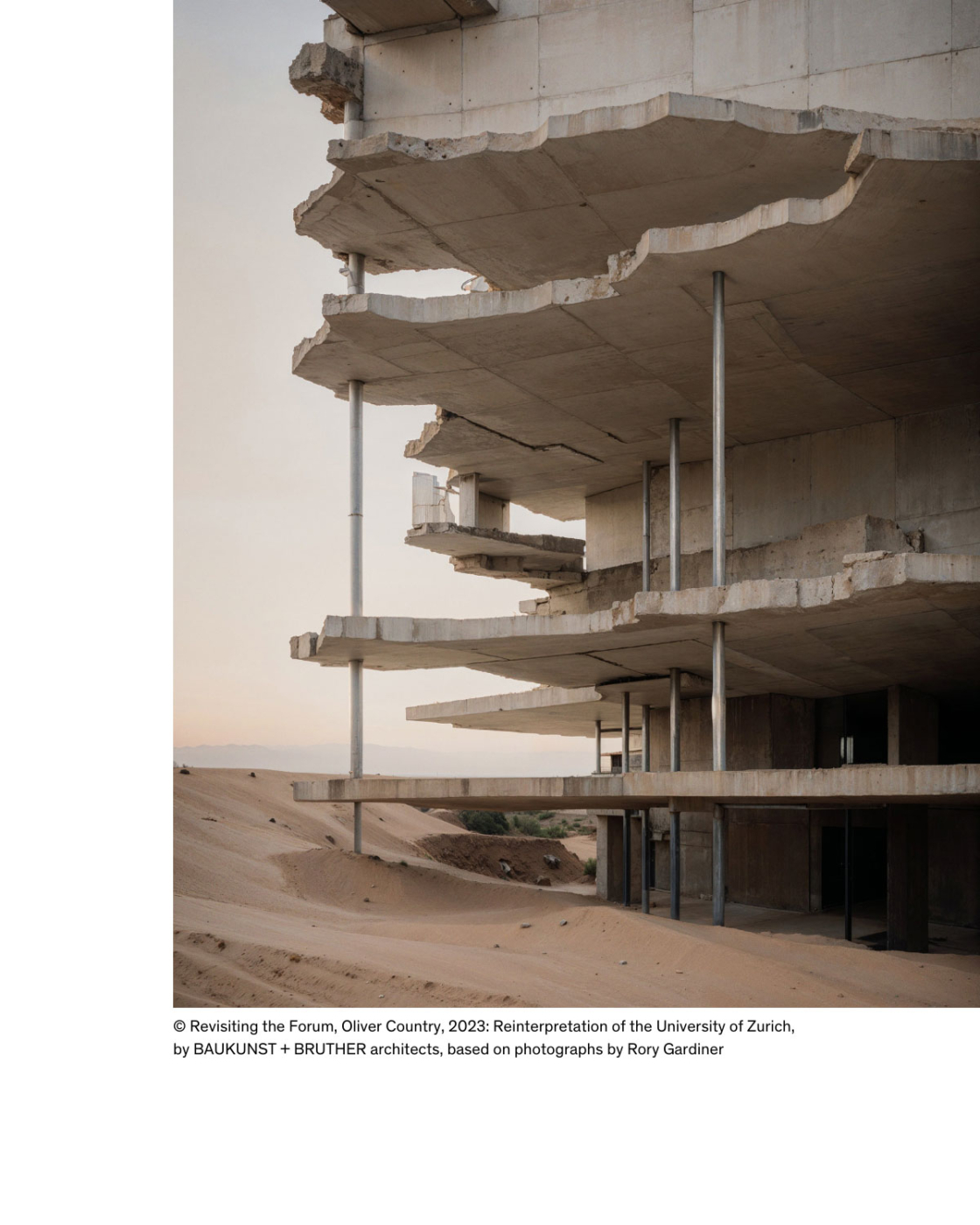
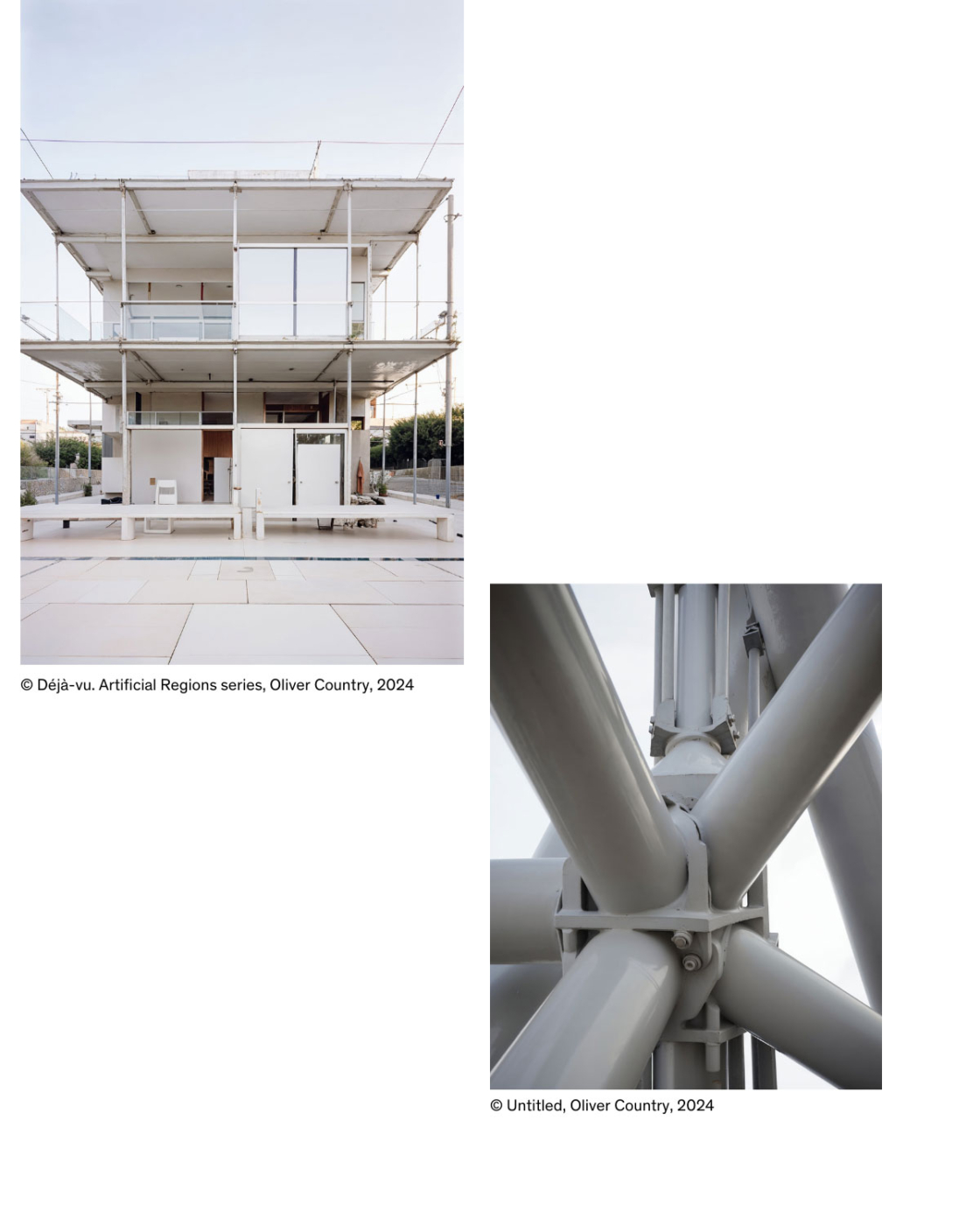
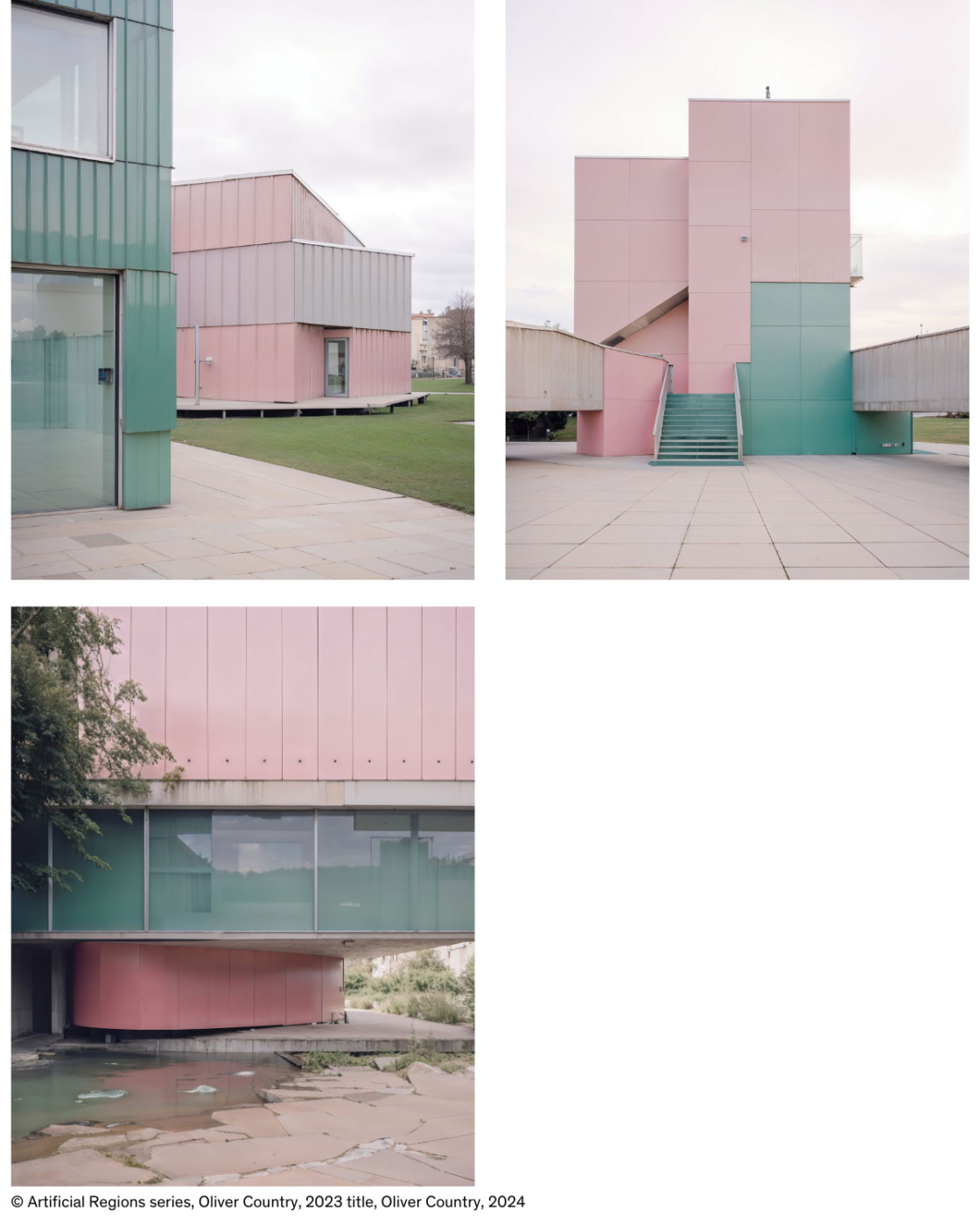
EXPERIMENTING: BREAKING AWAY FROM REALITY
With the rise of hyperrealistic AI-generated images, the distinction between true and false, source and original work is becoming blurred as generative systems recombine pre-established norms and forms. Some creators denounce their aesthetic uniformity, while others hijack this “silly and deceitful tool” to bring out the unexpected, the offbeat, the counterintuitive.
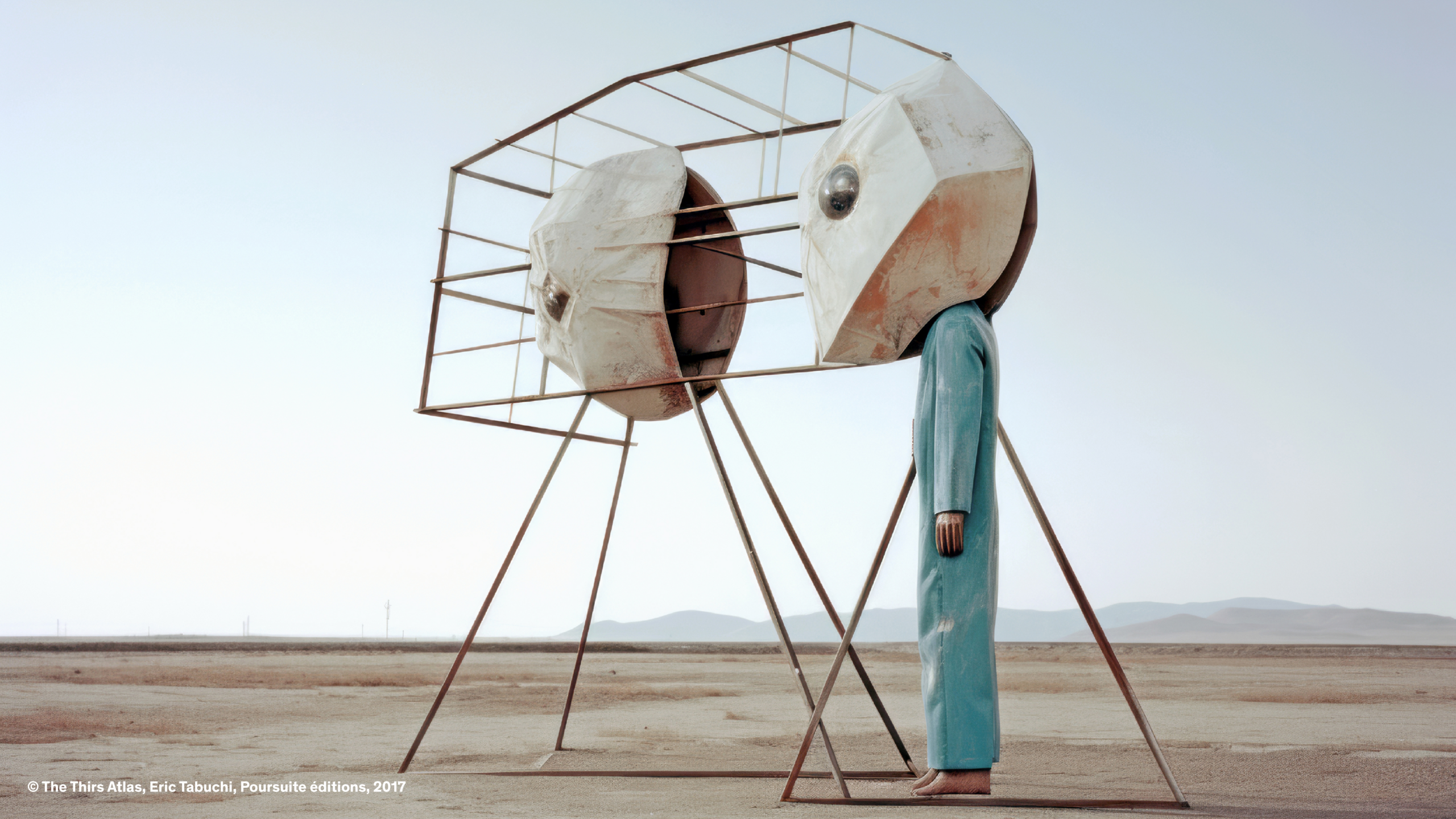
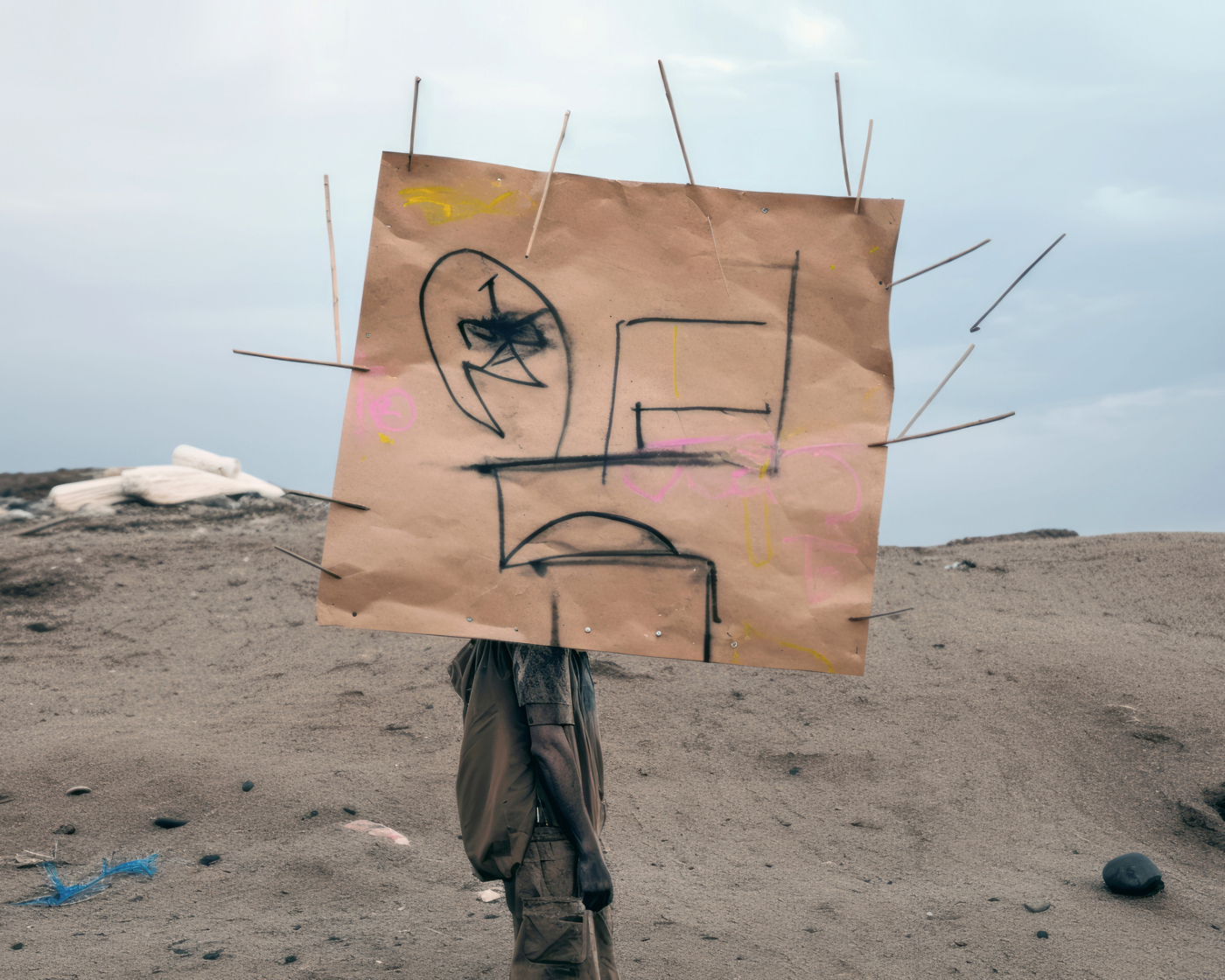
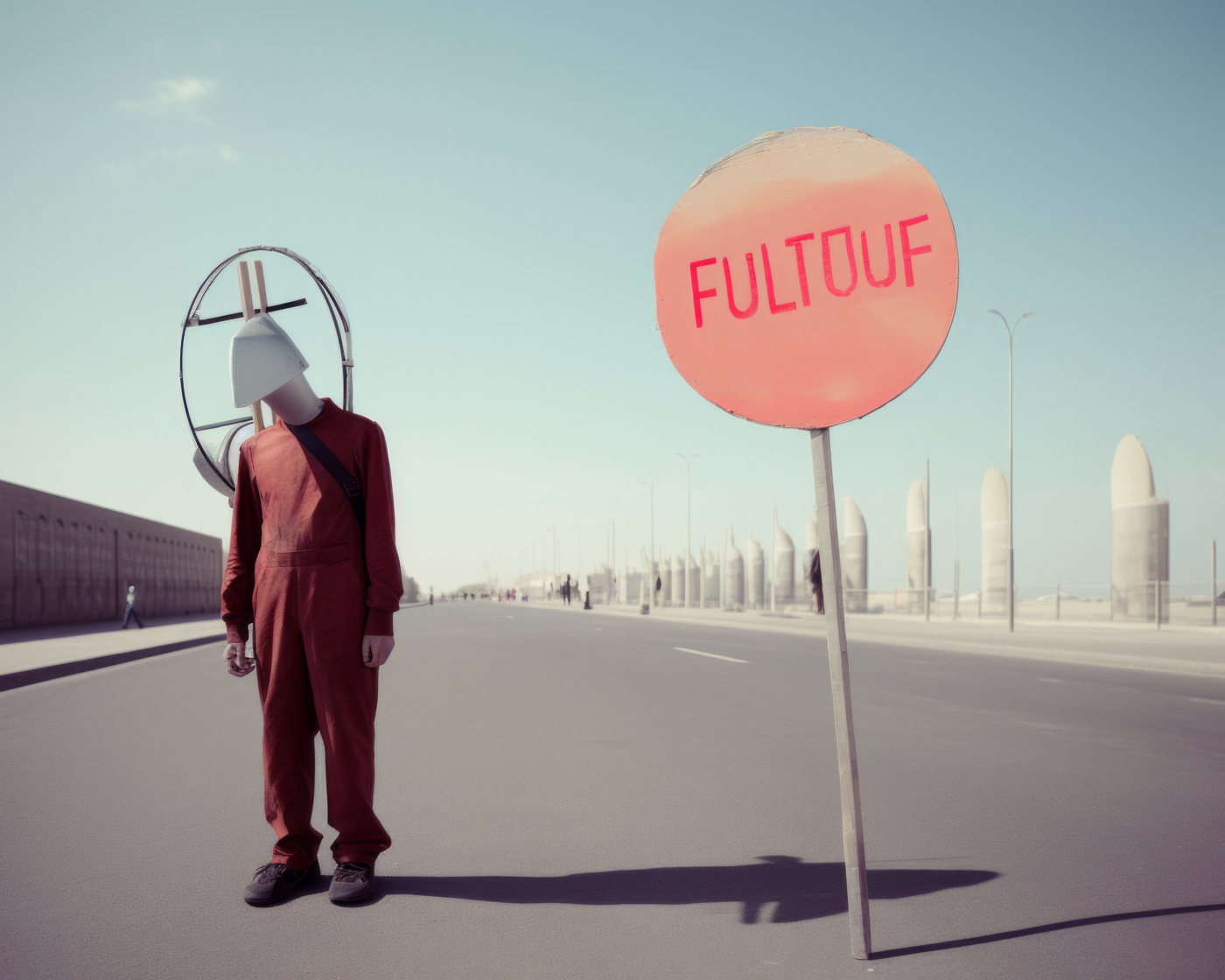
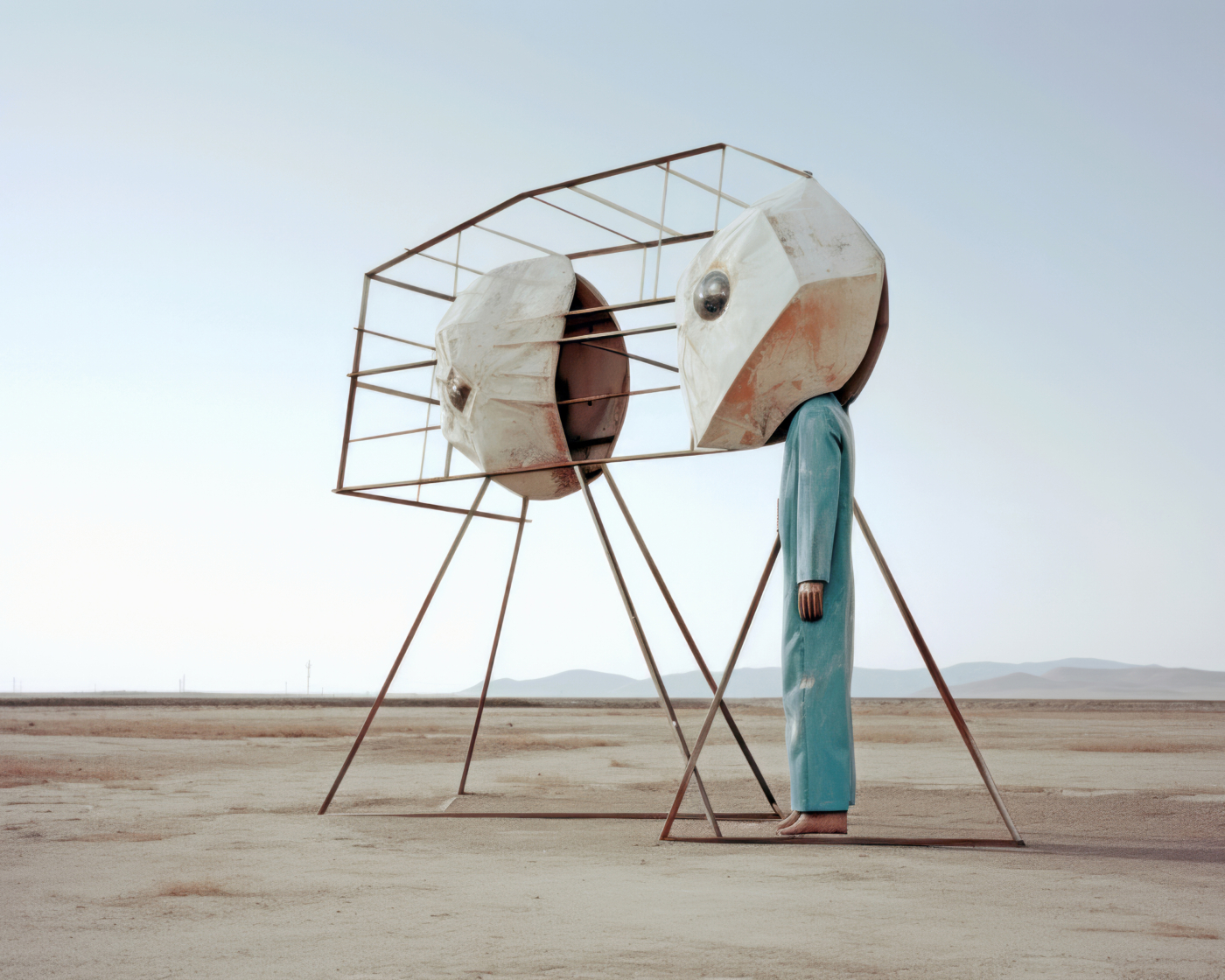
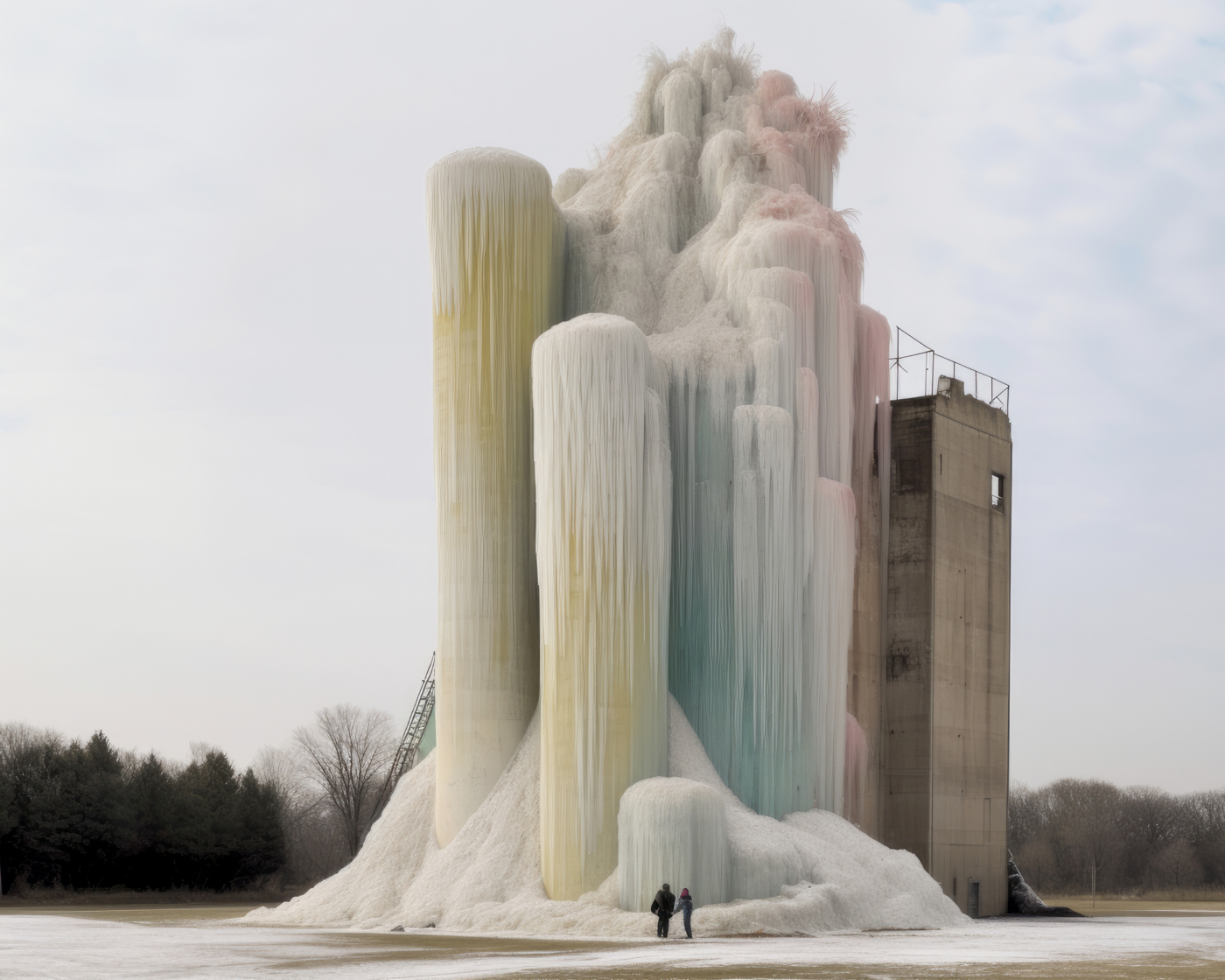
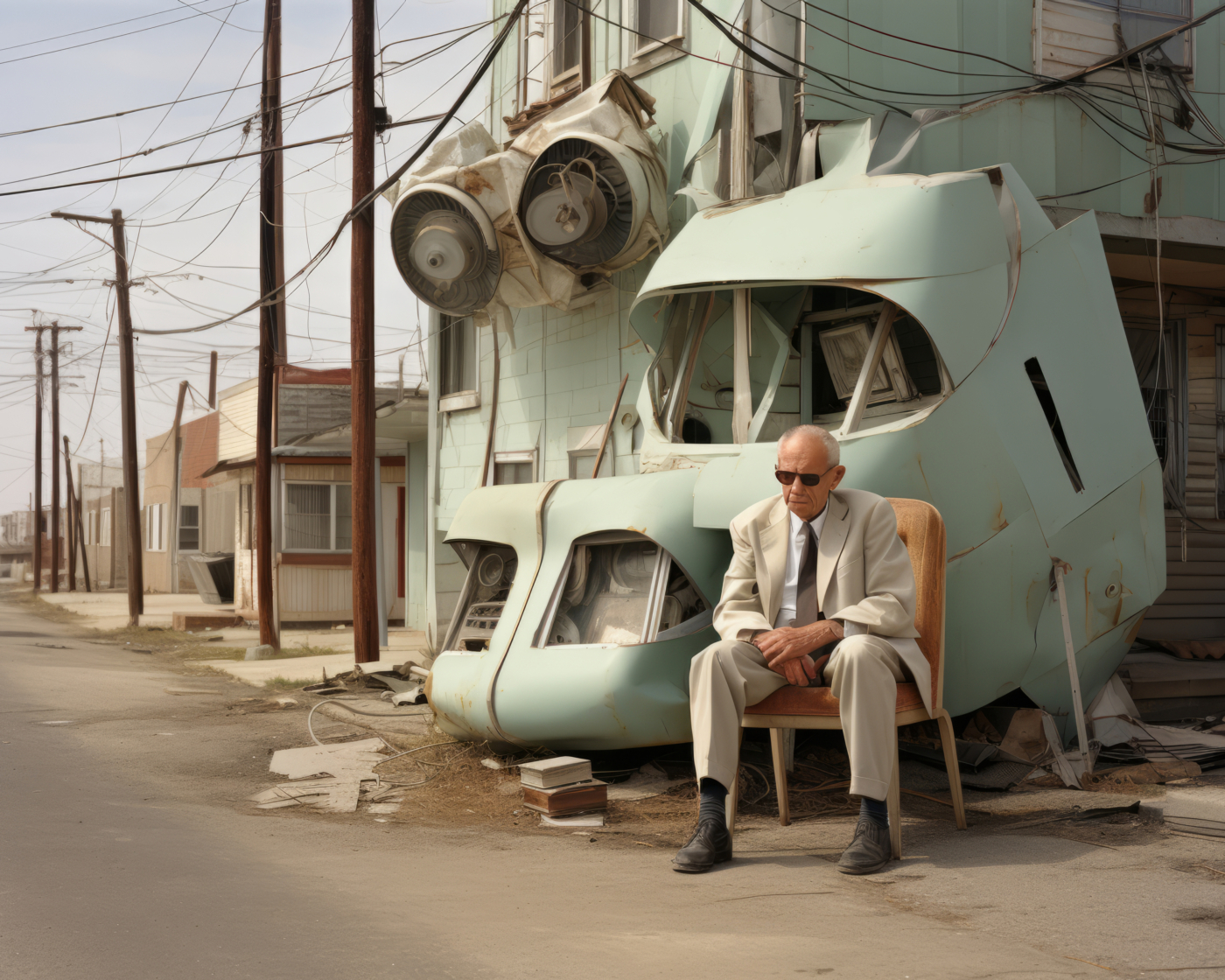
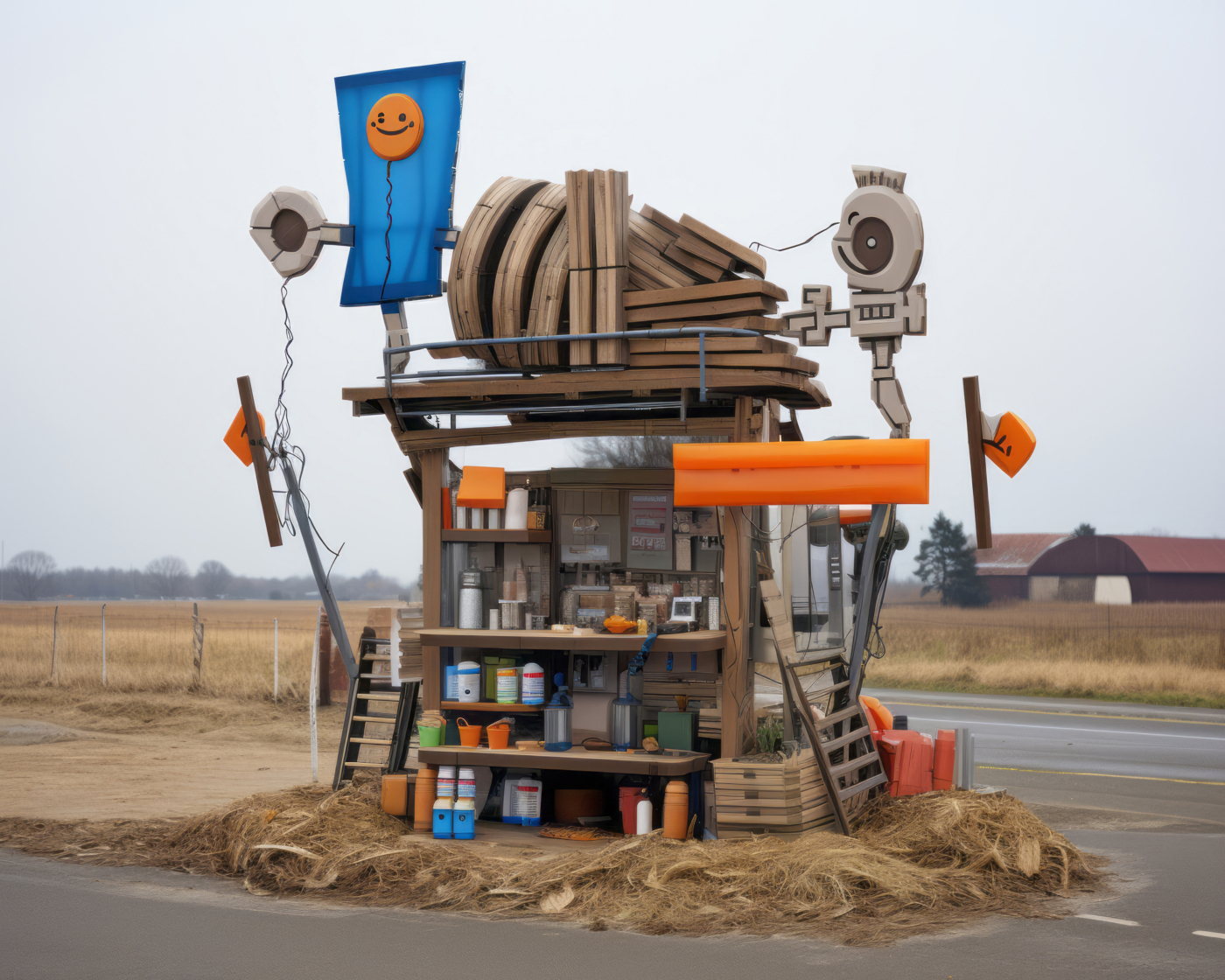
This is the case with Éric Tabuchi, a photographer who has been exploring architectural forms for twenty years. In The Third Atlas, he experiments with Midjourney to produce new forms, sometimes typing random letters or acronyms that are impossible to materialize. The unpredictable results defy all rational logic: a prompt featuring the letters “LIE” brings up masked characters as translations of the idea of lying; signs covered with abstract symbols emerge where a meaningful message was expected, revealing the limitations of a tool incapable of writing. In this way, he transforms AI into an autonomous creative instrument, freeing the photographer from the constraints of reality and transforming him into a novelist of spaces, a curator of forms and situations.
RECORD, CLASSIFY, PROTECT
Databases also play an important role in spatial design, as architects and designers often need to replicate certain elements, such as staircases, door frames, railings, door handles, etc., which they store in a library.
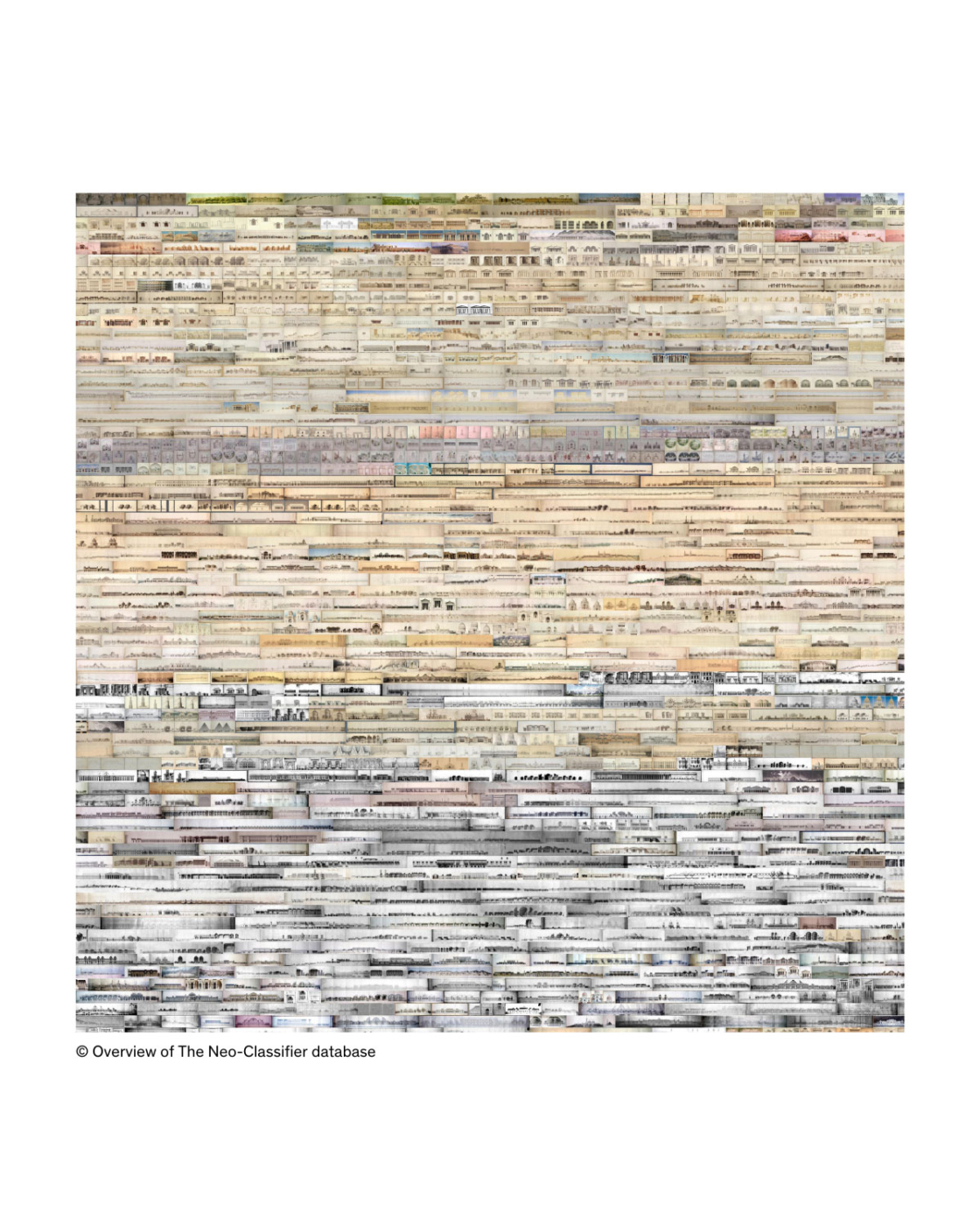
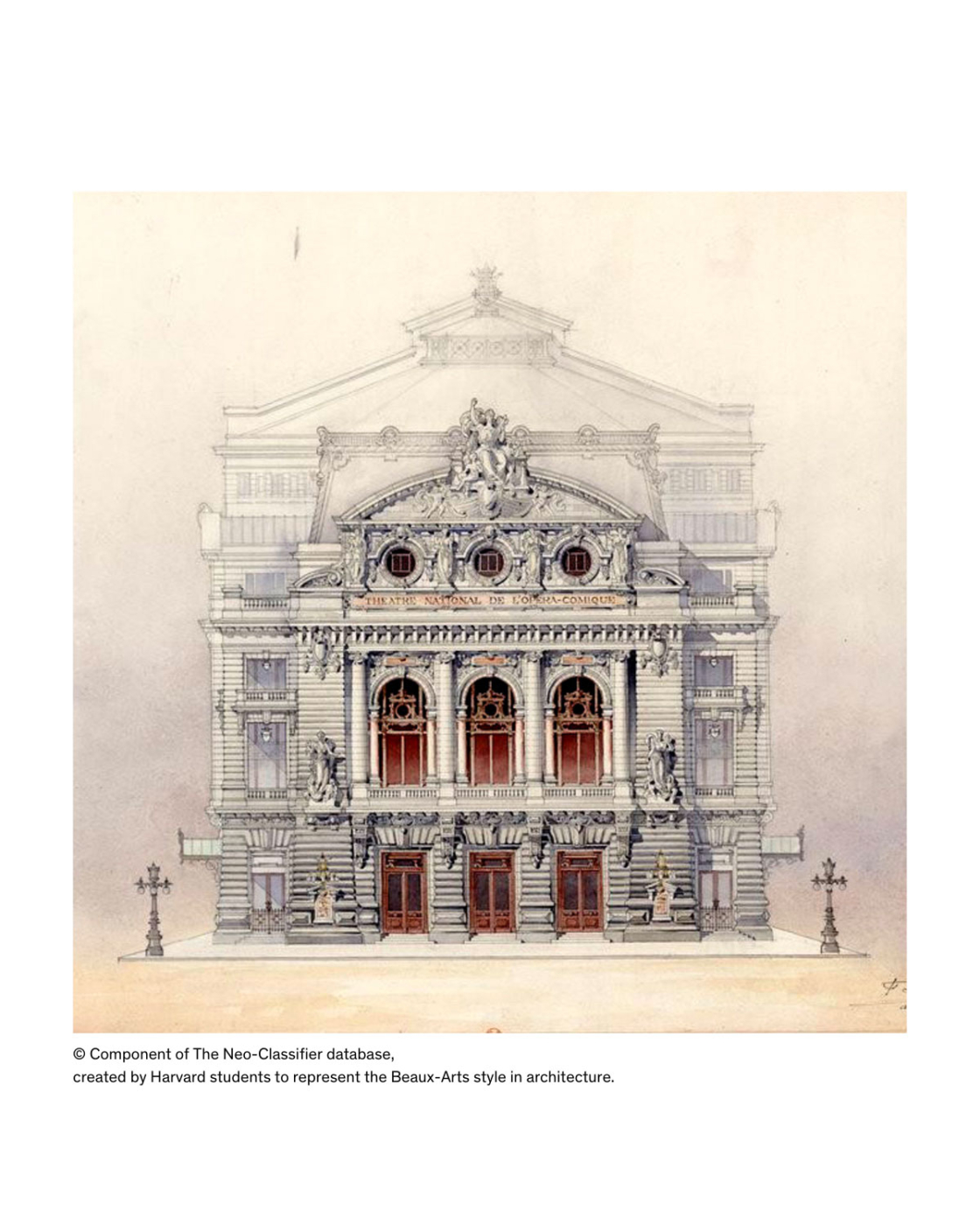
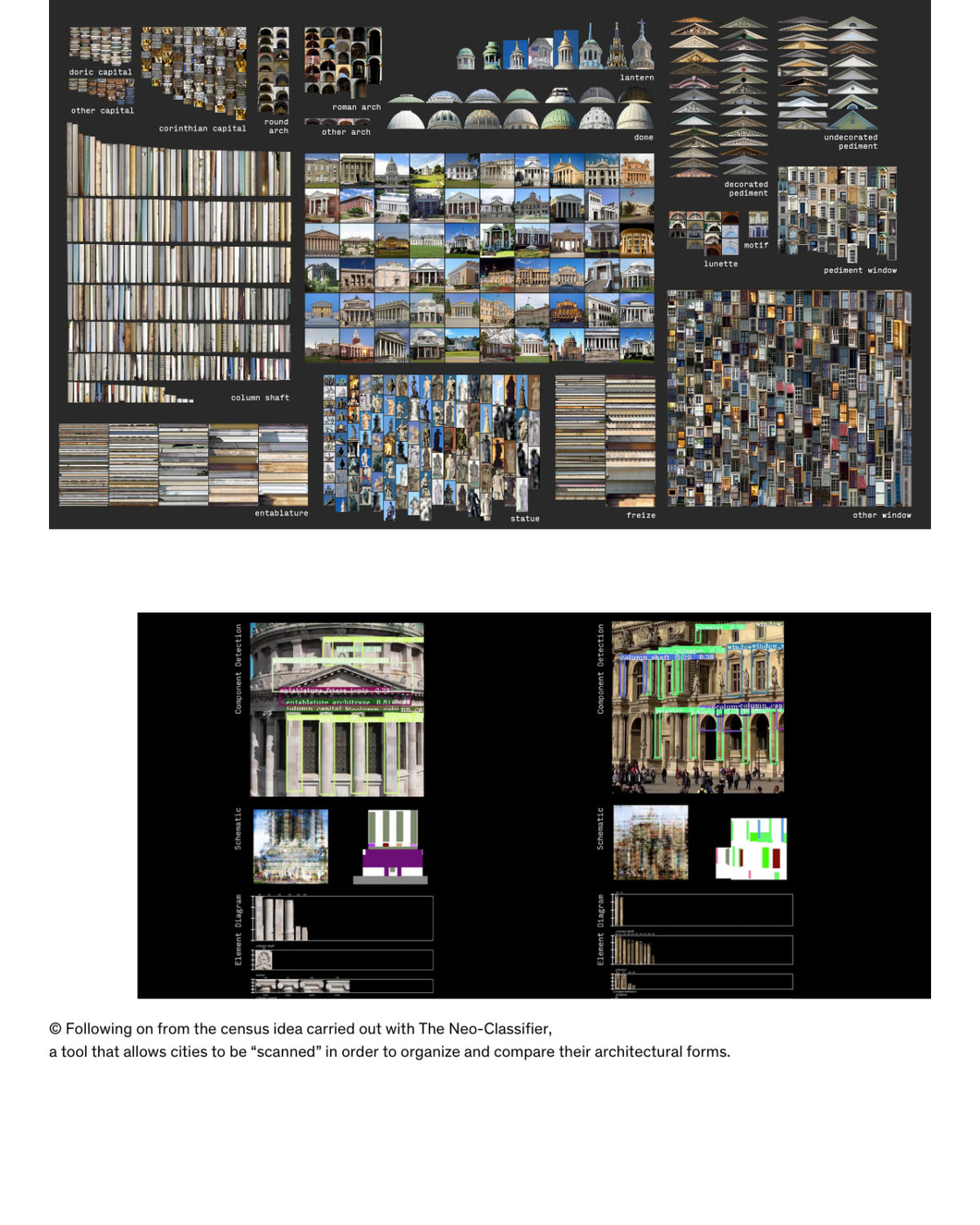
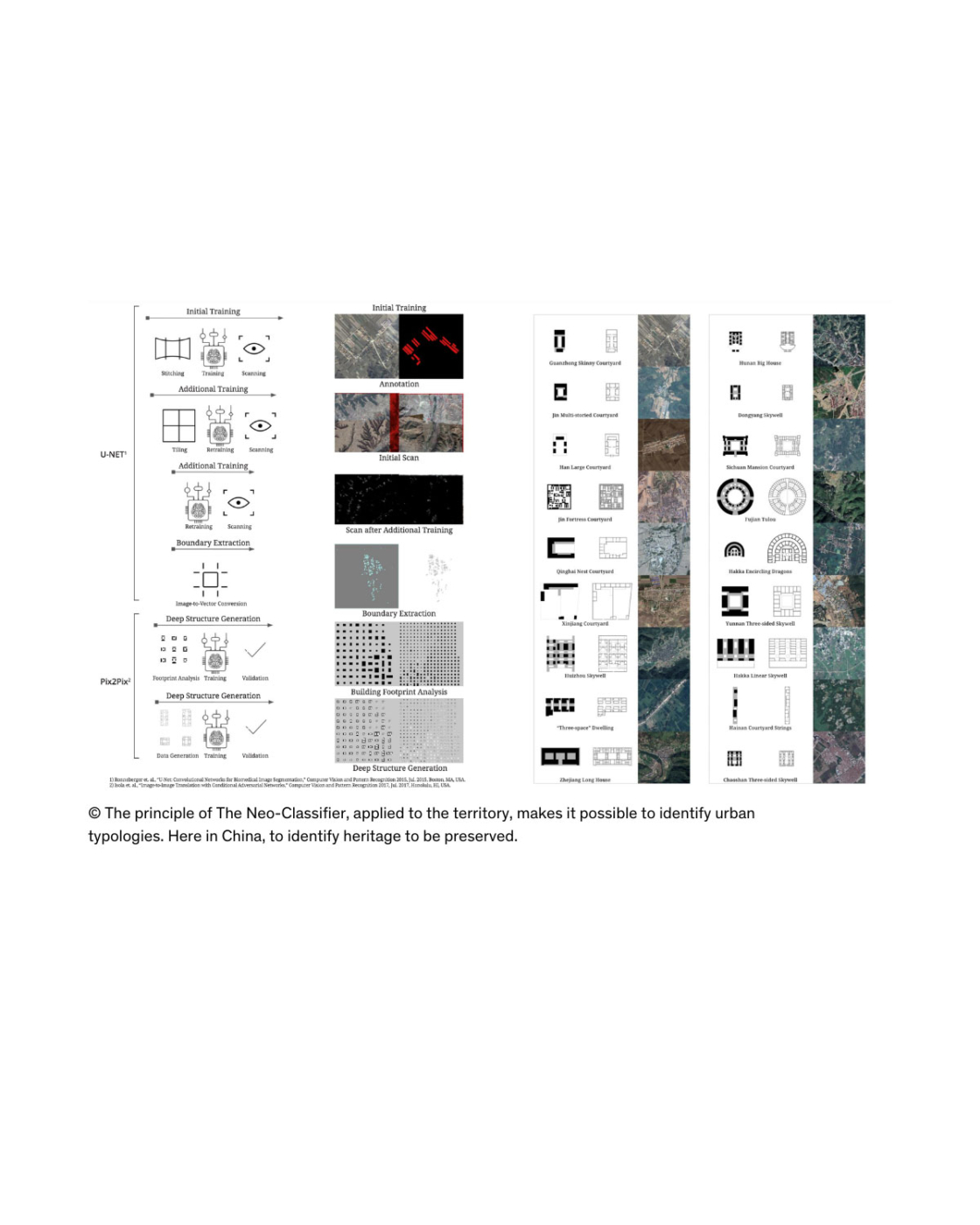
Andrew Witt, a professor at Harvard’s Graduate School of Design, illustrates the potential of AI in this field. Together with his students, he designed The Neo-classifier, a tool capable of recognizing and classifying neoclassical elements in the urban fabric, such as columns, pediments, and capitals, in order to establish a taxonomy and examine the place of neoclassicism in the city. Taking this idea further, Witt and his team have developed a system capable of “scanning” entire territories, such as in China, where this tool has made it possible to identify elements of traditional architecture with unparalleled speed and to establish an exhaustive map of cultural heritage to be preserved.
Here, AI is less a tool for direct creation than an instrument of perception and classification, capable of transforming the way we understand and protect our architectural heritage.