Piloting the “City-Metabolism” Chair

  • Publish On 3 October 2023
  • 5 minutes

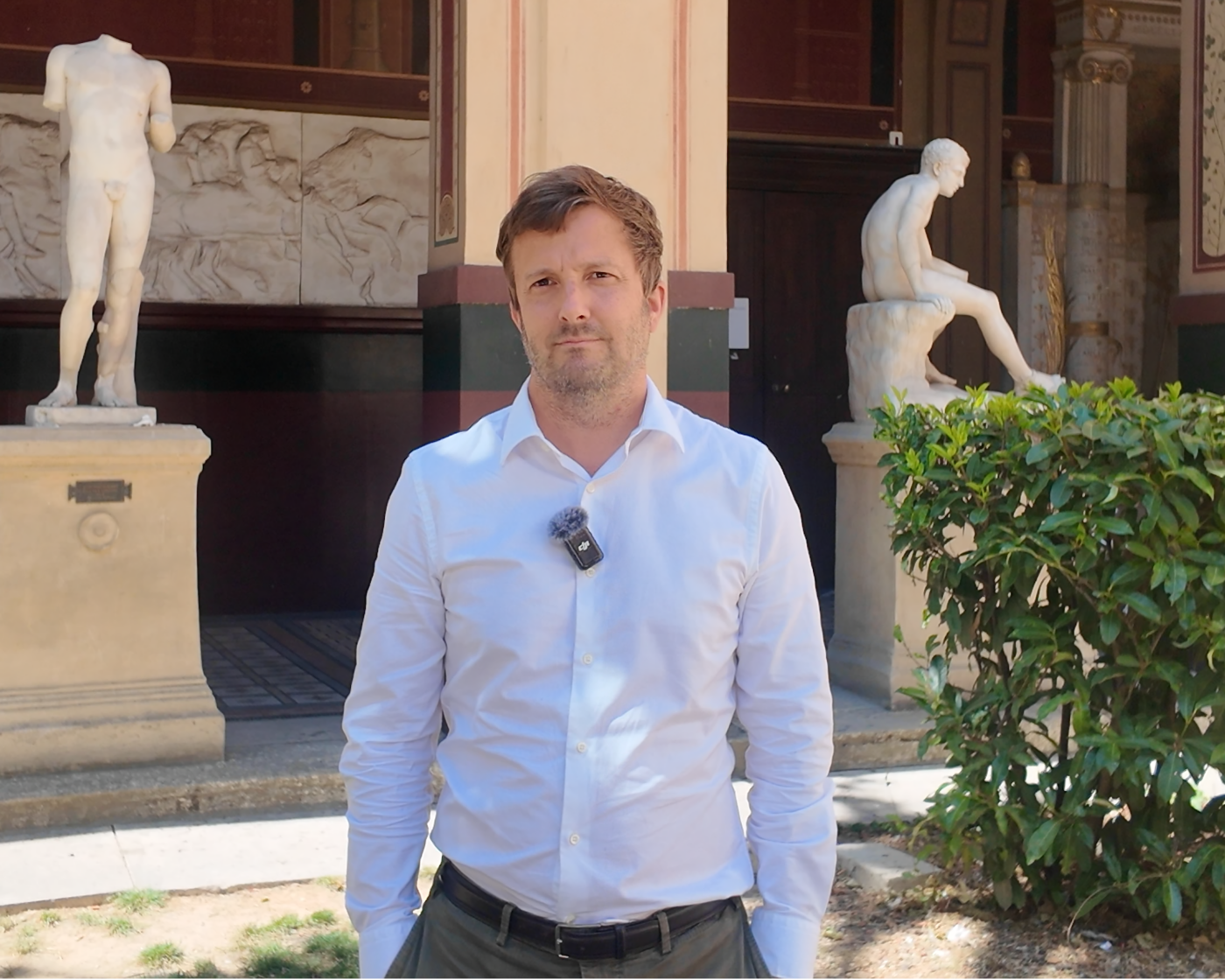
Périg Pitrou is an anthropologist, CNRS Research Director at the Maison Française d’Oxford and head of the “Anthropology of Life” team at the Collège de France. He is Scientific Director of the City-Metabolism Chair, which links the agency with PSL University (Paris Sciences et Lettres). The aim: to identify how interdisciplinary collaborations can help overcome the challenges of building future urban worlds.
Bibliography

explore

Podcast

“ A catastrophe is when a belief or certitude suddenly collapses. From its ruins, narrative, political, economic and ecological utopias can be reborn. ”

Podcast

“ A catastrophe is when a belief or certitude suddenly collapses. From its ruins, narrative, political, economic and ecological utopias can be reborn. ”


Can new narratives arise from ruins?

Raphaëlle Guidée is a specialist in narrative representations of economic, environmental and societal collapse. For over 10 years, she has analyzed the narratives surrounding Detroit’s bankruptcy in order to understand how an apparent ruin of capitalism can inspire discourses of domination or resistance. In La ville d’après : Détroit, une enquête narrative [The Aftermath City: Detroit, a narrative investigation] (Flammarion), rather than focusing on fictions, she seeks out testimonies and concrete stories, believing that modern times don’t need new narratives. We simply need alternative narratives. Read the transcription of the podcast.

Discover
Podcast

“ My research question was: How do tools for integrating biodiversity into urban and architectural projects contribute to shaping multi-species urban worlds? ”

1/4: Translating biodiversity

Léone-Alix Mazaud

Podcast

“ My research question was: How do tools for integrating biodiversity into urban and architectural projects contribute to shaping multi-species urban worlds? ”


1/4: Translating biodiversity

In this first episode, Léone revisits the genesis of her research topic and traces the evolution of her methodology. She adopts a “material semiotics” approach, focused on how biodiversity tools translate and make ecological knowledge perceptible. These tools are analyzed as “cosmograms,” according to John Tresch’s concept: objects designed to summarize the order of the world by materially organizing the relationships between humans and non-humans. But an examination of the diversity of these tools quickly reveals the difficulty in producing shared representations of biodiversity. This heterogeneity opens an investigation into the often implicit ways in which these tools shape our thinking and conceptions of the multi-species city.   Working with diversity: Operators sensitive to non-human life in urban and architectural projects In this series of four podcasts, we invite you to delve into the work of Léone, a researcher at the agency, who recently defended her CIFRE PhD thesis in Science and Technology Studies, supervised by Jérôme Denis at the Centre for the Sociology of Innovation (École des Mines, Université PSL). Her research examines the tools developed since the 2010s to integrate biodiversity into urban and architectural projects. Indicators, labels, models: these instruments translate ecological knowledge and guide how we design cities. Through field observations, reflective analysis, and sound experimentation, the thesis explores how these tools shape our relationship with living things and contribute to building multi-species urban worlds. This diversity reveals the capacity of biodiversity to fulfill varied ambitions, depending on whether the tools prioritize the faithful translation of scientific ecology or the enhancement of uses and landscapes within projects. A series presented by Léone-Alix Mazaud and Jasmine Léonardon. Editing: Théa Lingrand.

Discover
Article
Article

Reshaping myths to reveal pressing realities

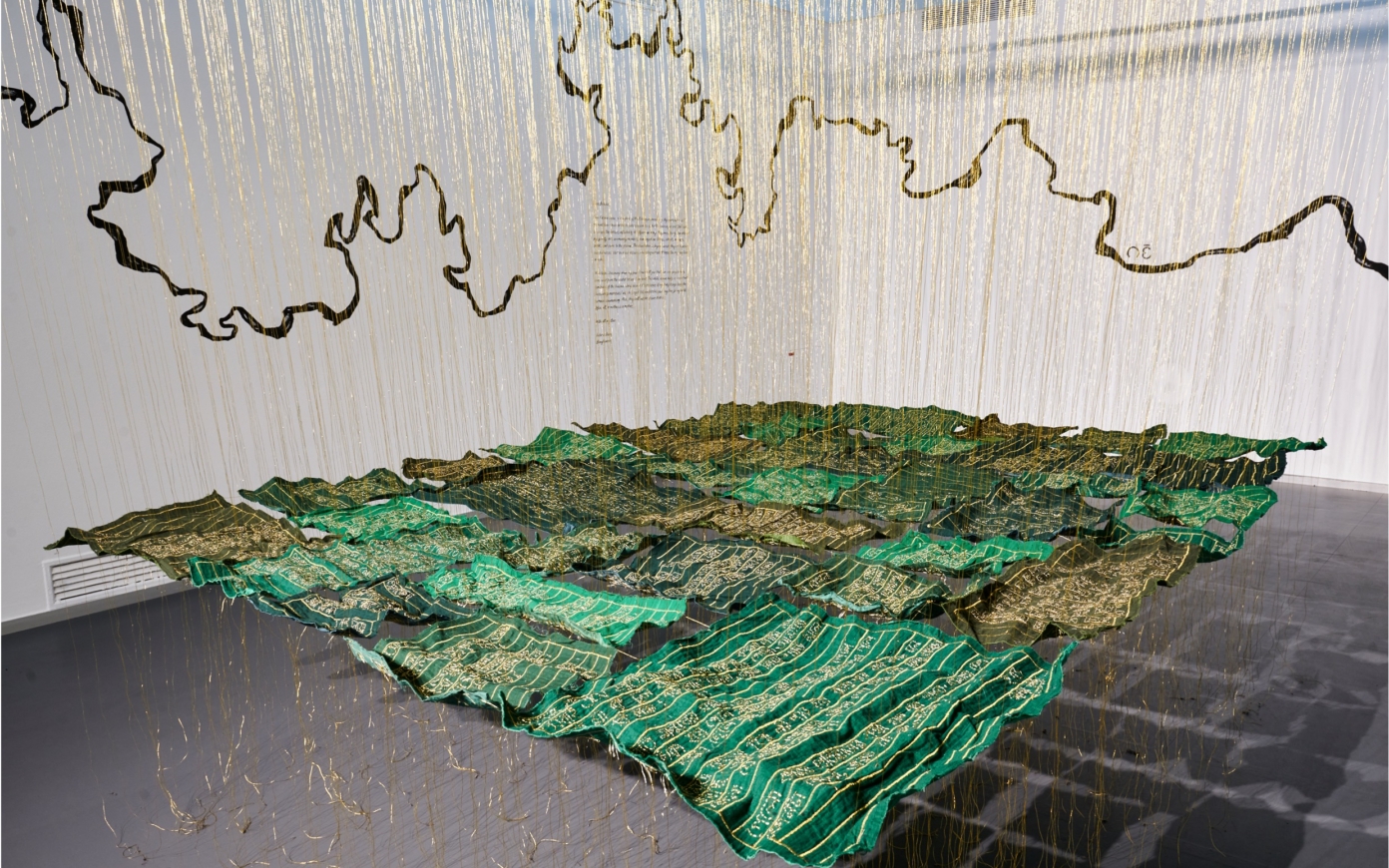
Ashfika Rahman is a visual artist based in Bangladesh, who recently won the Future Generation Art Prize awarded by the PinchukArtCentre in Ukraine. Faced with the overwhelming power of information systems that are serving dominant narratives, she is working on creating alternative medium of expression, giving their voice back to marginalized communities in her homeland, particularly women. Through her art, Rahman questions myths, folk tales and widely spread prejudice that are still shaping our cultures and legitimating violence, adopting a contemporary and feminist lense. We met with her to discuss her recent work, Behula These Days where she brings together ancient crafts and new techniques to share the poignant and heart-wrenching experiences of women living in one of the most floodprone areas in Bangladesh.

Discover
Article
Article

The potential of the night

Once a sanctuary for dreams and imagination, nighttime has now been relegated to the mere role of a utilitarian prelude to daytime. Nocturnal realms possess an alchemical power capable of transfiguring our perceptions. However, when viewed through the lens of urban uses, the night also exacerbates inequalities and raises questions about the possibility of achieving an urban night that is accessible to everyone. Exploring the range of possibilities associated with the night reveals it as a space-time where complex interactions are woven that could be revitalized through a chronotopic and inclusive architecture.

Discover
Vidéo

Björn Geldhof

Vidéo

Culture as a weapon

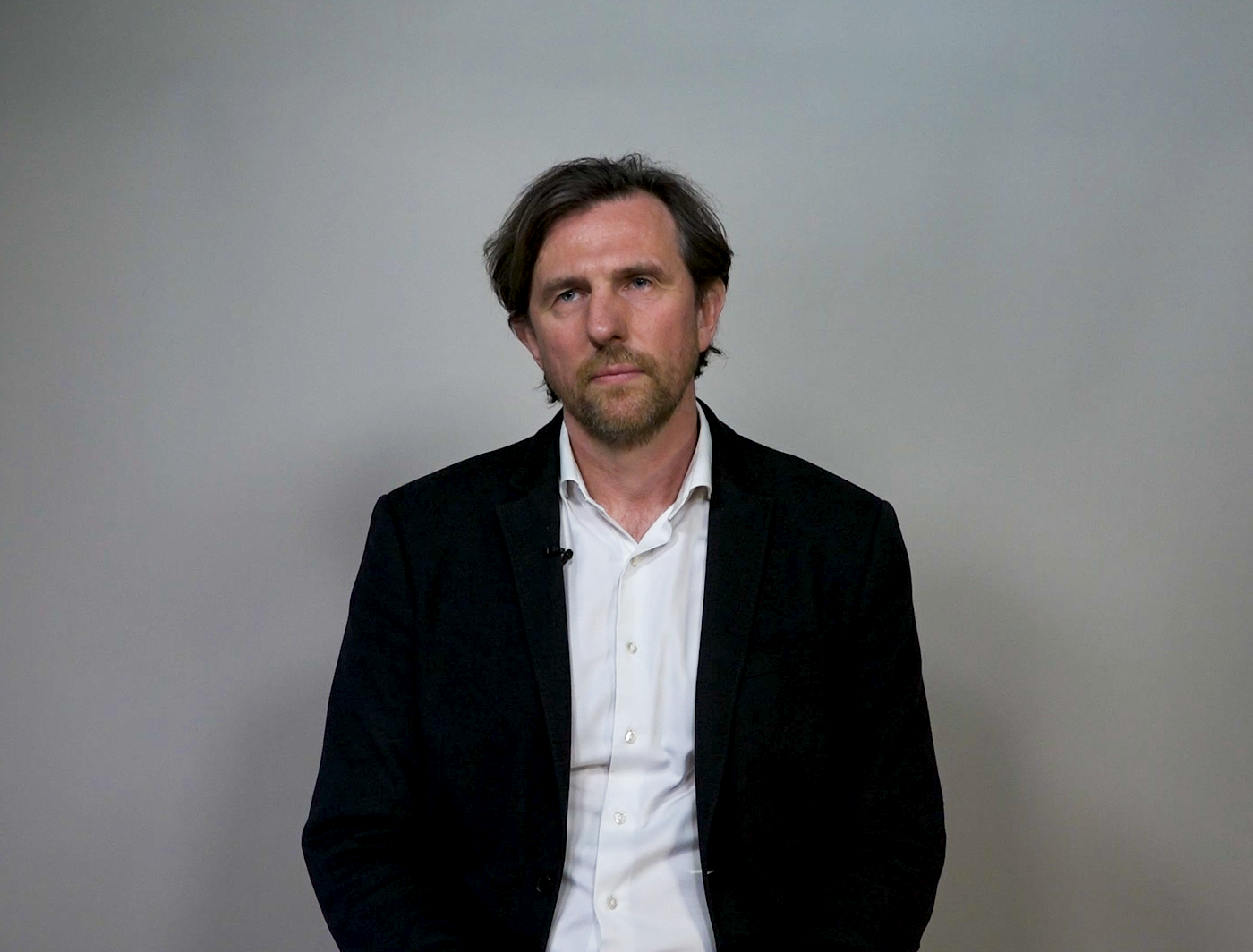
In this exclusive interview, Björn Geldhof, director of the PinchuckArtCentre in Kyiv, looks at the evolution of the centre’s cultural programming since the outbreak of war in Ukraine. From an institutional space whose primary role was to open up the country to the world, the centre has evolved into a platform for committed and activist research, carrying the voice of Ukraine throughout Europe. By using art to document the conflict, the PinchukArtCentre uses a factual approach to raise awareness in the spheres of opinion and decision-making, thus affirming its role as the country’s ‘artistic arm’.  

Discover
Vidéo
Vidéo

Beautiful like an encounter on the glass roof of colored clouds

For Daniel Buren, architecture is an open-air studio. In an exclusive interview with architect Philippe Chiambaretta, he talks about his site-specific work, where art and architecture meet, just like the Nuages Colorés that cover the scales of the 175 Haussmann glass roof.

Discover
Article
Article

Podcast transcription: Raphaëlle Guidée

Raphaëlle Guidée is a specialist in narrative representations of economic, environmental and societal collapse. For over 10 years, she has analyzed the narratives surrounding Detroit’s bankruptcy in order to understand how an apparent ruin of capitalism can inspire discourses of domination or resistance. In La ville d’après : Détroit, une enquête narrative [The Aftermath City: Detroit, a narrative investigation] (Flammarion), rather than focusing on fictions, she seeks out testimonies and concrete stories, believing that modern times don’t need new narratives. We simply need alternative narratives. Read the transcription of her podcast below.

Discover
Podcast

“ Artificial intelligence is revolutionizing our relation to history, giving us access to previously indecipherable archives. ”

Using AI to tell history

Raphaël Doan

Podcast

“ Artificial intelligence is revolutionizing our relation to history, giving us access to previously indecipherable archives. ”


Using AI to tell history

On February 10 and 11, France hosted the Summit for Action on Artificial Intelligence, bringing together international companies and heads of state to identify the potential and limits (notably environmental) of this tool. This is an opportunity for us to discuss the subject of generative AI with Raphaël Doan, a specialist in the sciences of Antiquity and author of the uchronia Si Rome n’avait pas chuté (If Rome hadn’t fallen), an essay imagining, with the help of AI, what might have happened if the Industrial Revolution had taken place under the Roman Empire. Through this experiment, fascinating possibilities for historical and archaeological research are outlined, as AI facilitates the processing of archives, the translation of lost languages and the deciphering of burnt texts. Read here the transcription of our interview with Raphaël Doan

Discover