The art of artificial life
  • Publish On 15 April 2024
  • Justine Emard
  • 6 minutes

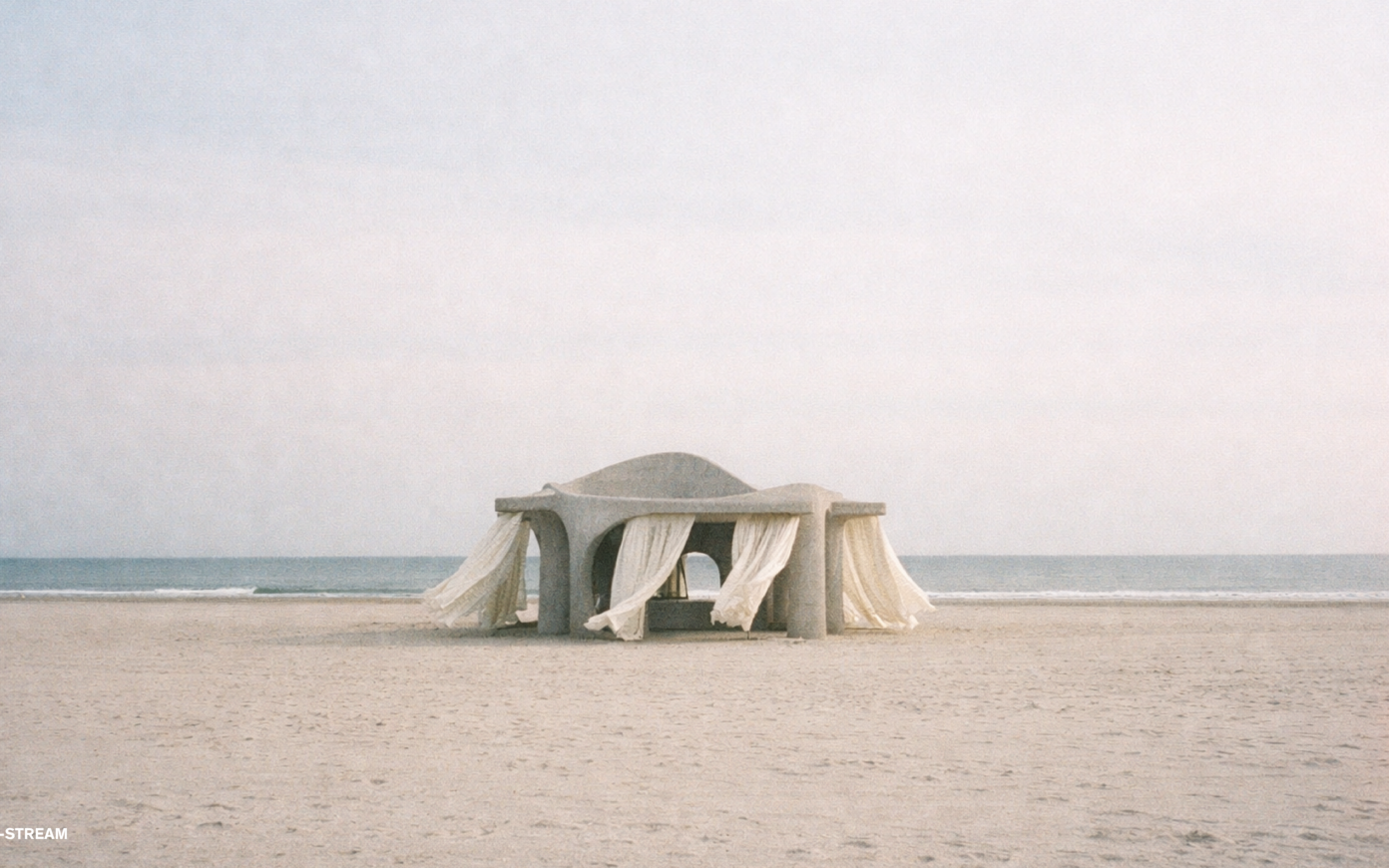
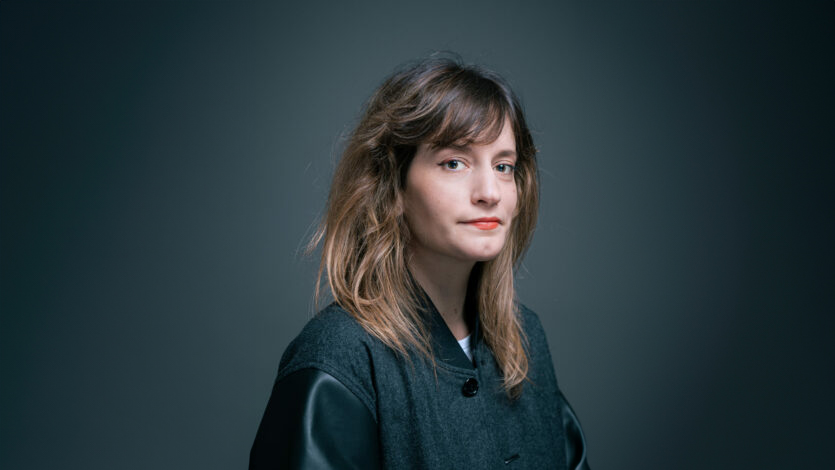
Justine Emard is a visual artist. Her installations use AI to understand the living, exploring the boundaries between organic life and artificial intelligence. Bee swarms, encephalographic recordings and prehistoric paintings become learning supports for algorithms that, contrary to dystopian imaginations, generate new supra-hyper-organisms.

Bibliography

explore

Podcast

“ My research question was: How do tools for integrating biodiversity into urban and architectural projects contribute to shaping multi-species urban worlds? ”

Translating biodiversity

Léone-Alix Mazaud

Podcast

“ My research question was: How do tools for integrating biodiversity into urban and architectural projects contribute to shaping multi-species urban worlds? ”


Translating biodiversity

In this first episode, Léone revisits the genesis of her research topic and traces the evolution of her methodology. She adopts a “material semiotics” approach, focused on how biodiversity tools translate and make ecological knowledge perceptible. These tools are analyzed as “cosmograms,” according to John Tresch’s concept: objects designed to summarize the order of the world by materially organizing the relationships between humans and non-humans. But an examination of the diversity of these tools quickly reveals the difficulty in producing shared representations of biodiversity. This heterogeneity opens an investigation into the often implicit ways in which these tools shape our thinking and conceptions of the multi-species city.   Working with diversity: Operators sensitive to non-human life in urban and architectural projects In this series of four podcasts, we invite you to delve into the work of Léone, a researcher at the agency, who recently defended her CIFRE PhD thesis in Science and Technology Studies, supervised by Jérôme Denis at the Centre for the Sociology of Innovation (École des Mines, Université PSL). A series presented by Léone-Alix Mazaud and Jasmine Léonardon. Editing: Théa Lingrand.

Discover
Vidéo
Vidéo

Beautiful like an encounter on the glass roof of colored clouds

For Daniel Buren, architecture is an open-air studio. In an exclusive interview with architect Philippe Chiambaretta, he talks about his site-specific work, where art and architecture meet, just like the Nuages Colorés that cover the scales of the 175 Haussmann glass roof.

Discover
Vidéo

Jean-Baptiste de Froment

Vidéo

"For an open architecture"

On the occasion of its integration into the Paris Sciences et Lettres (PSL) university consortium, the École nationale supérieure d’architecture de Paris-Malaquais is publishing a manifesto that asserts its institutional positioning. Far more than a mere text, this manifesto lays the foundations for a committed academic vision, emphasizing the urgent need to train architects engaged in transforming the ways we inhabit the world. Structured around twelve key concepts, it is intended as a compass to guide the school’s pedagogical and strategic choices, in alignment with the 2025–2029 National Strategy for Architecture. In this interview, its director, Jean-Baptiste de Froment, reflects on the values driving this project and on how the school positions itself as a proactive agent of thought and action within the contemporary architectural landscape.

Discover
Article
Article

Educating Citizen Architects: for a meaningful architecture

Andrew Freear runs the Rural Studio program at Auburn School of Architecture (USA). He believes that schools of architecture have an ethical responsibility to train citizen architects who are locally committed to concrete projects and experientially connected to contexts and places. To design an inclusive city, the Studio adopts an experimental field approach, combining analysis of the territory’s endemic problems, understanding of residents’ needs and new construction techniques. Read the full interview published in STREAM 05!

Discover
Vidéo

Björn Geldhof

Vidéo

Culture as a weapon

In this exclusive interview, Björn Geldhof, director of the PinchuckArtCentre in Kyiv, looks at the evolution of the centre’s cultural programming since the outbreak of war in Ukraine. From an institutional space whose primary role was to open up the country to the world, the centre has evolved into a platform for committed and activist research, carrying the voice of Ukraine throughout Europe. By using art to document the conflict, the PinchukArtCentre uses a factual approach to raise awareness in the spheres of opinion and decision-making, thus affirming its role as the country’s ‘artistic arm’.  

Discover
Article
Article

The potential of the night

Once a sanctuary for dreams and imagination, nighttime has now been relegated to the mere role of a utilitarian prelude to daytime. Nocturnal realms possess an alchemical power capable of transfiguring our perceptions. However, when viewed through the lens of urban uses, the night also exacerbates inequalities and raises questions about the possibility of achieving an urban night that is accessible to everyone. Exploring the range of possibilities associated with the night reveals it as a space-time where complex interactions are woven that could be revitalized through a chronotopic and inclusive architecture.

Discover
Podcast

“ A catastrophe is when a belief or certitude suddenly collapses. From its ruins, narrative, political, economic and ecological utopias can be reborn. ”

Podcast

“ A catastrophe is when a belief or certitude suddenly collapses. From its ruins, narrative, political, economic and ecological utopias can be reborn. ”


Can new narratives arise from ruins?

Raphaëlle Guidée is a specialist in narrative representations of economic, environmental and societal collapse. For over 10 years, she has analyzed the narratives surrounding Detroit’s bankruptcy in order to understand how an apparent ruin of capitalism can inspire discourses of domination or resistance. In La ville d’après : Détroit, une enquête narrative [The Aftermath City: Detroit, a narrative investigation] (Flammarion), rather than focusing on fictions, she seeks out testimonies and concrete stories, believing that modern times don’t need new narratives. We simply need alternative narratives. Read the transcription of the podcast.

Discover
Article

Capturing the Cityscape Through Photography

Émilie d'Orgeix, Corinne Feïss-Jehel, Pierre-Jérôme Jehel

Article

Capturing the Cityscape Through Photography

Over the span of several months, students from GOBELINS Paris scouted La Défense, examining the iconic business district from the fresh perspective of urban metabolism. As part of a documentary workshop led by Pierre-Jérôme Jehel and Laetitia Guillemin (GOBELINS) and designed in partnership with researchers from the City-Metabolism Chair at PSL University, some thirty students explored this territory. They did so by treating it not as a mere backdrop but as a living organism, traversed by flows, tensions, and rhythms, using photography as a tool for revelation. Their projects, located at the crossroads of artistic creation and research, unveil an alternative reading of this mineral space, between invisible flows and underlying tensions. Both sensitive and rigorous, this inquiry is chronicled here by Corinne Feïss Jehel (EPHE-PSL), Pierre-Jérôme Jehel, and Émilie d’Orgeix (EPHE-PSL) as part of a research project conducted by the City-Metabolism Chair (which is financially supported by PCA-STREAM, Artelia, and Groupama Immobilier).

Discover