The Venice Biennale put to the political test
- Publish On 29 May 2026
- 4 minutes
To mark the 61st Venice Art Biennale, Stream Voices presents a special issue centred on the theme ‘In Minor Keys’, exploring peripheral narratives, practices of care, everyday attentiveness and discreet forms of cultural production.
This edition is, however, marked by a level of political tension rarely seen in recent decades. Conceived by the Swiss-Cameroonian curator Koyo Kouoh, who passed away suddenly before the opening, it is shaped by a dual context: that of mourning and that of a cultural world deeply fractured by contemporary geopolitical conflicts.
We begin by examining the lines of tension running through this 2026 edition, before republishing a series of interviews from our magazines Stream and previous issues of Stream Voices, organised around several themes: what still resists in the face of war and forms of oppression; the archaeologies of erasure and buried memories; and the realms of the sensuous, through artistic practices attentive to subtle perceptions, everyday practices and the invisible forms of reality.
Under the banner of ‘minor keys’
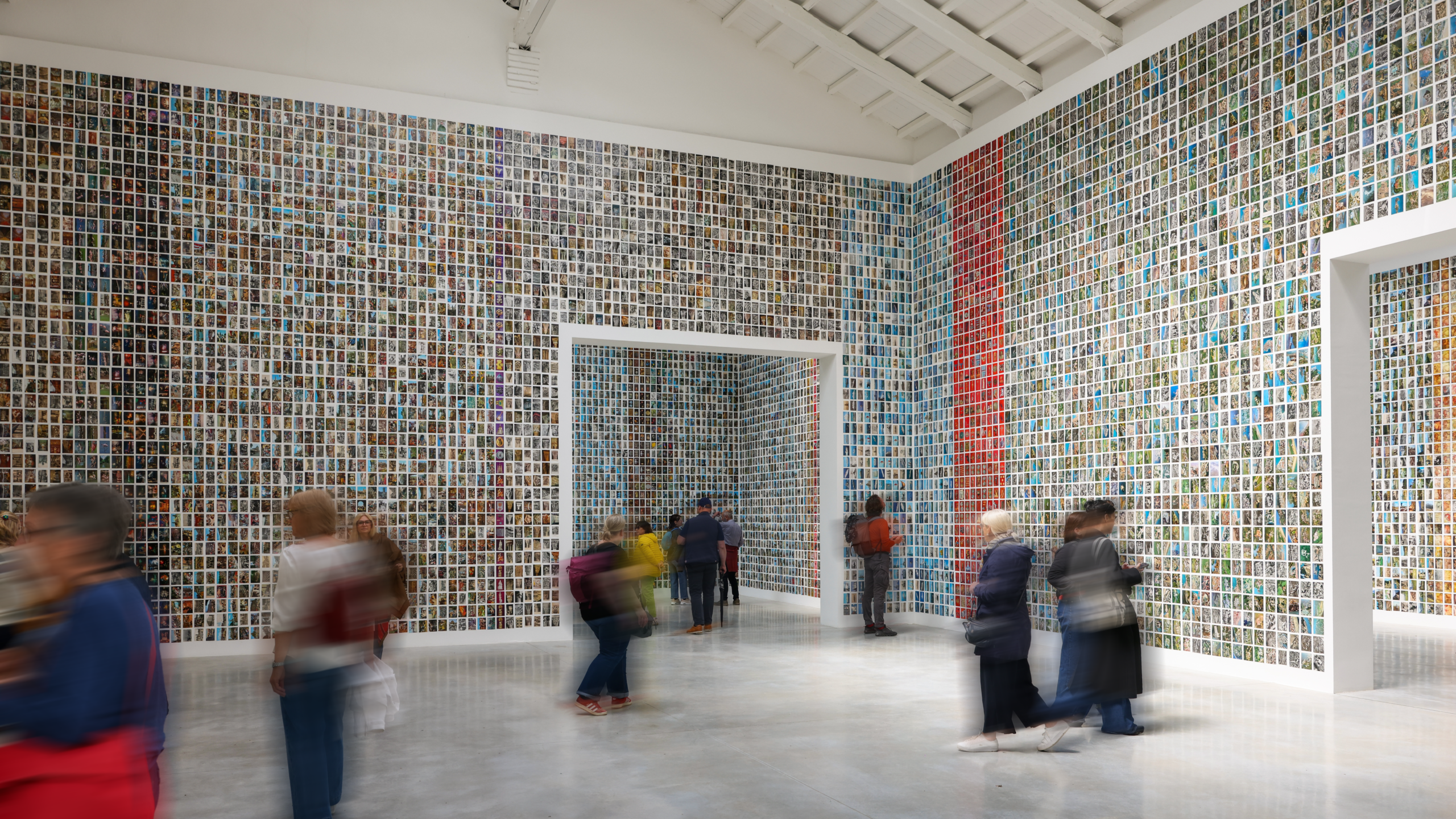
With ‘In Minor Keys’, Koyo Kouoh proposed a kind of anti-Biennale. In contrast to spectacular installations, monumental architecture and the economy of visibility that has come to dominate contemporary art, his project sought to shift the focus towards more discreet, collective and site-specific practices. The exhibition thus highlights marginalised voices, scenes from the Global South, and artisanal, sound or textile forms, as well as concepts rarely central to major international events: care, listening and slowing down. African and diaspora artists occupy a central place, in an attempt to symbolically rebalance the global narrative of contemporary art.
But this ambition reveals a structural contradiction that is hard to ignore. How can one praise discretion, the everyday or attentiveness within one of the most highly publicised, competitive and diplomatic events in the cultural world? The Biennale remains a theatre of power, where states, foundations, collectors and cultural institutions wage a battle for global influence. The discourse of “minor chords” thus unfolds within a gigantic sounding board and machine of international prestige.
On the right to be represented
This tension is fully evident in the controversies surrounding the 2026 edition. The main points of contention concern the official return of Russia, which has been absent since the invasion of Ukraine in 2022, and the presence of Israel, against the backdrop of the war in Gaza. For the first time, Biennale staff have gone on strike and several pavilions have temporarily closed in protest. Many artists have incorporated explicit references to Palestine into their works, whilst several international collectives have called for Israel’s exclusion from the event. As for Russia’s reinstatement, it sparked diplomatic protests, demonstrations in Venice, calls for a boycott, and even the resignation of the jury. For many figures in the art world, a national pavilion is seen as an instrument of geopolitical normalisation.
The affair highlights the historical ambiguity of the Biennale, which claims the autonomy of art whilst relying on a diplomatic logic (a system of national pavilions) inherited from the 19th century.
Beyond the symbolic competition between nations, these tensions reveal a deeper transformation of the contemporary art world. Western cultural institutions, long presented as spaces of neutrality or universality, are now accused of applying standards that vary according to conflicts and geopolitical contexts. Debates on censorship, political complicity or cultural instrumentalisation sometimes dominate the public sphere more than the artistic works themselves.
In Venice, the exhibition becomes almost secondary in the face of a question that has taken centre stage: who today has the right to be represented, and in the name of what?
Against this backdrop of political and symbolic fragmentation, the artistic practices brought together in this special issue appear less as answers than as attempts at displacement: inventing other ways of feeling, inhabiting and narrating the world.