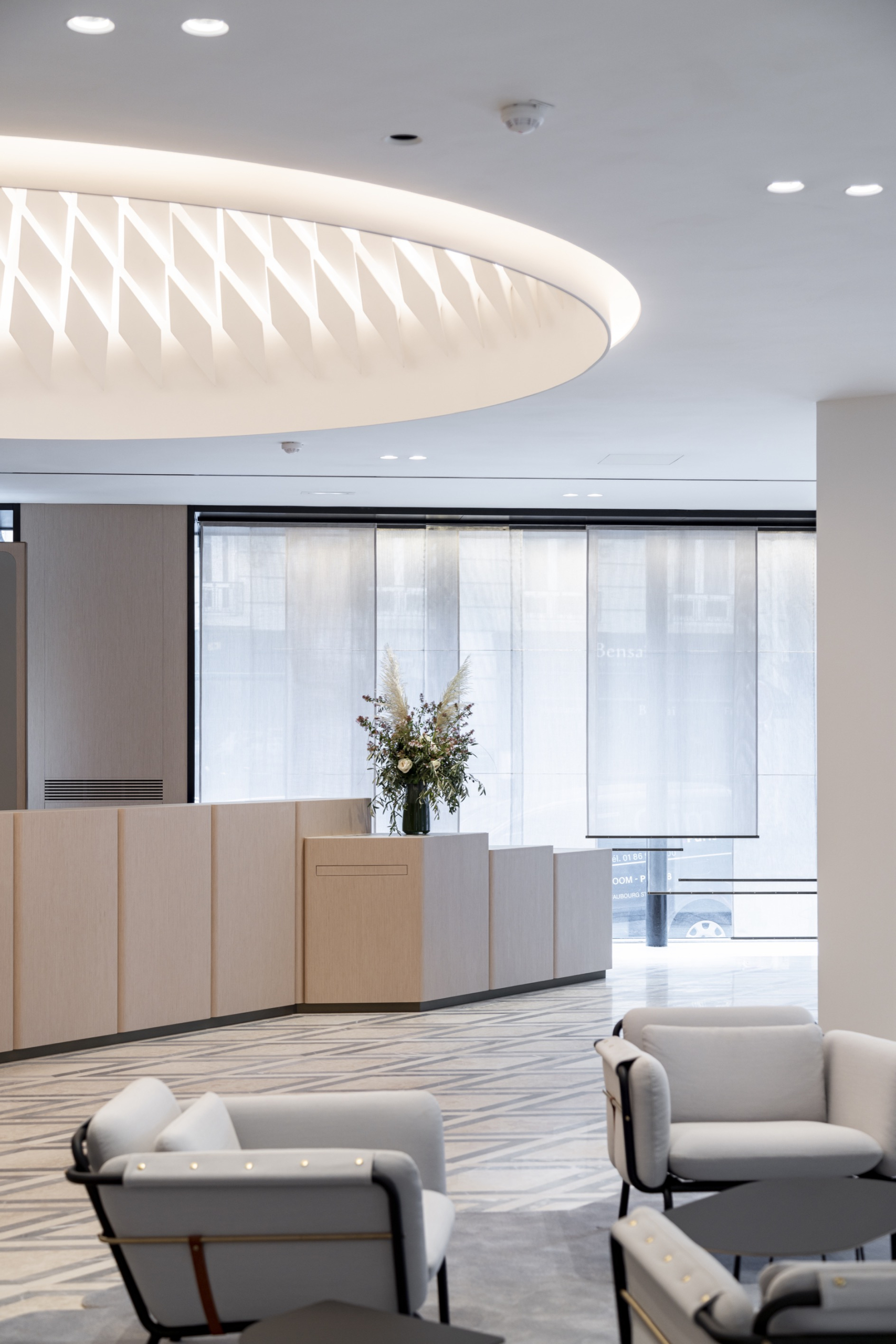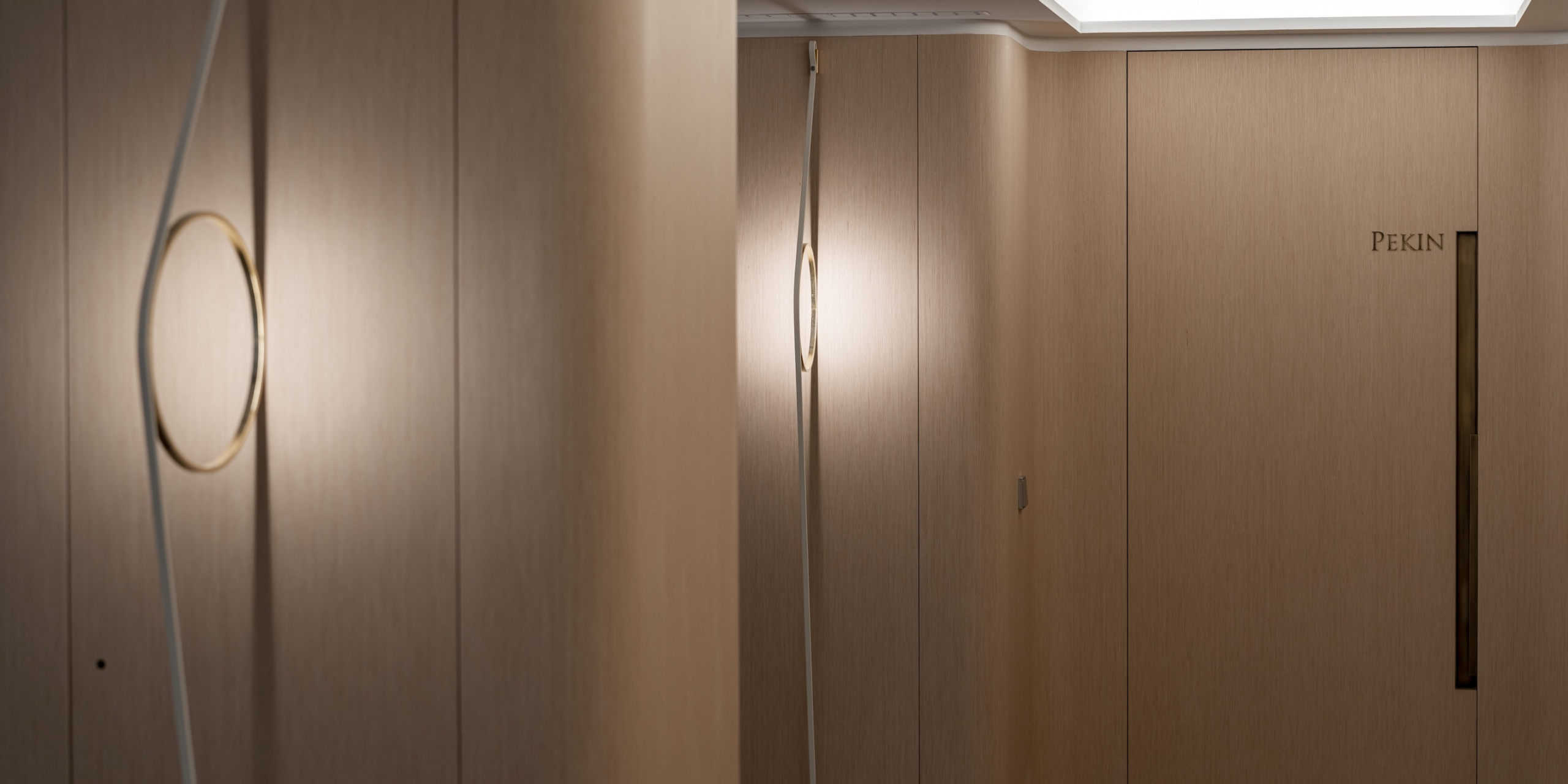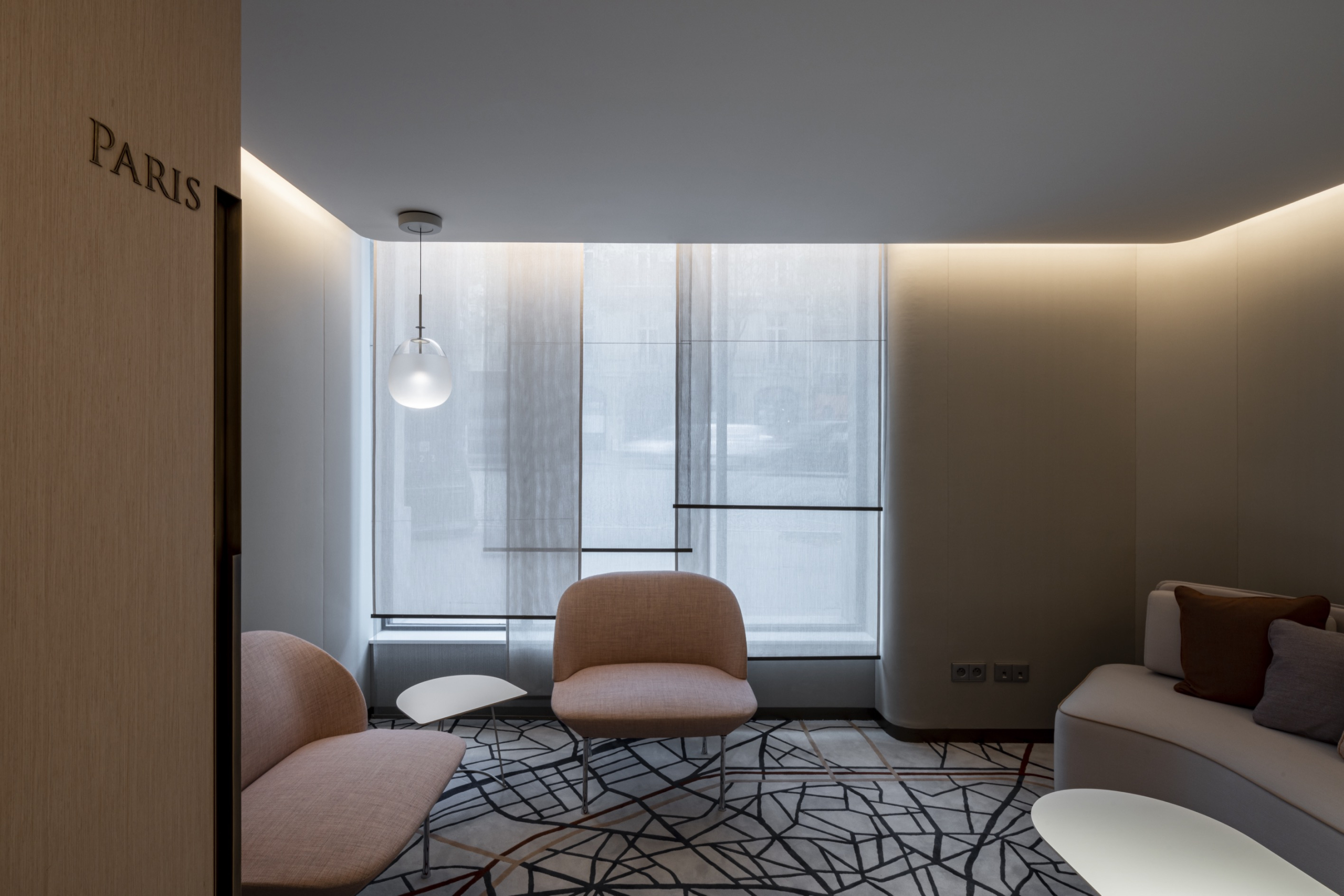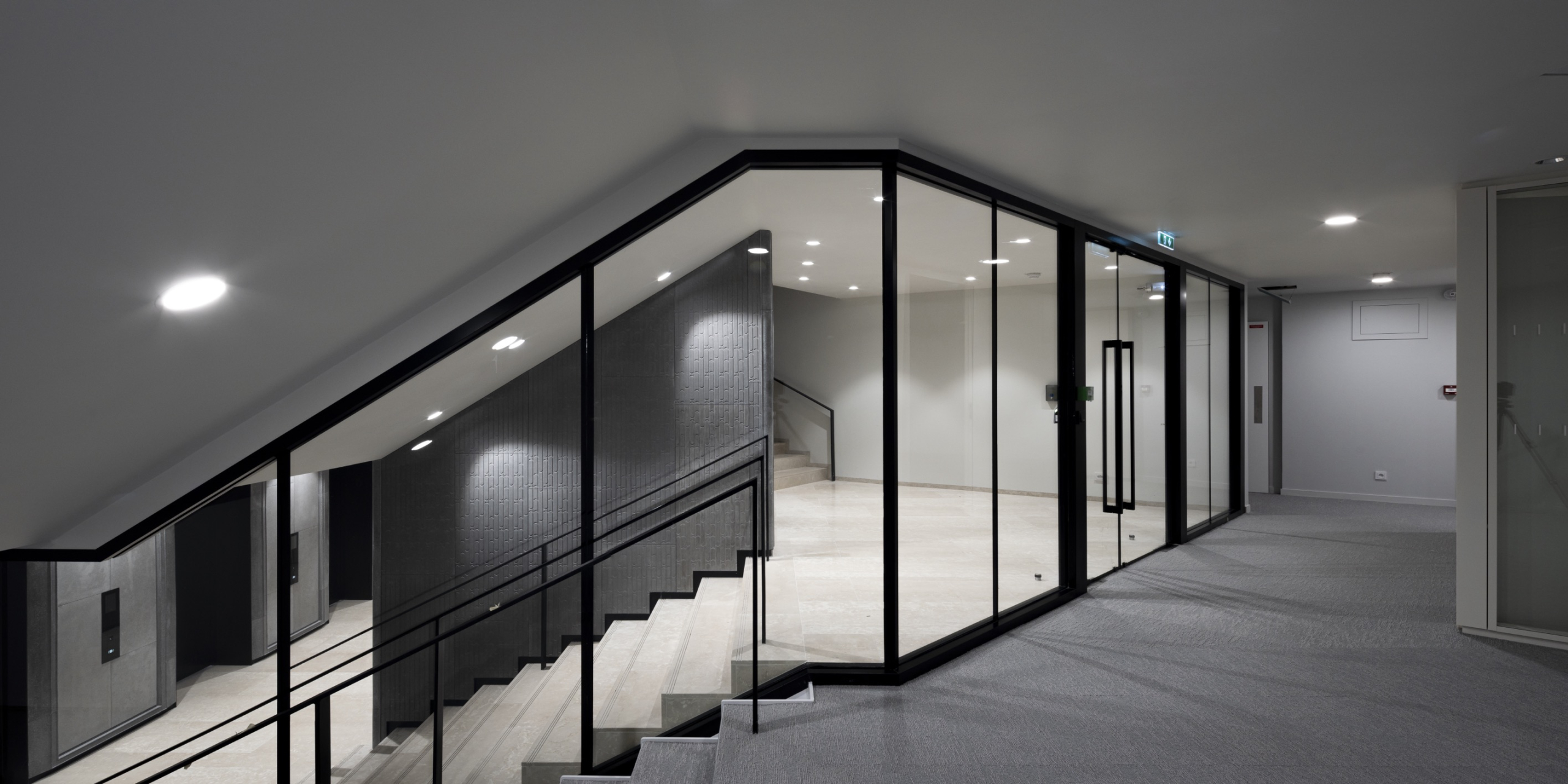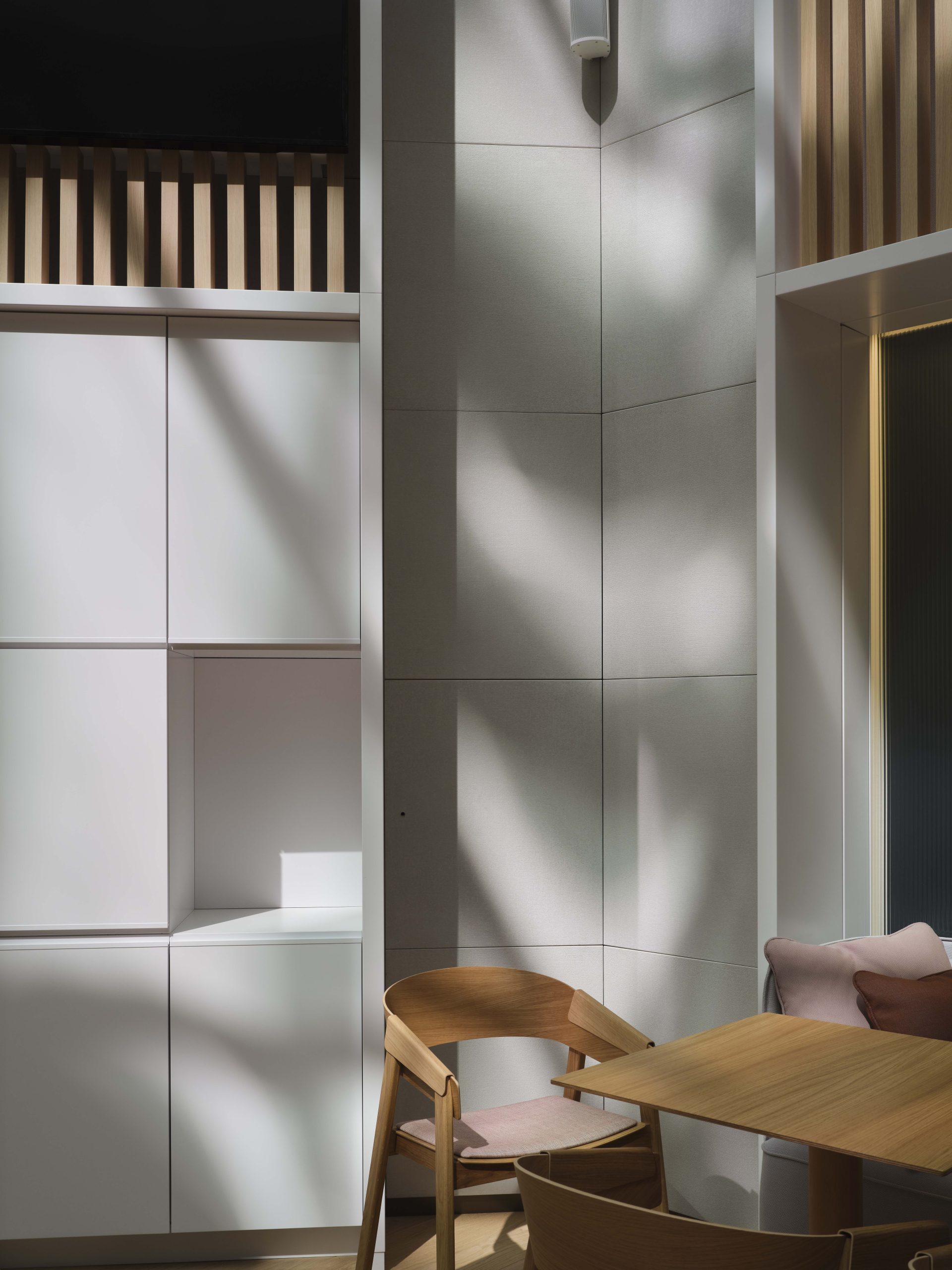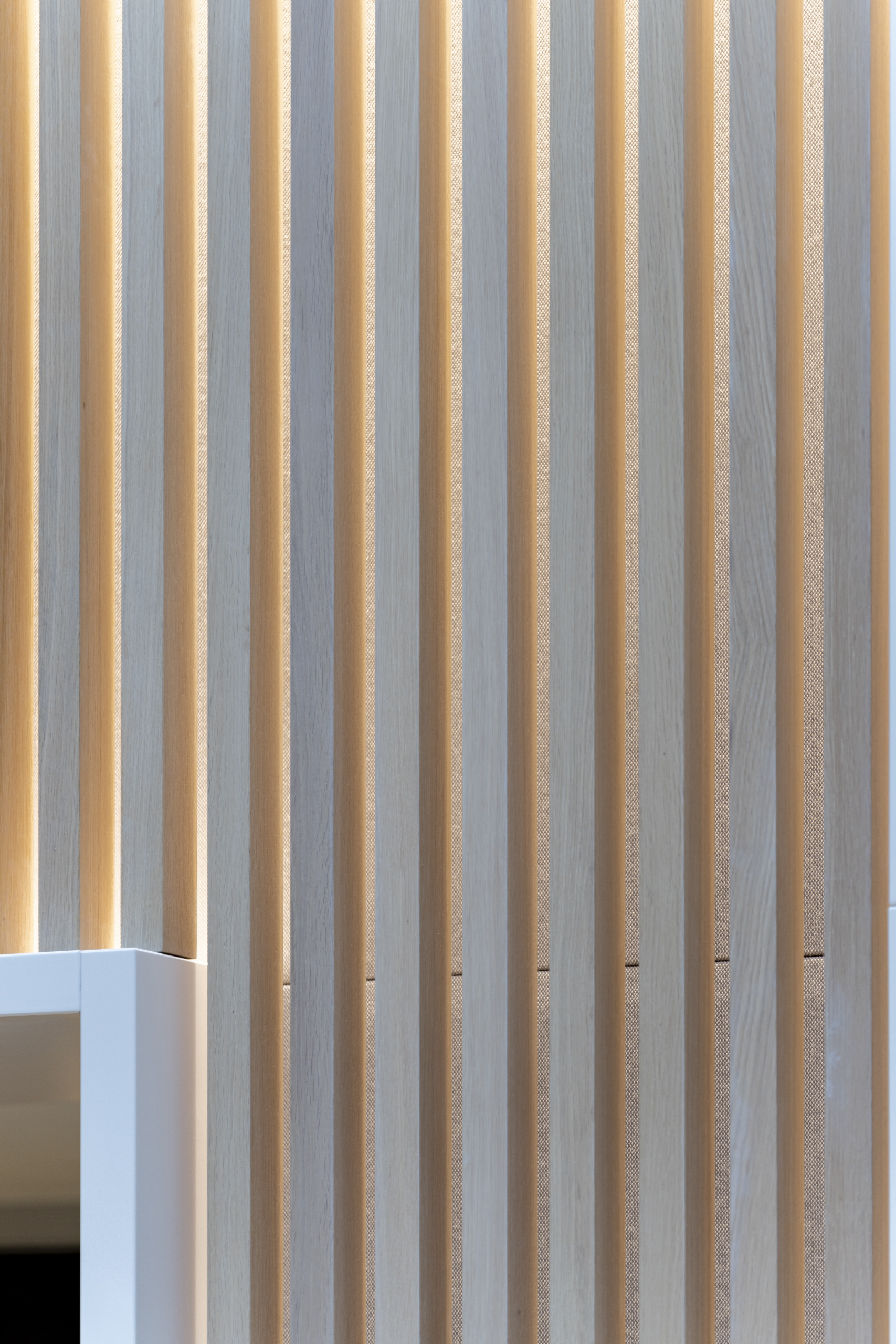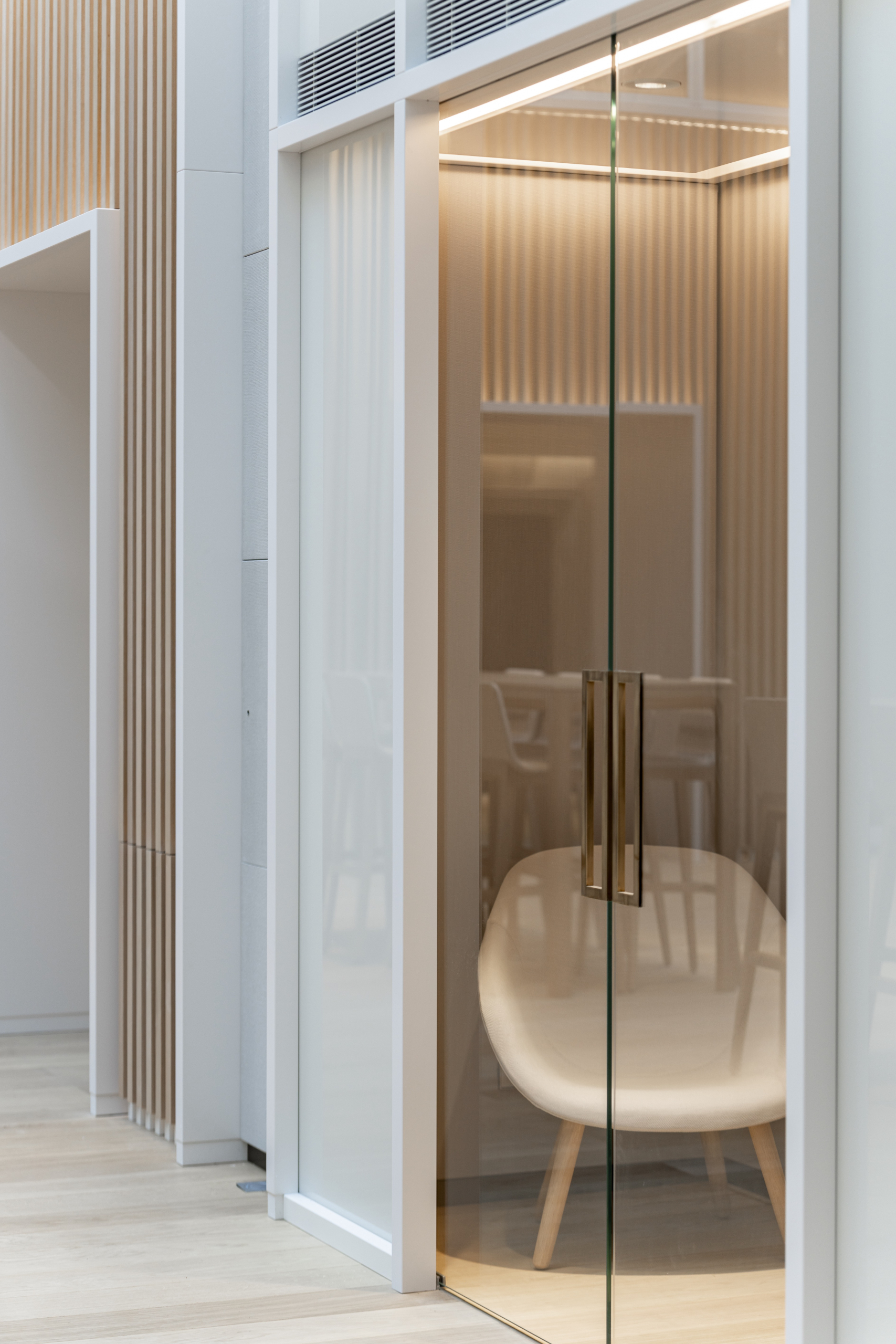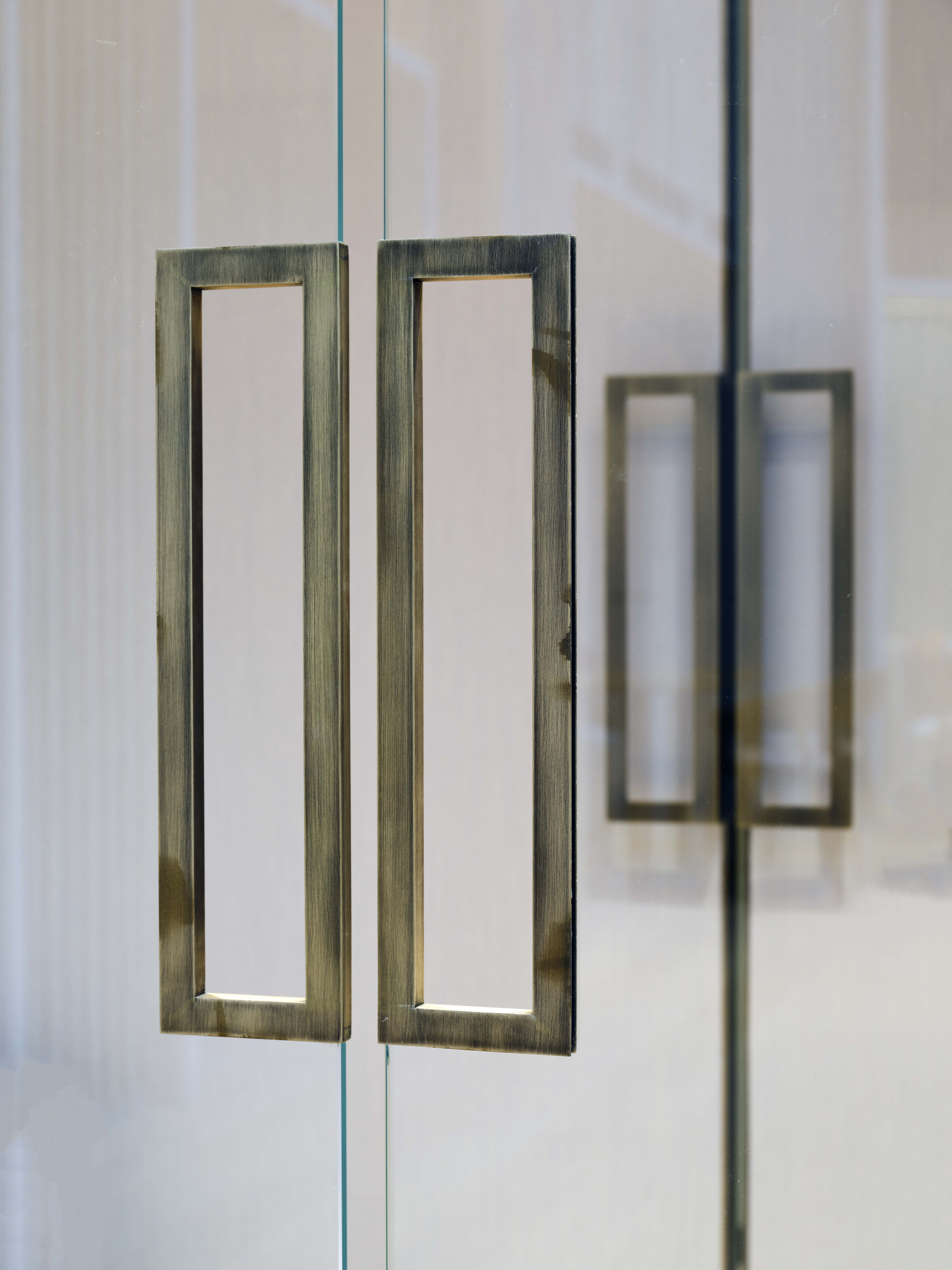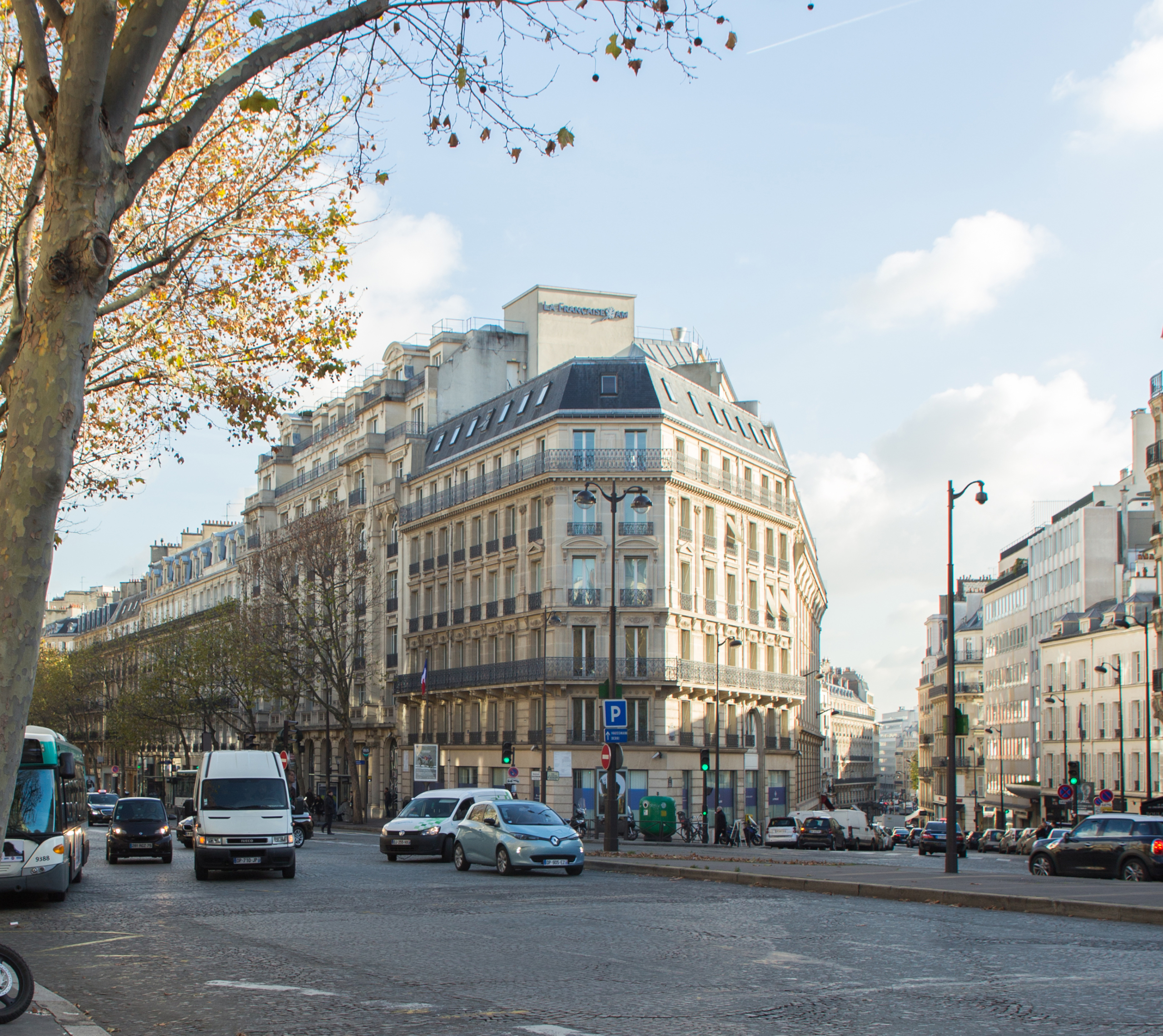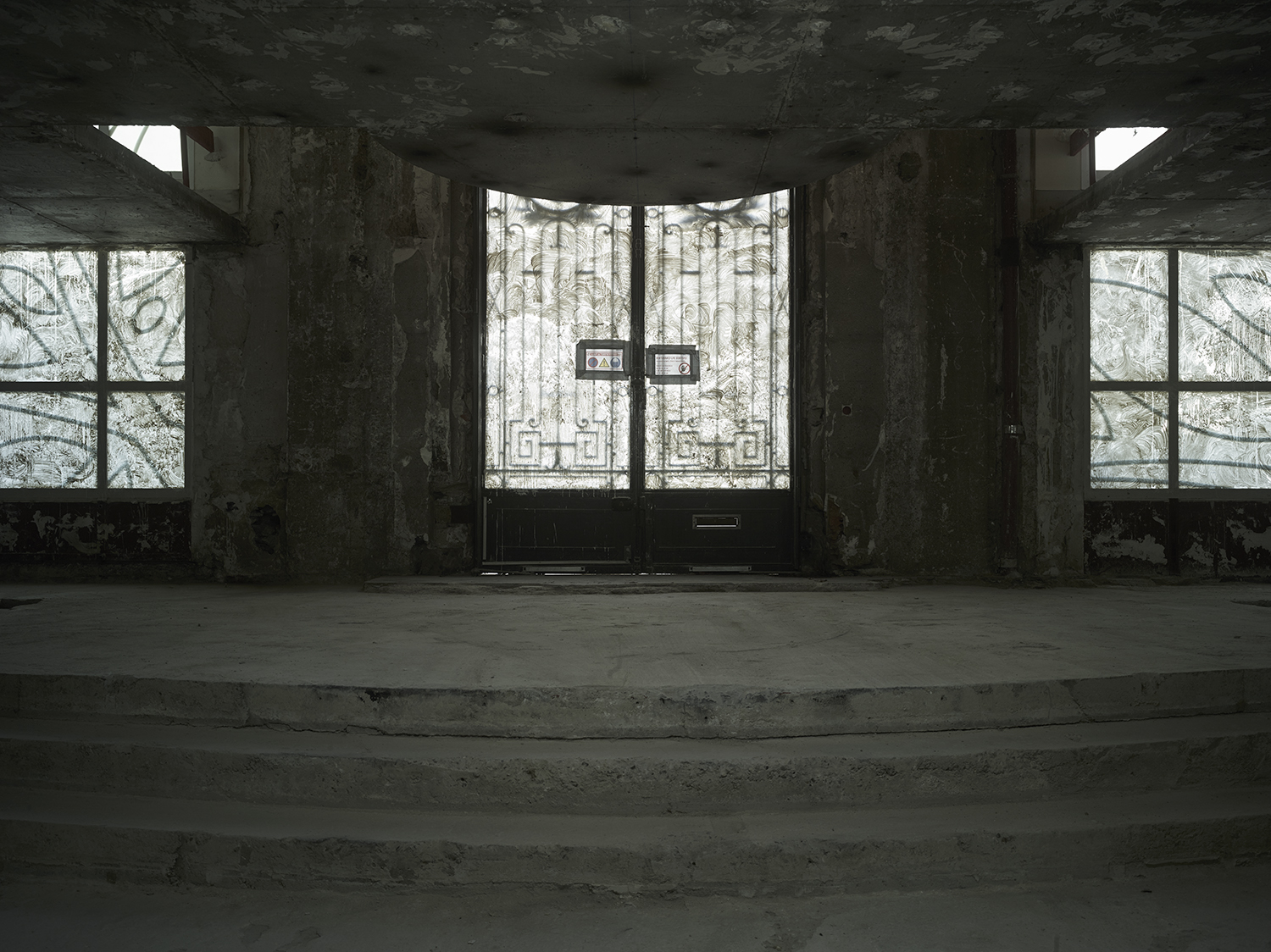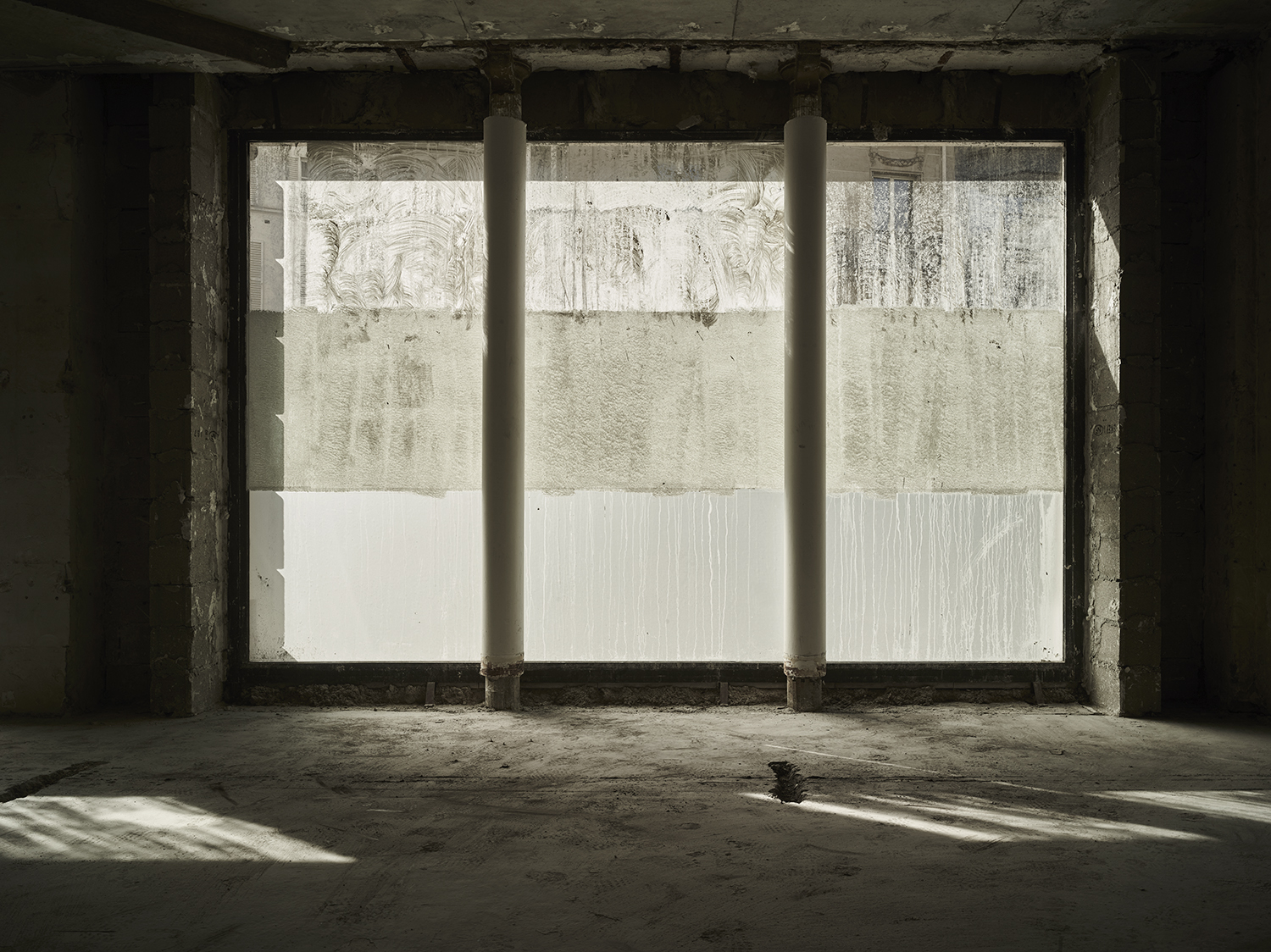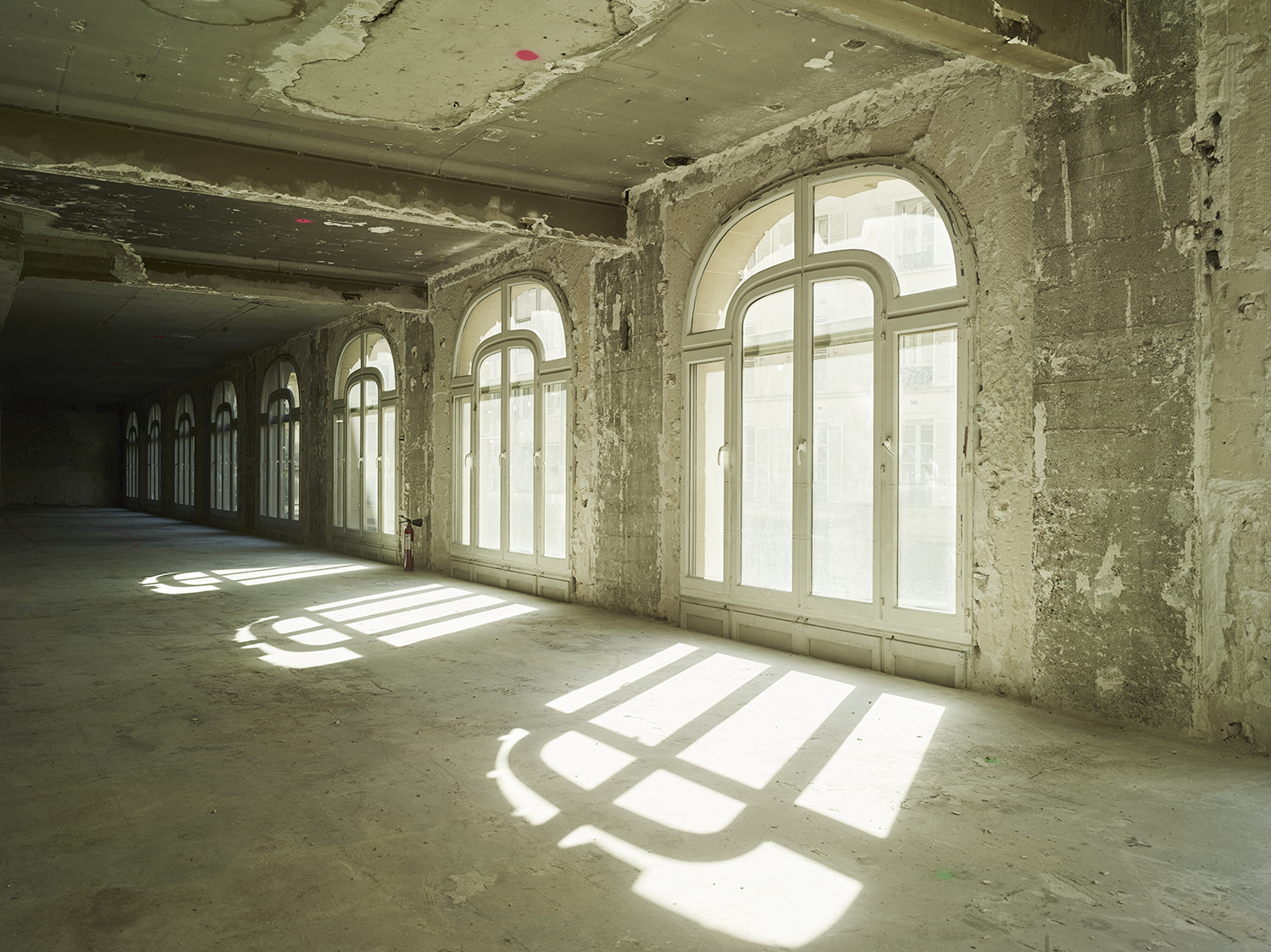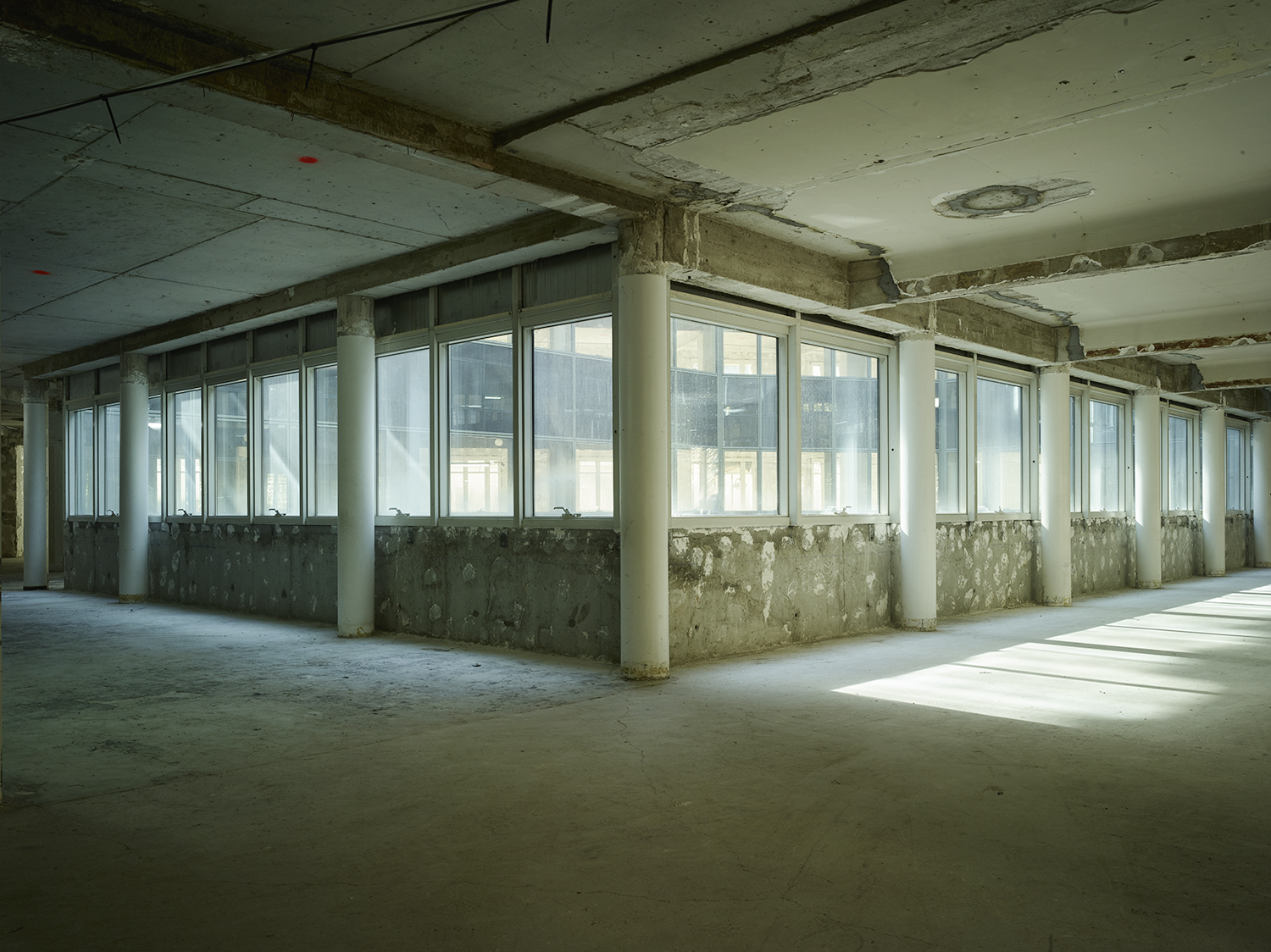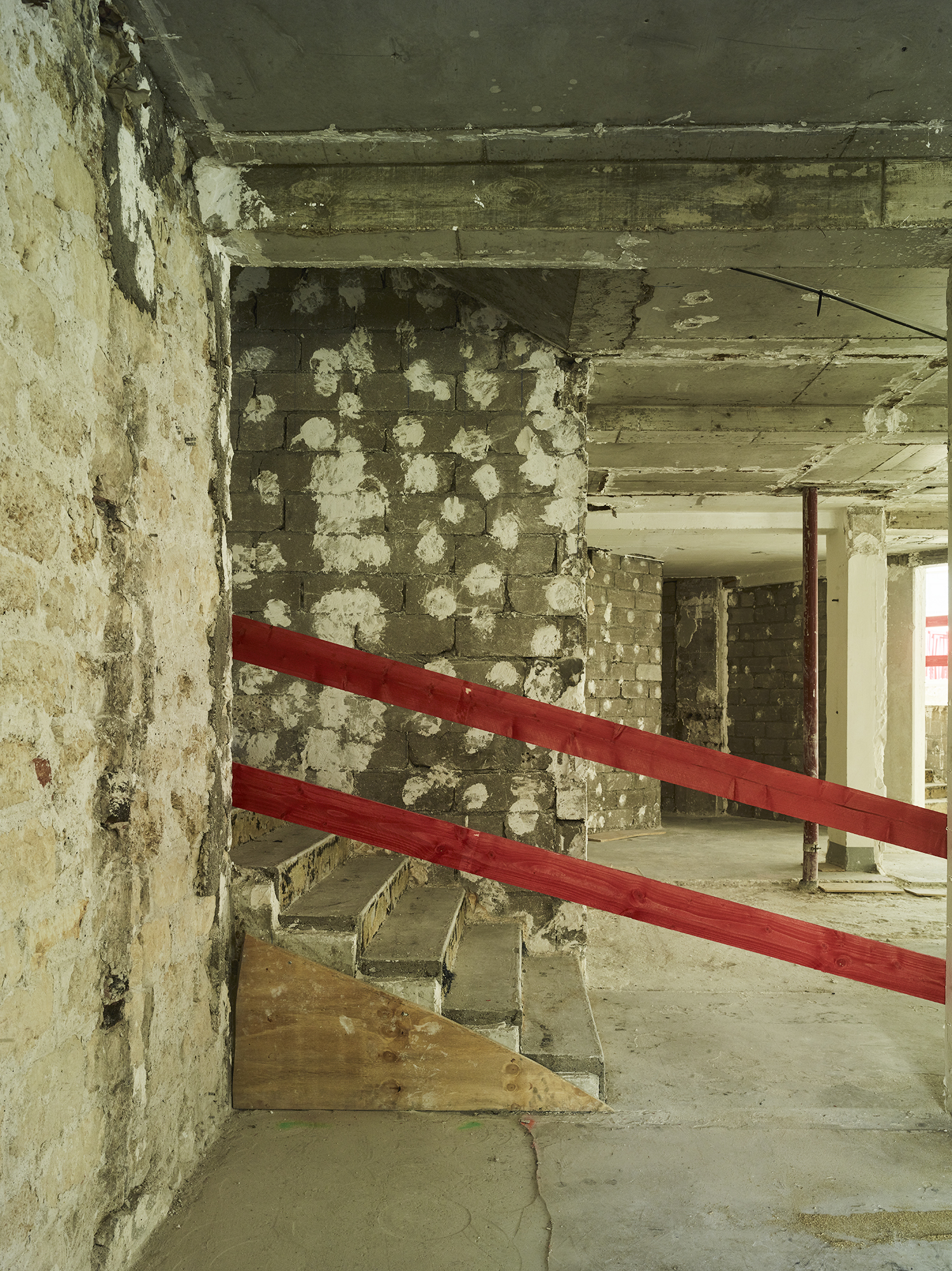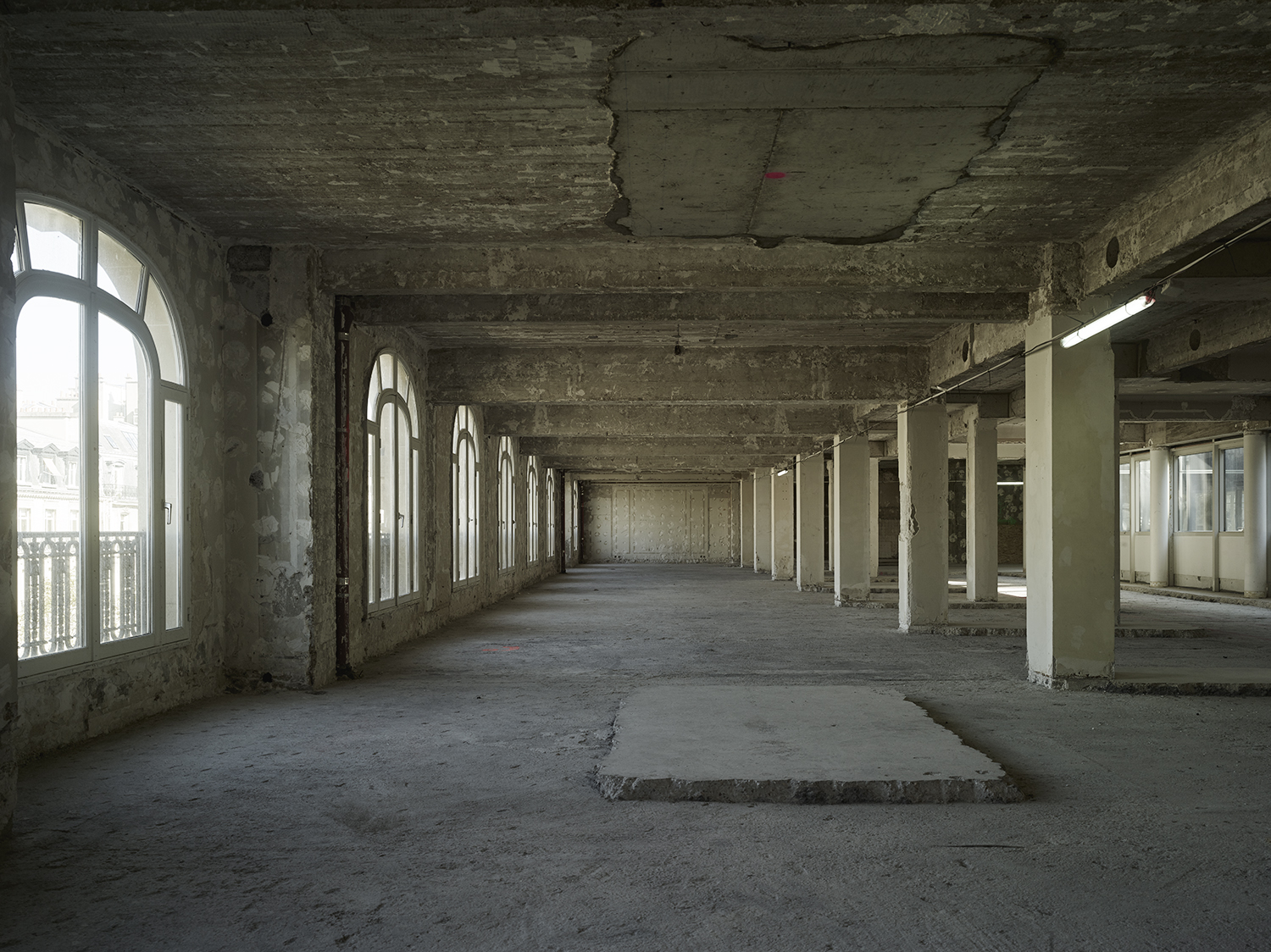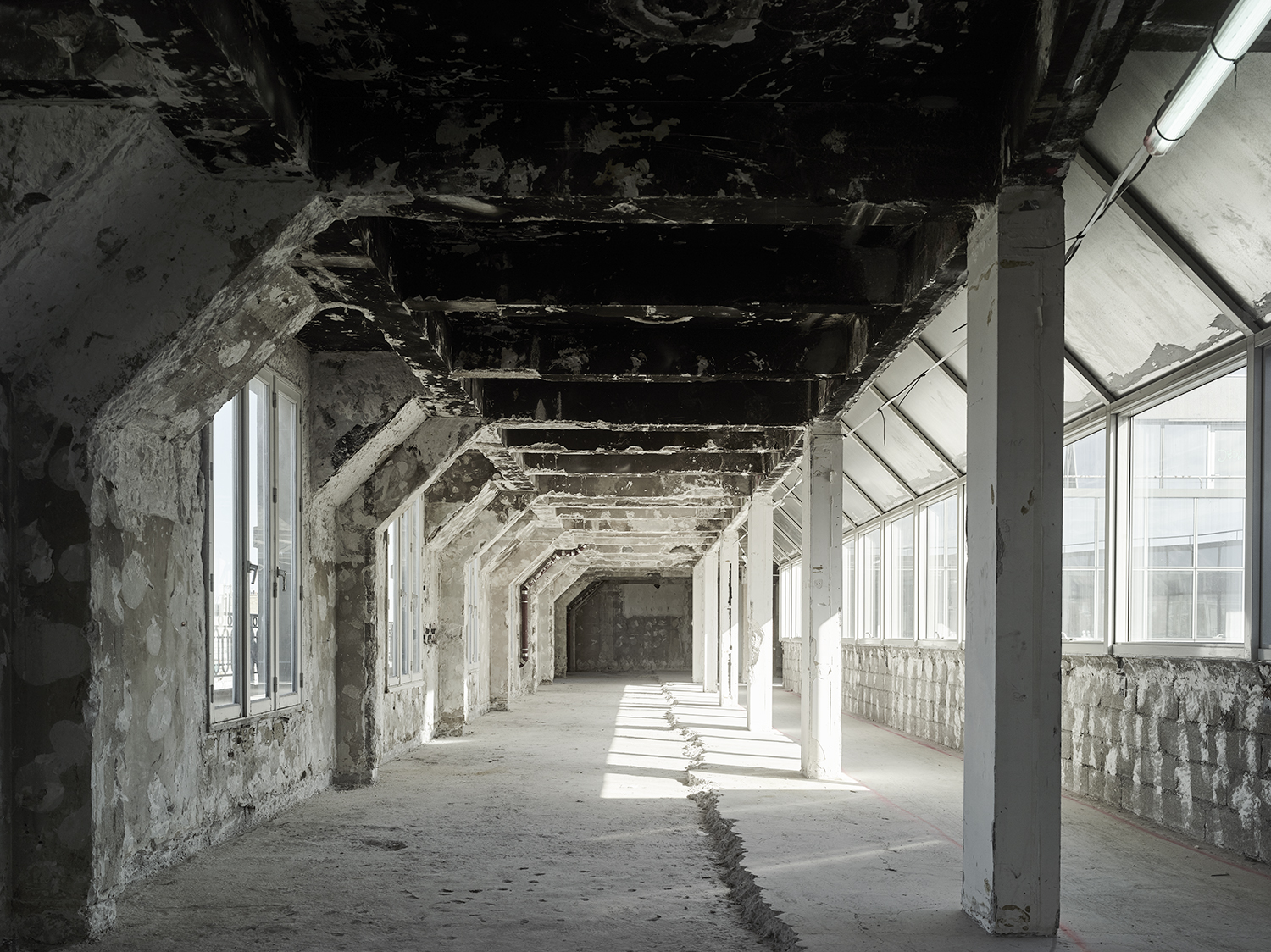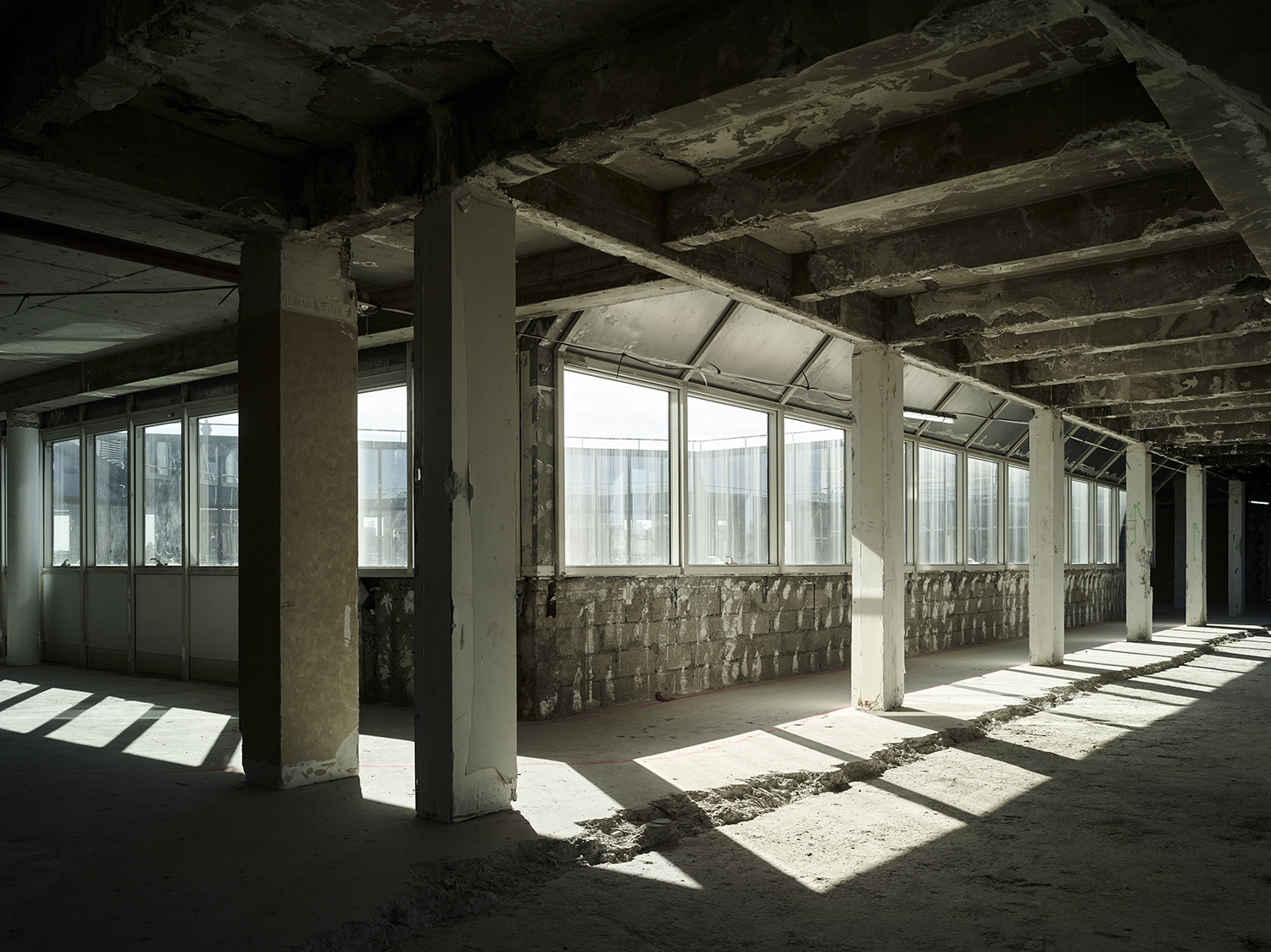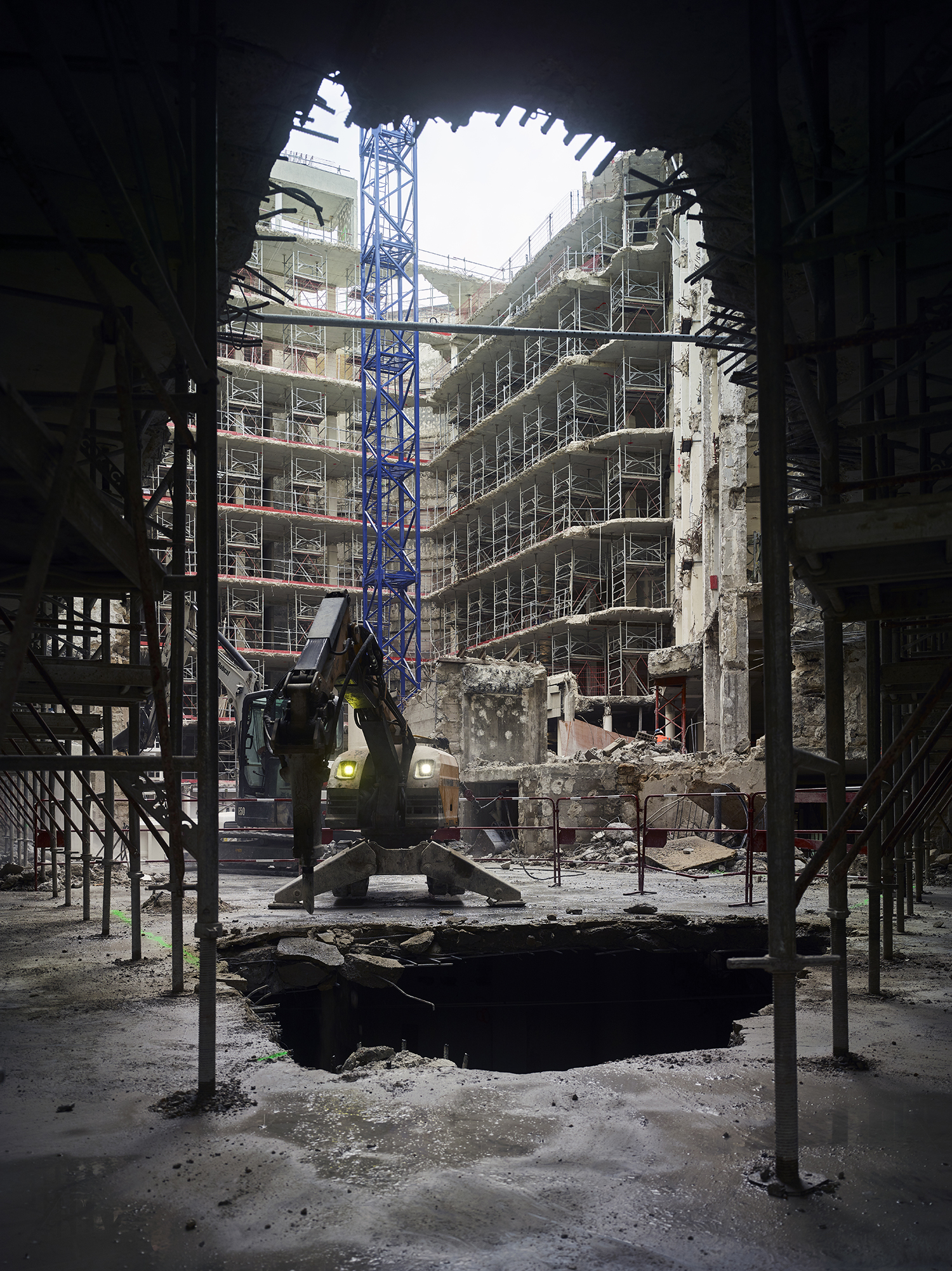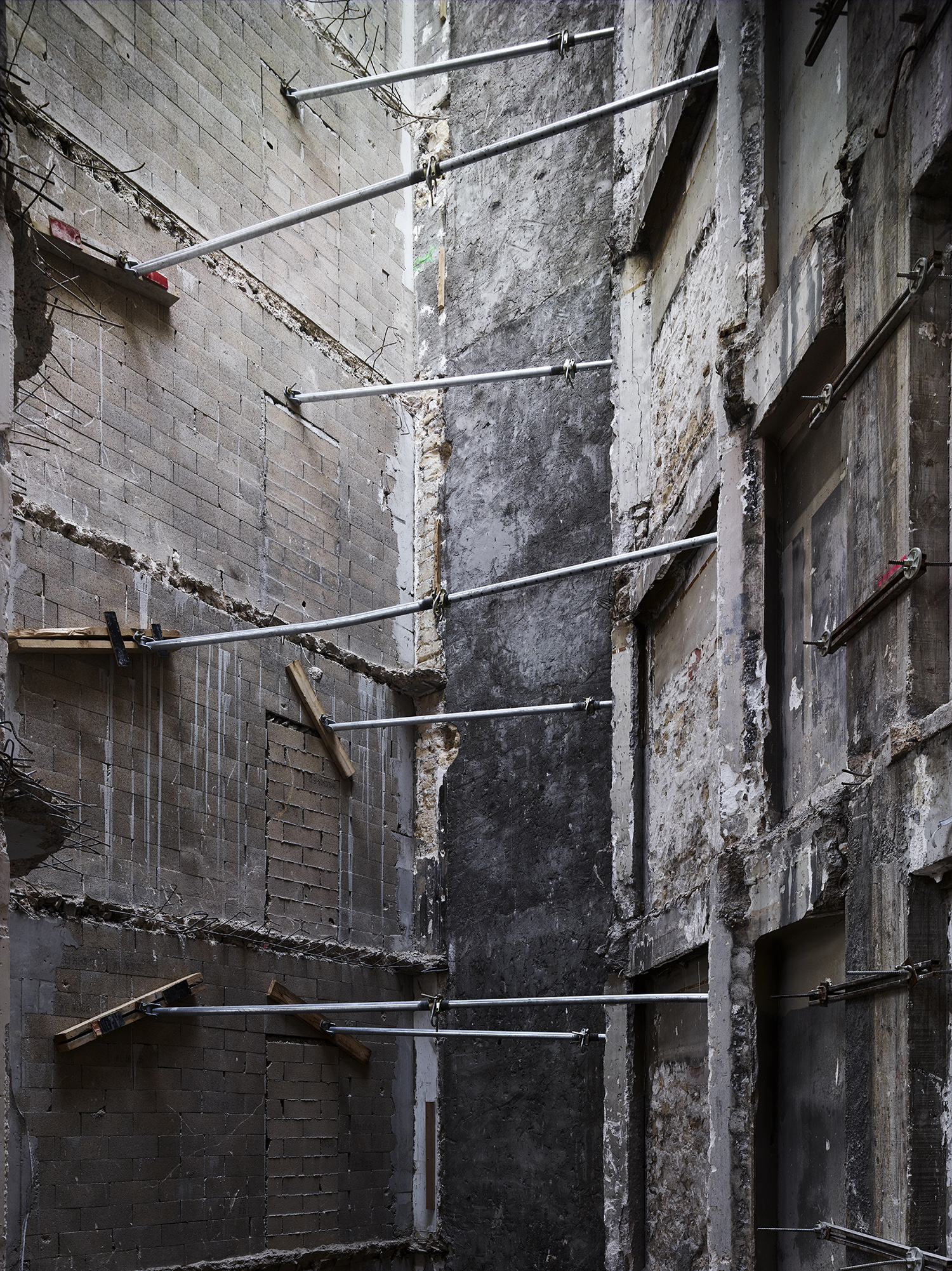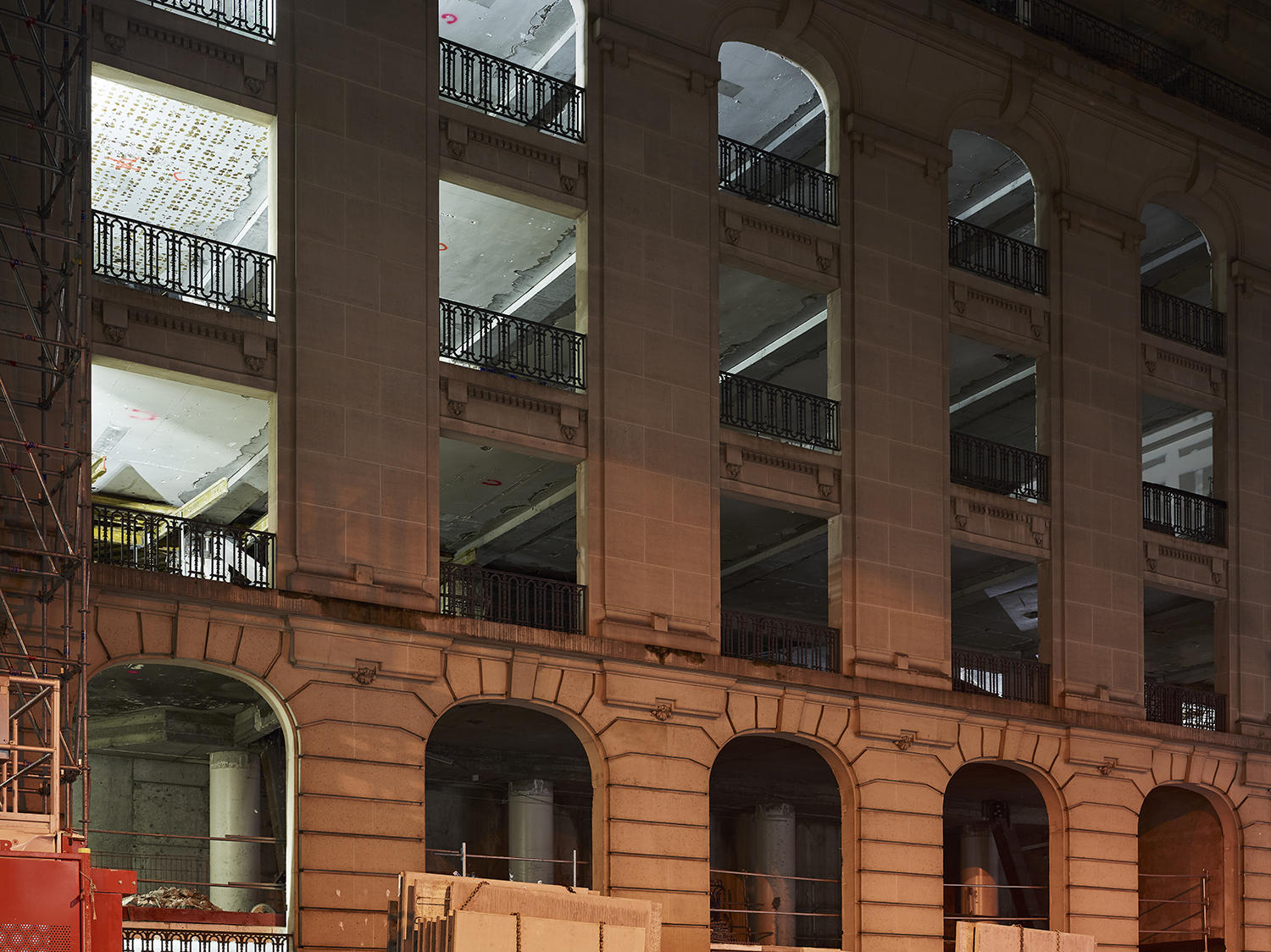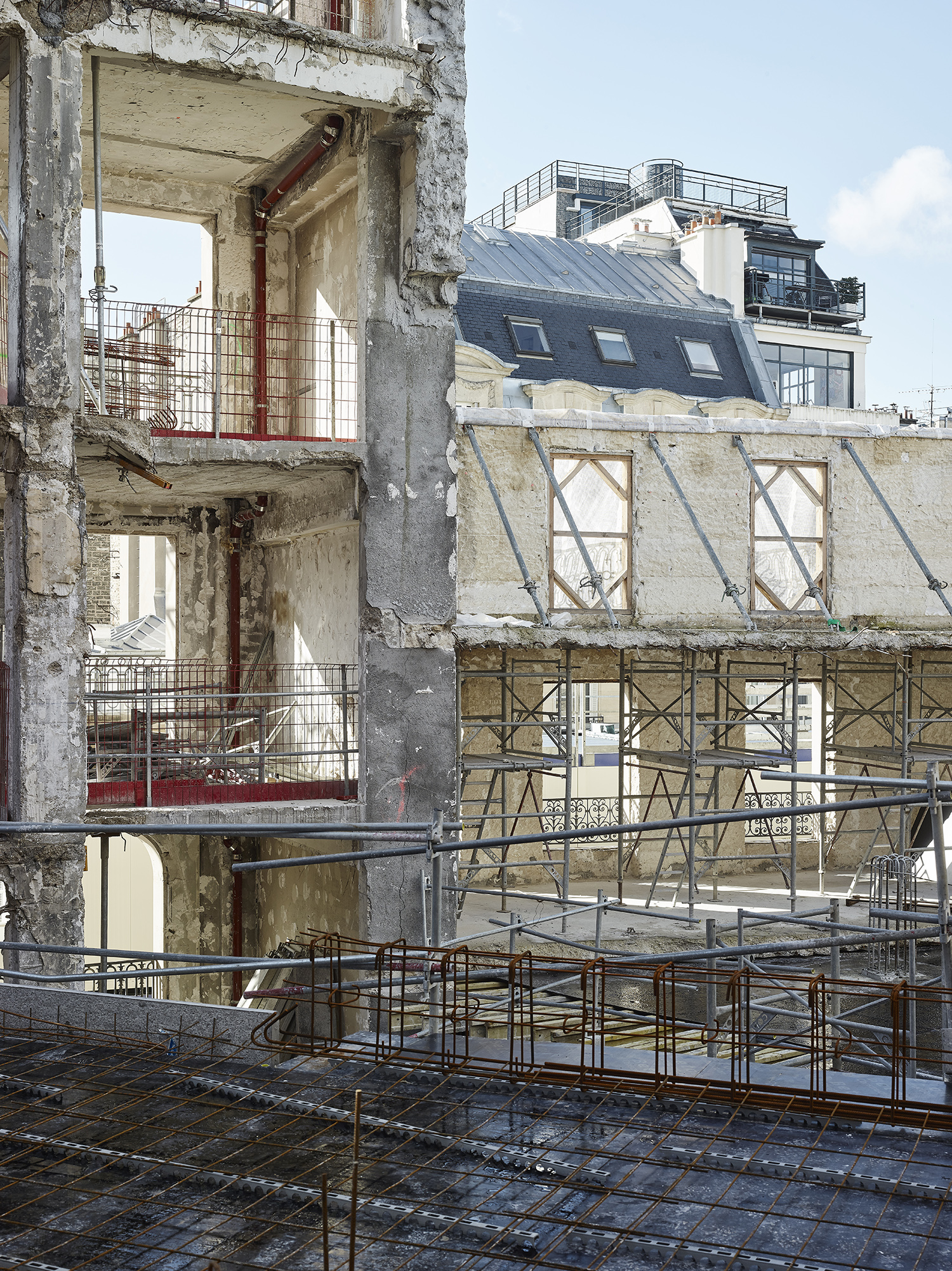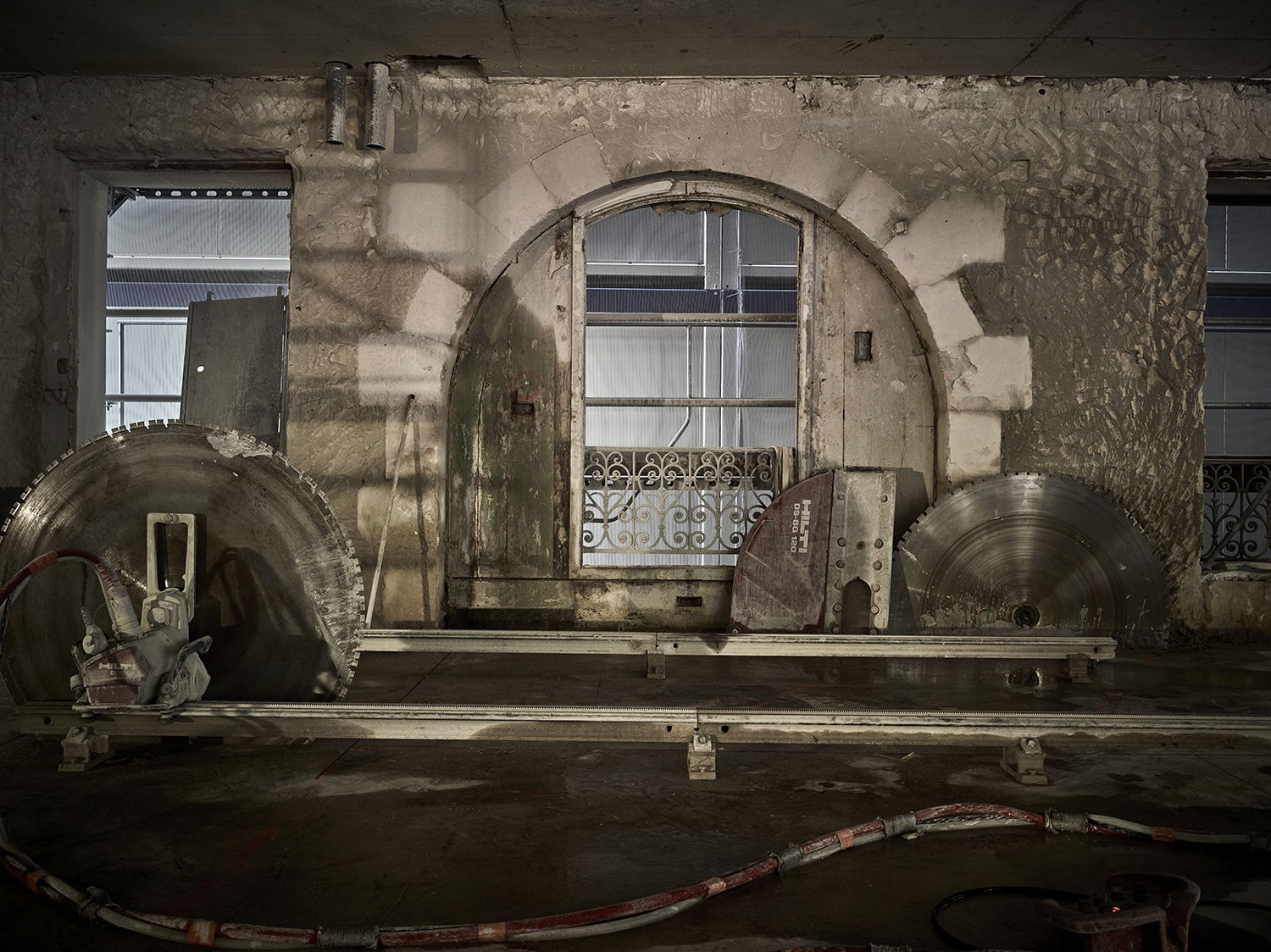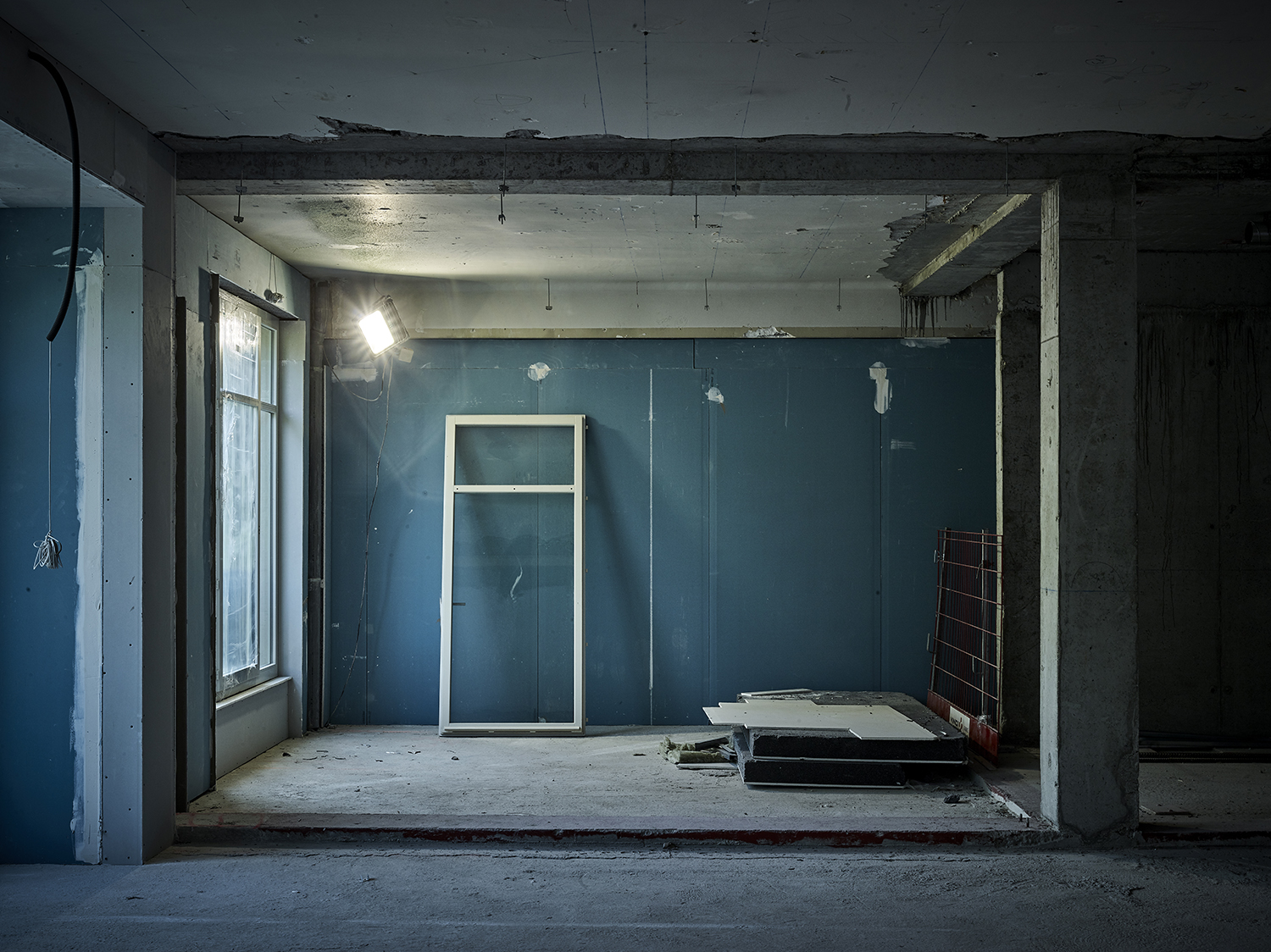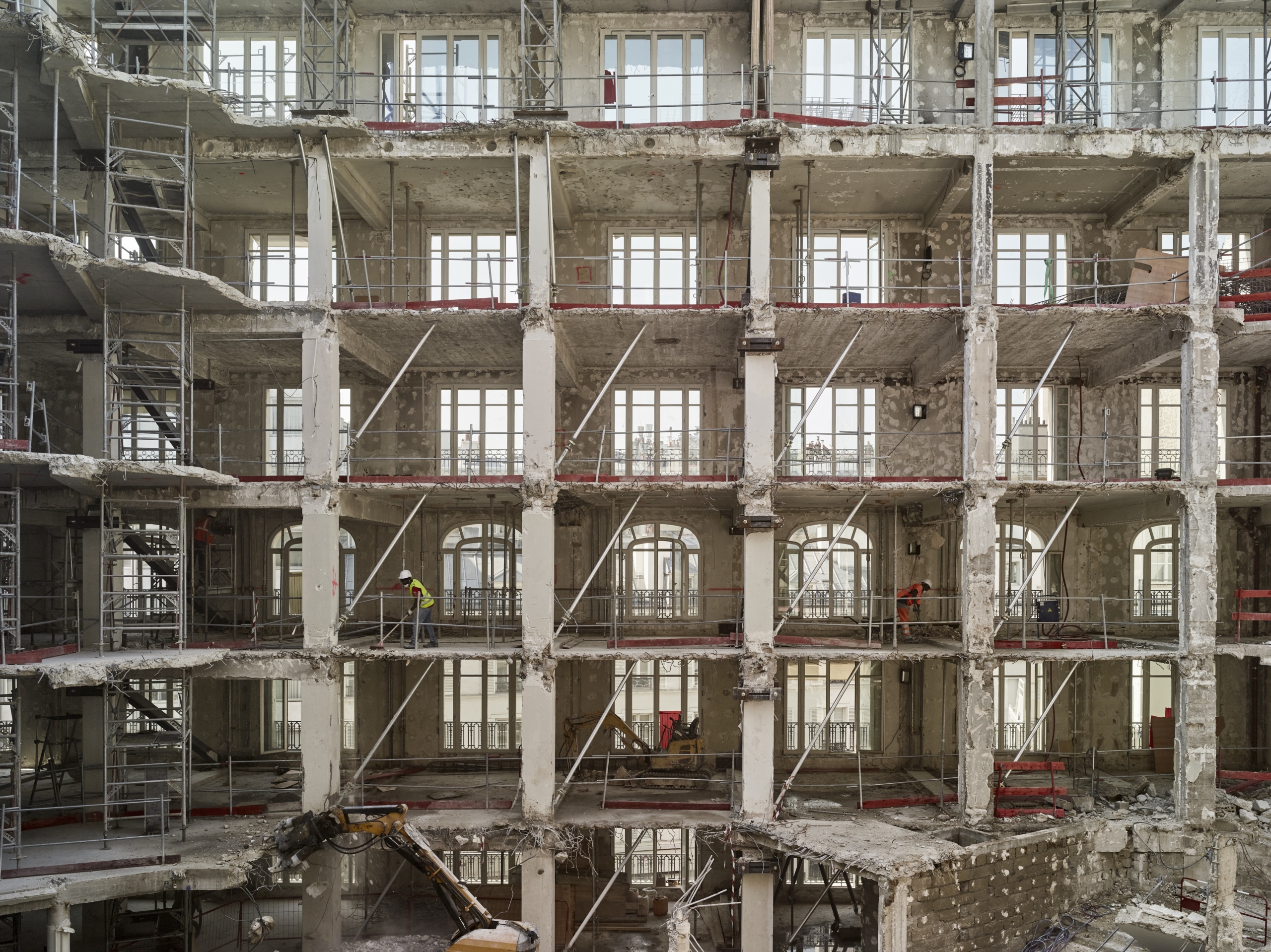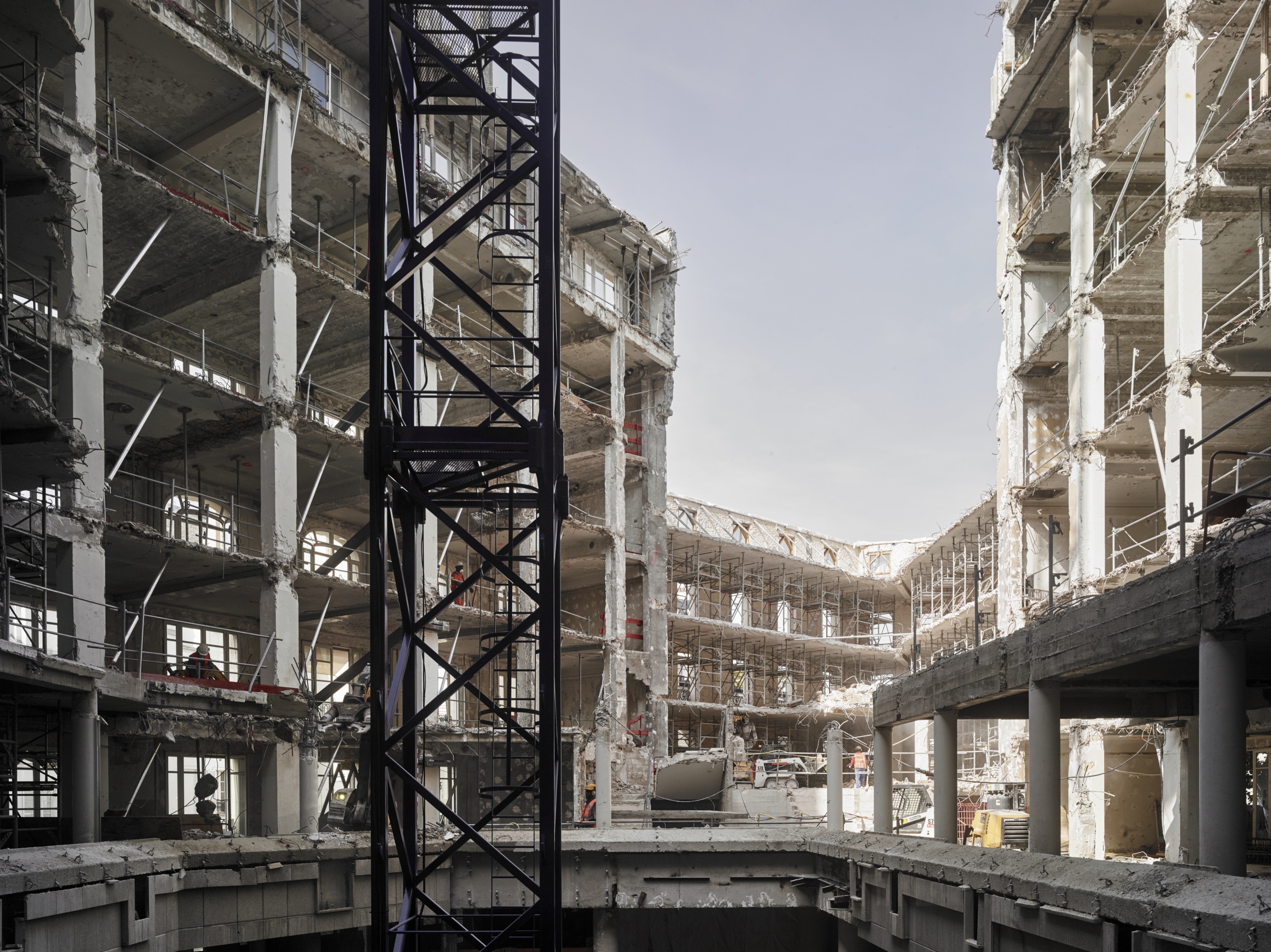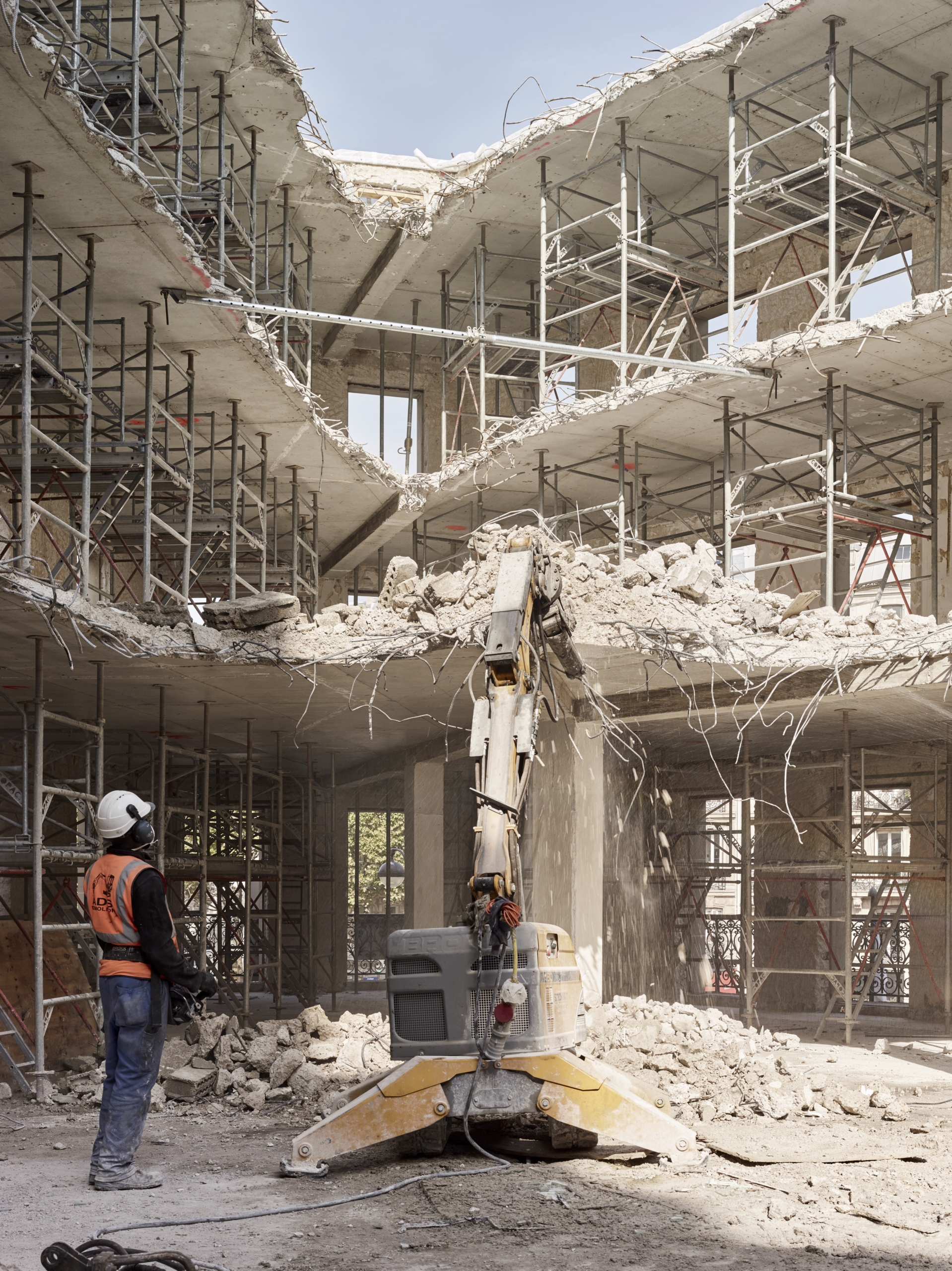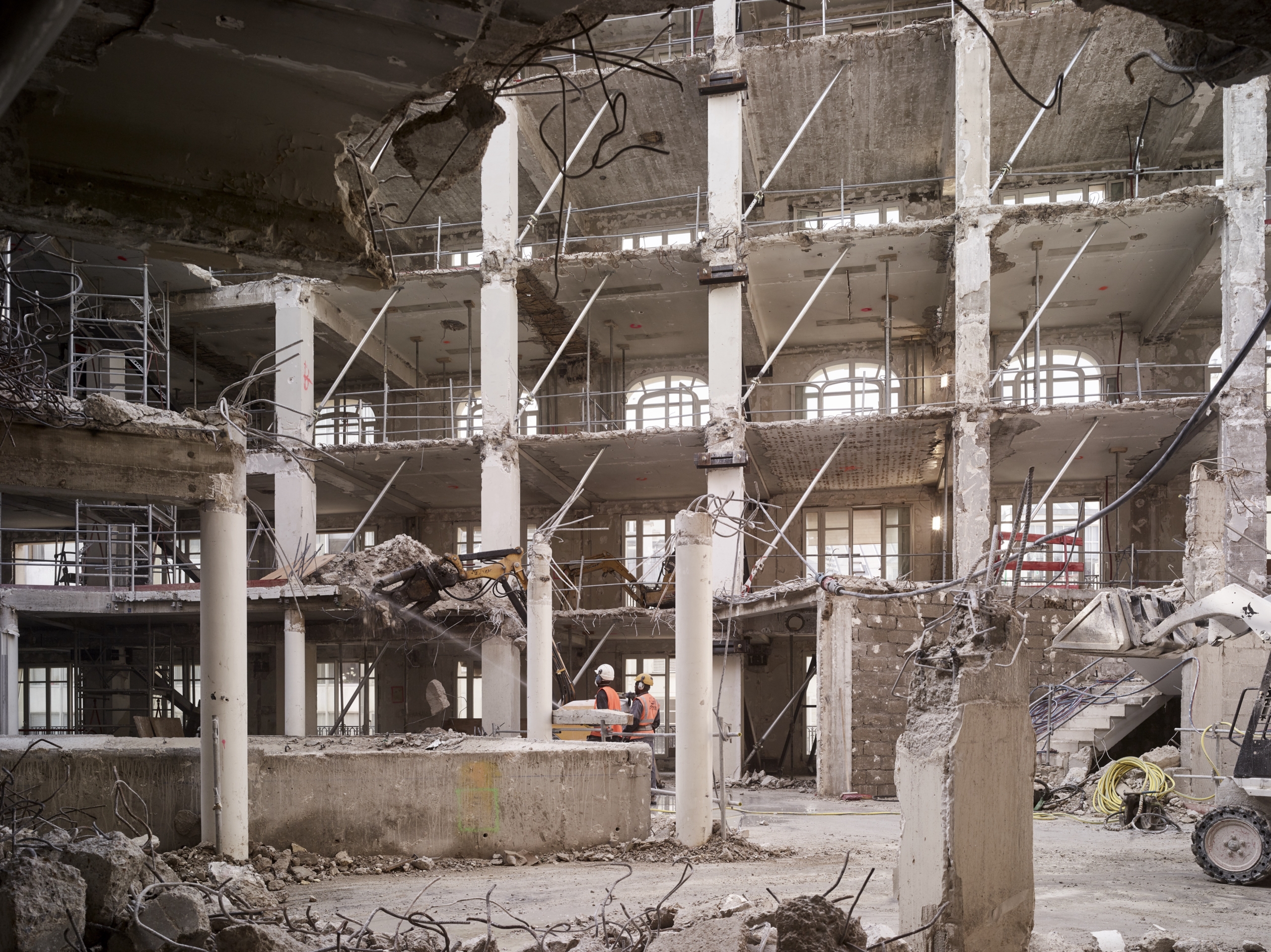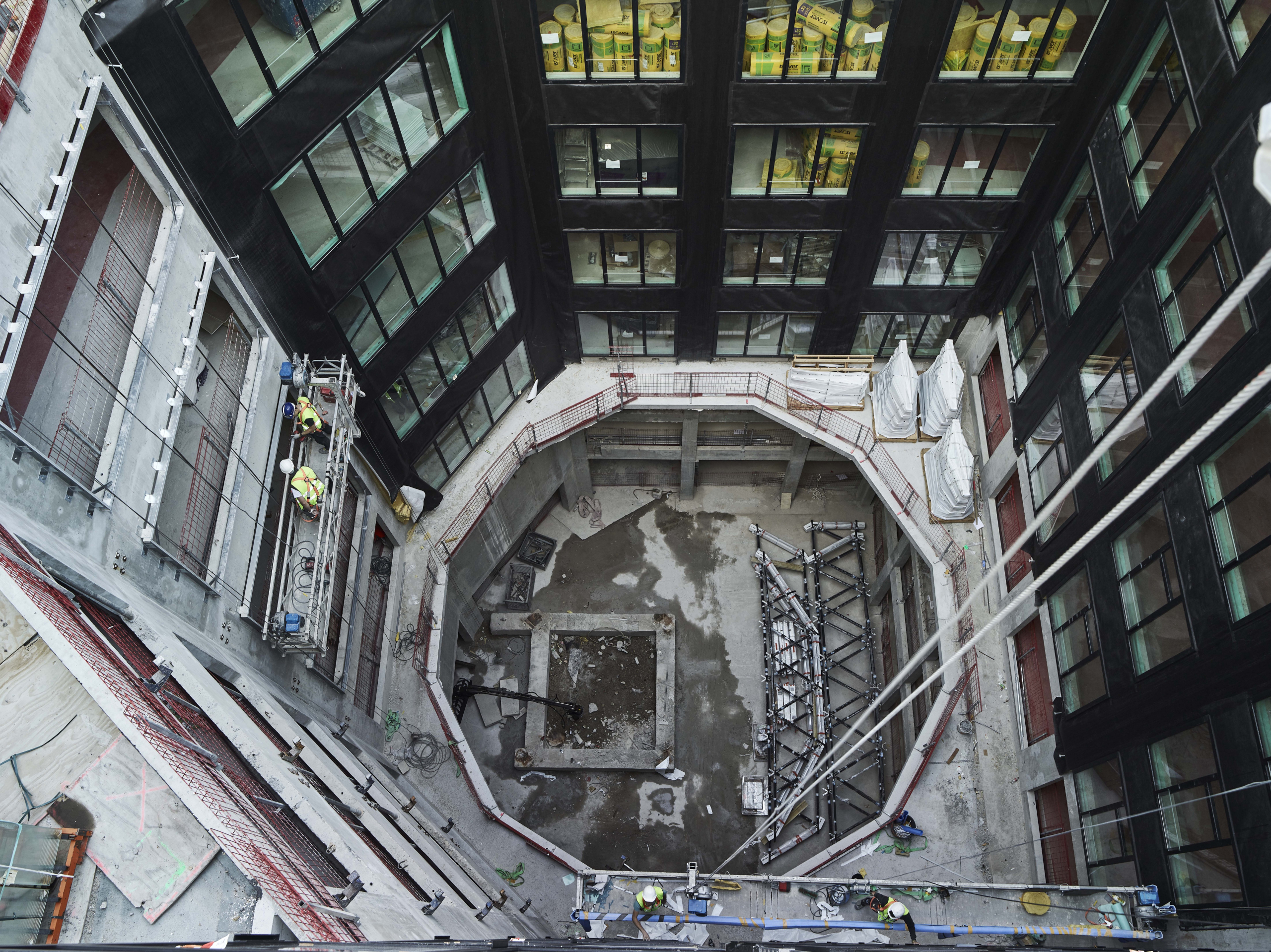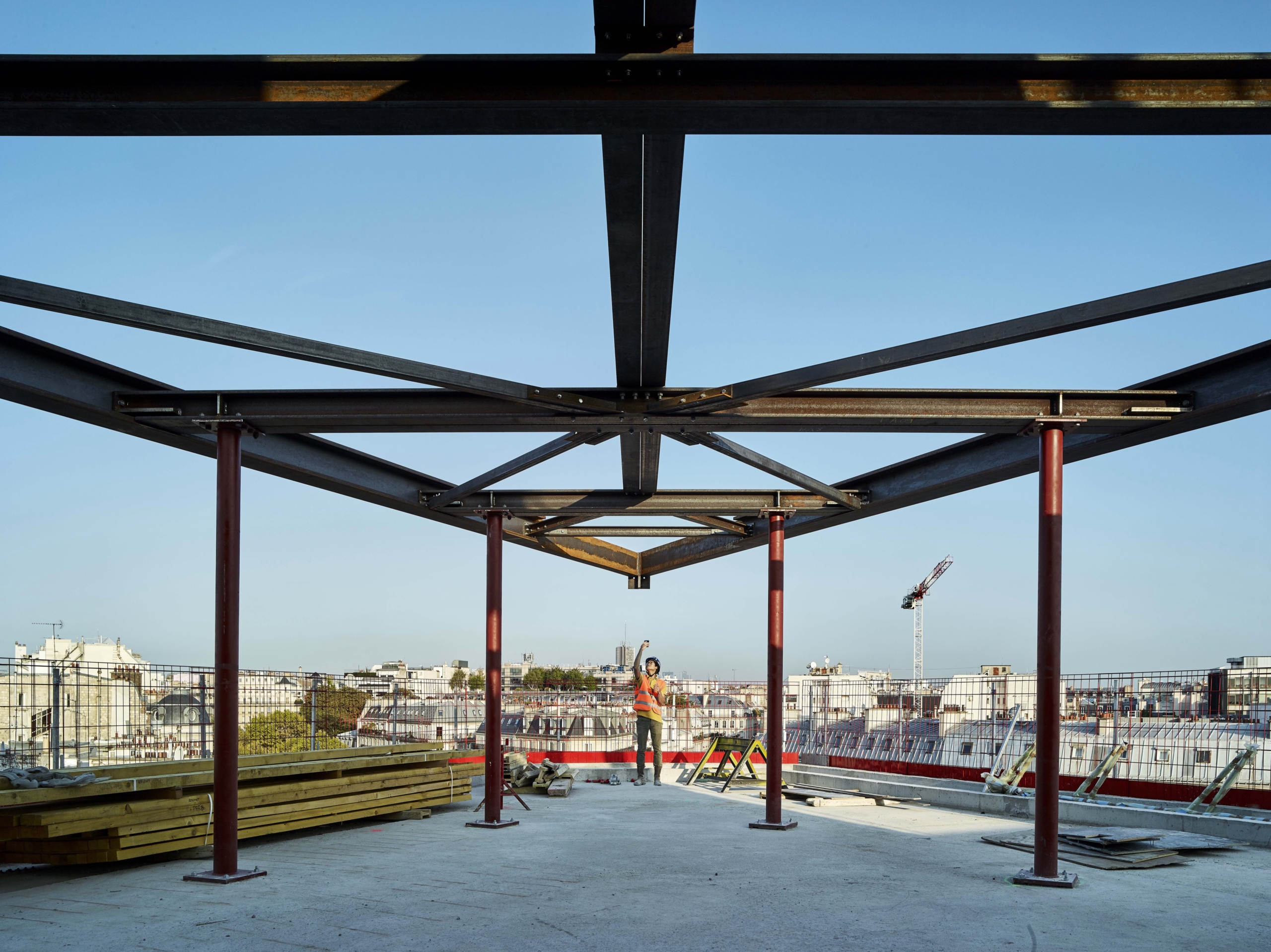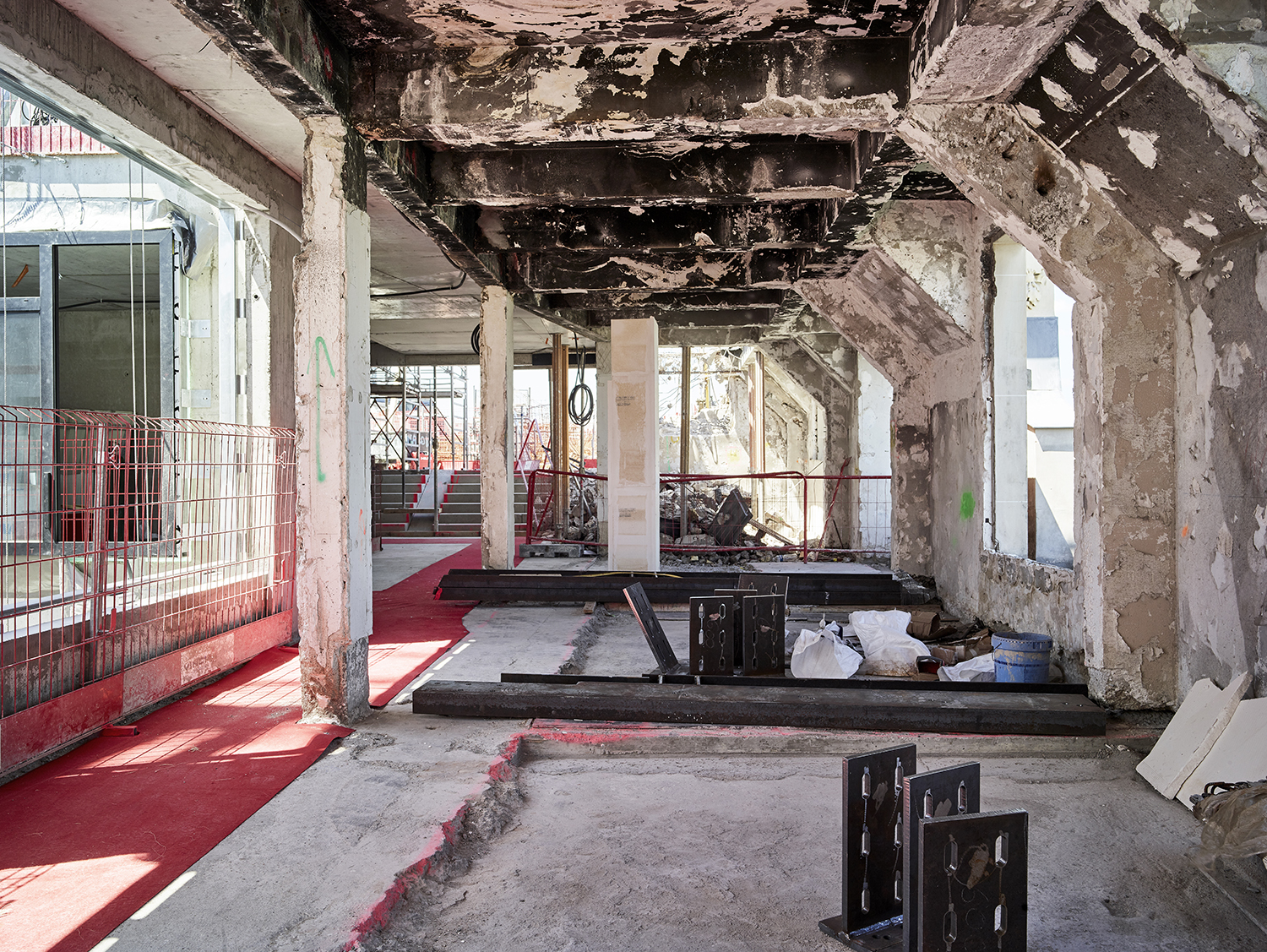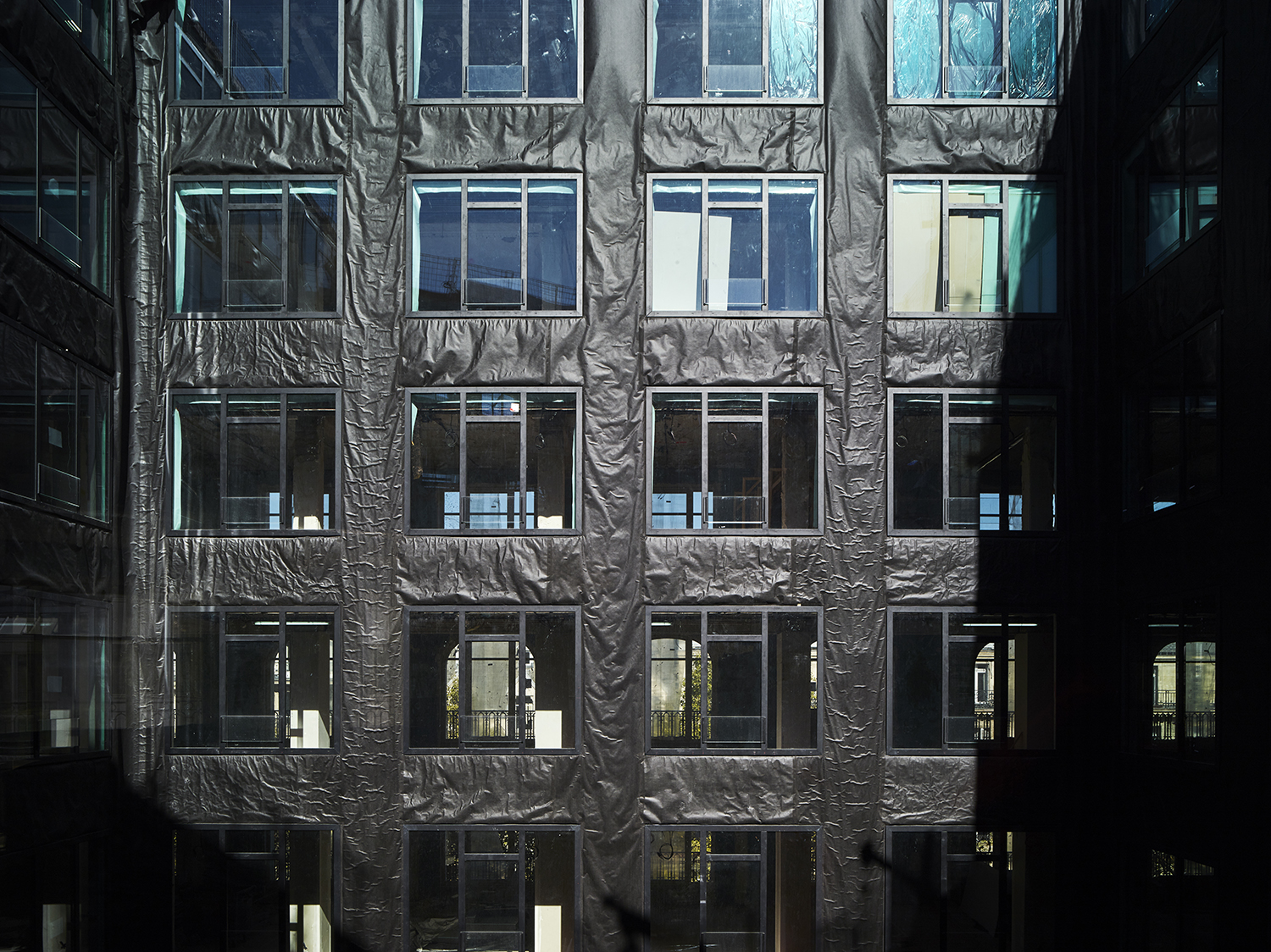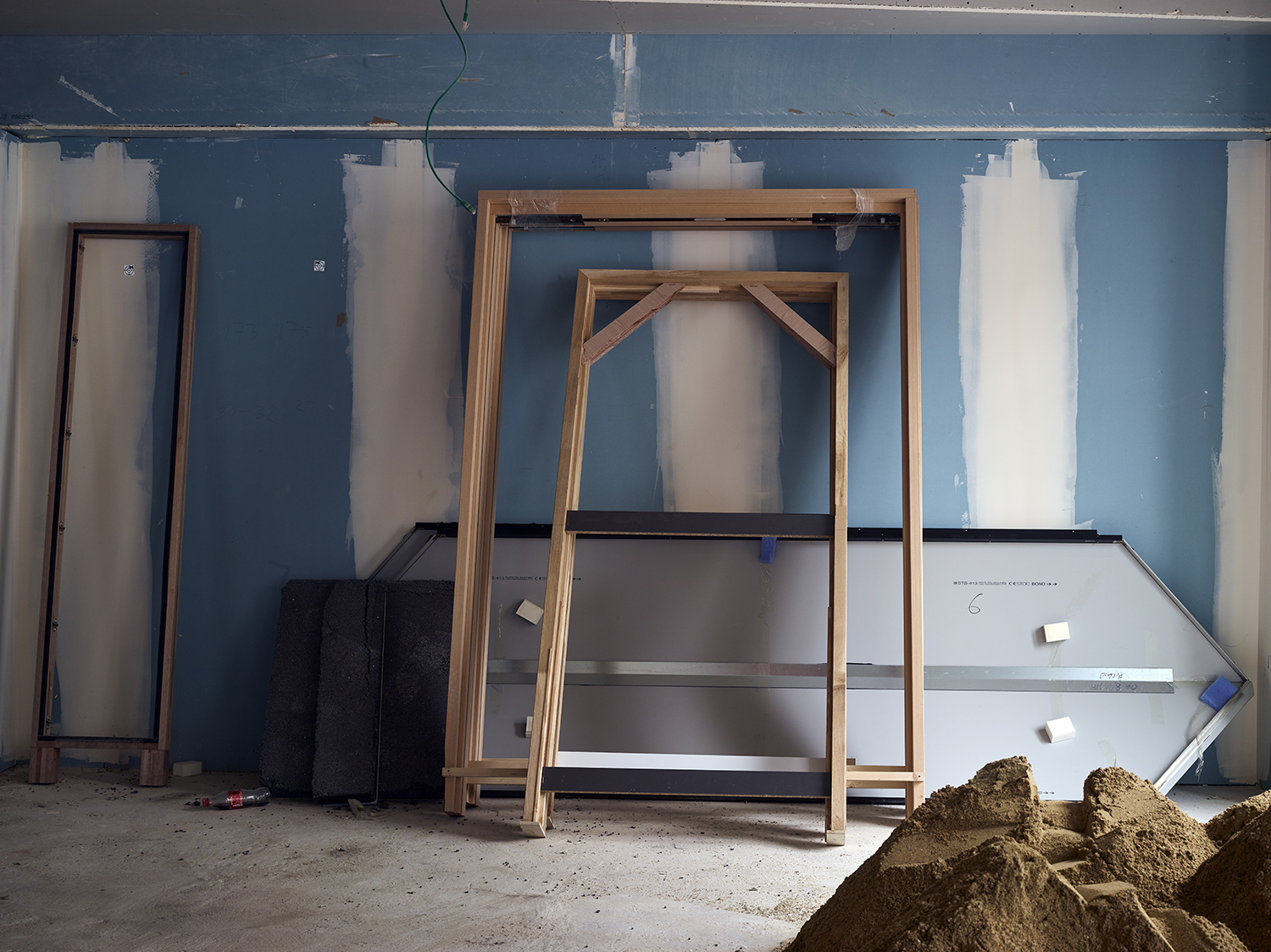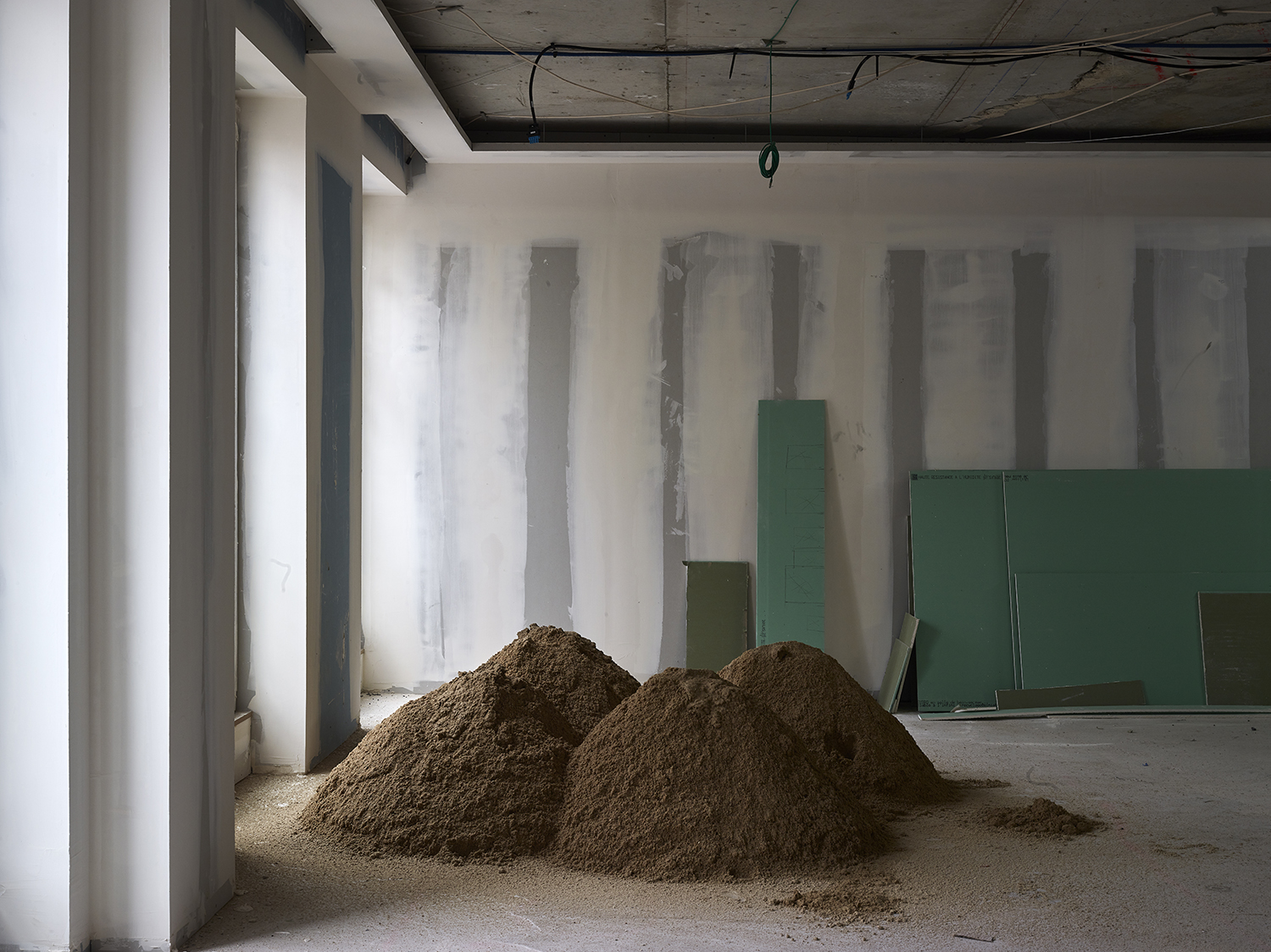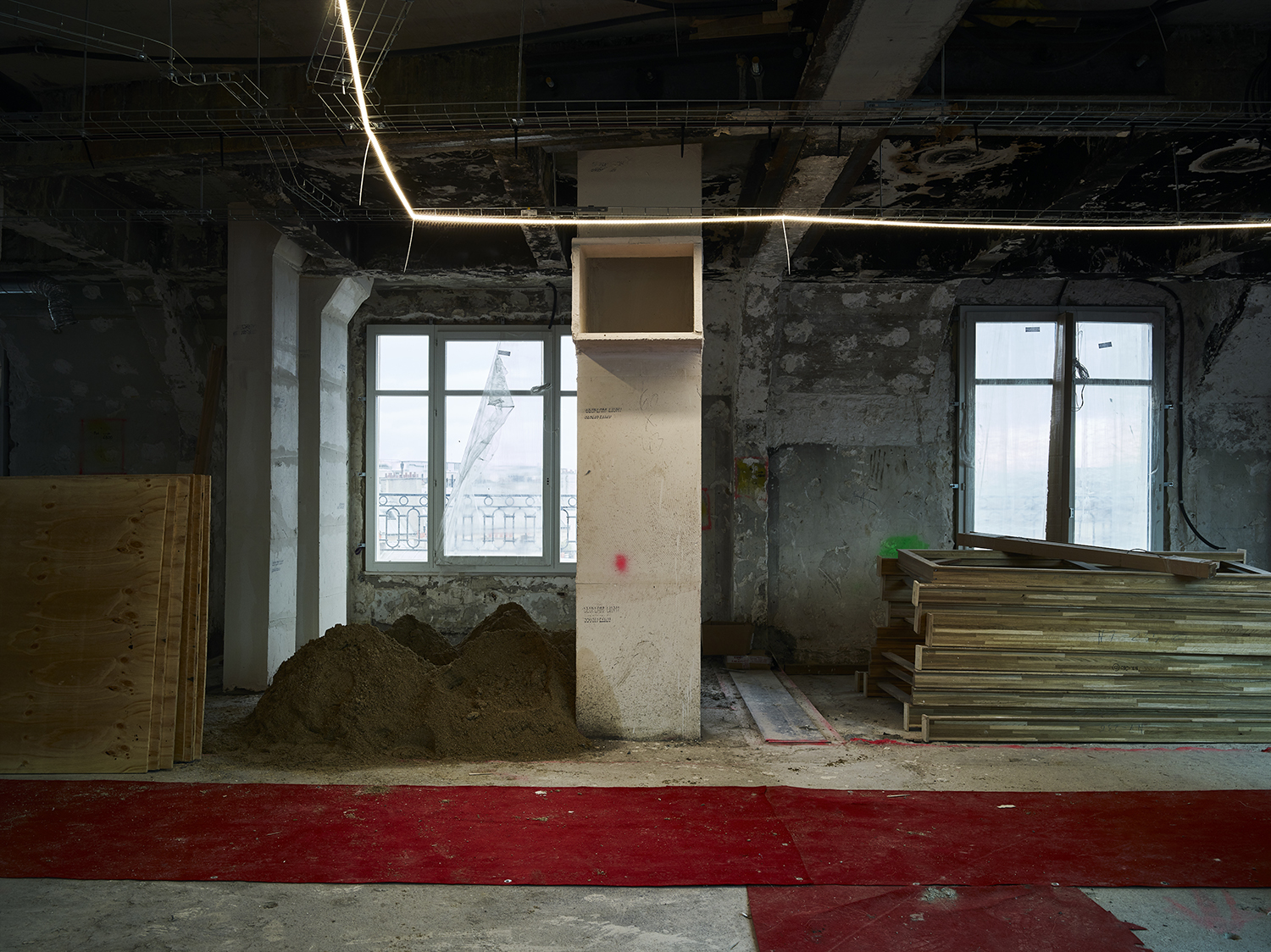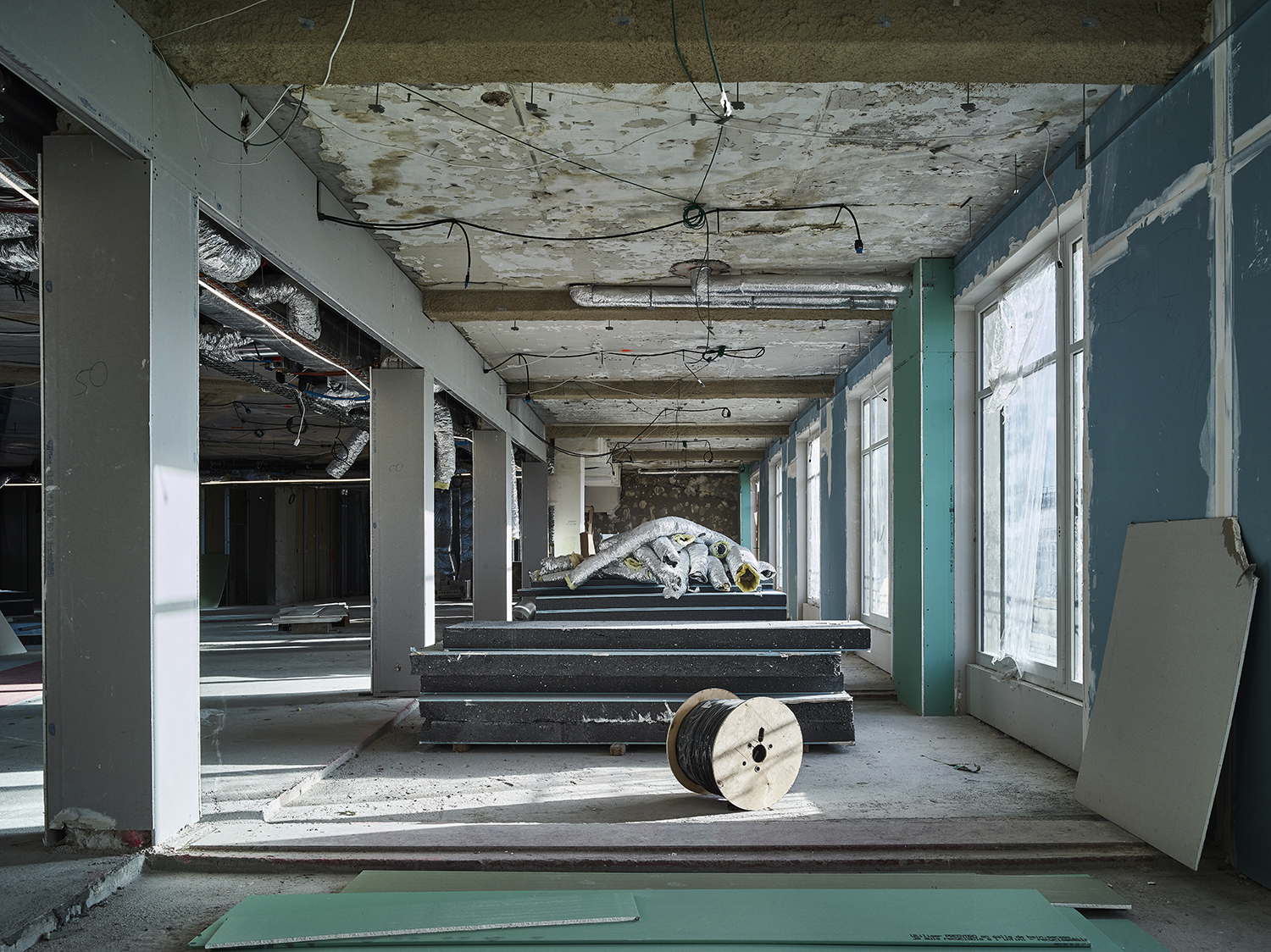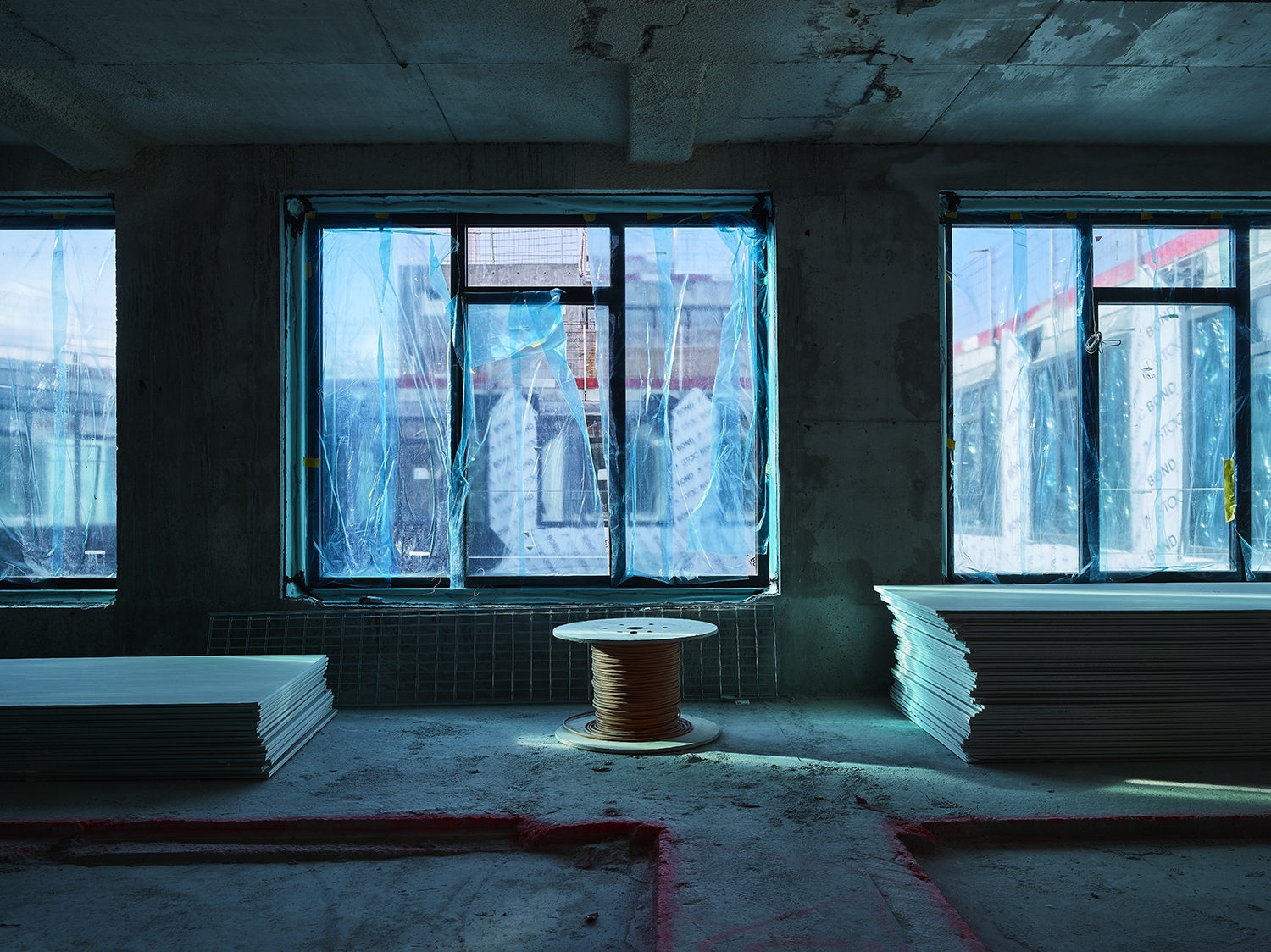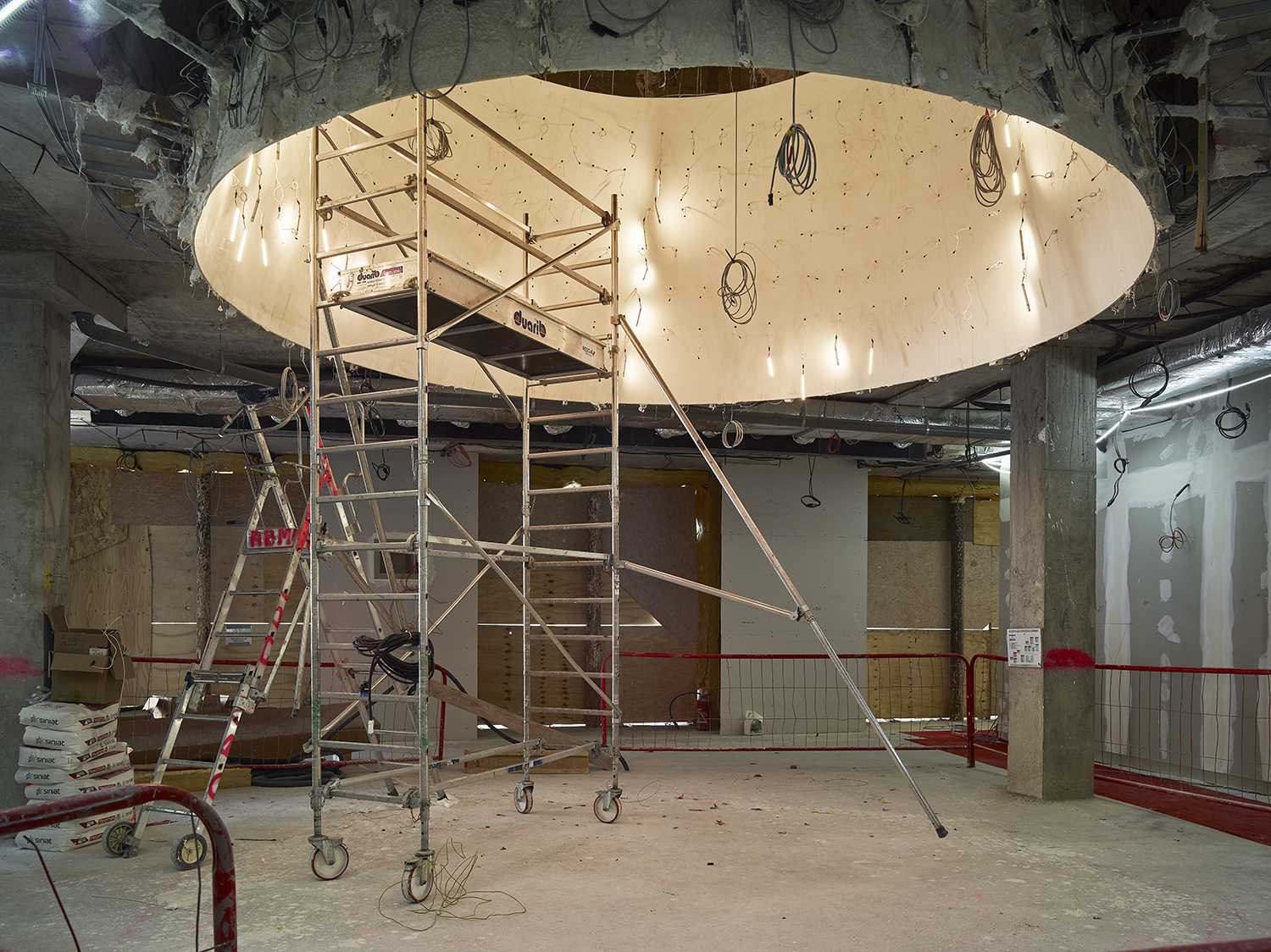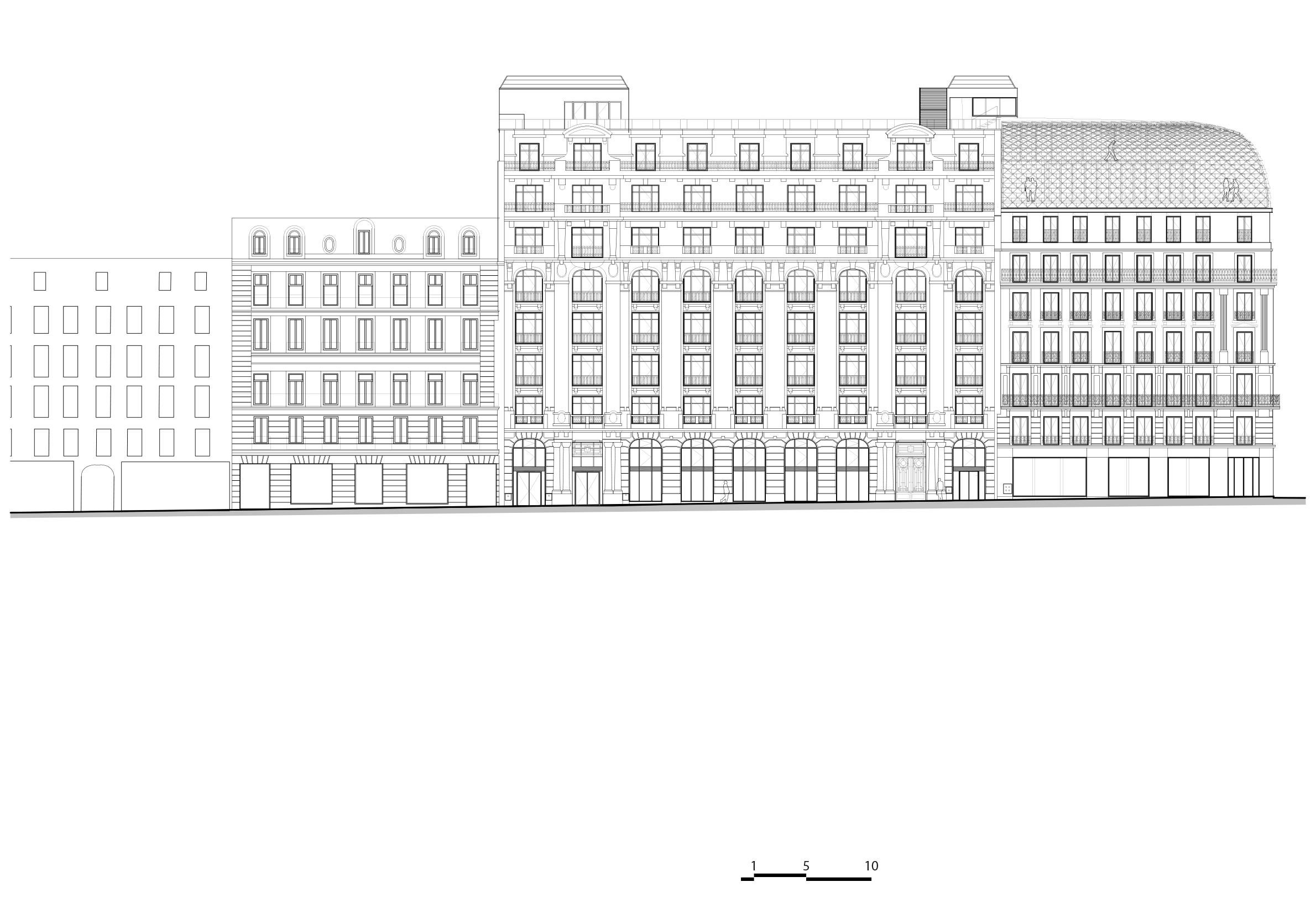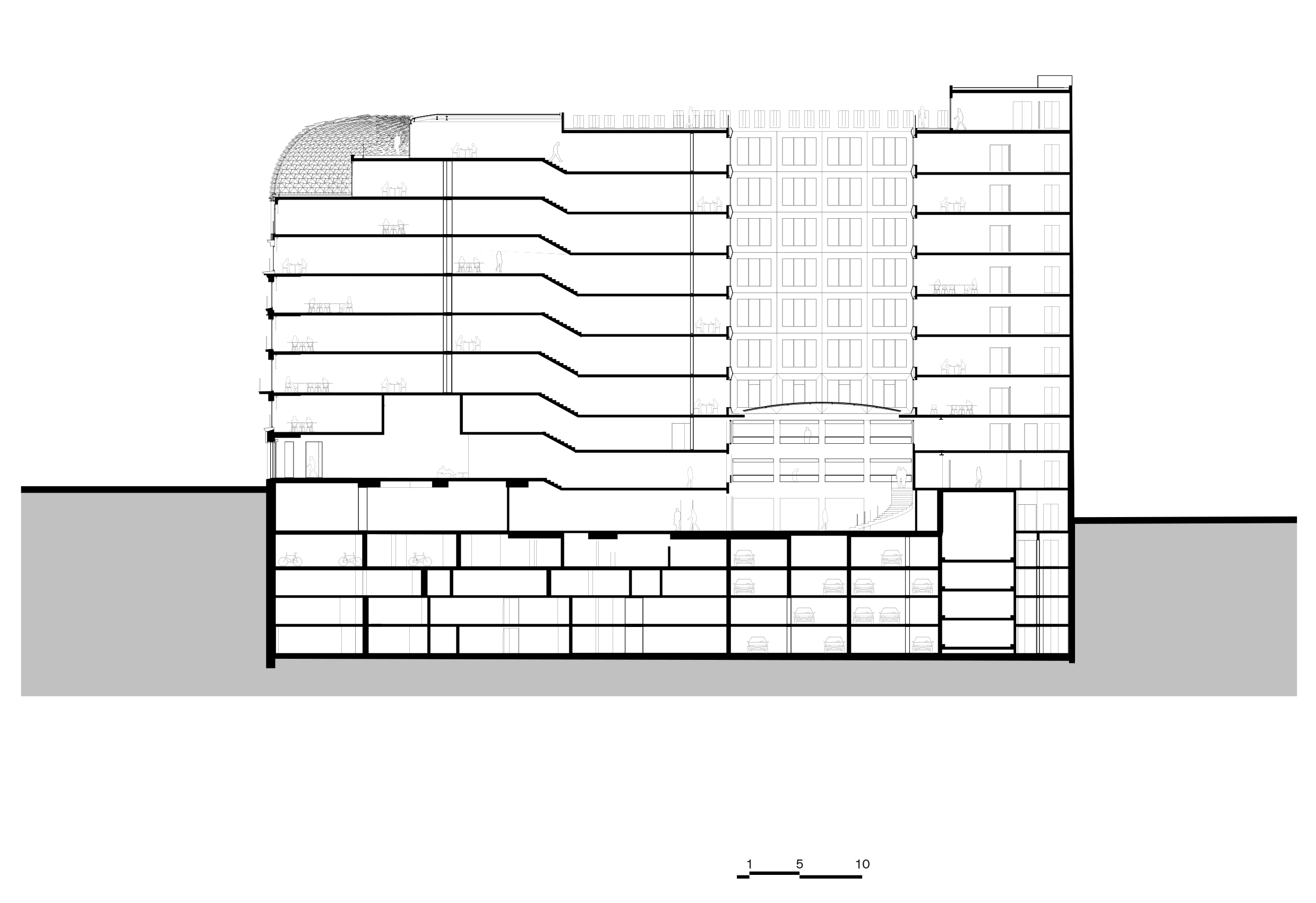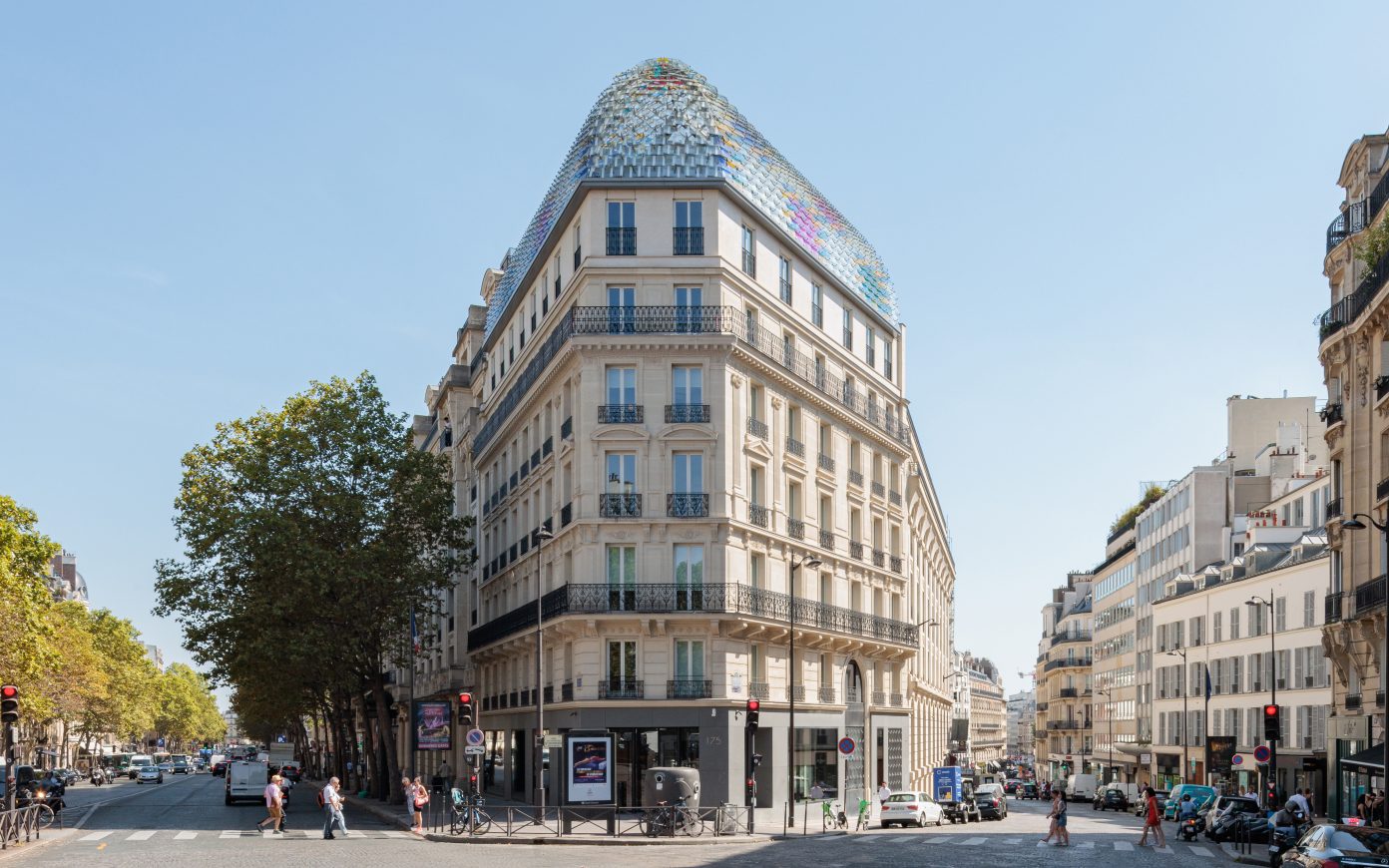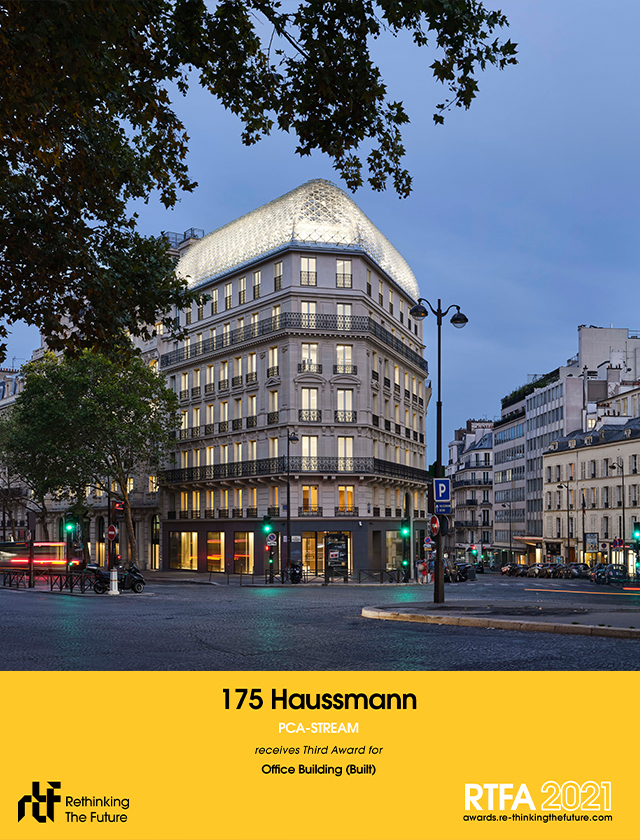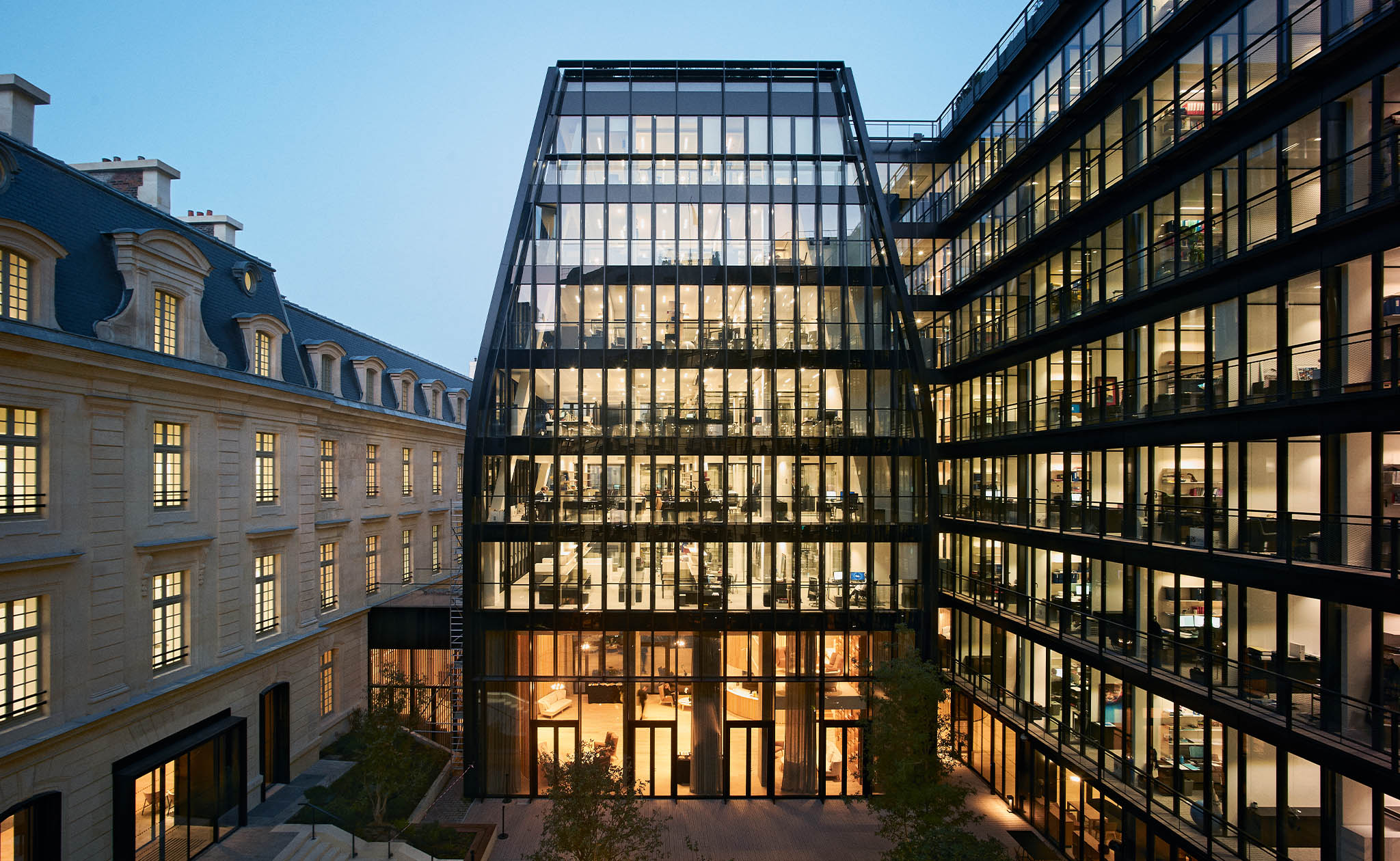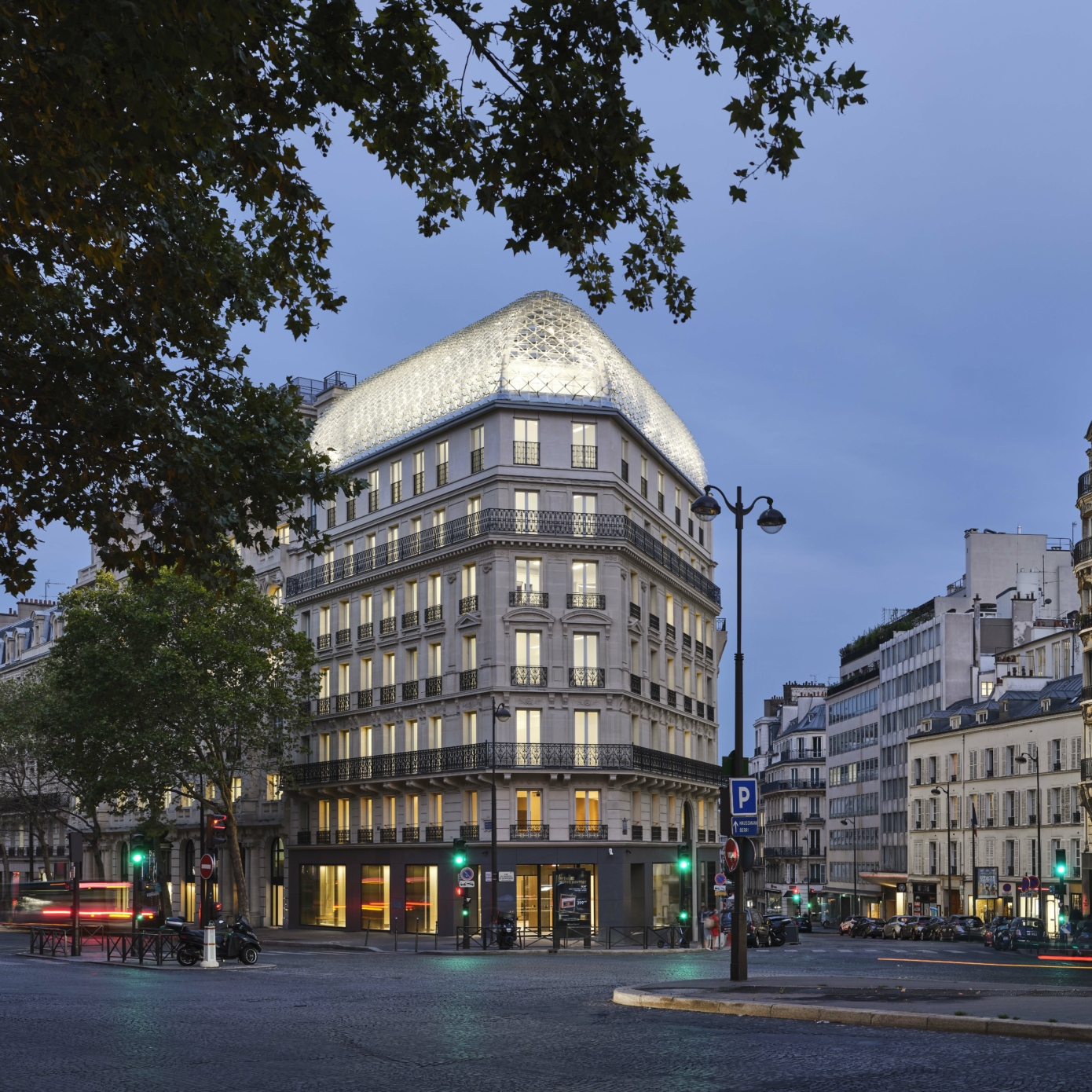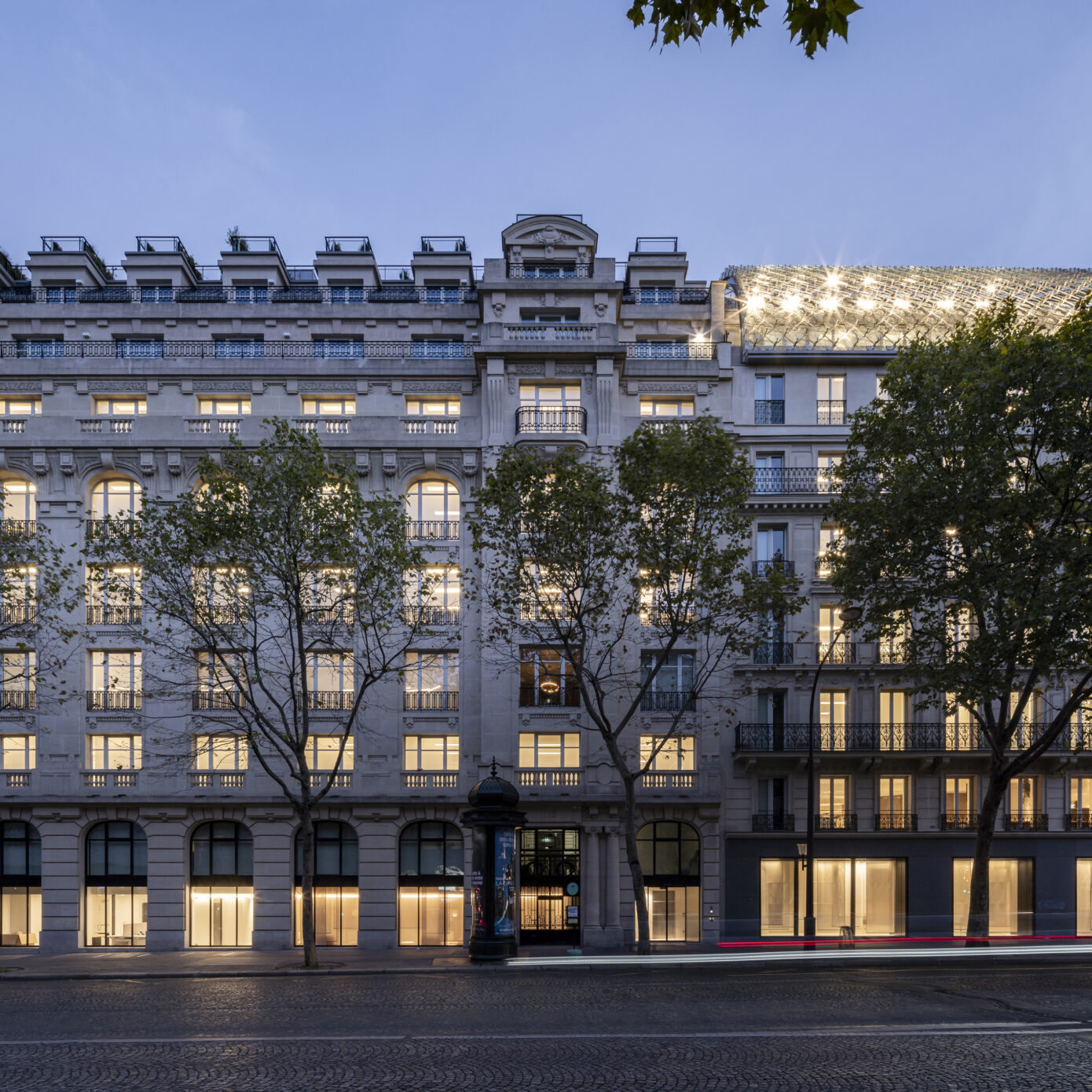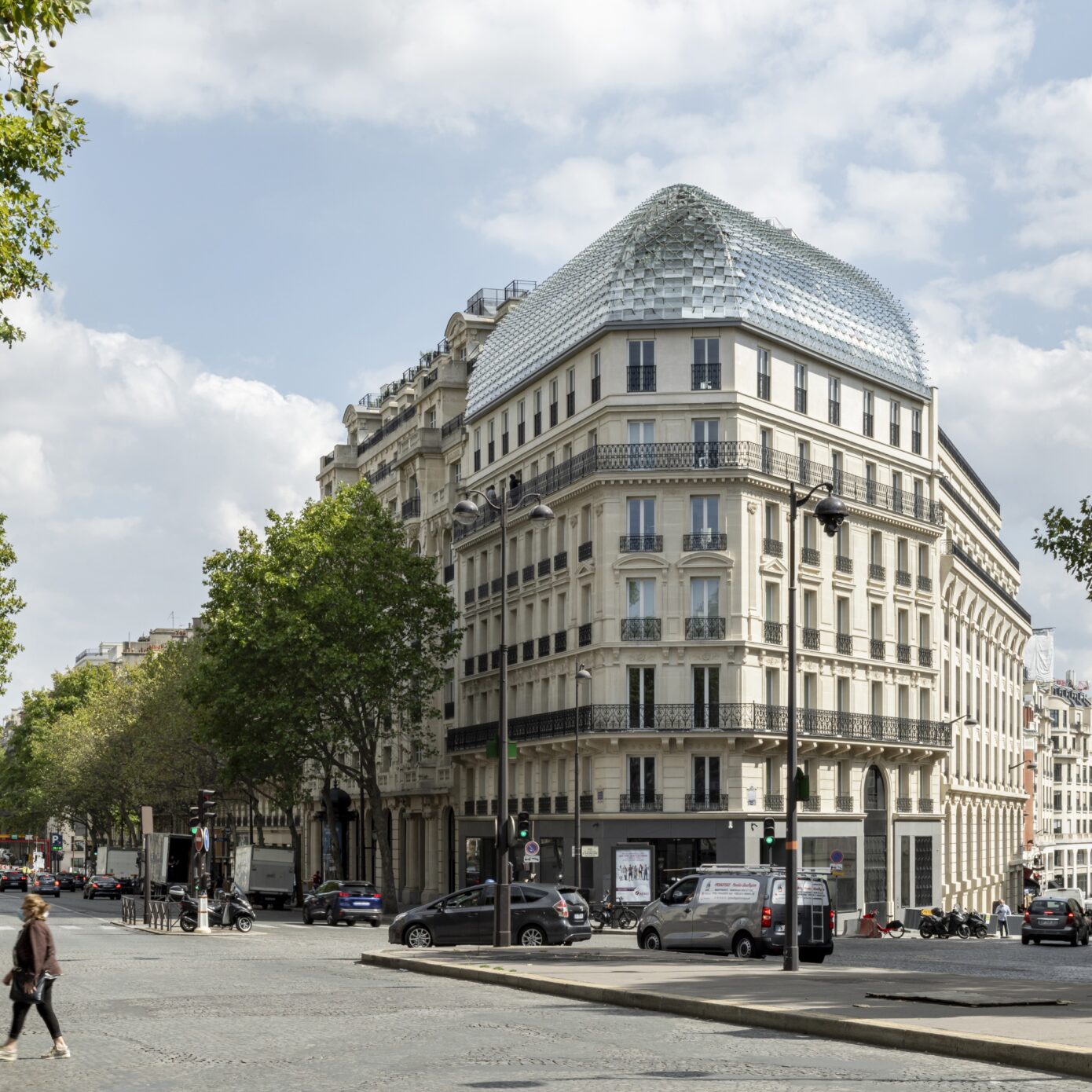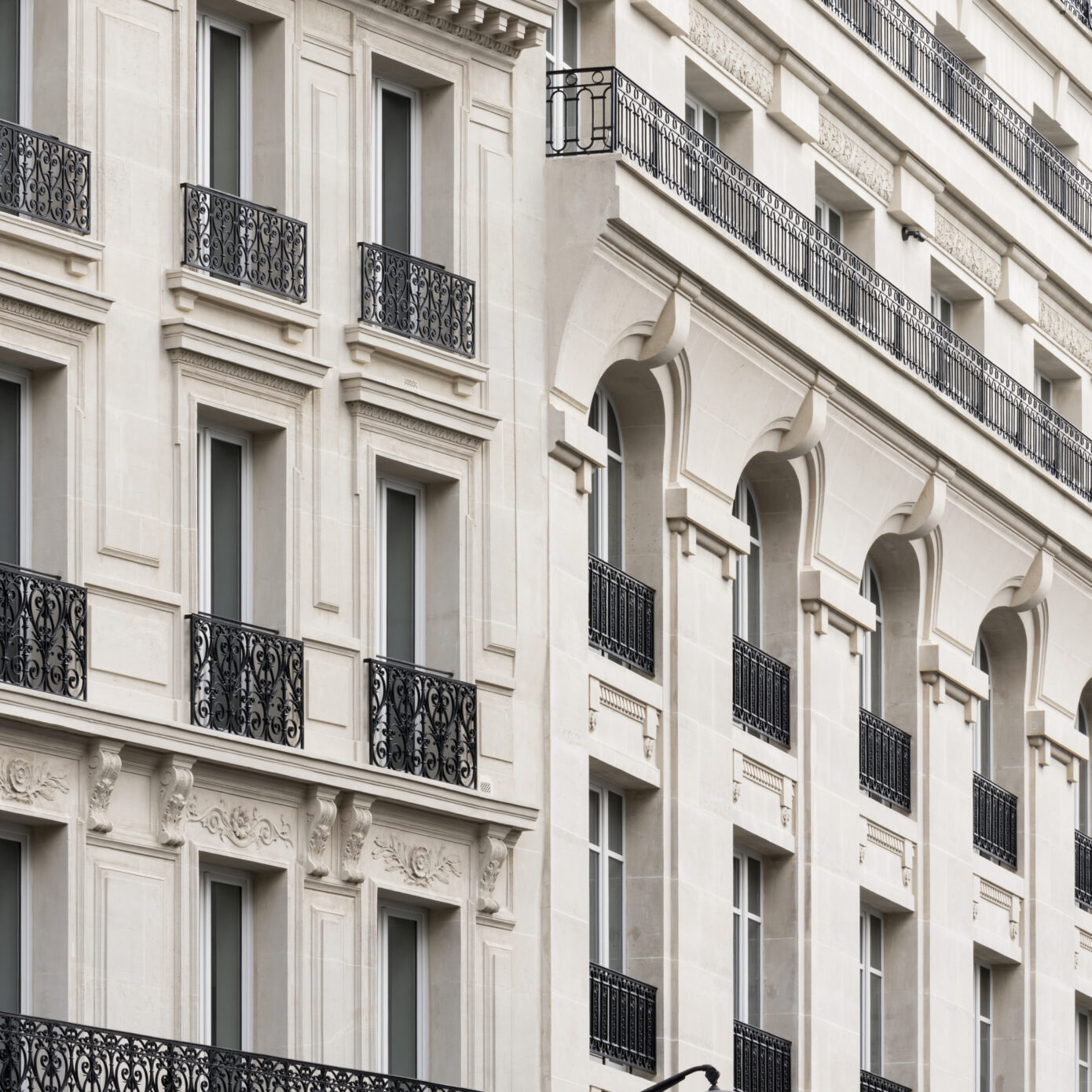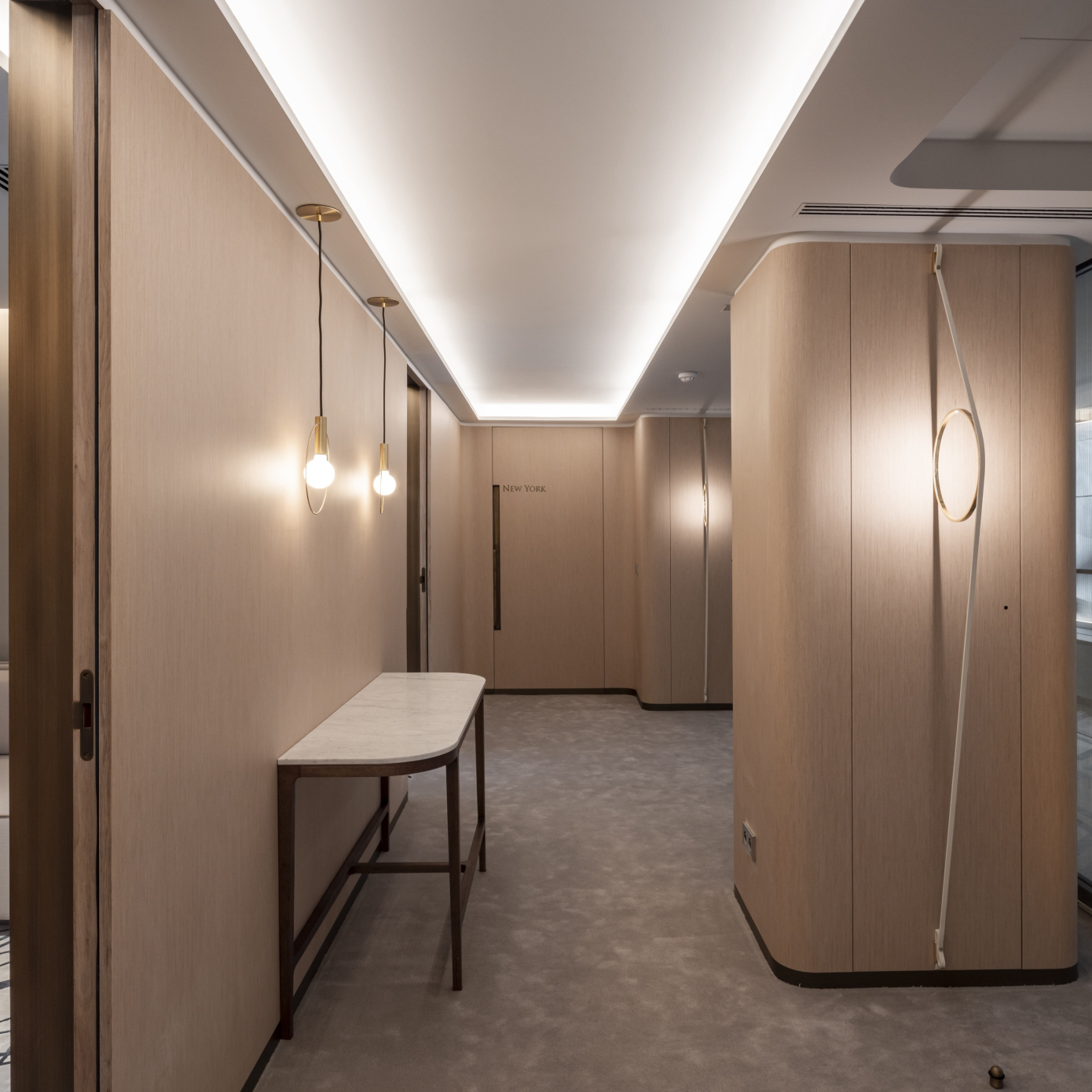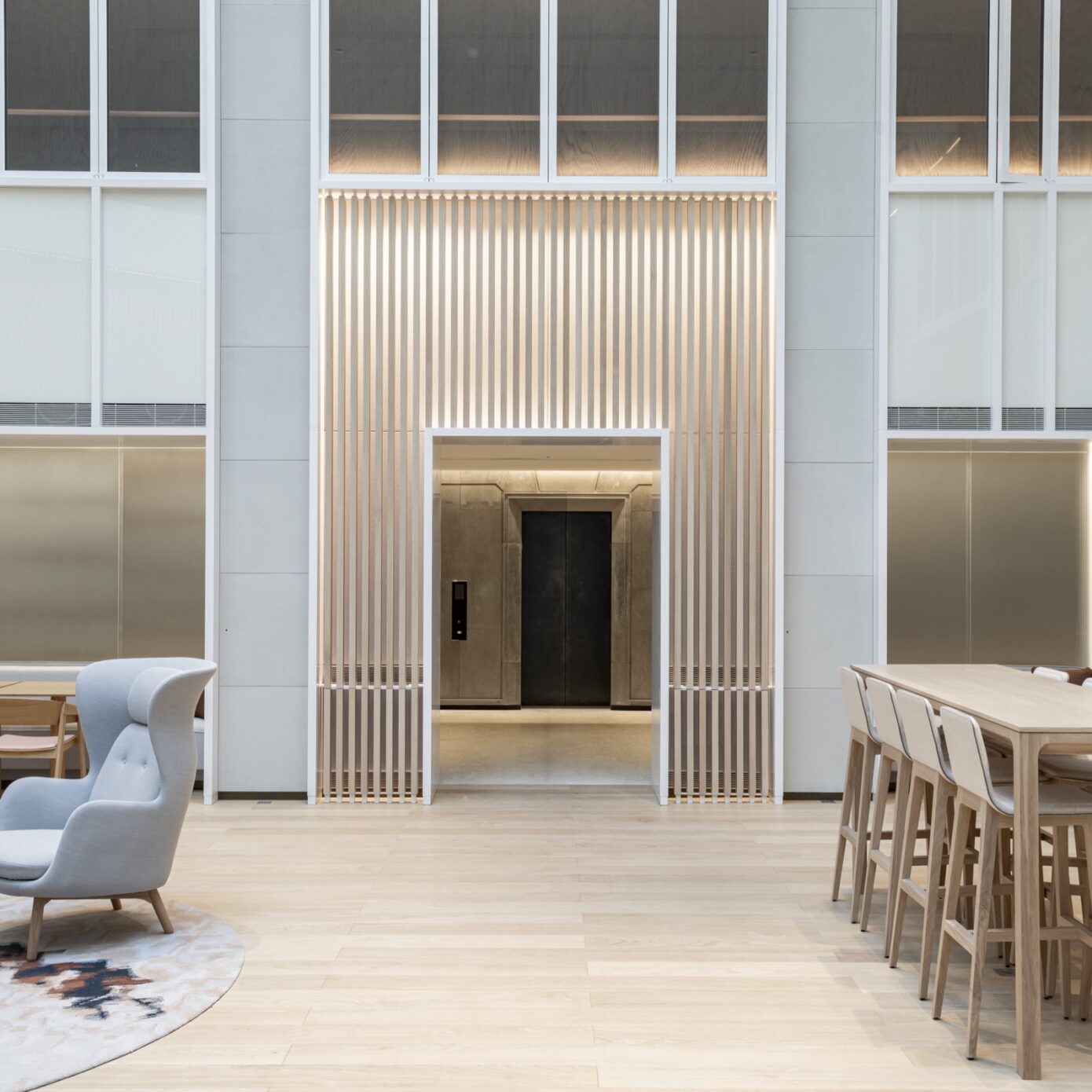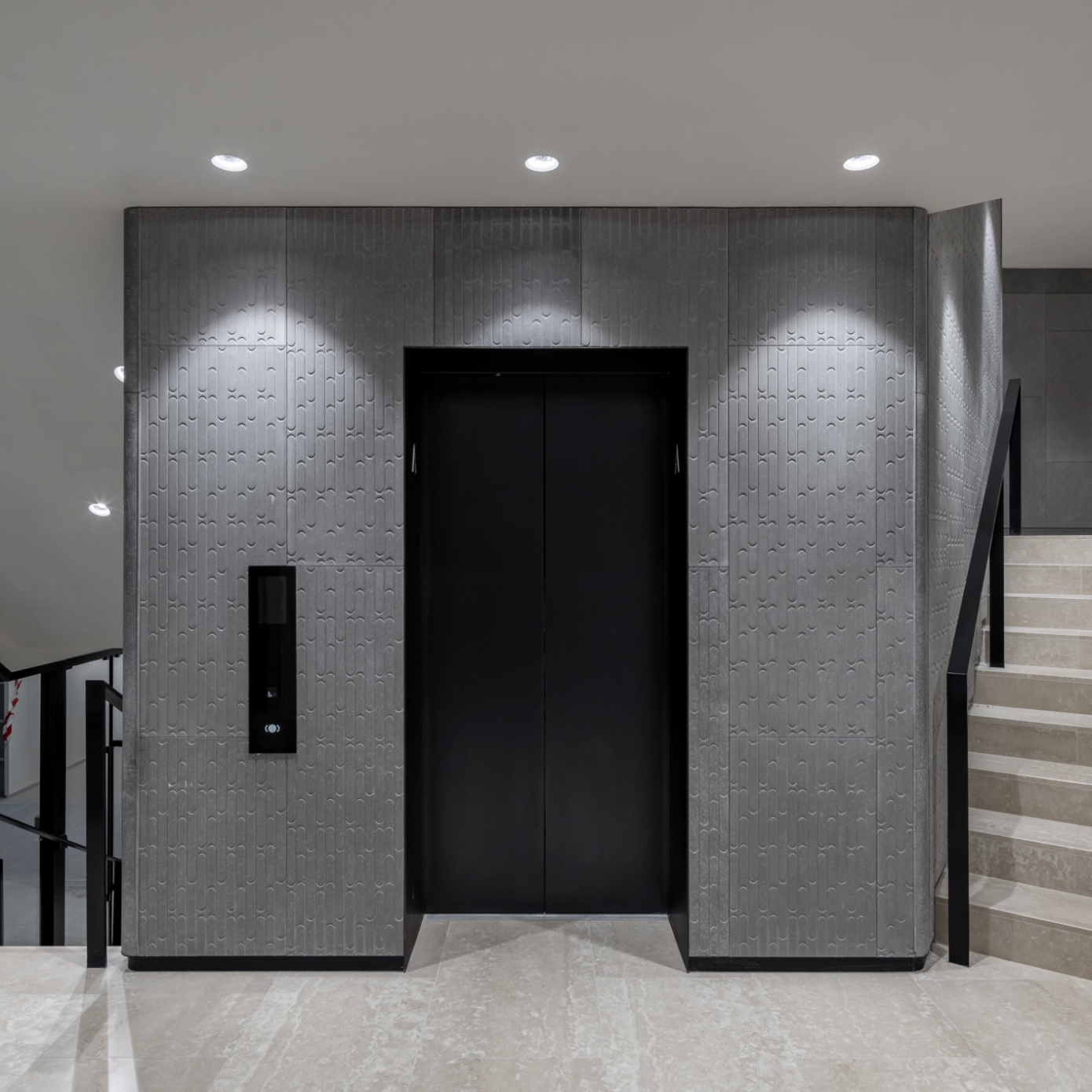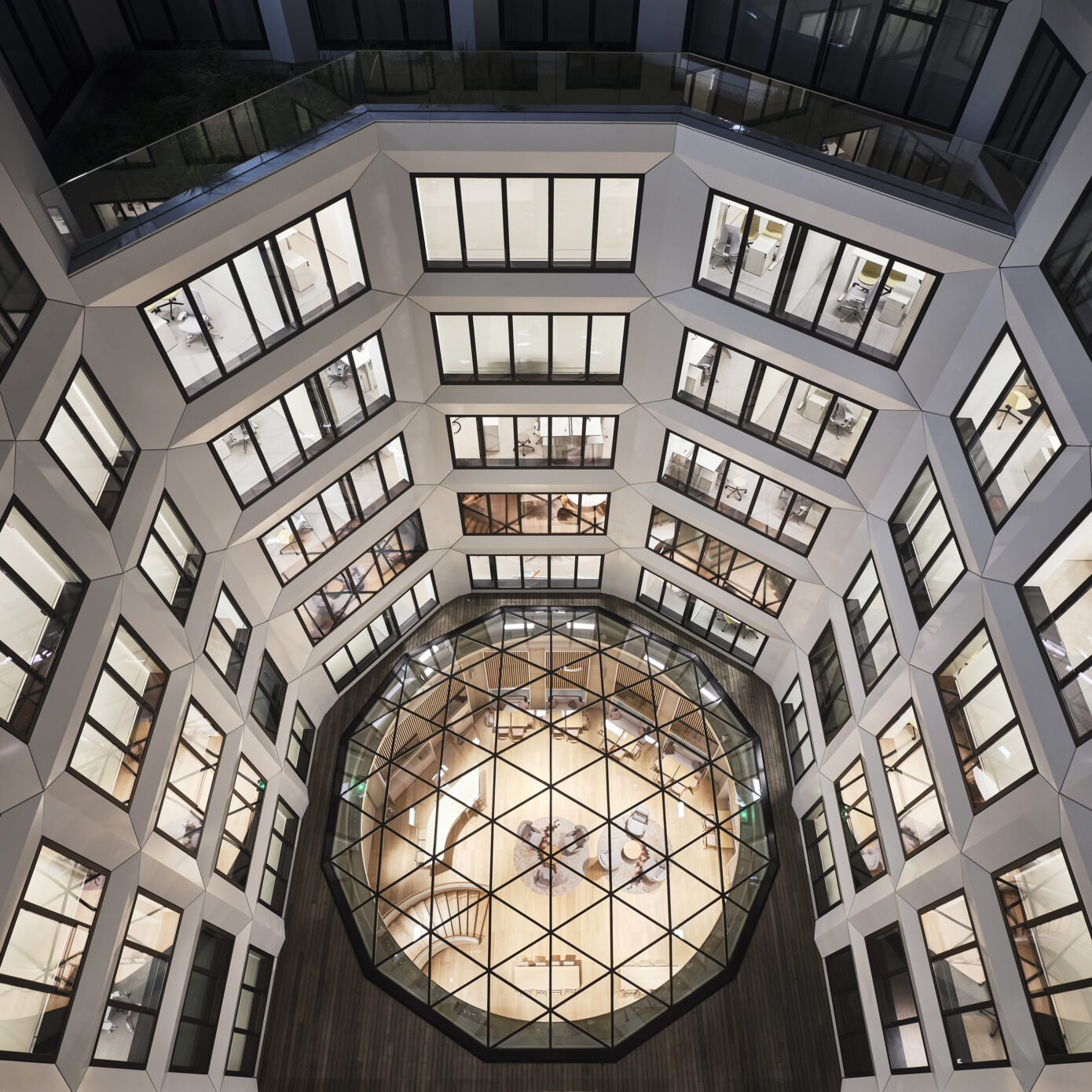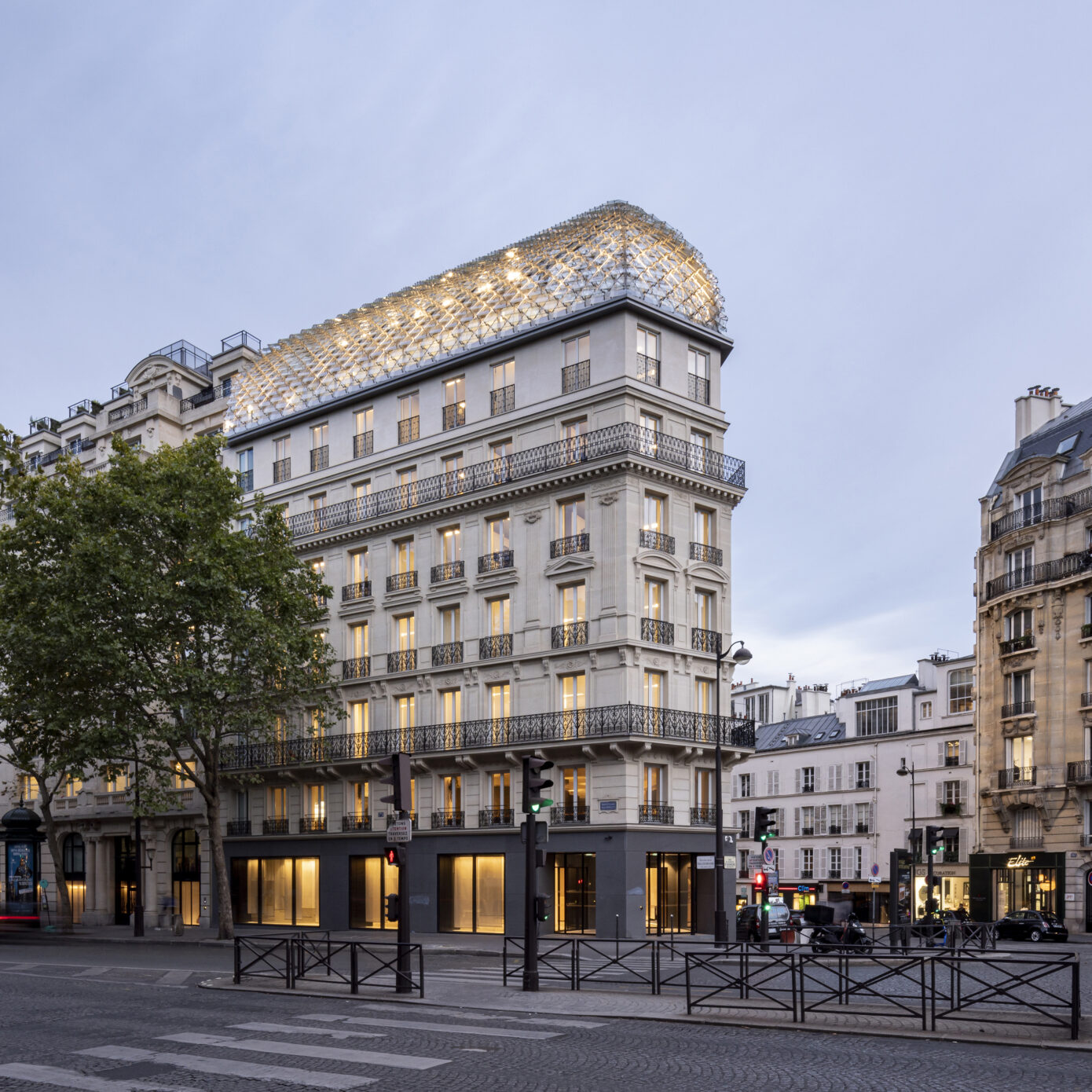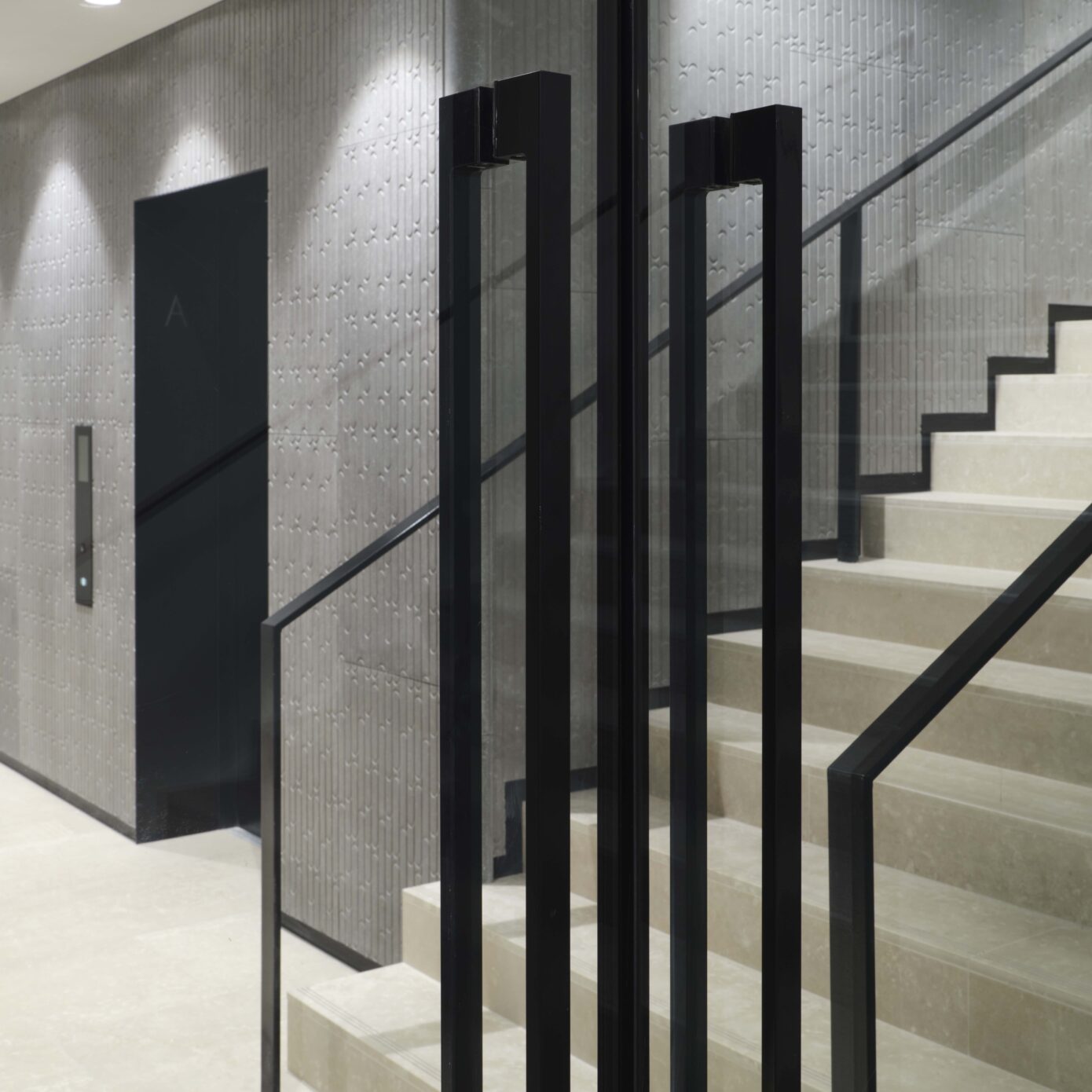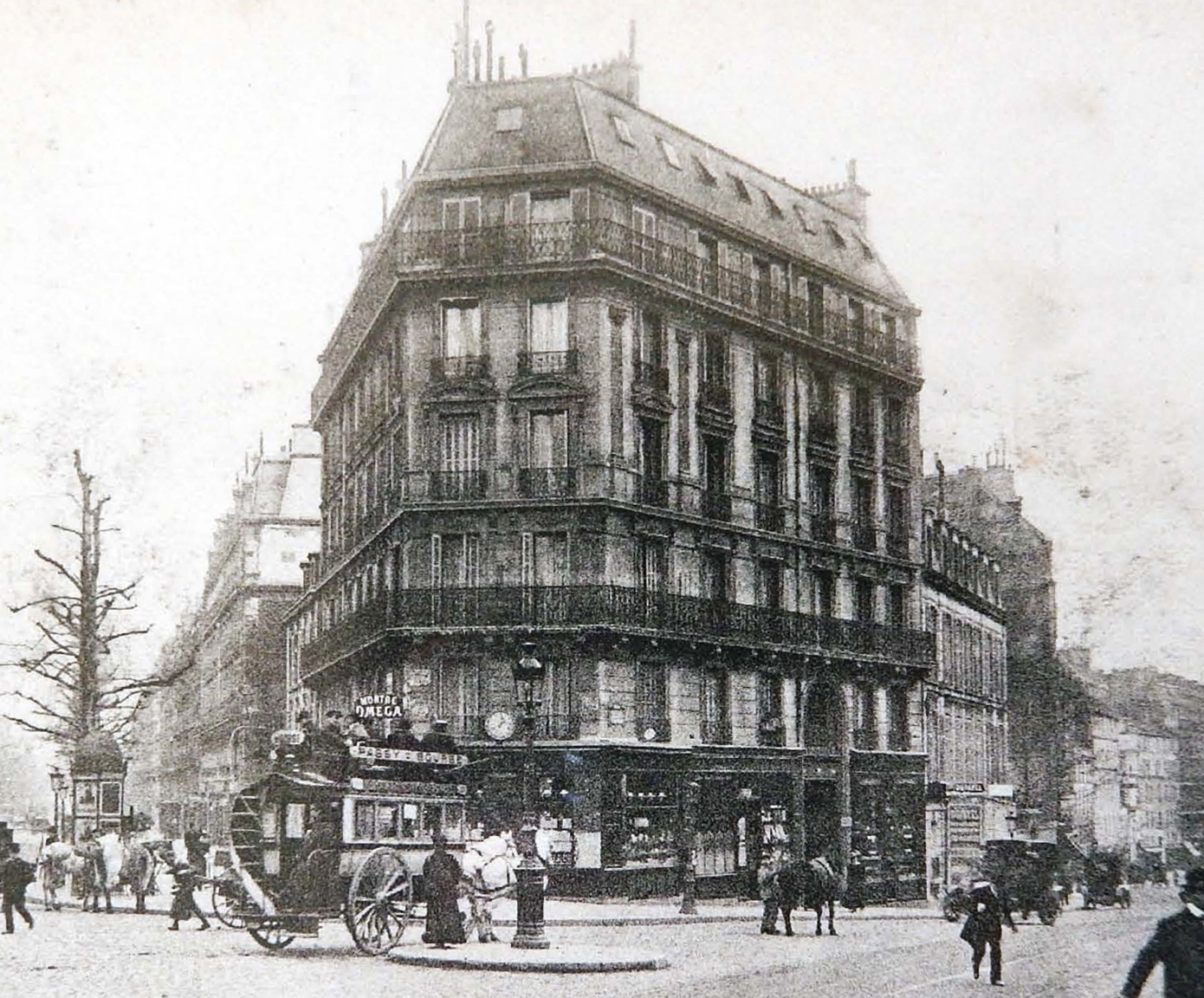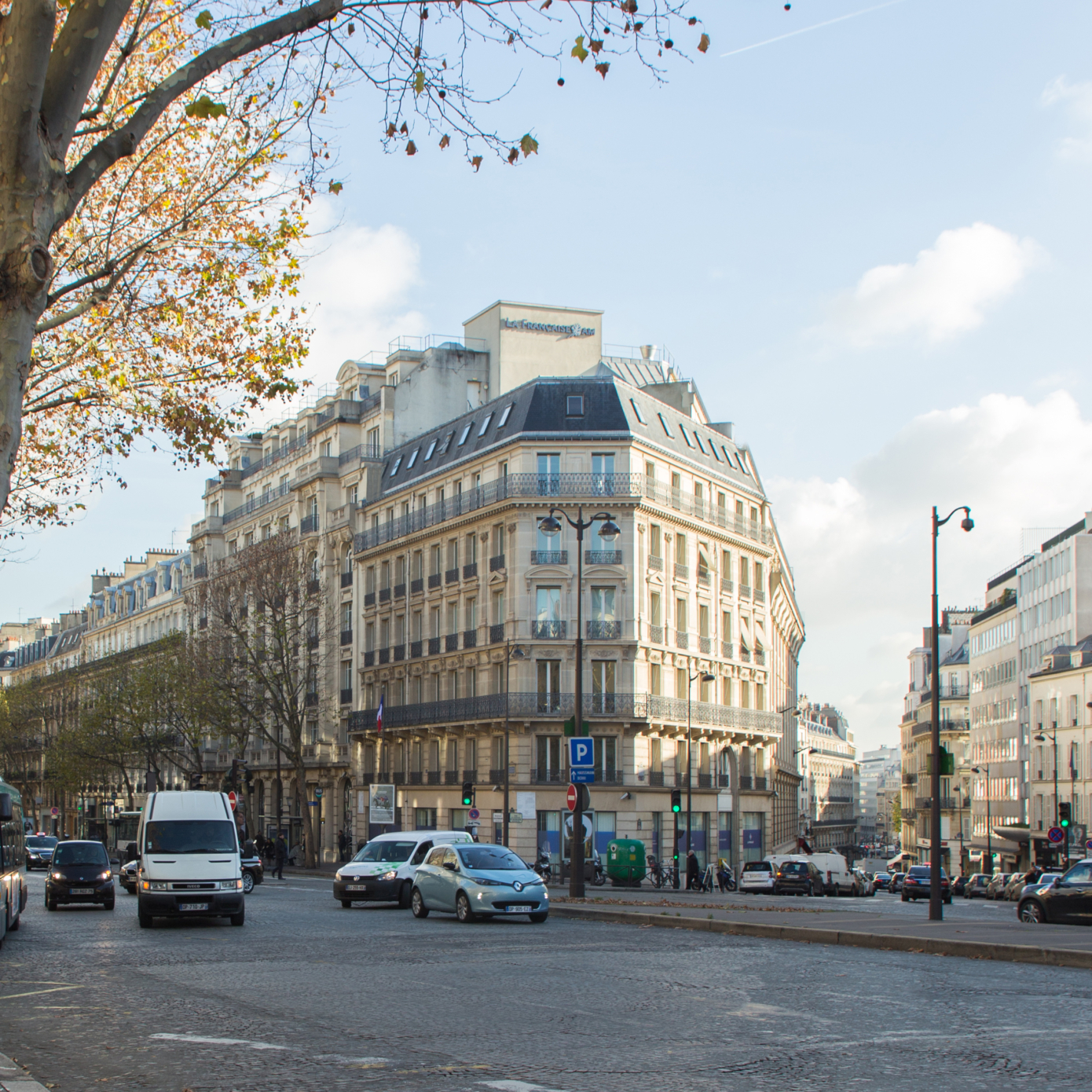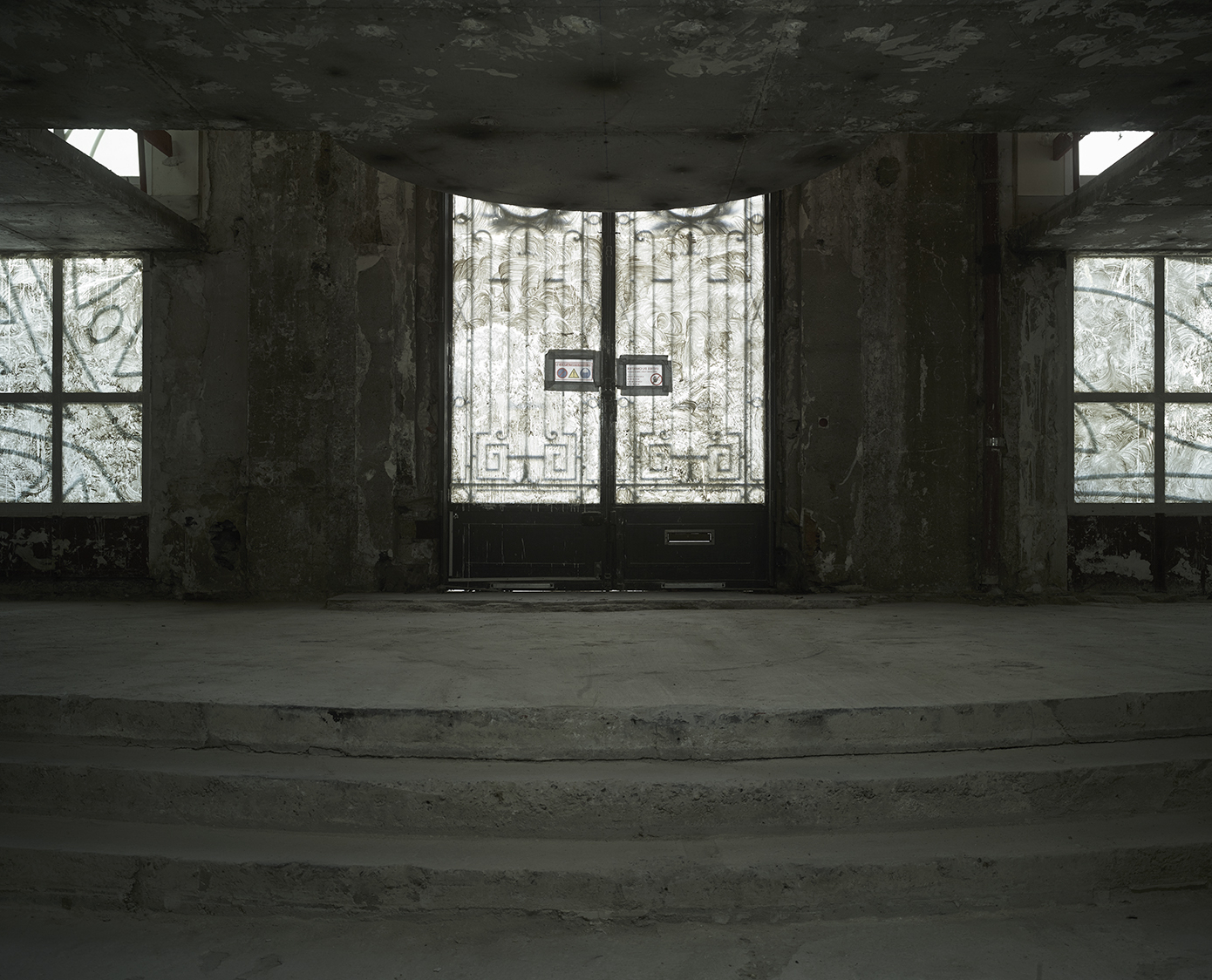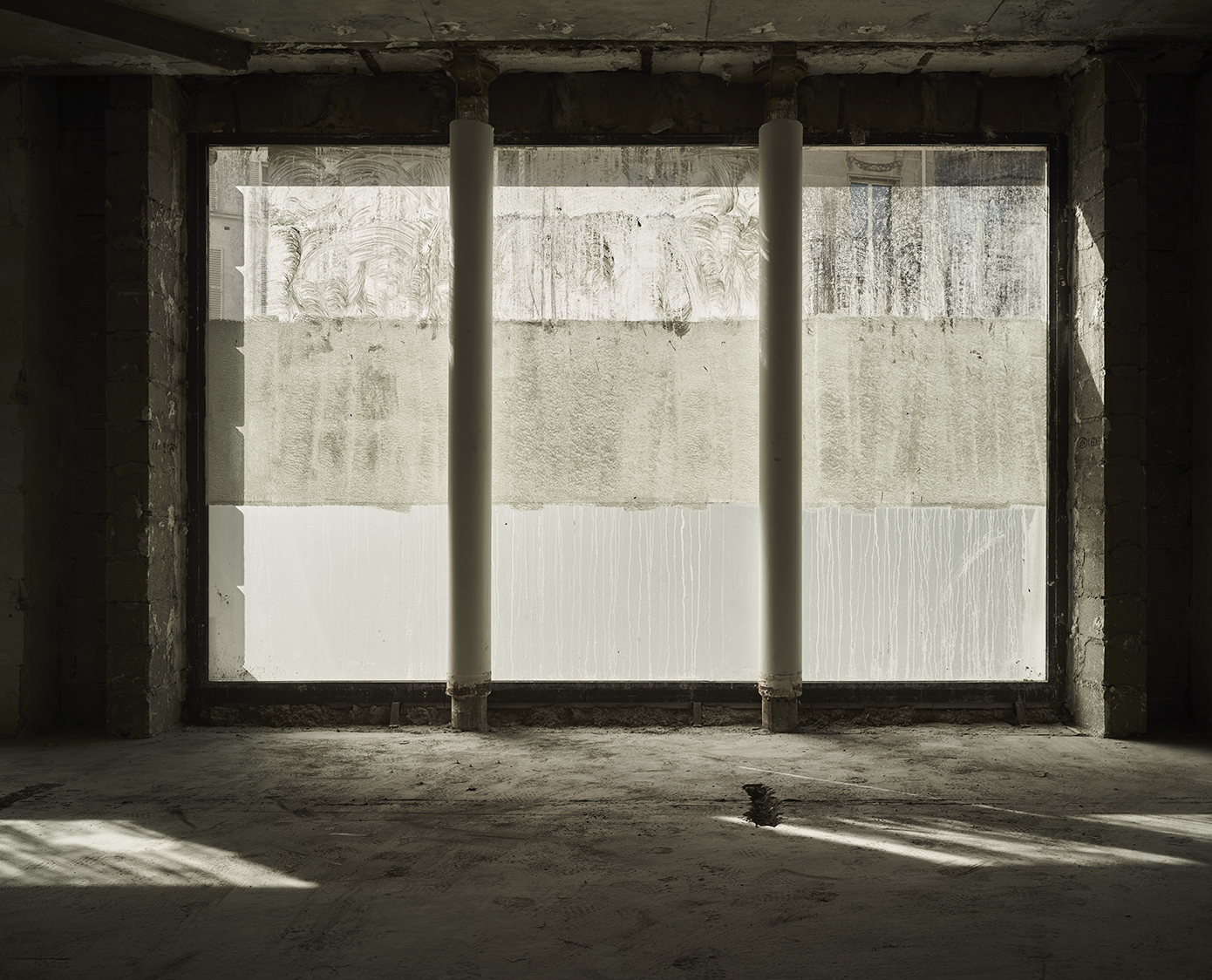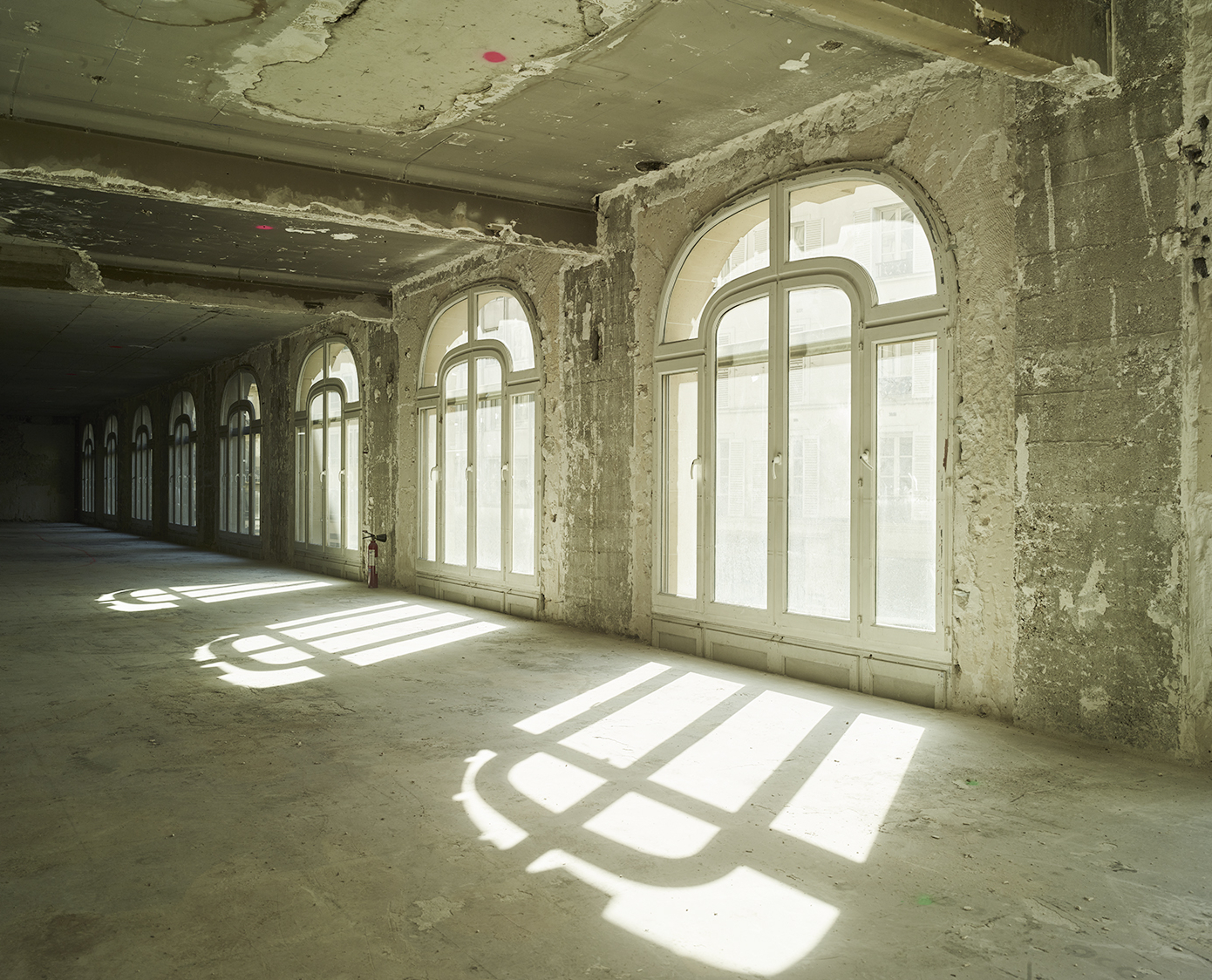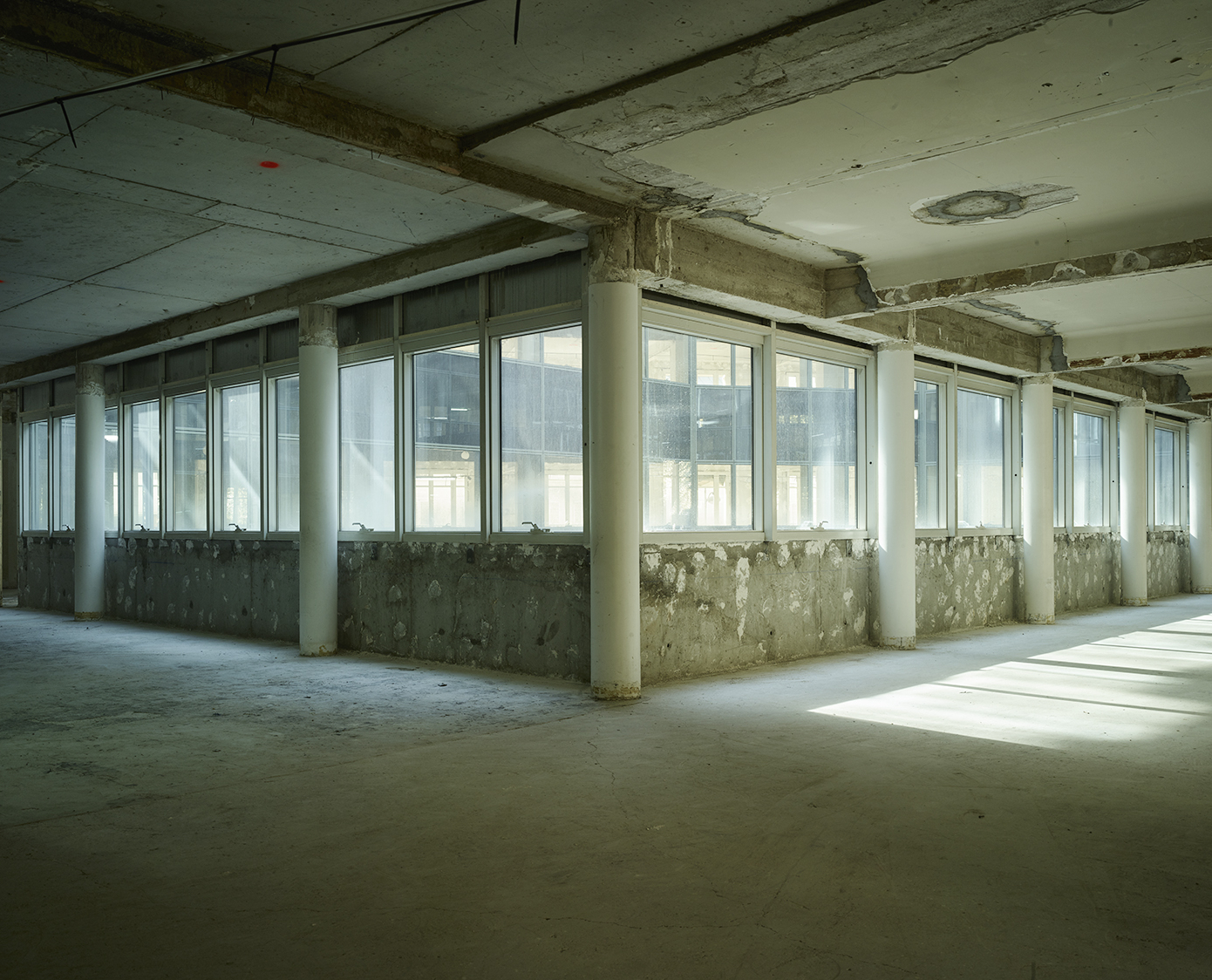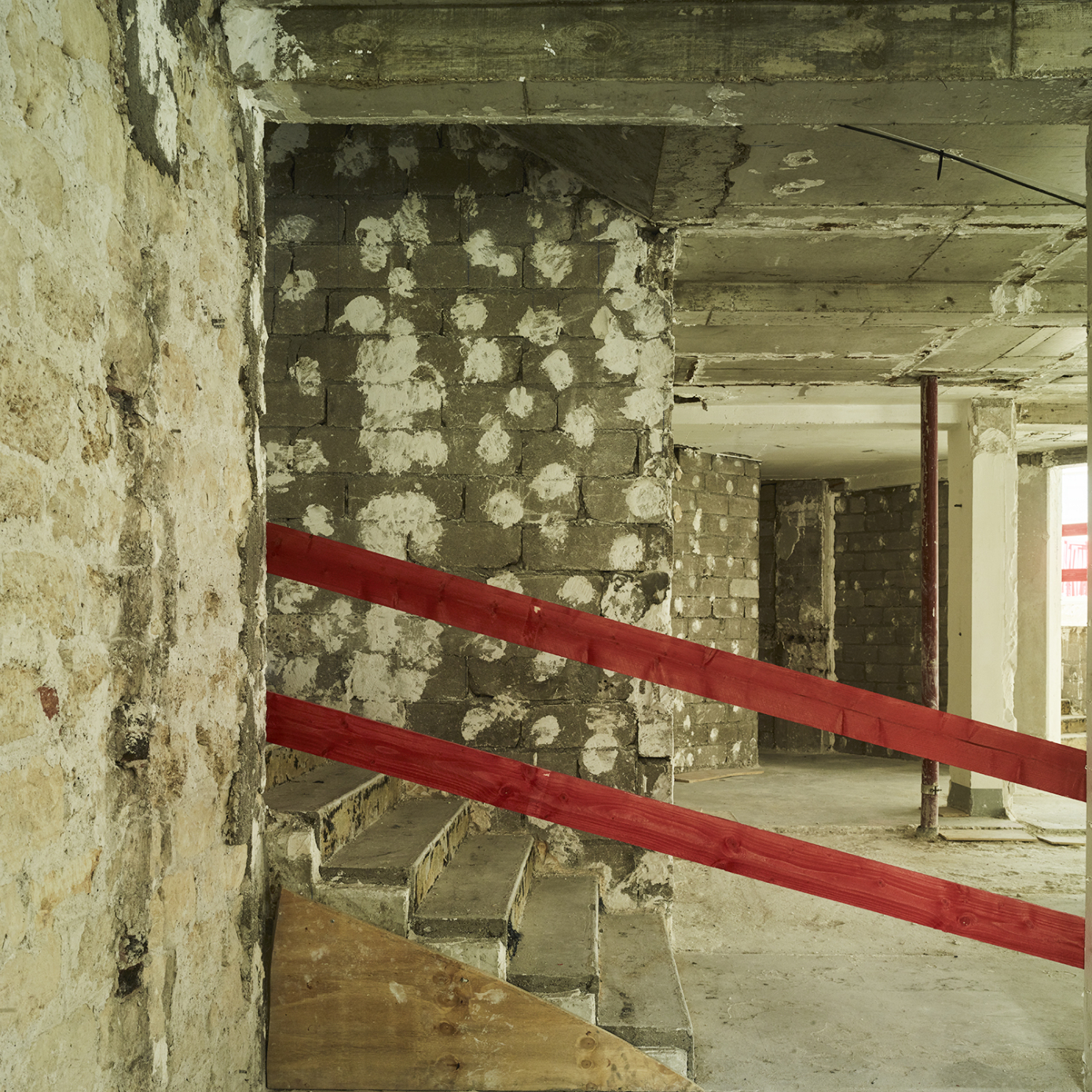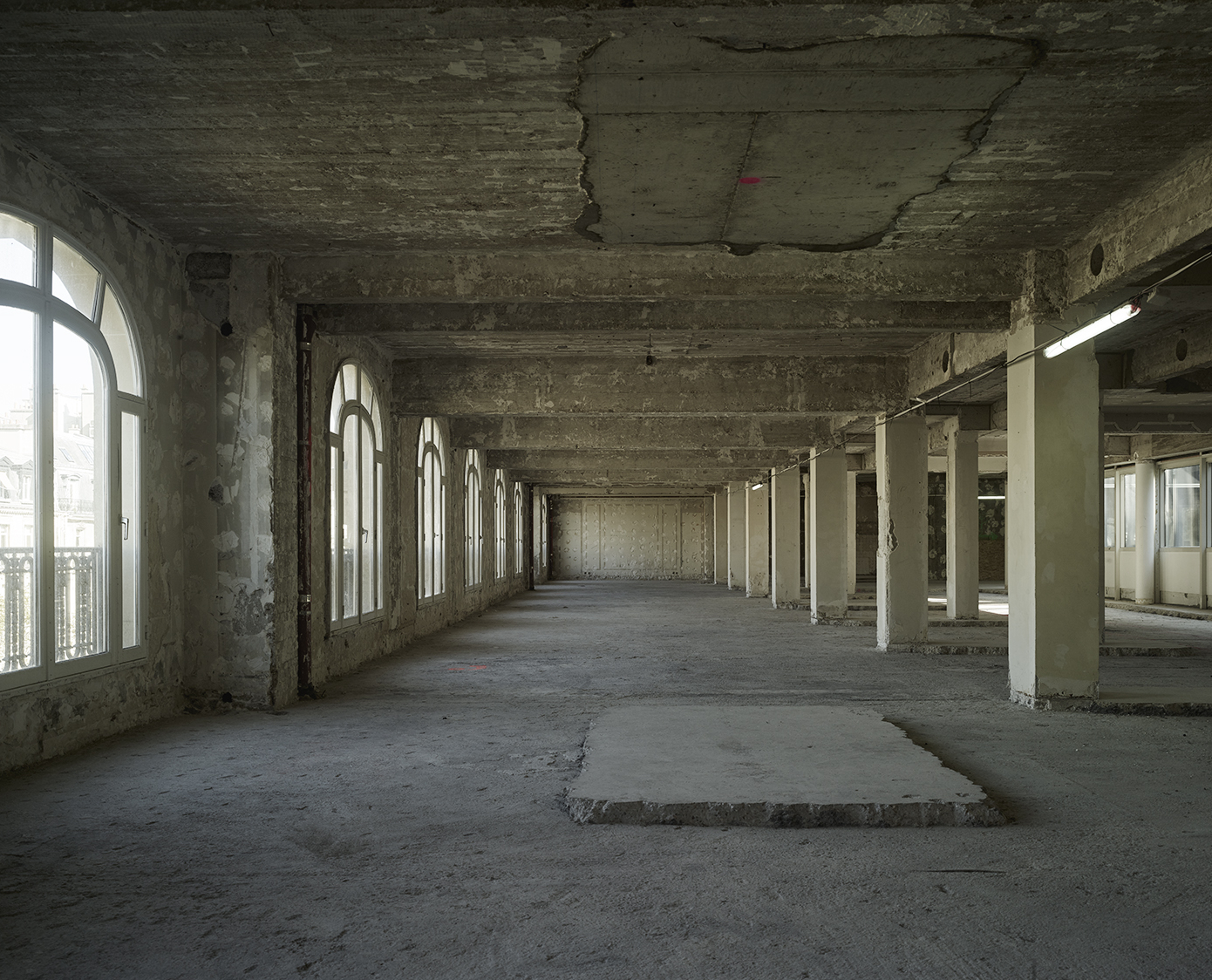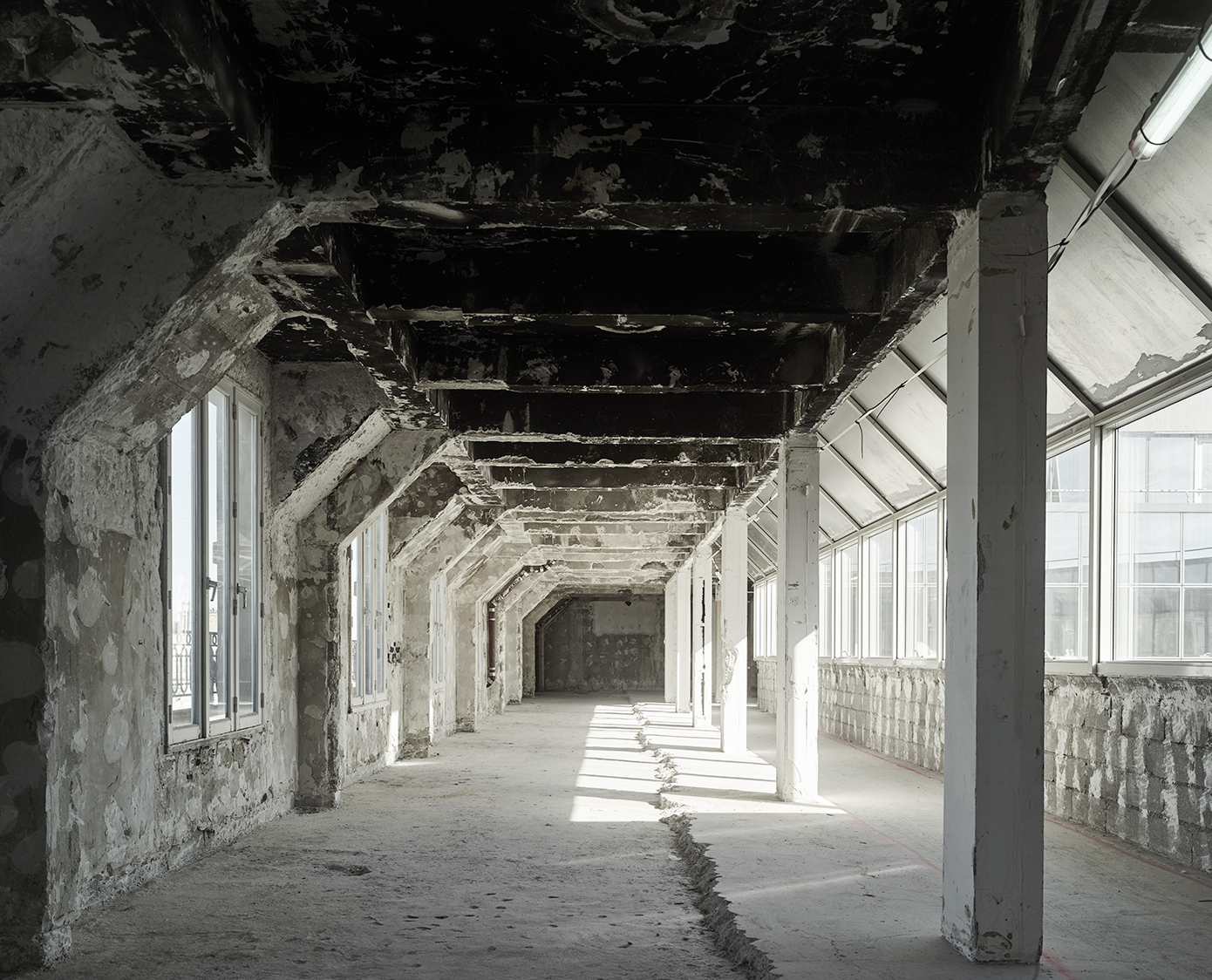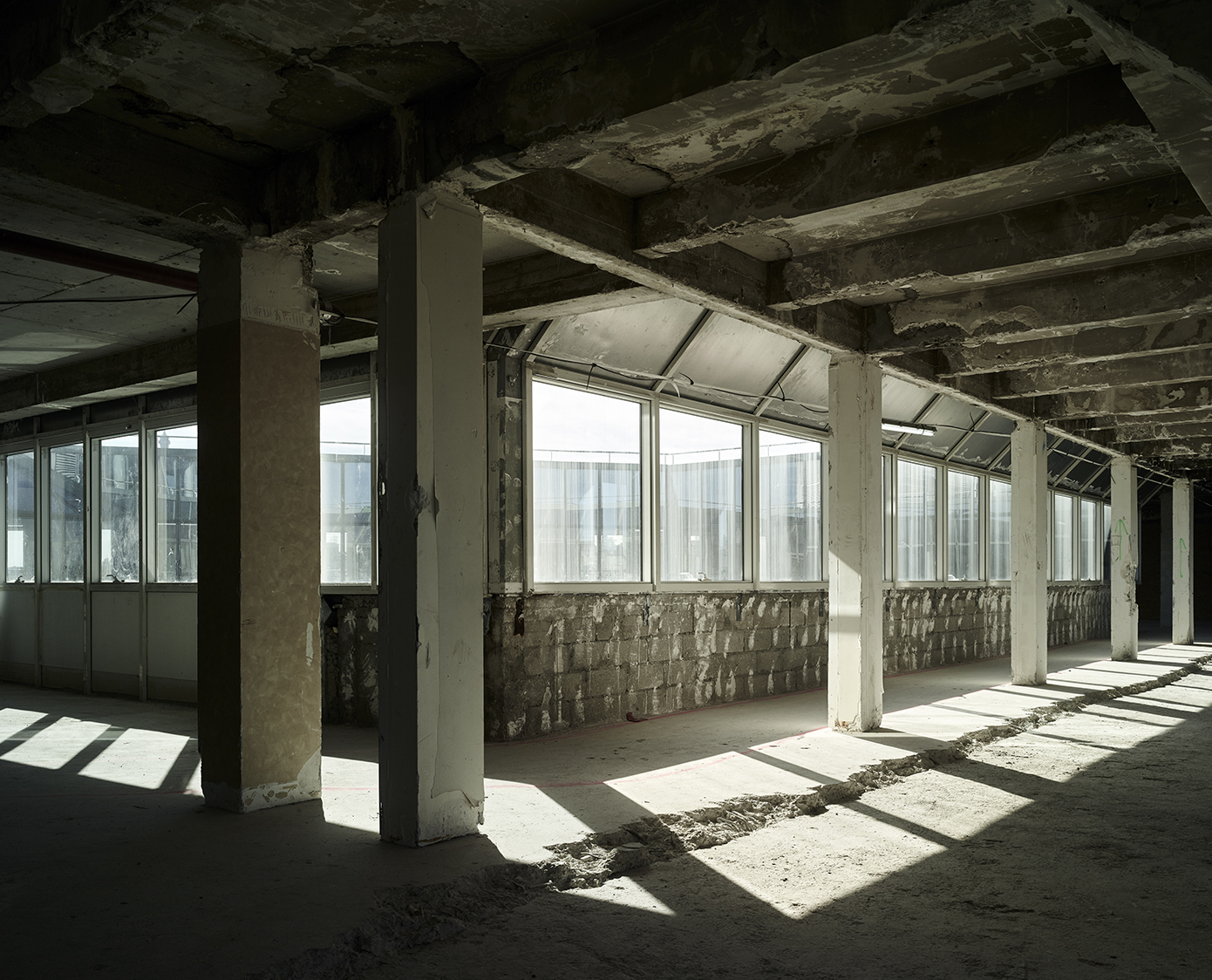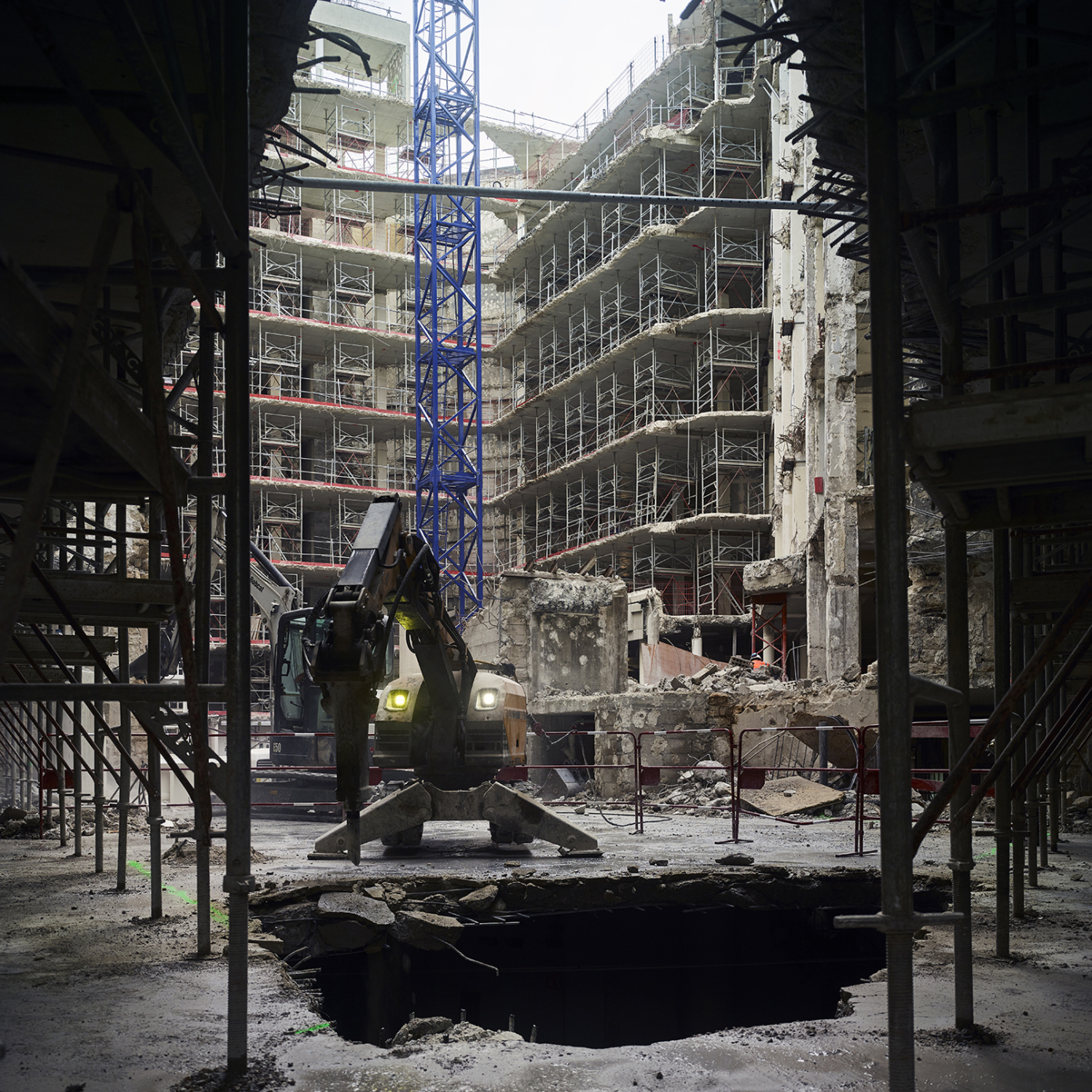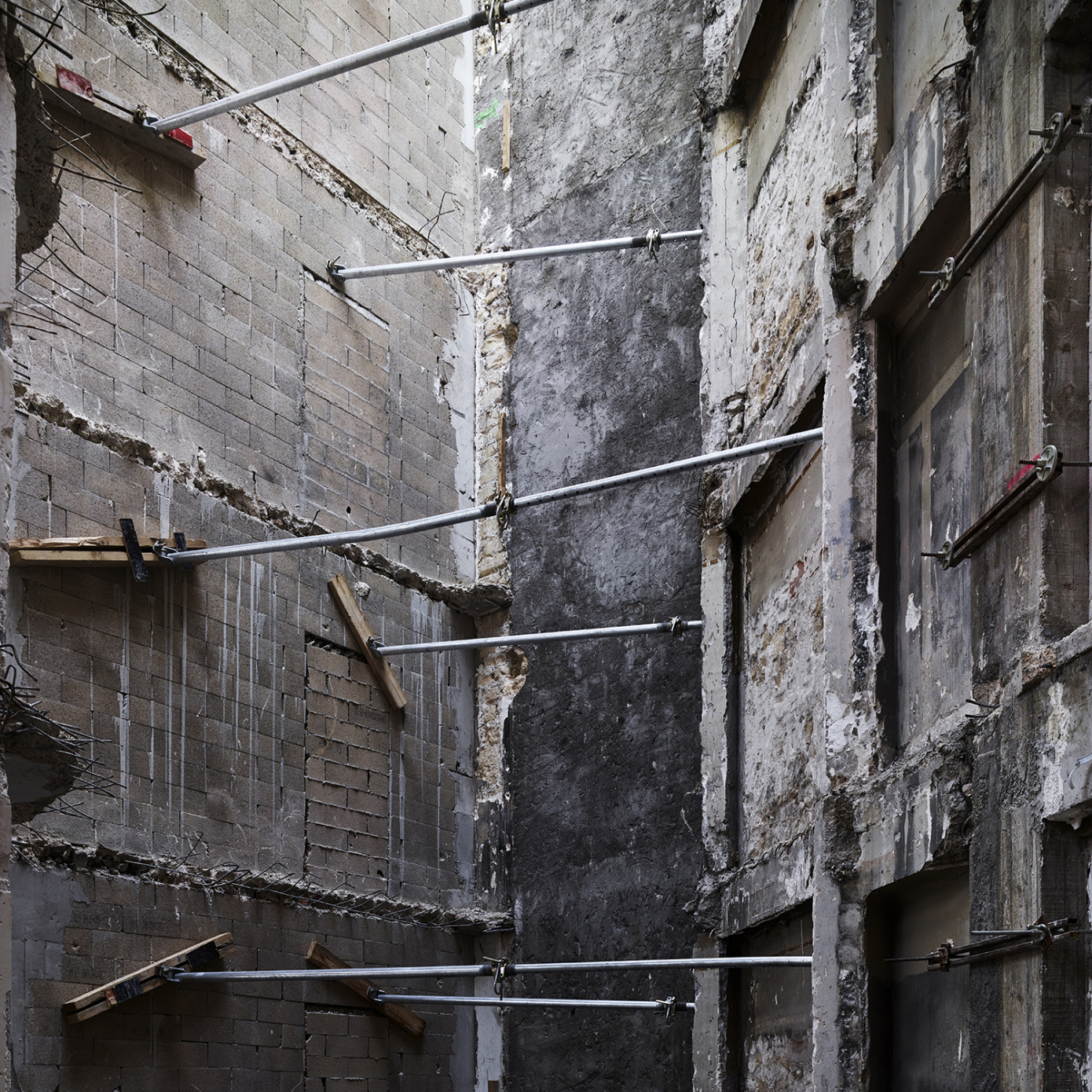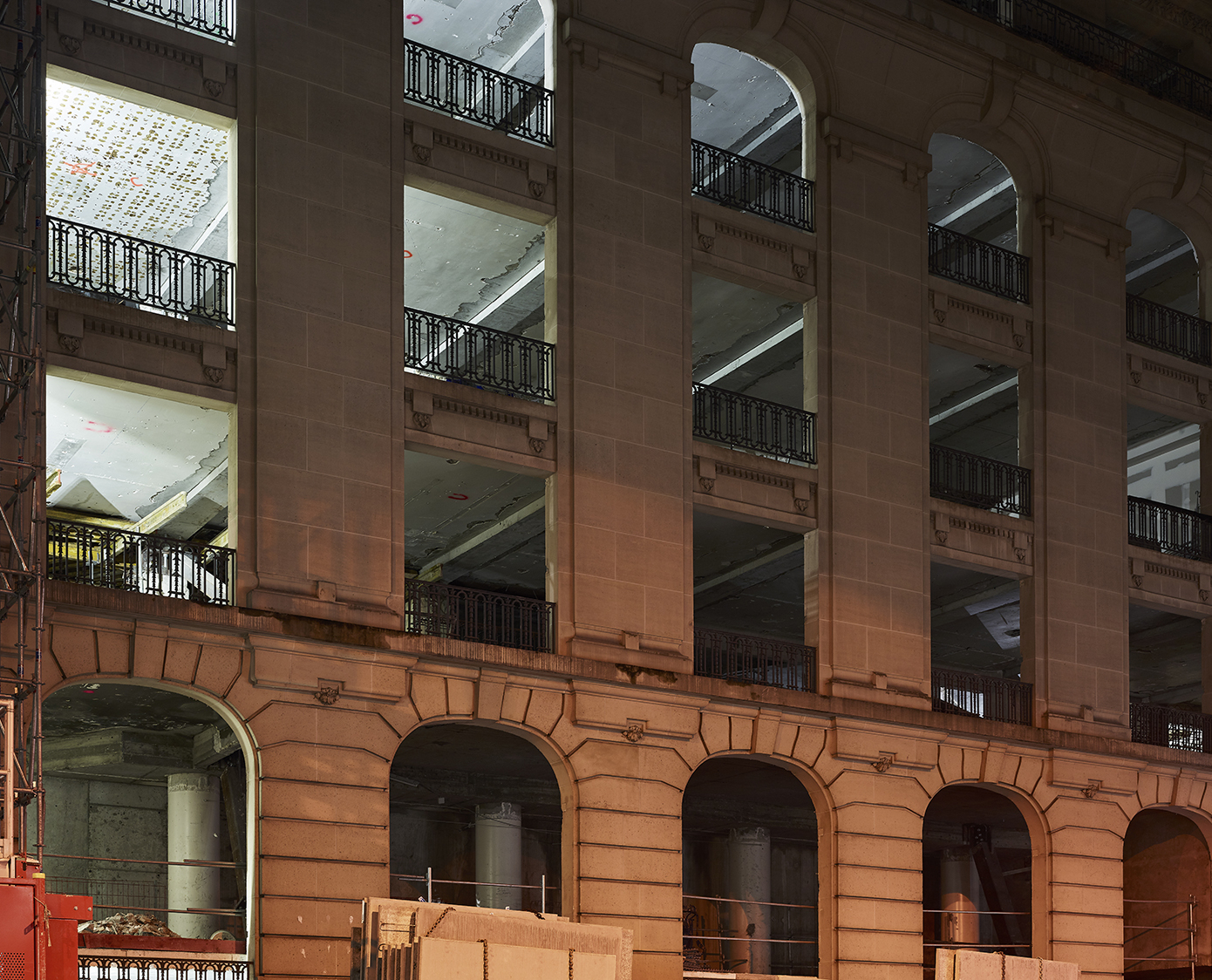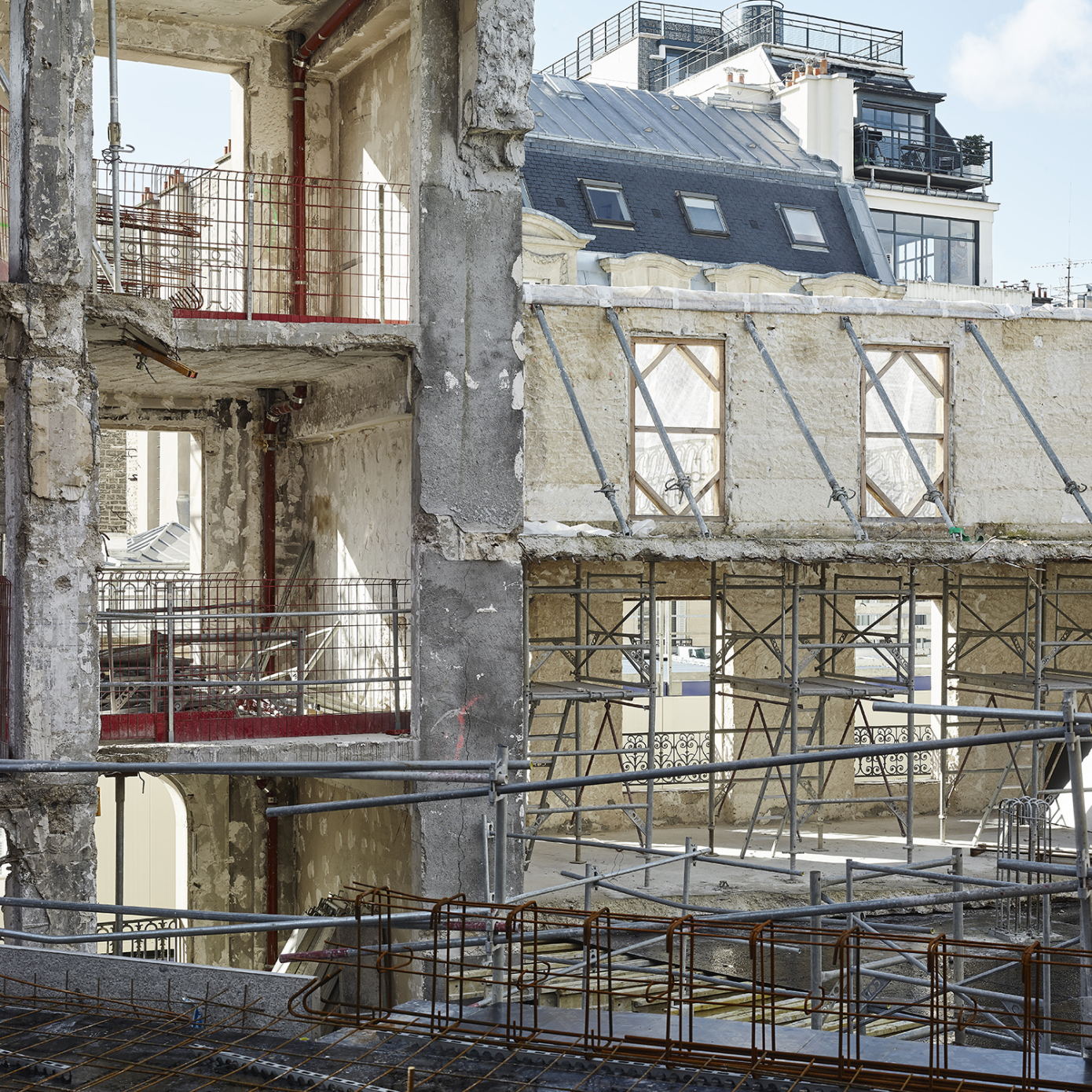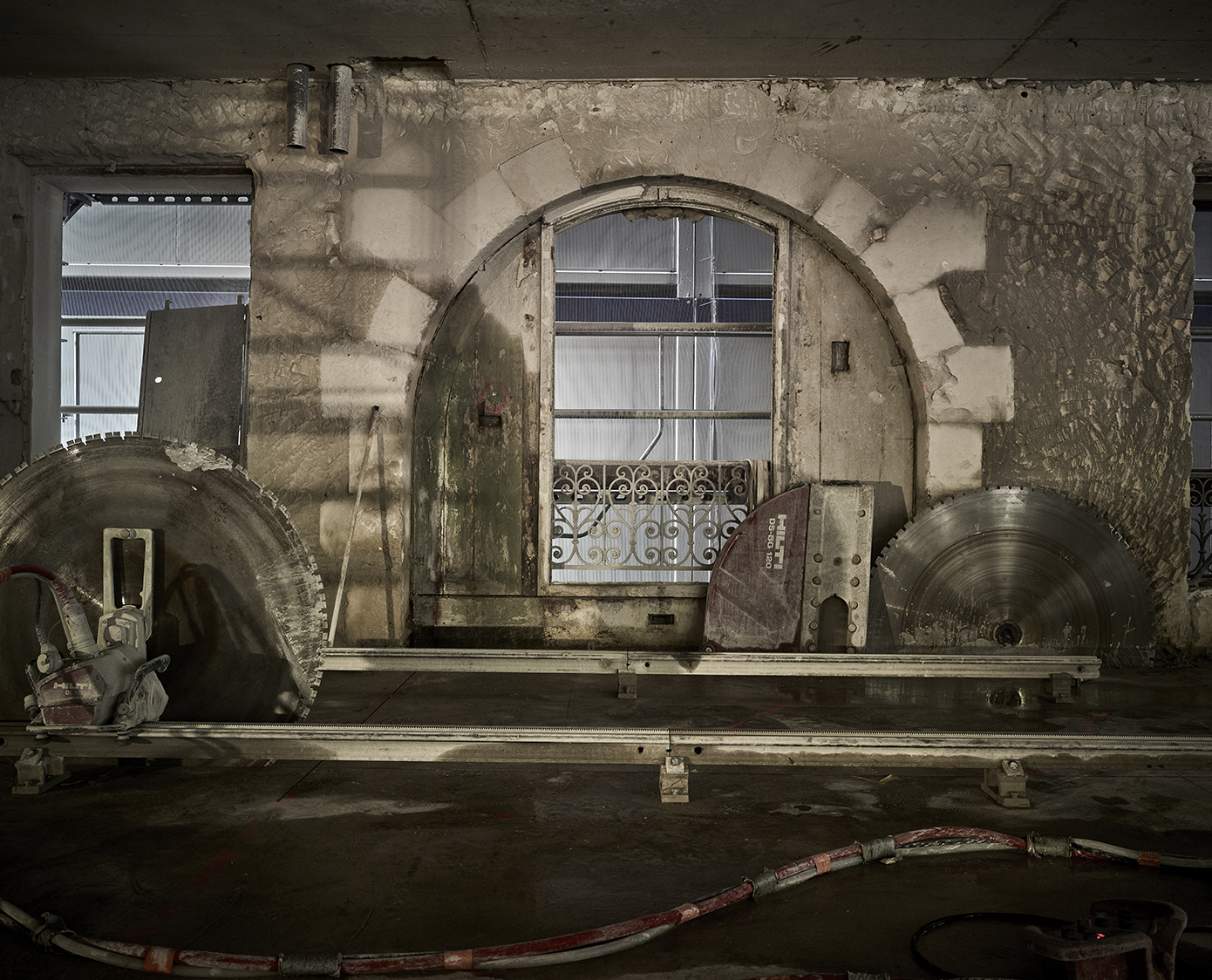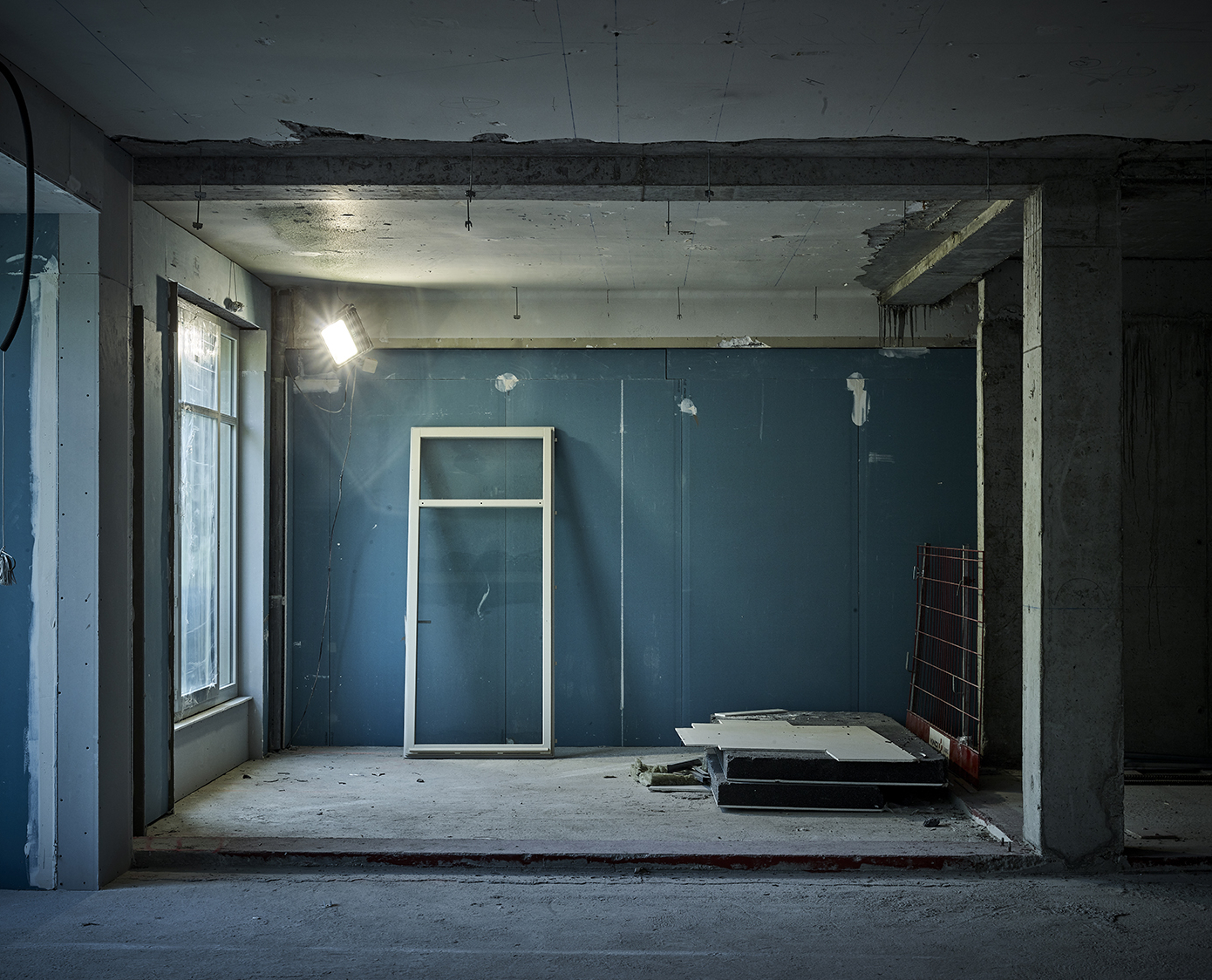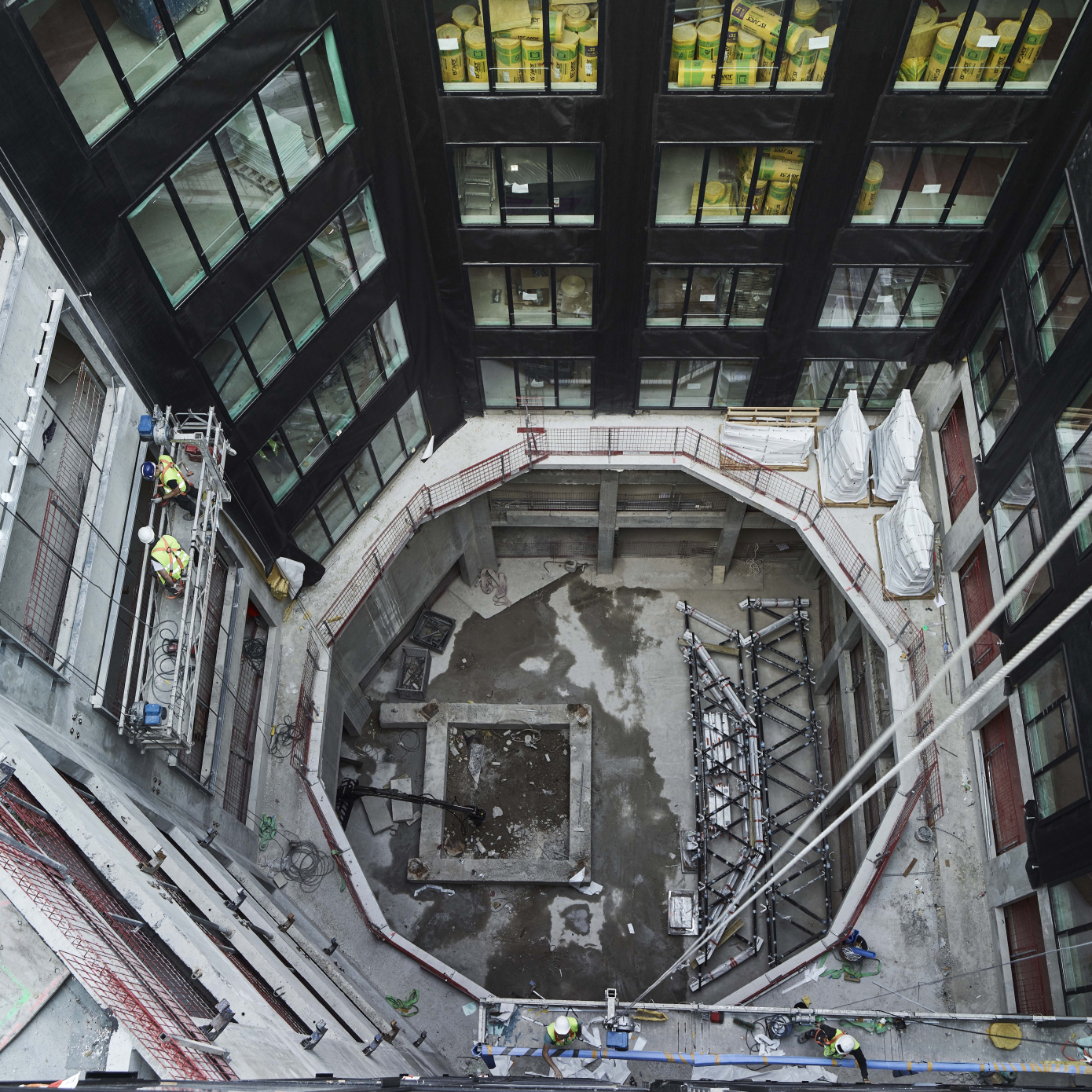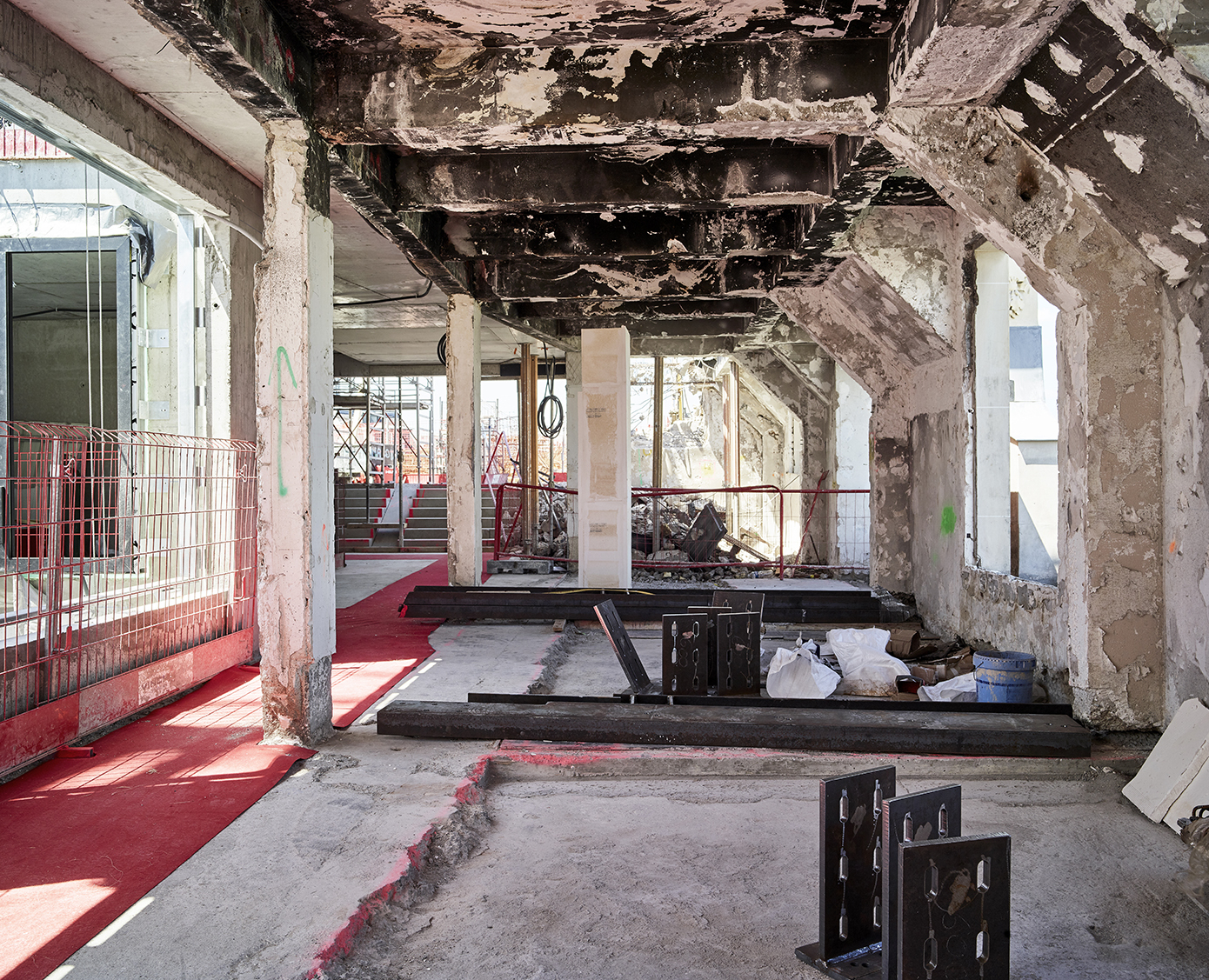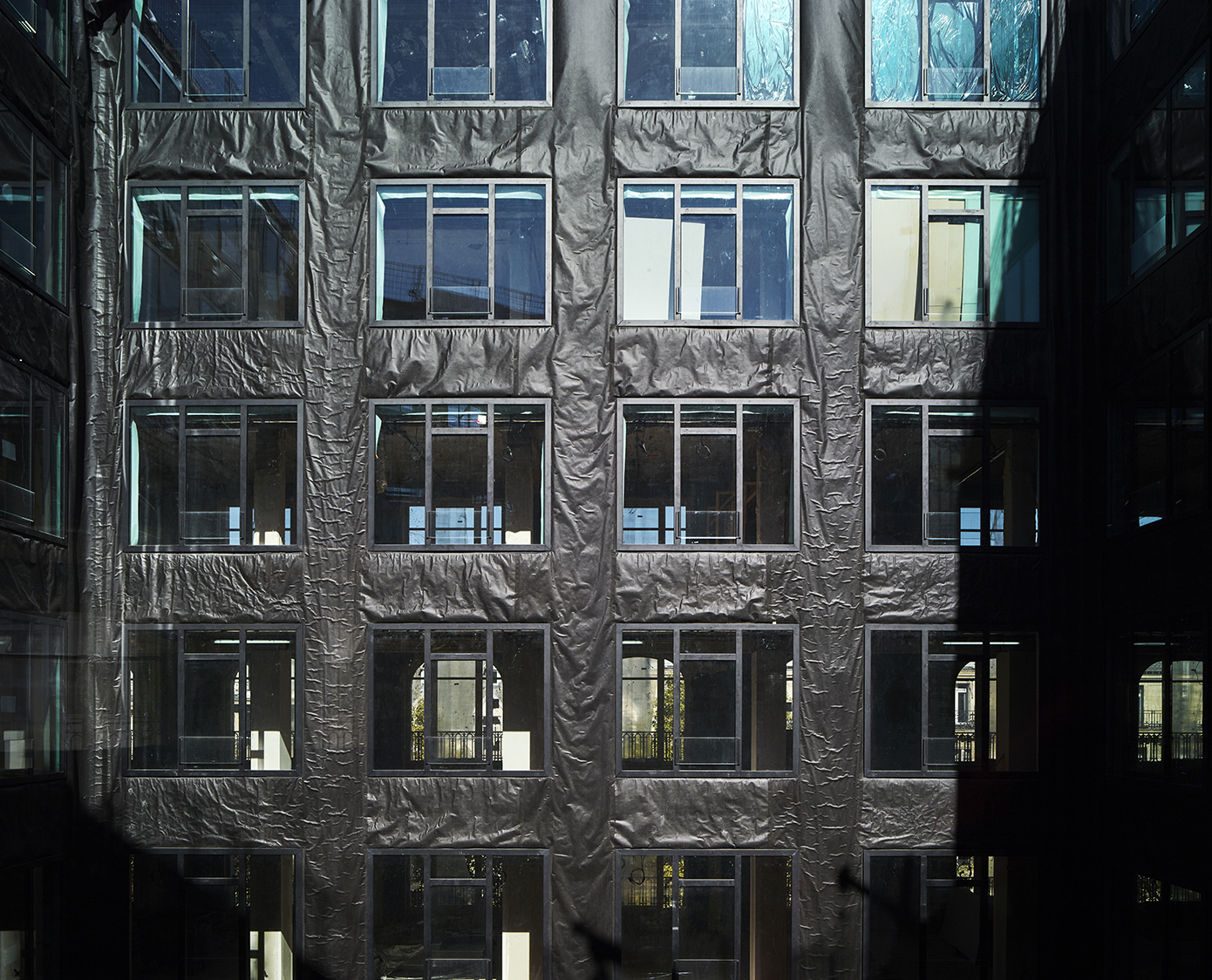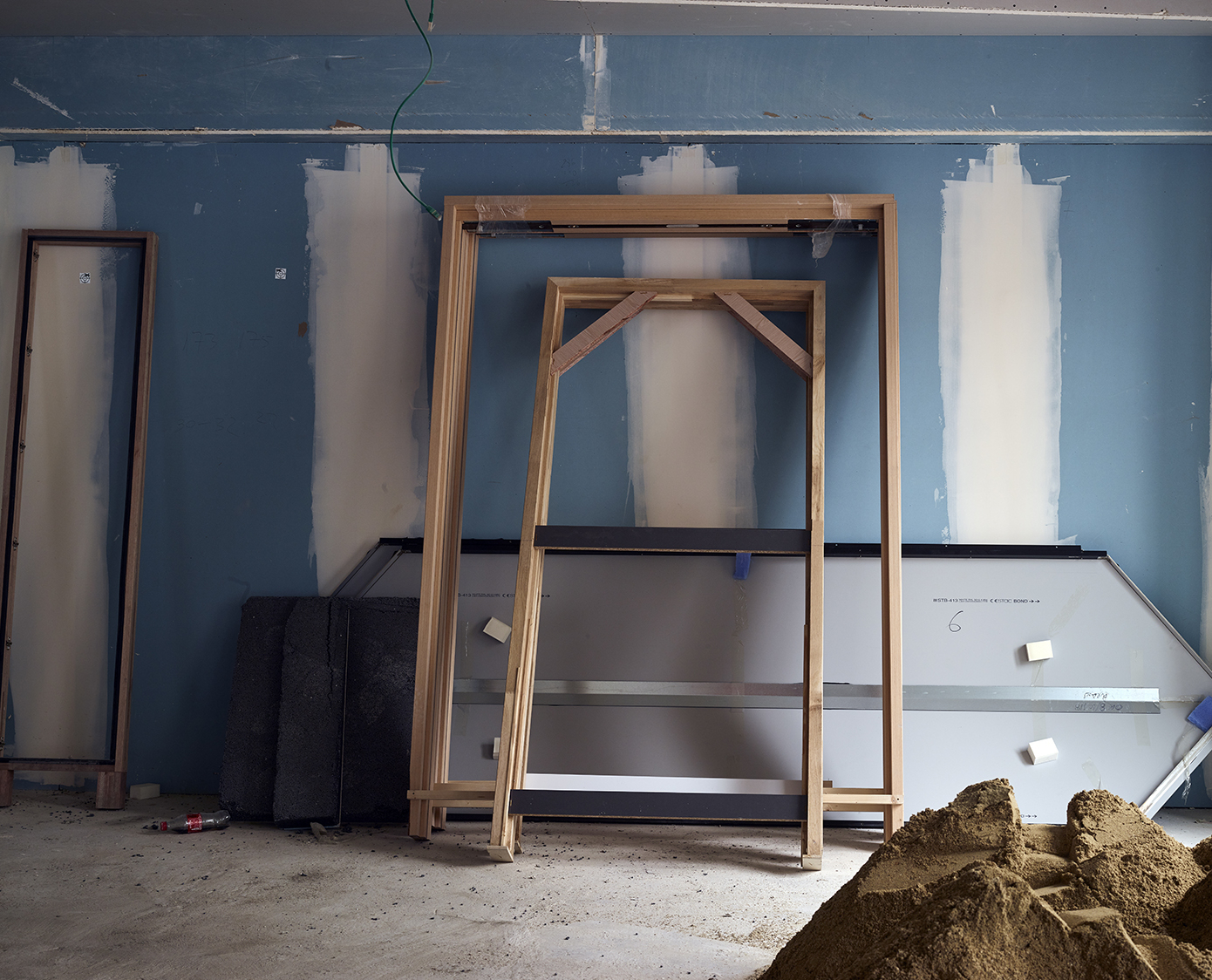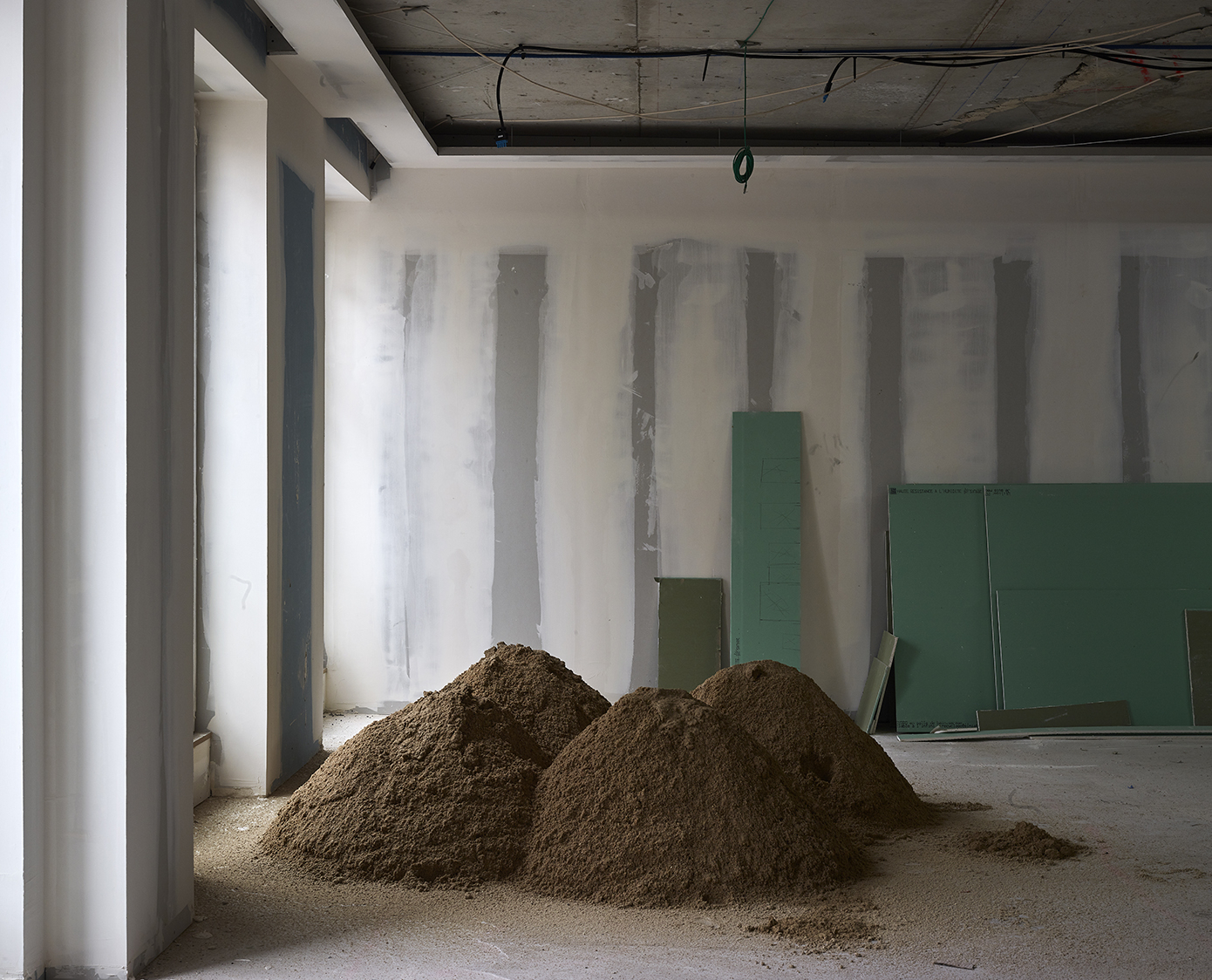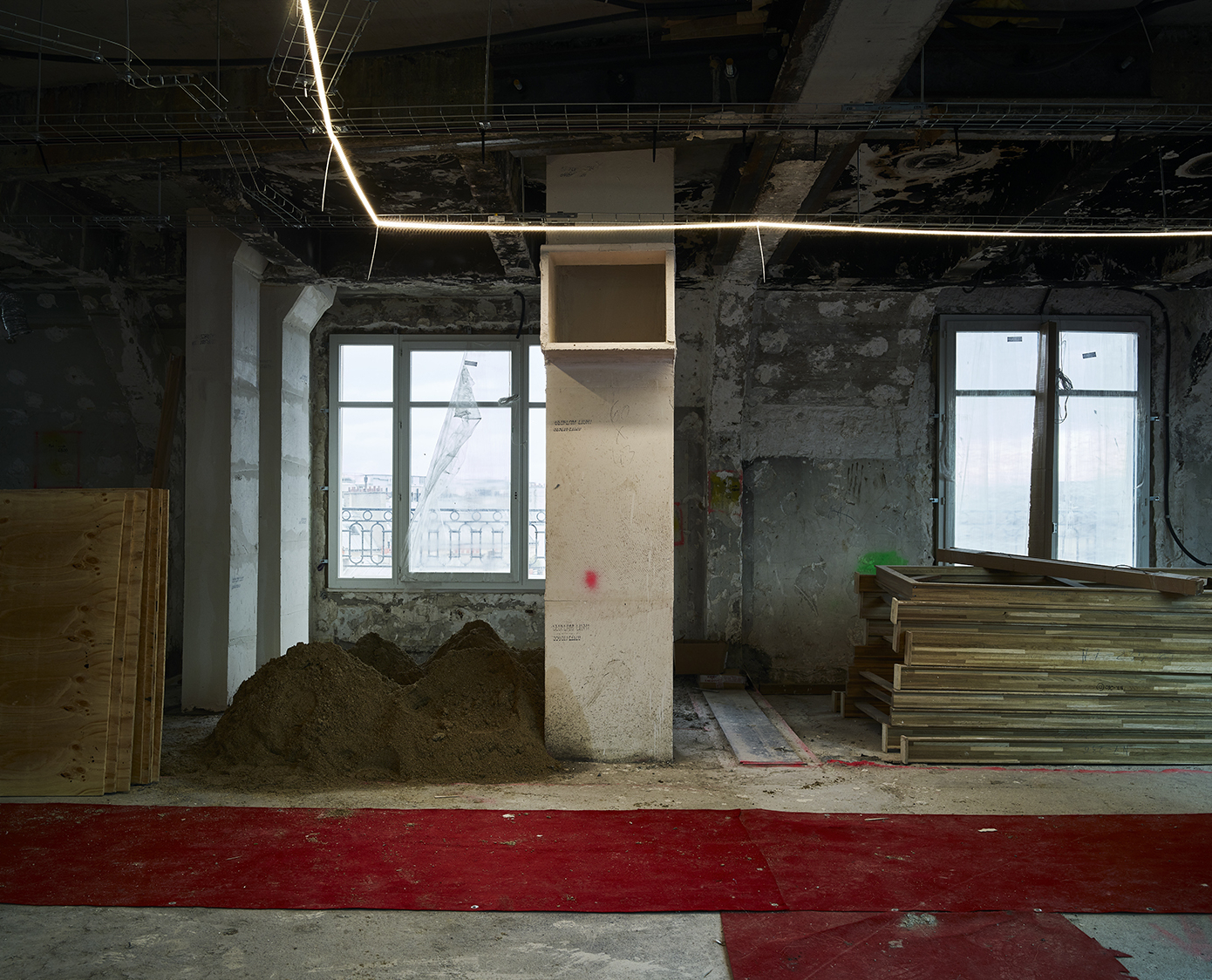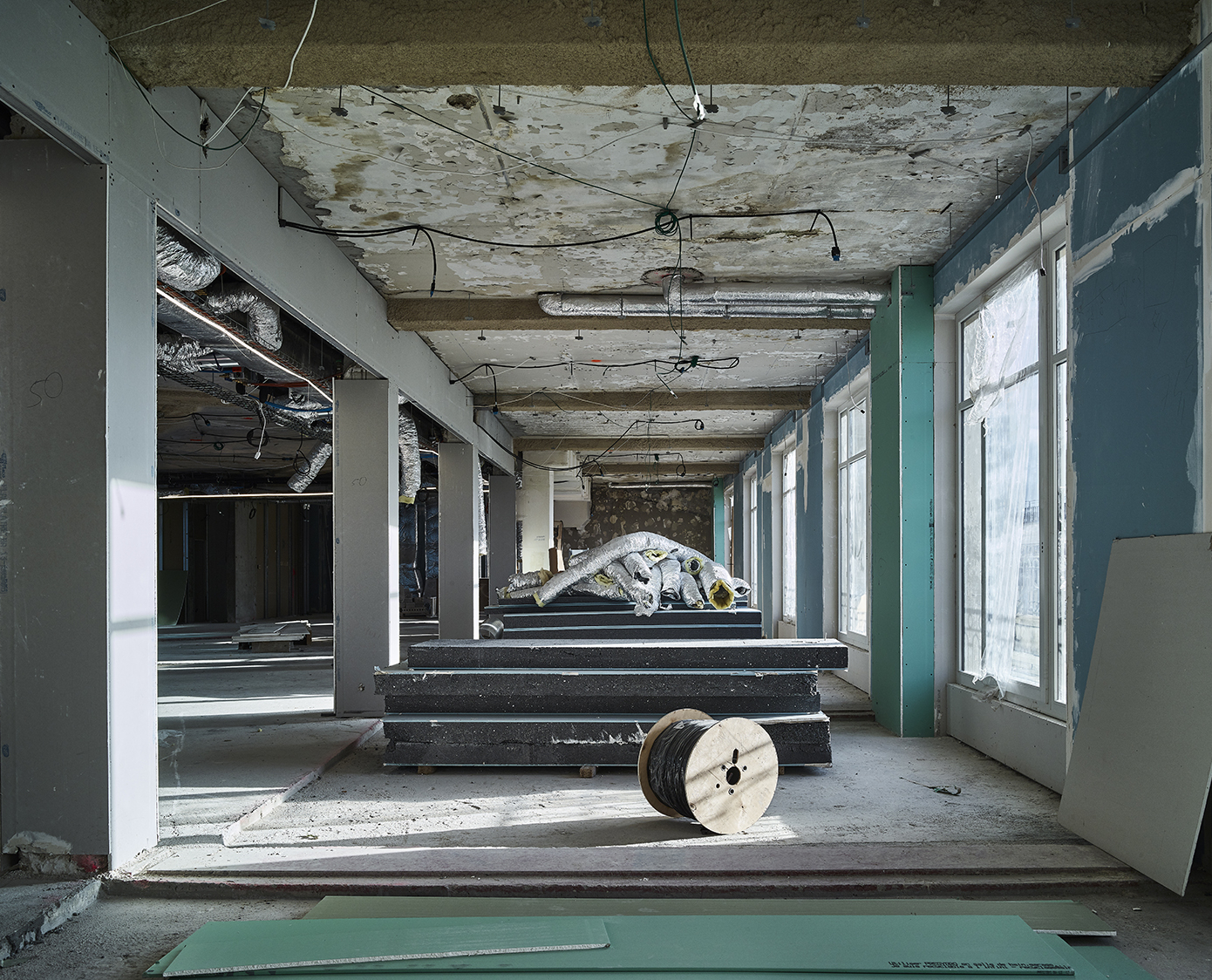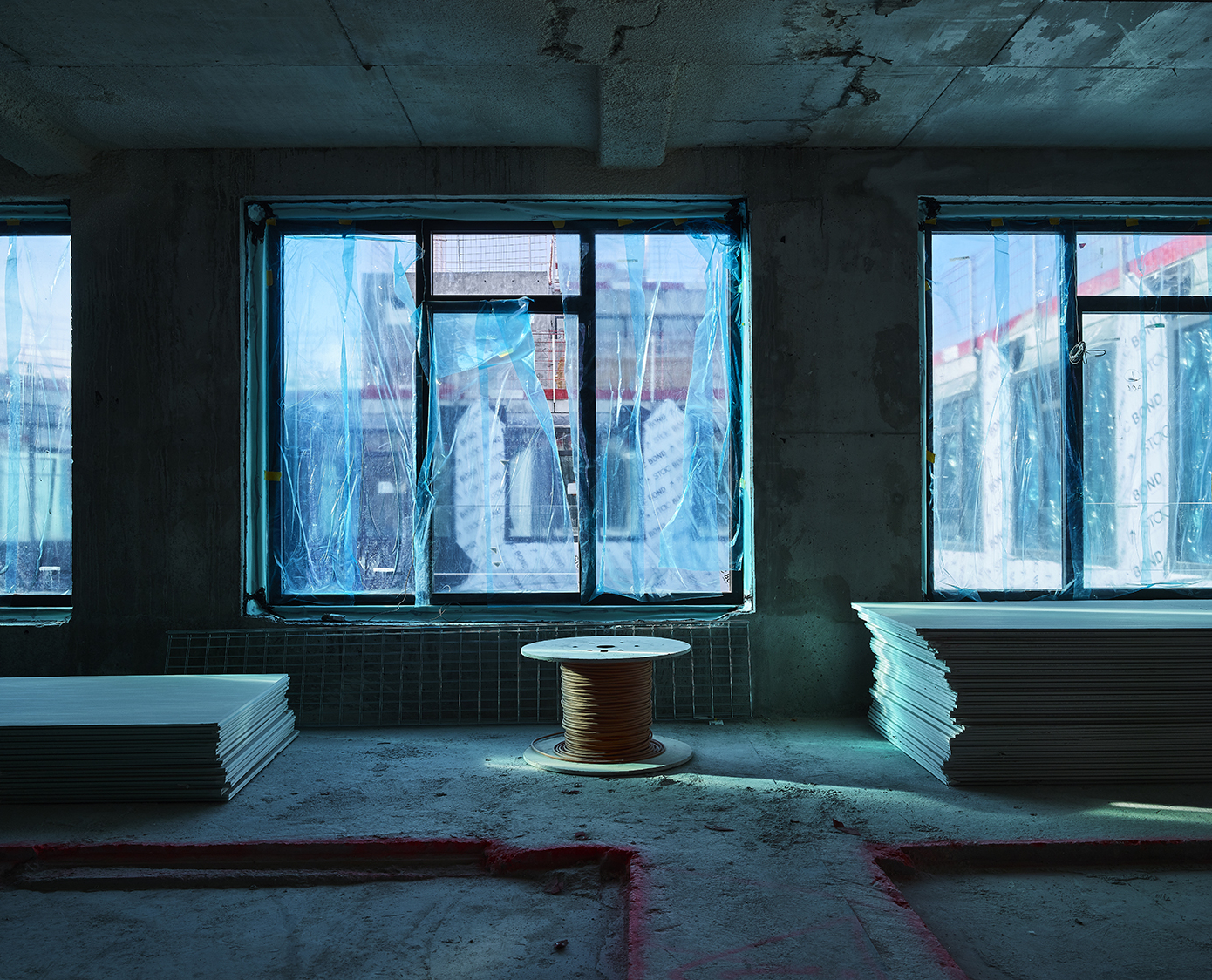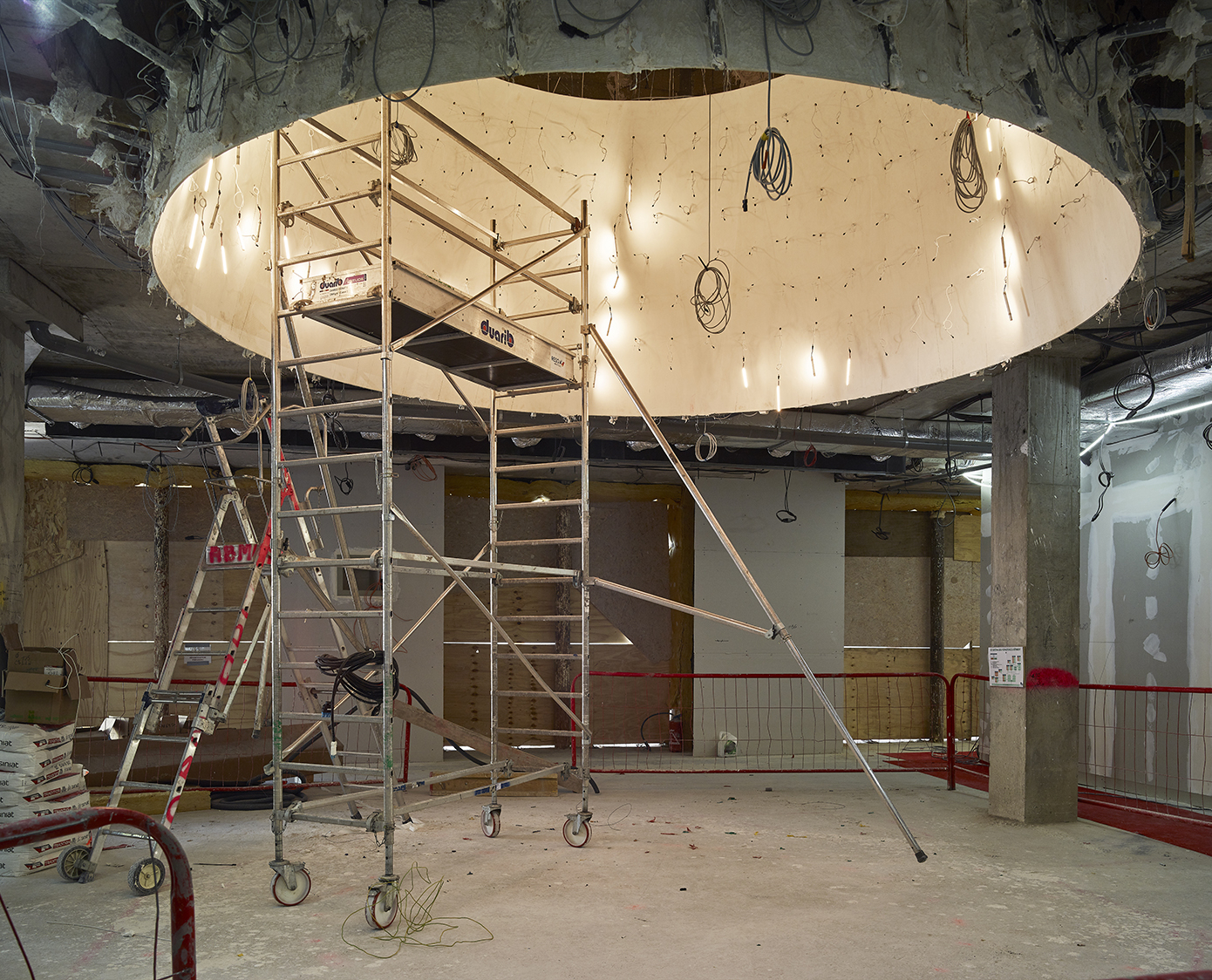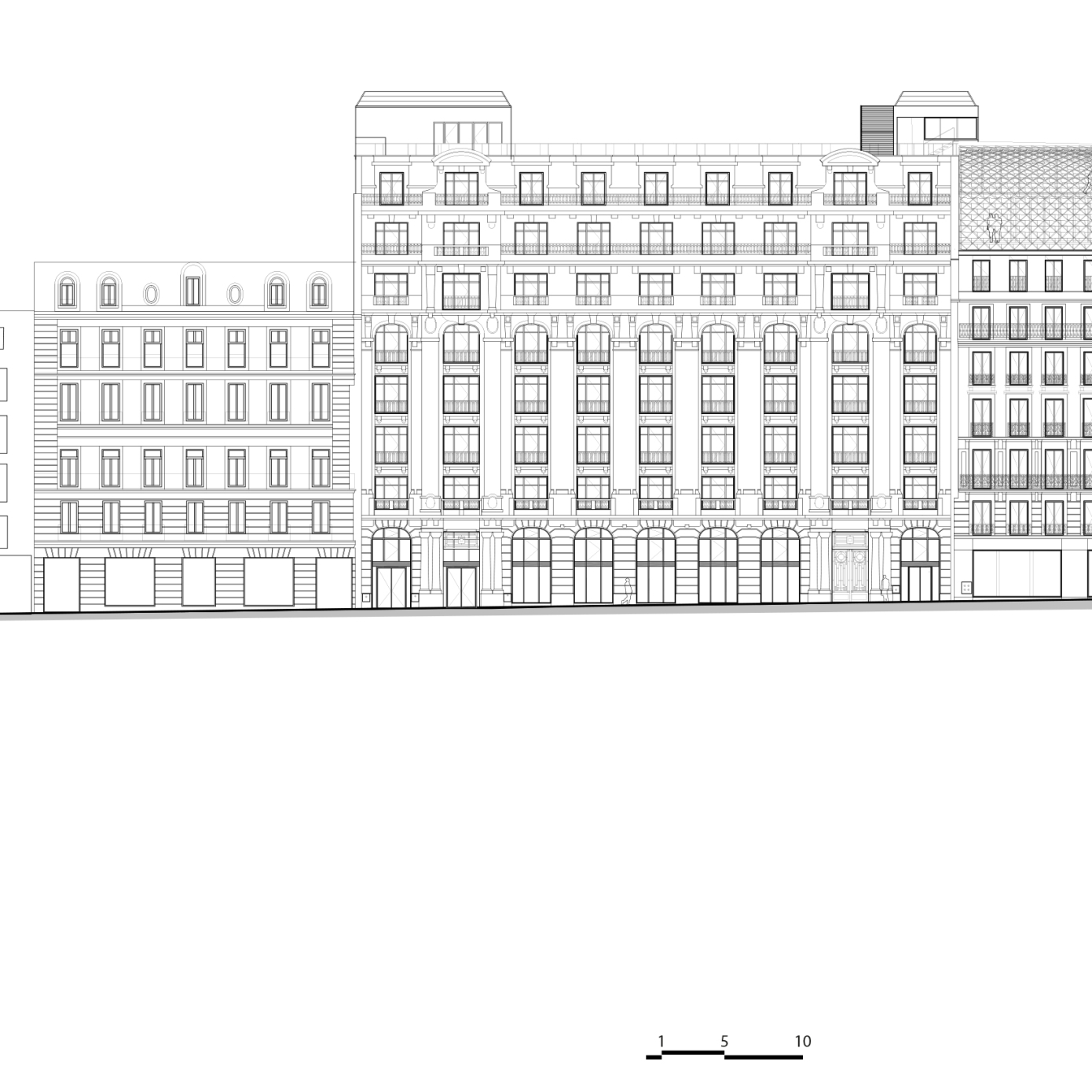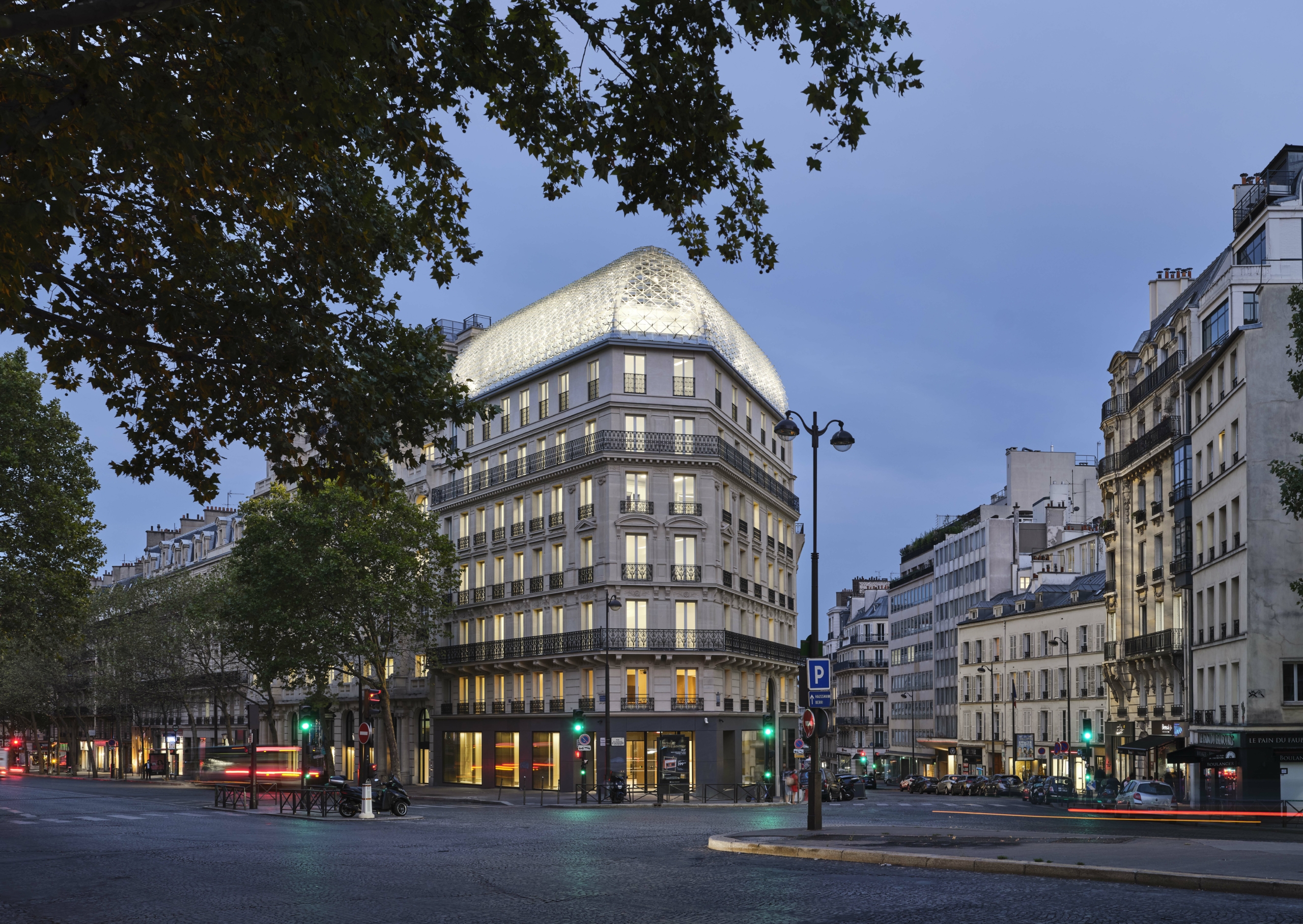
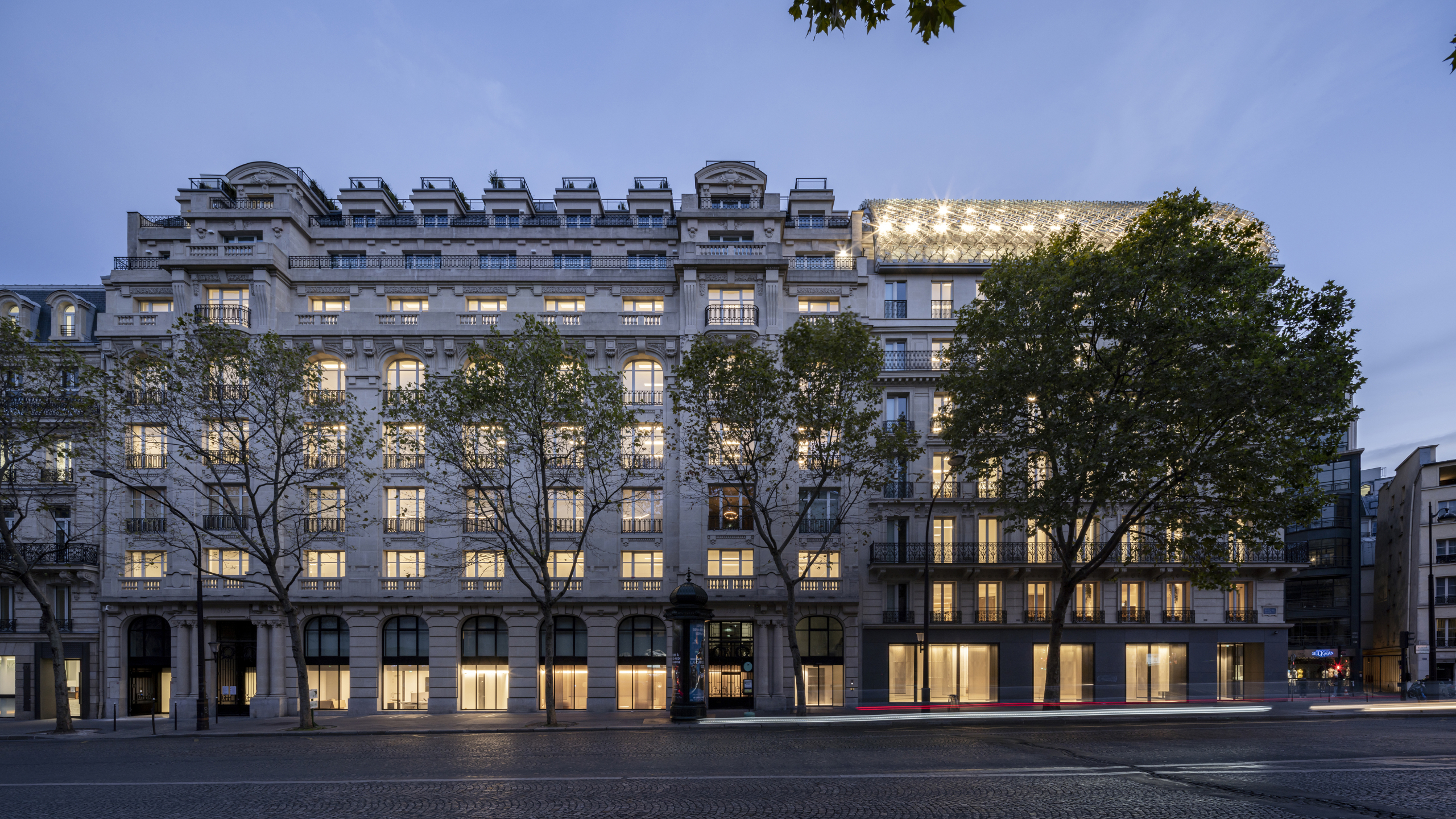
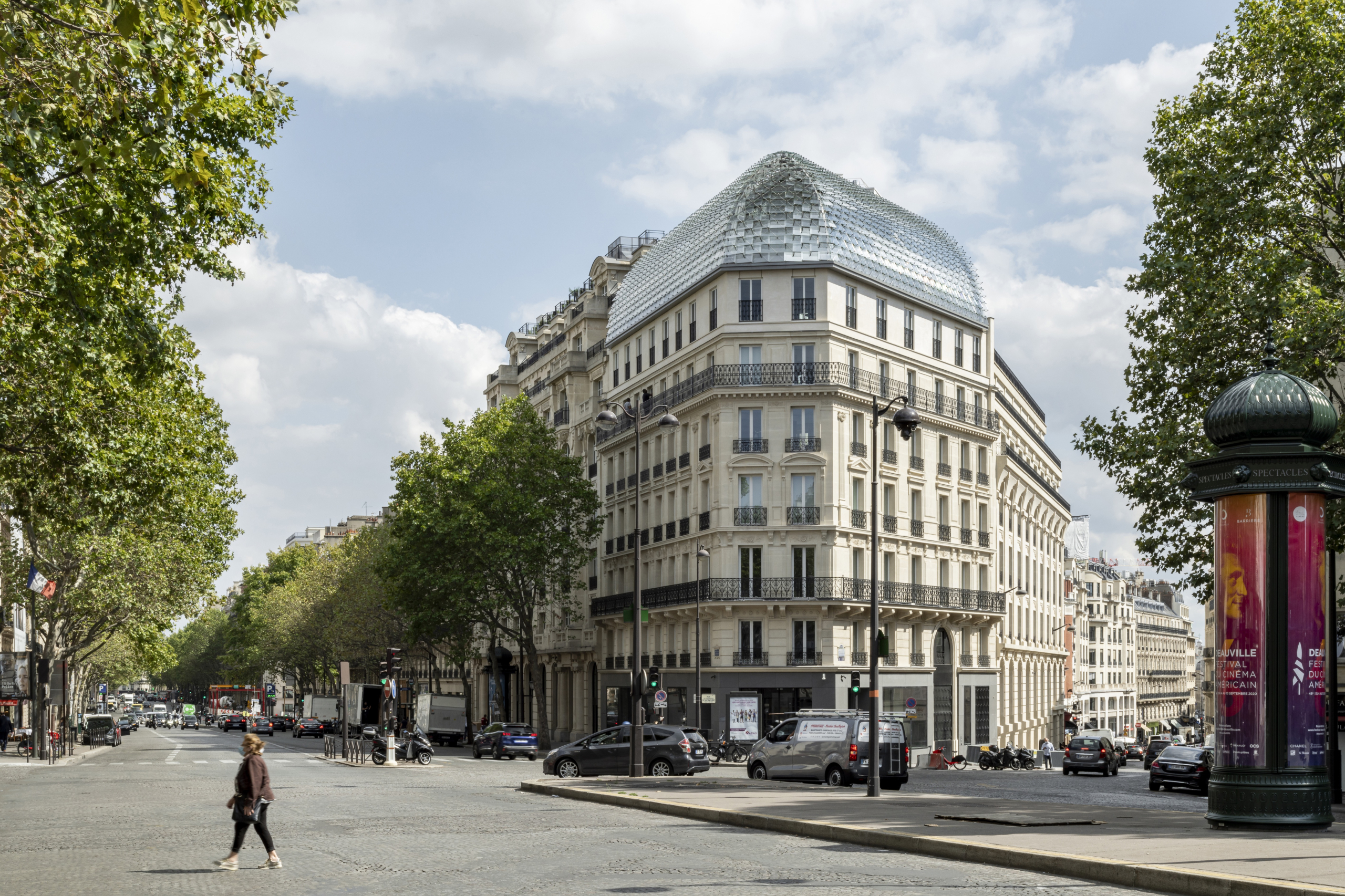
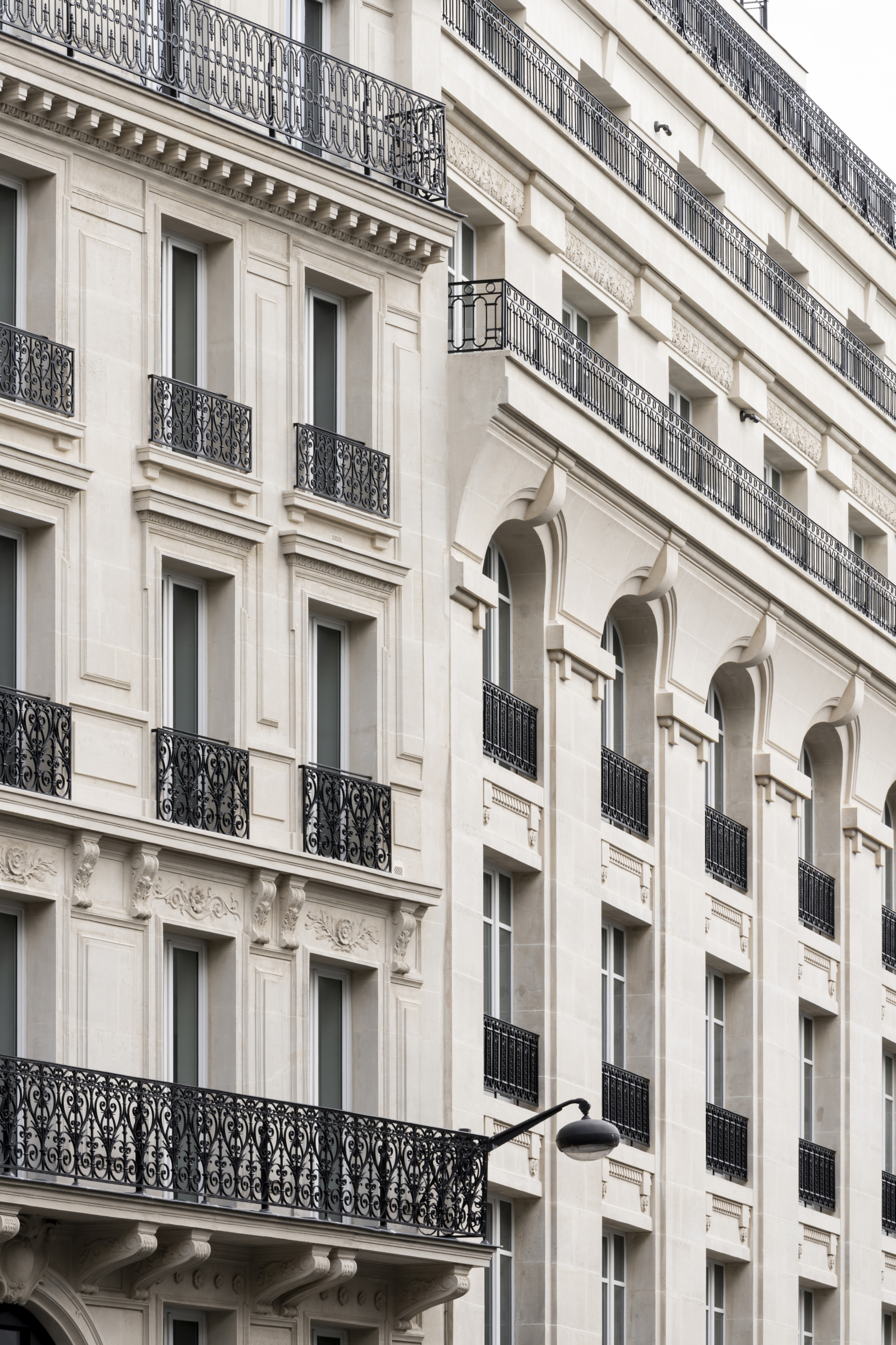
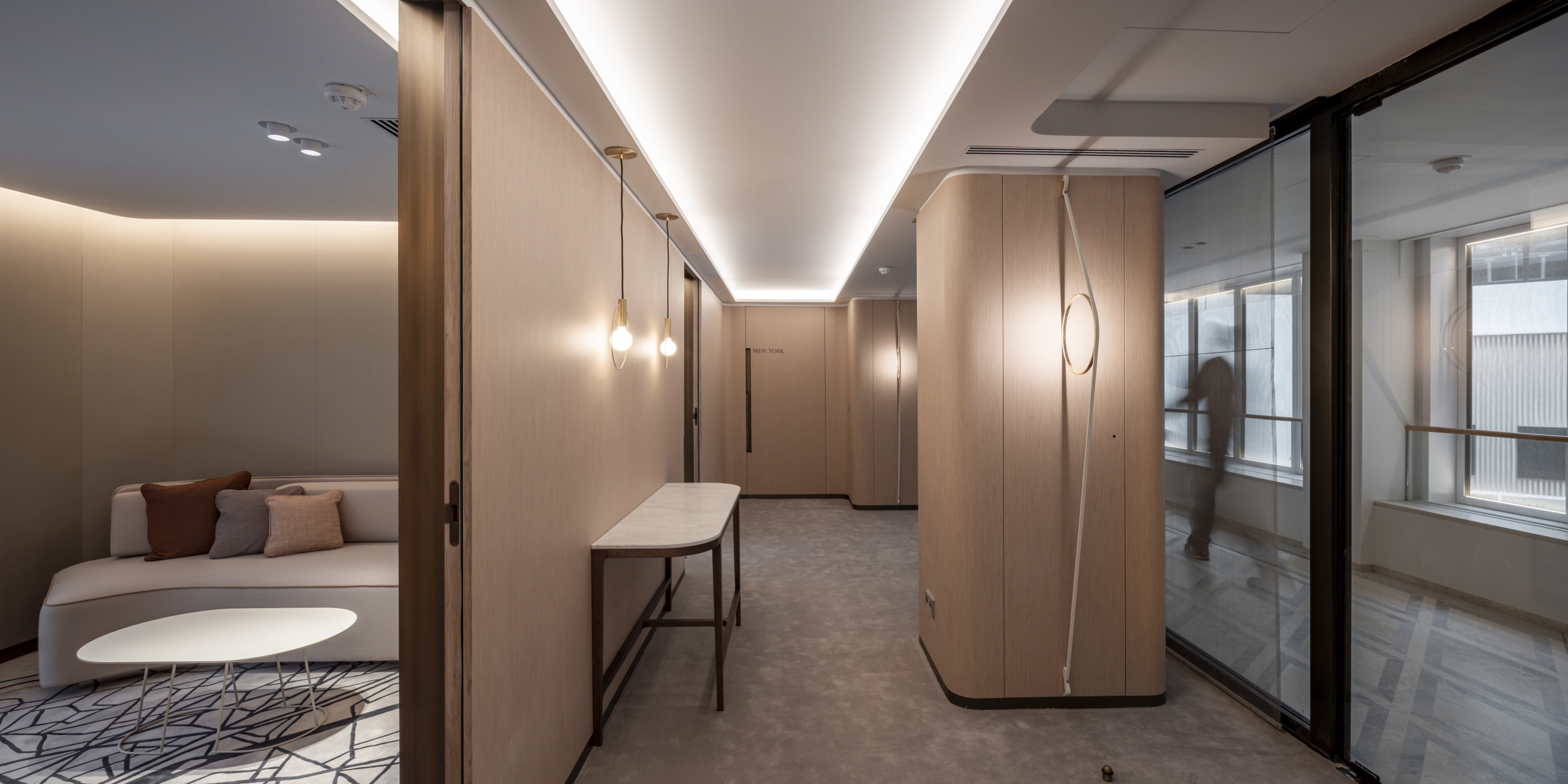
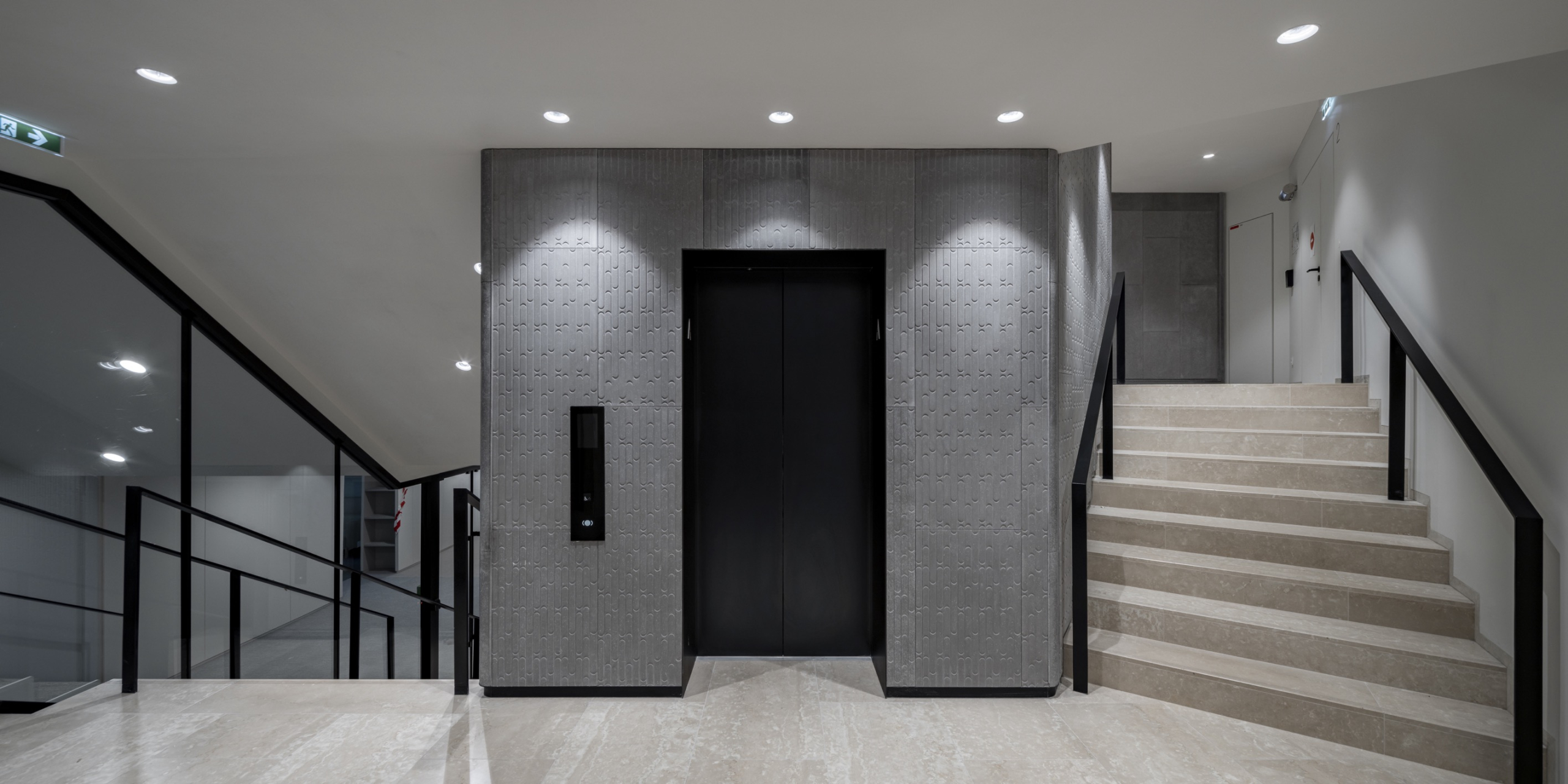
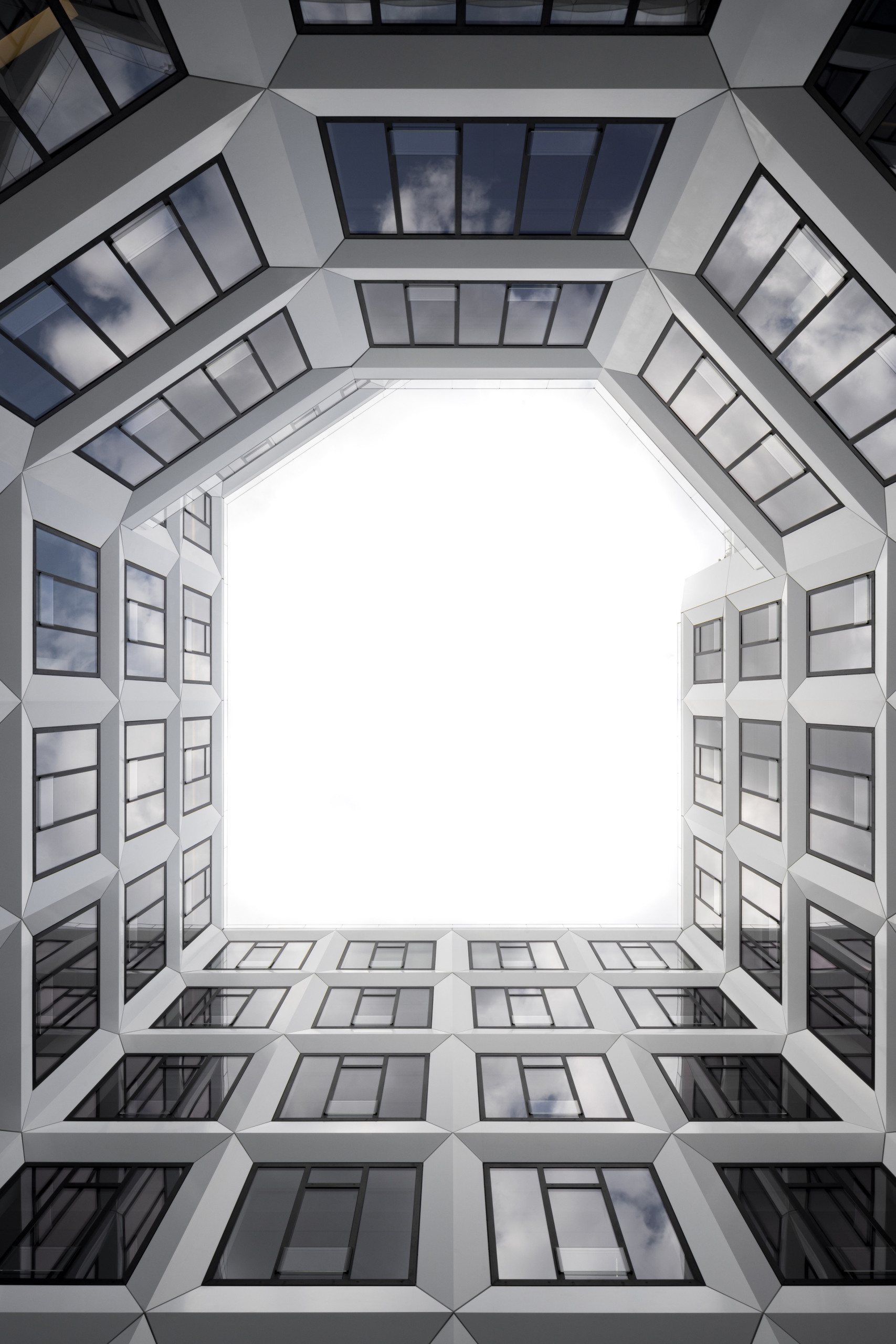
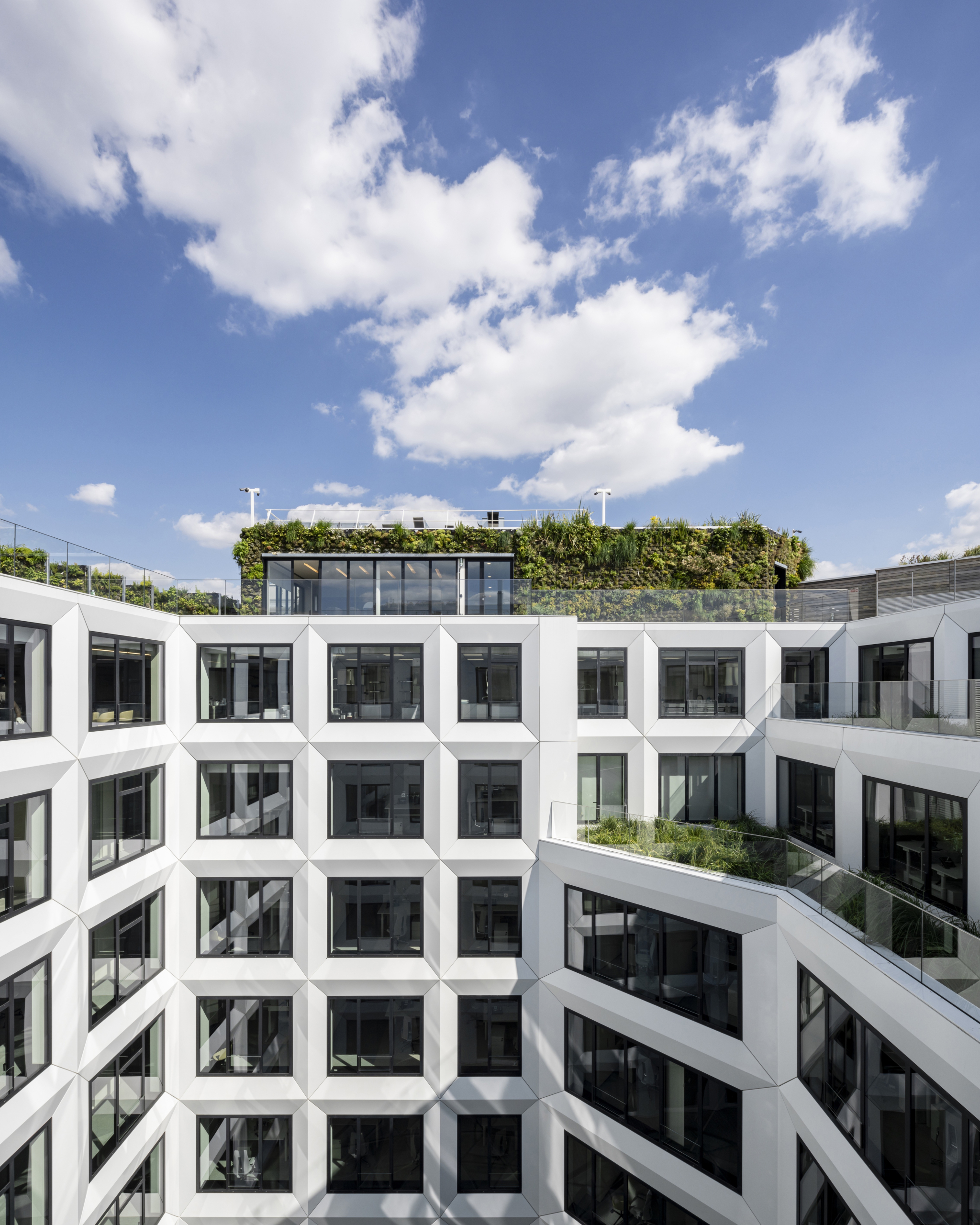
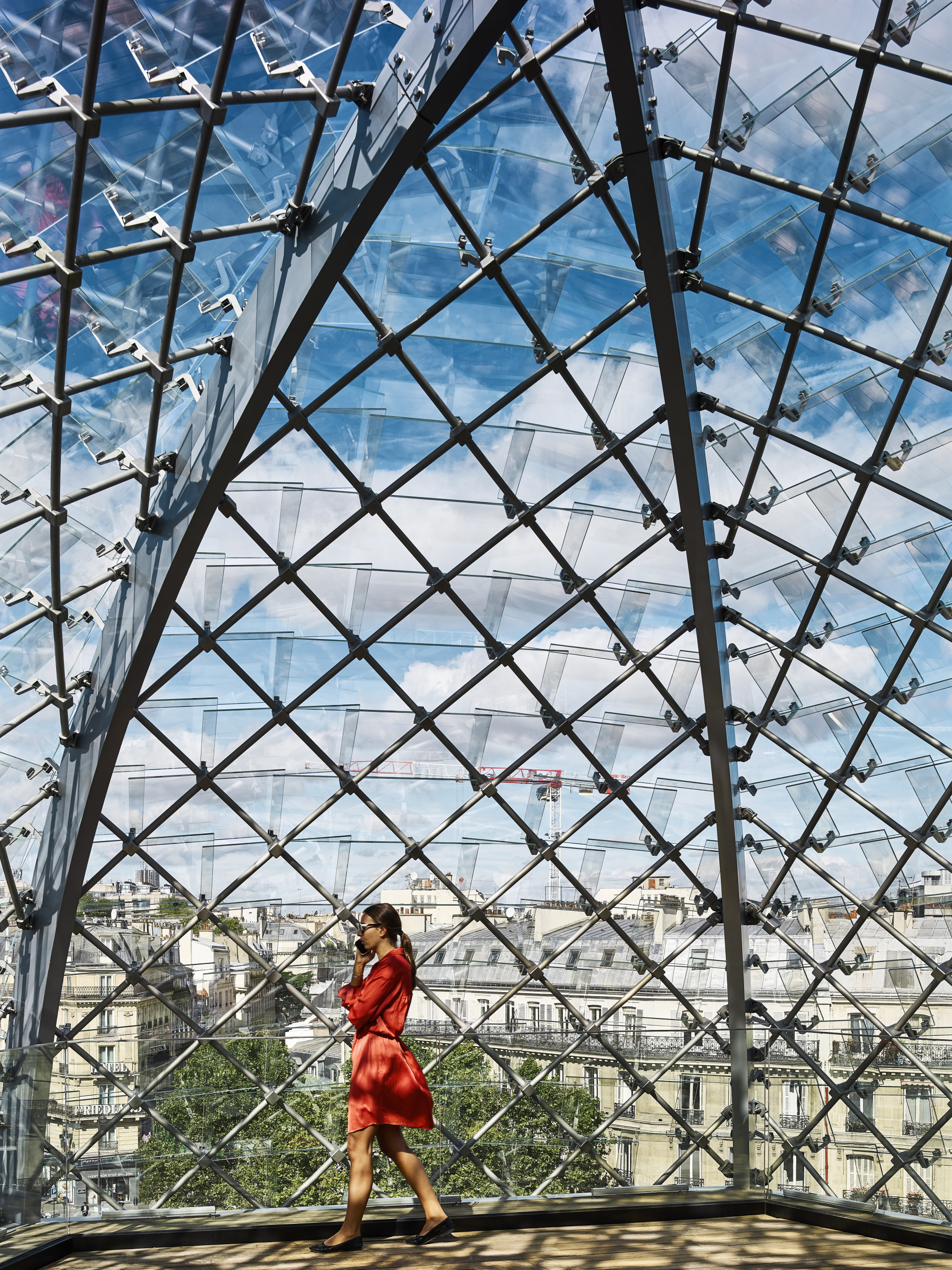
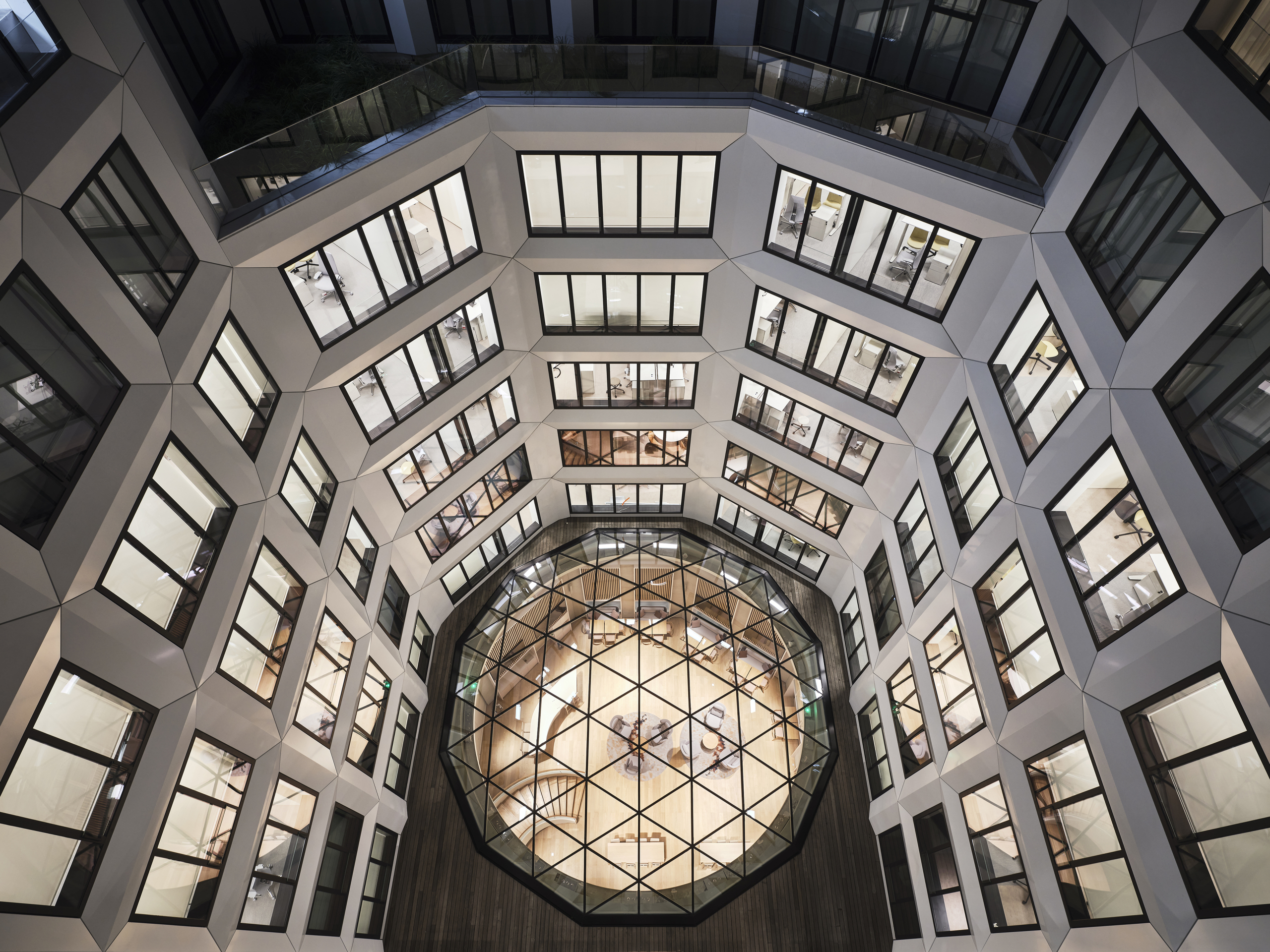
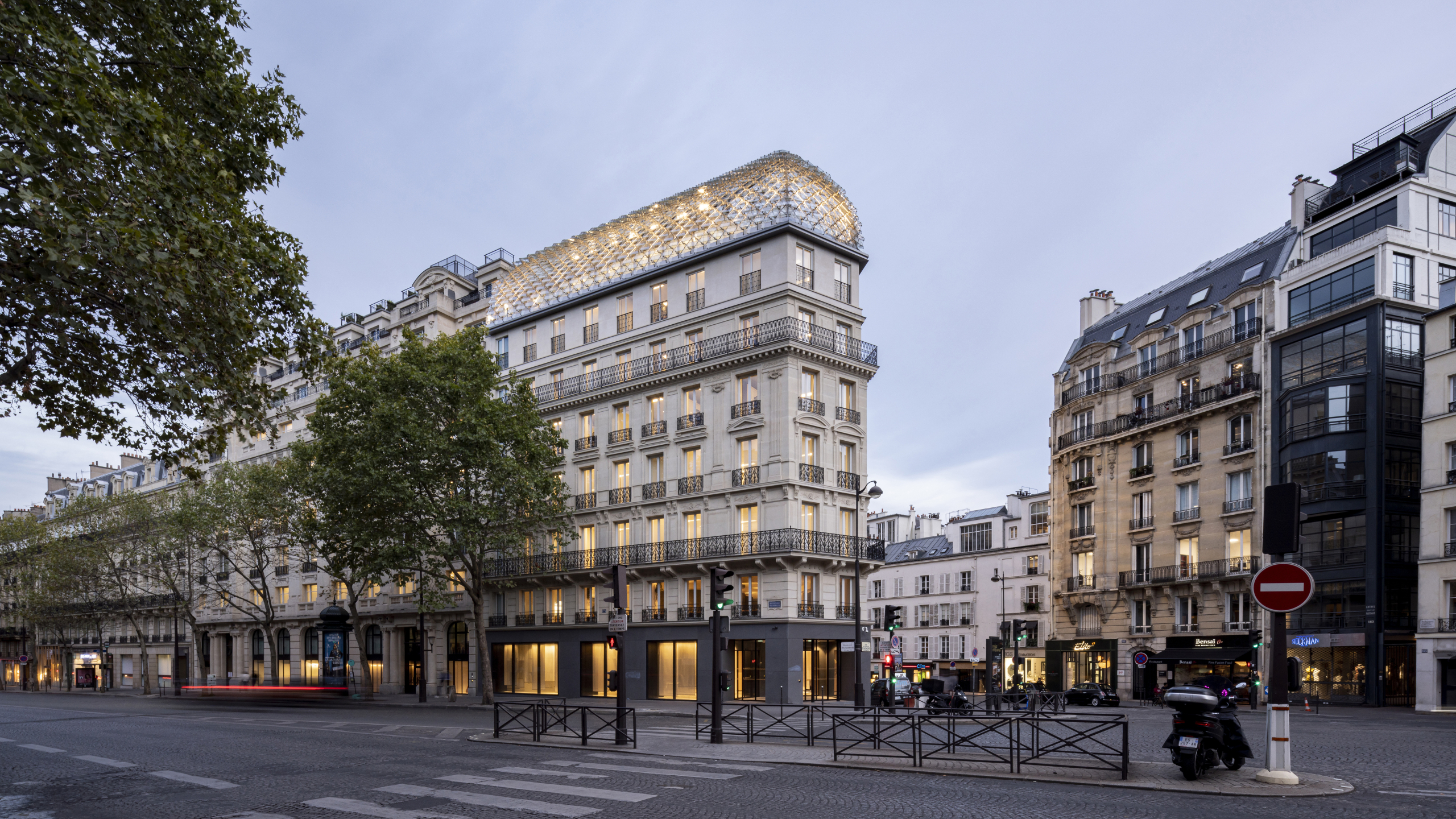
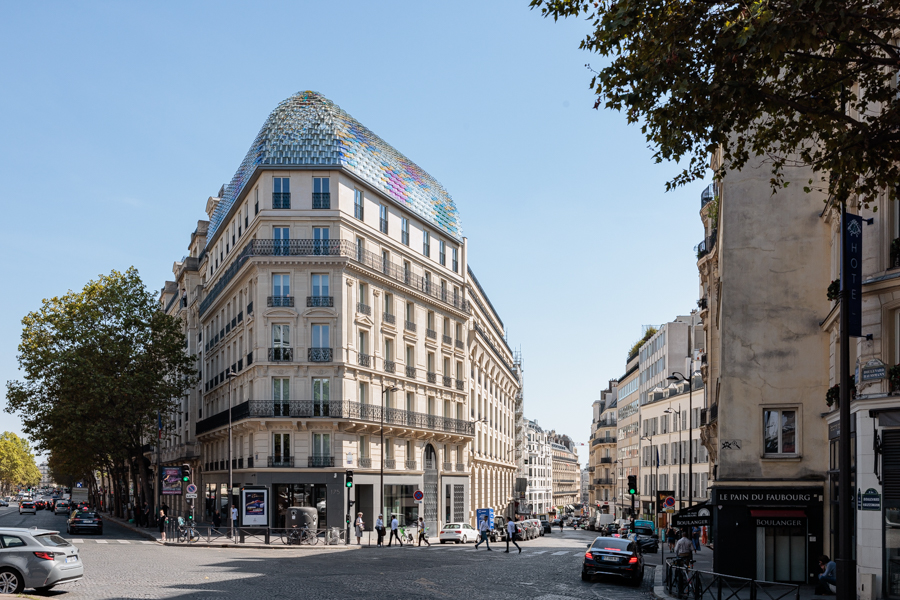
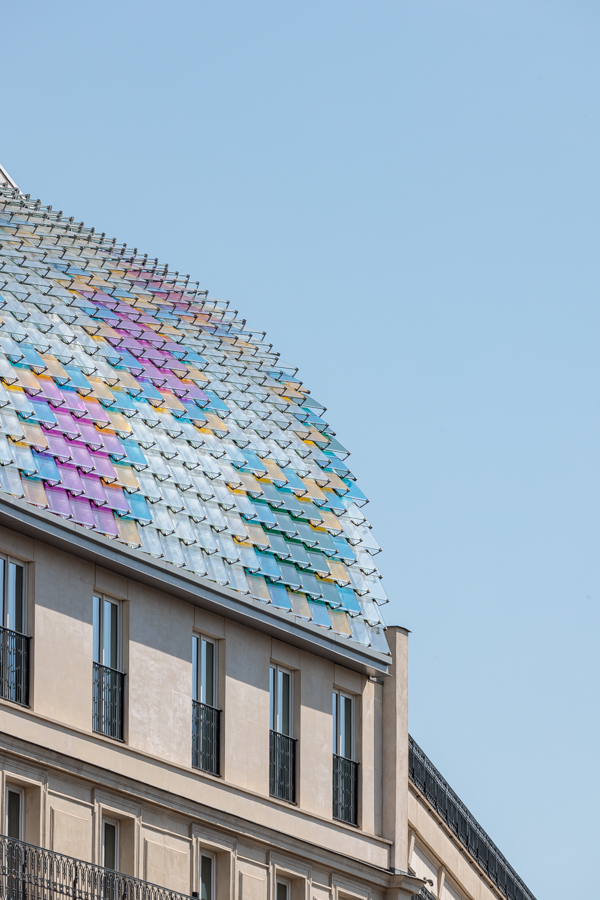
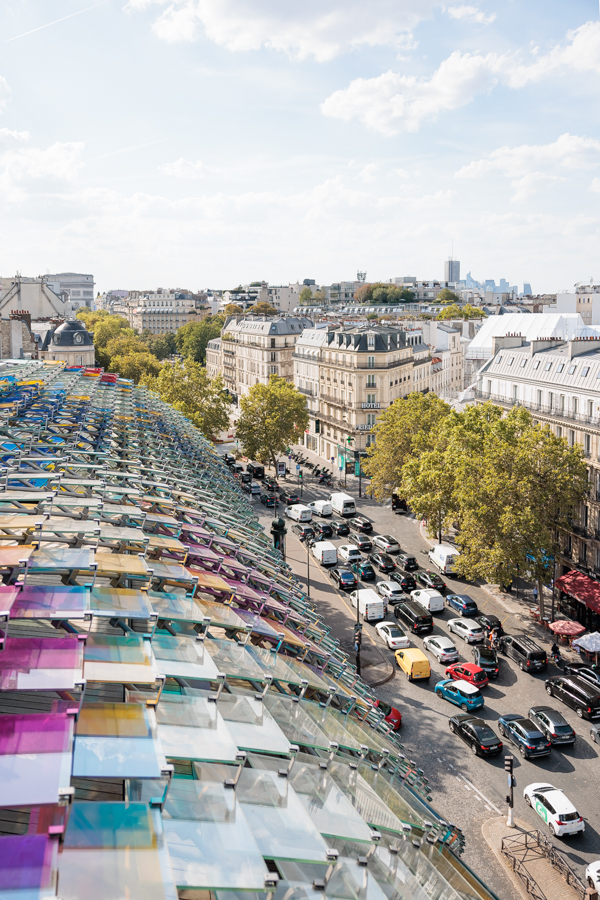
In the heart of the Central Business District, a stone’s throw from the Étoile, 173-175 Haussmann stands at the head of Boulevard Haussmann and Rue du Faubourg Saint-Honoré. It comprises two buildings: 175, a classic 1863 Haussmann, and 173, dating from the early 1920s, with Art Deco overtones. Restructuring in the early 1990s brought the two buildings together for a tertiary program, but to the benefit of the floor space and with little coherence. Outdated in terms of workspace design, decoration and technology, the complex suffered from a number of architectural and functional shortcomings, notably a problem of levels between the buildings and a poor-quality access sequence from the side, via a basement overlooking a dimly-lit patio. The restructuring project is an opportunity to restore coherence and character.
Restoring clarity and coherence
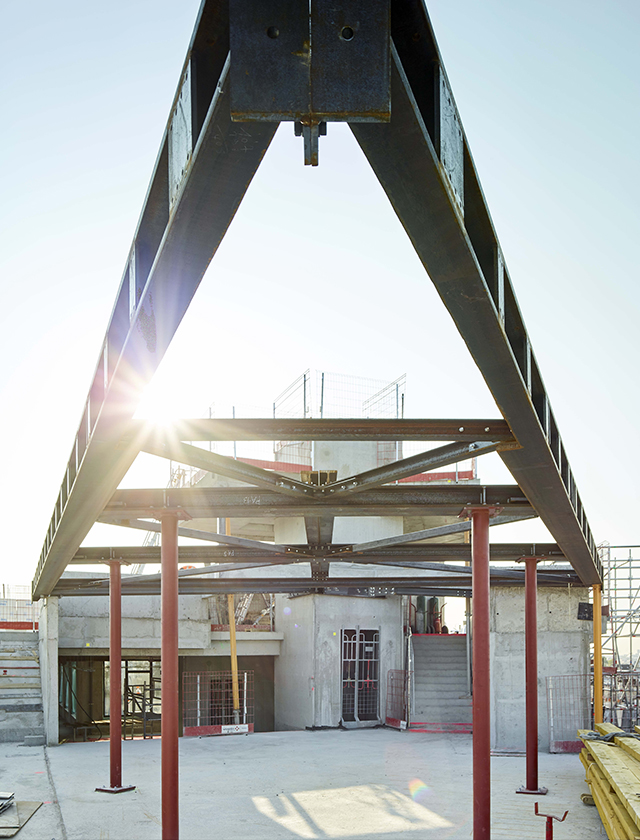
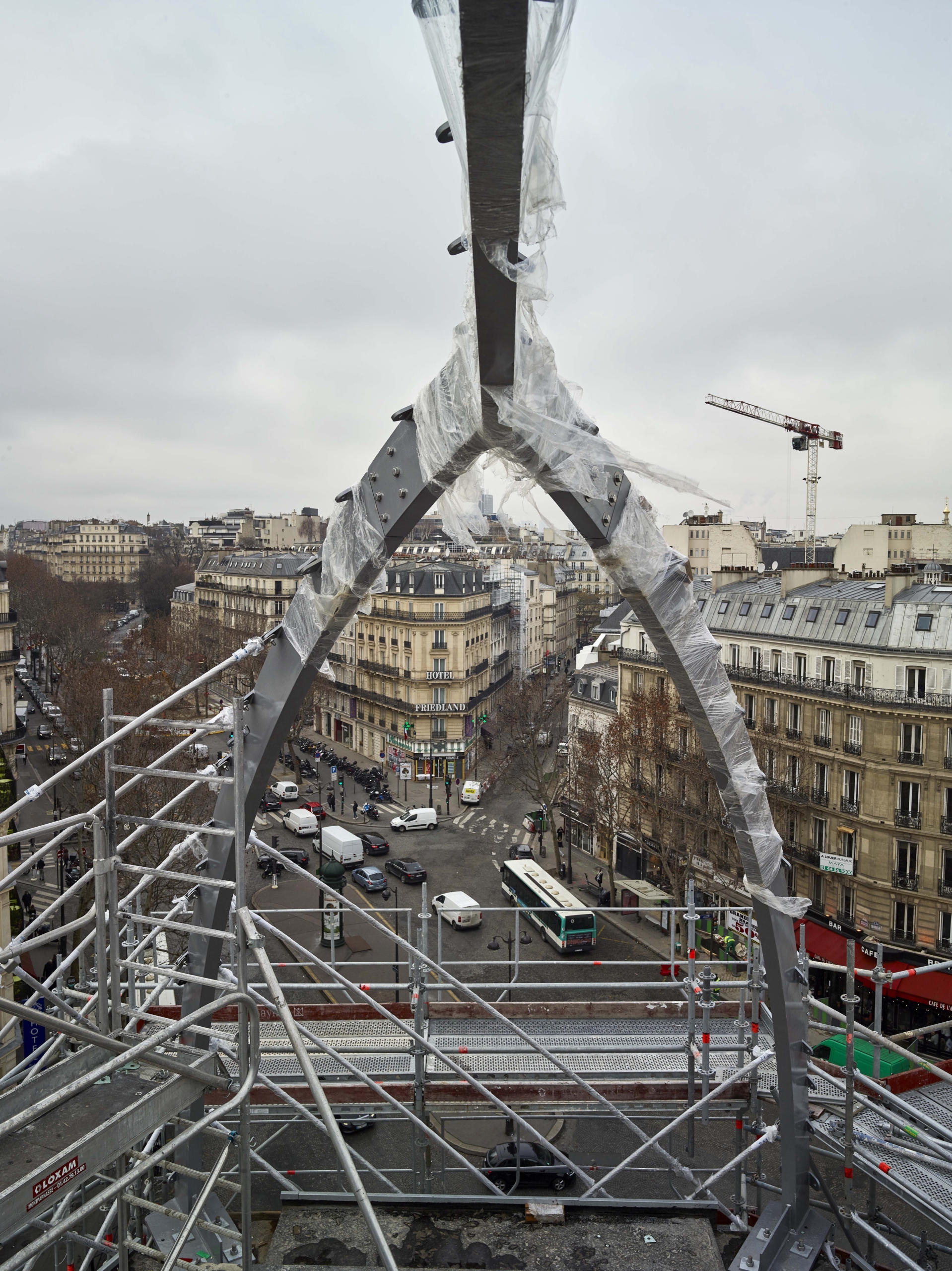
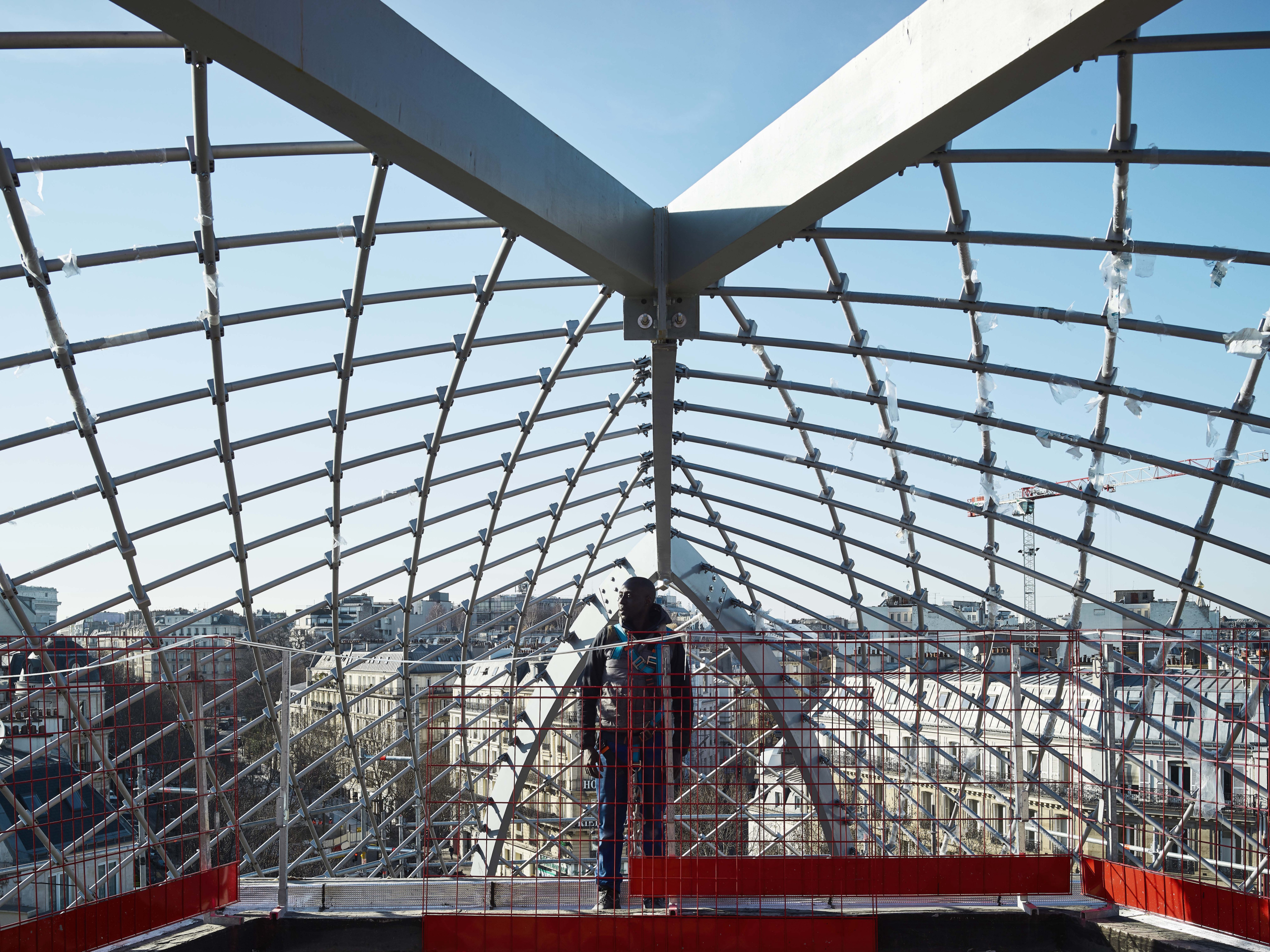
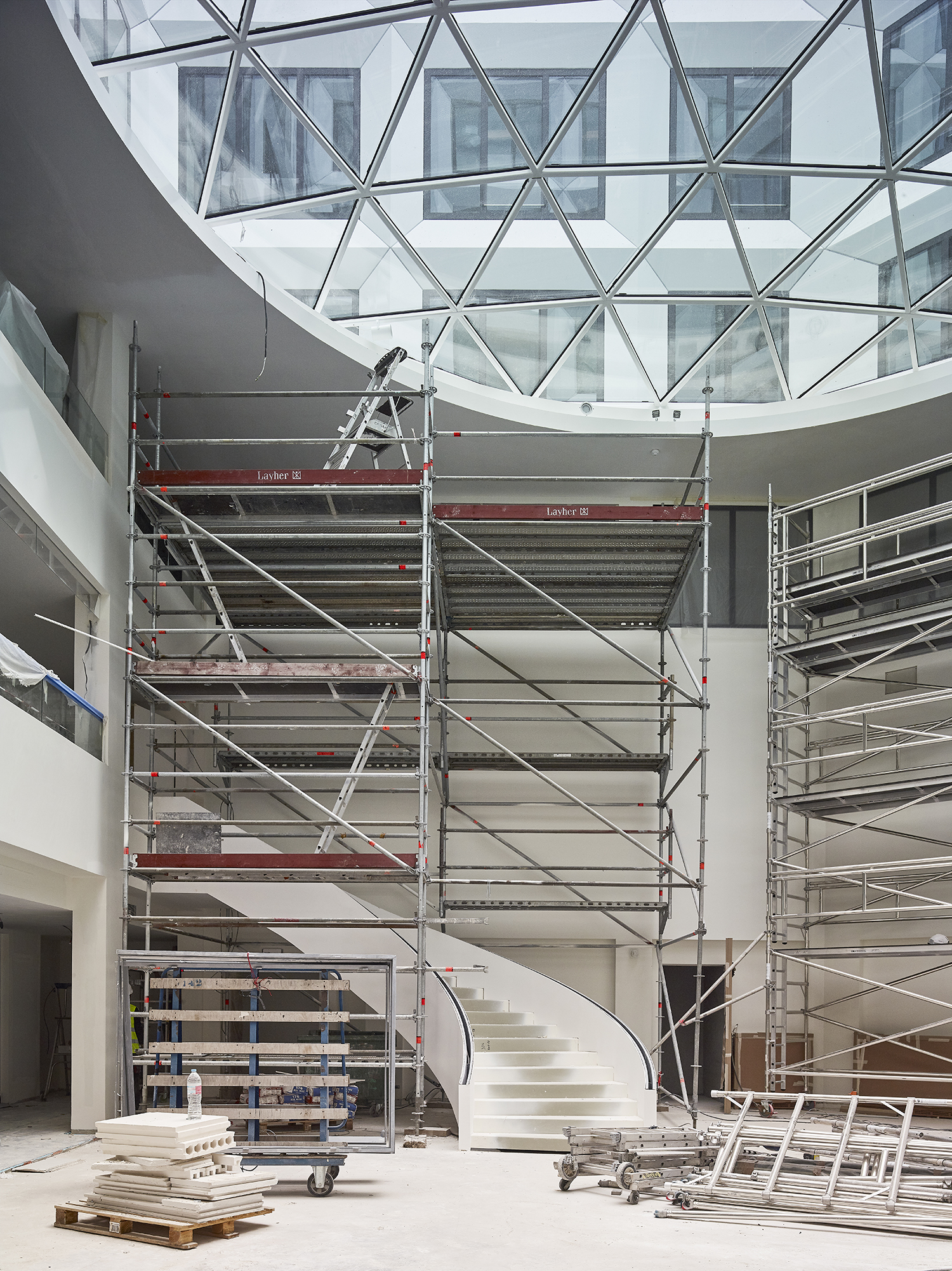
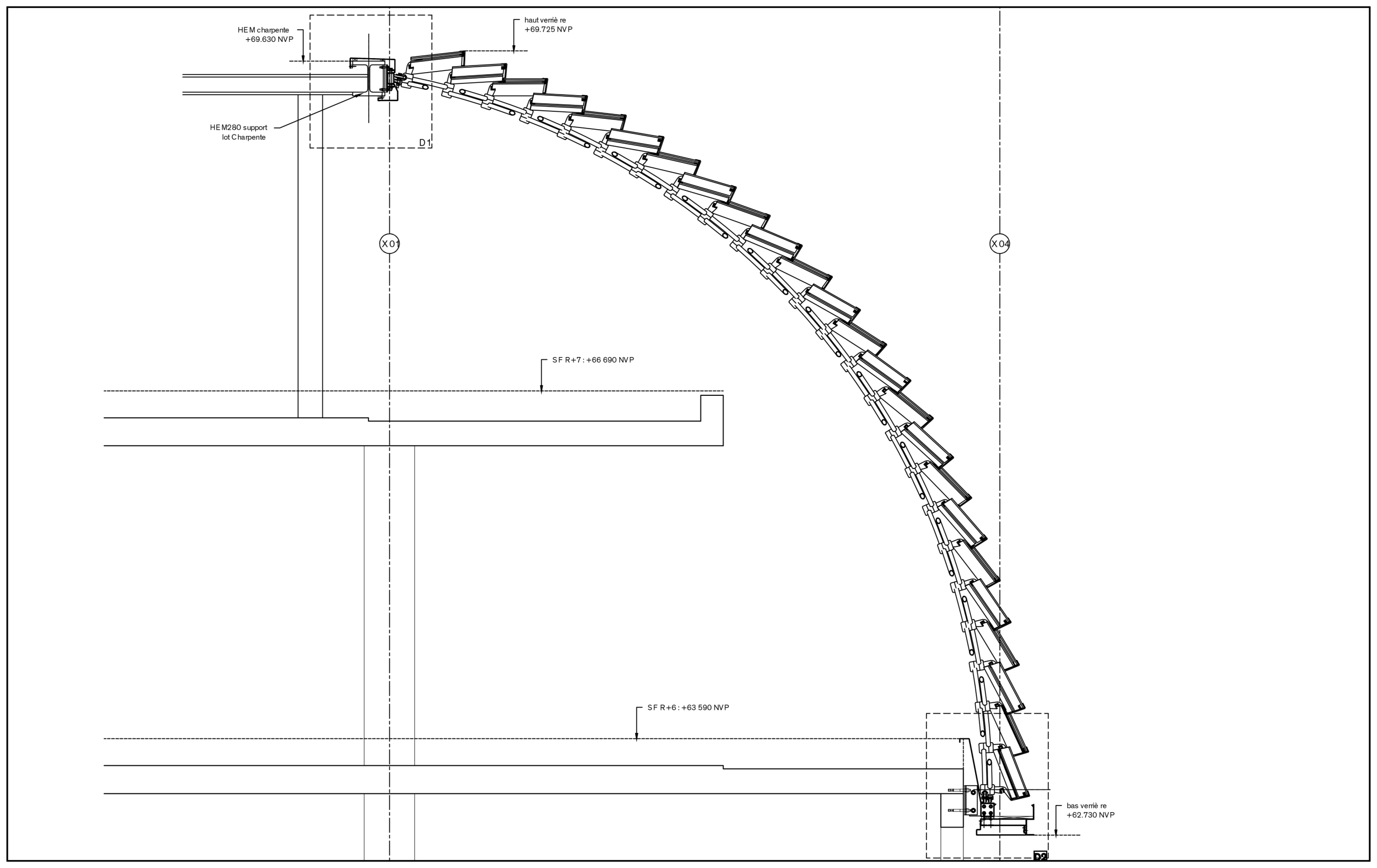
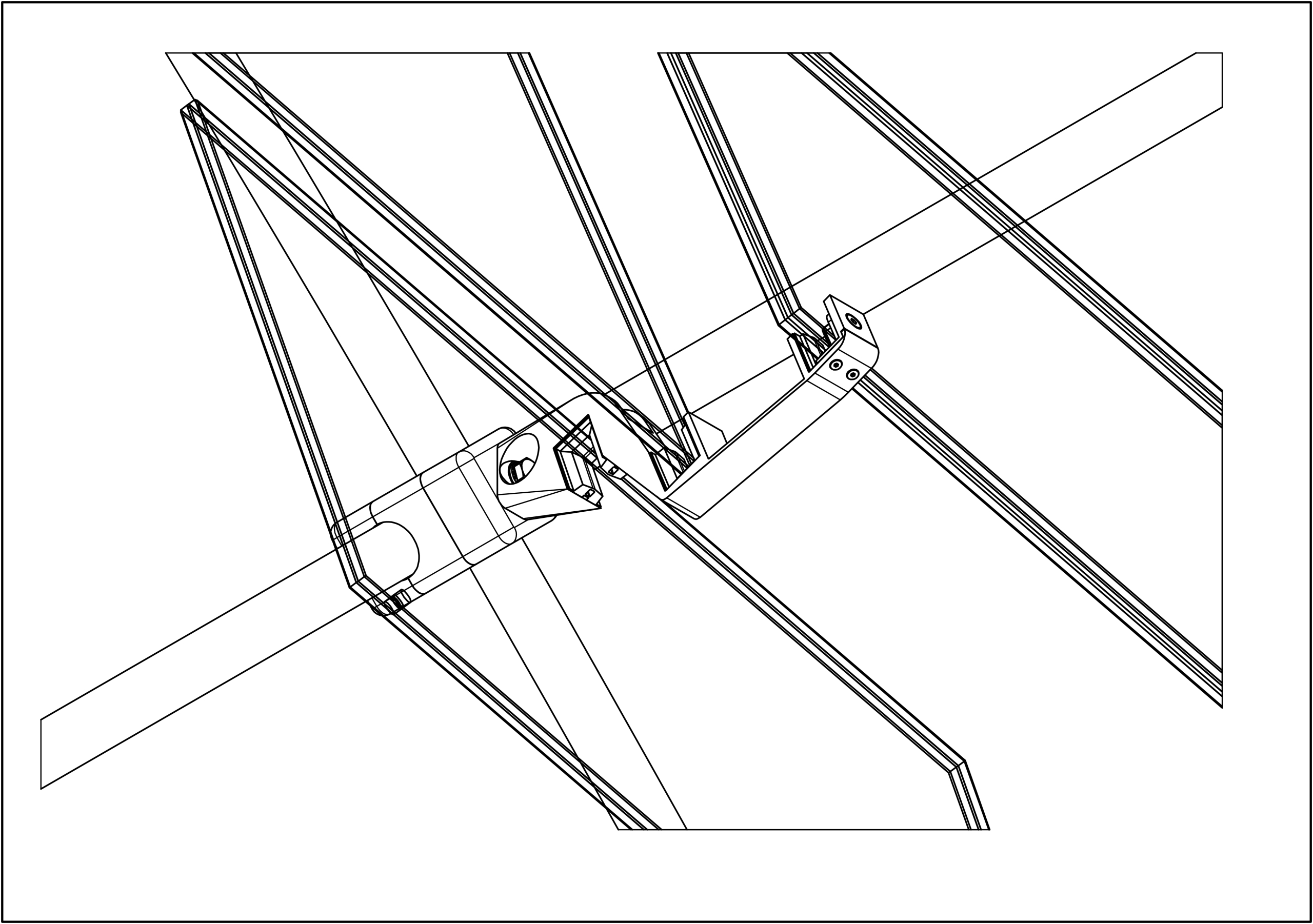
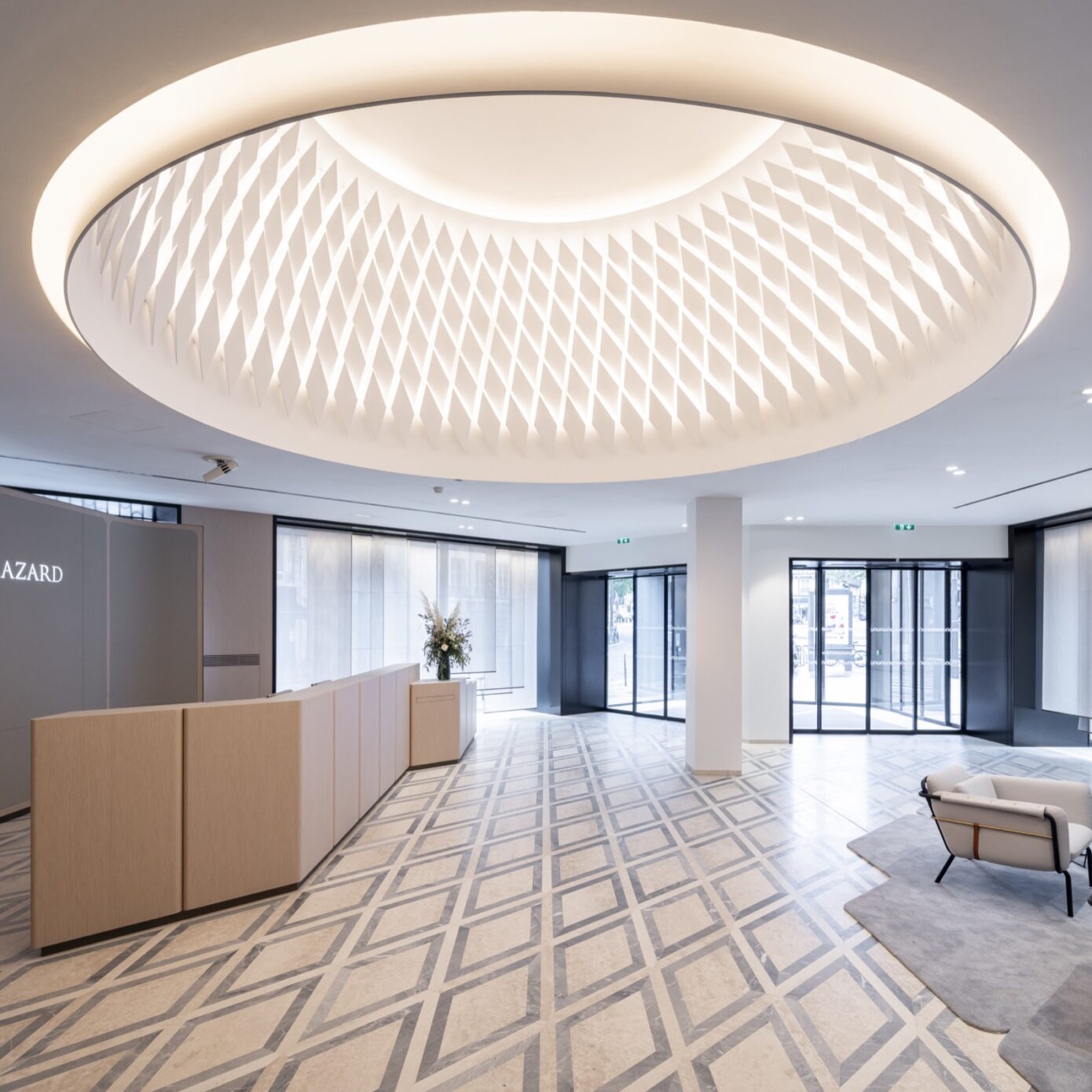
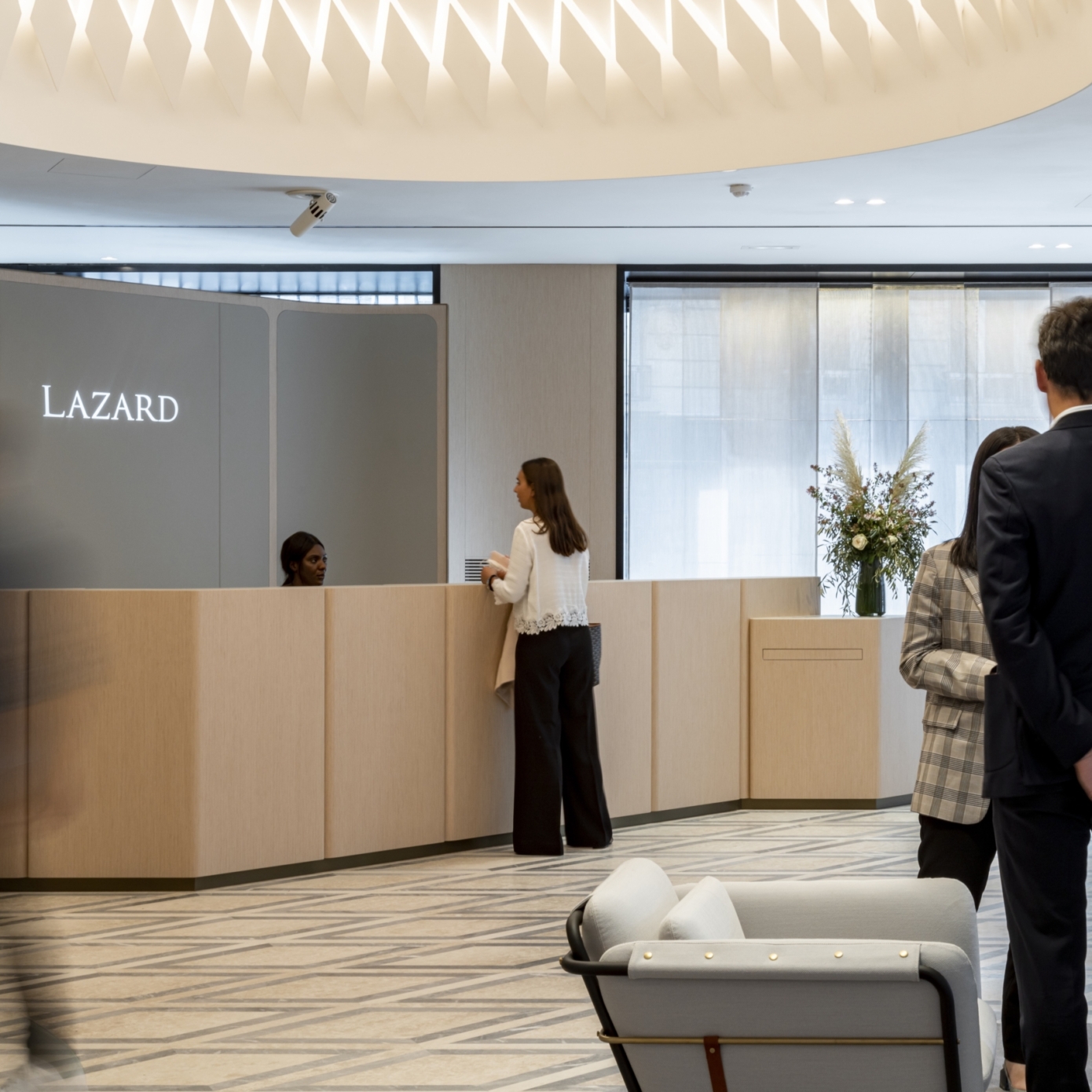
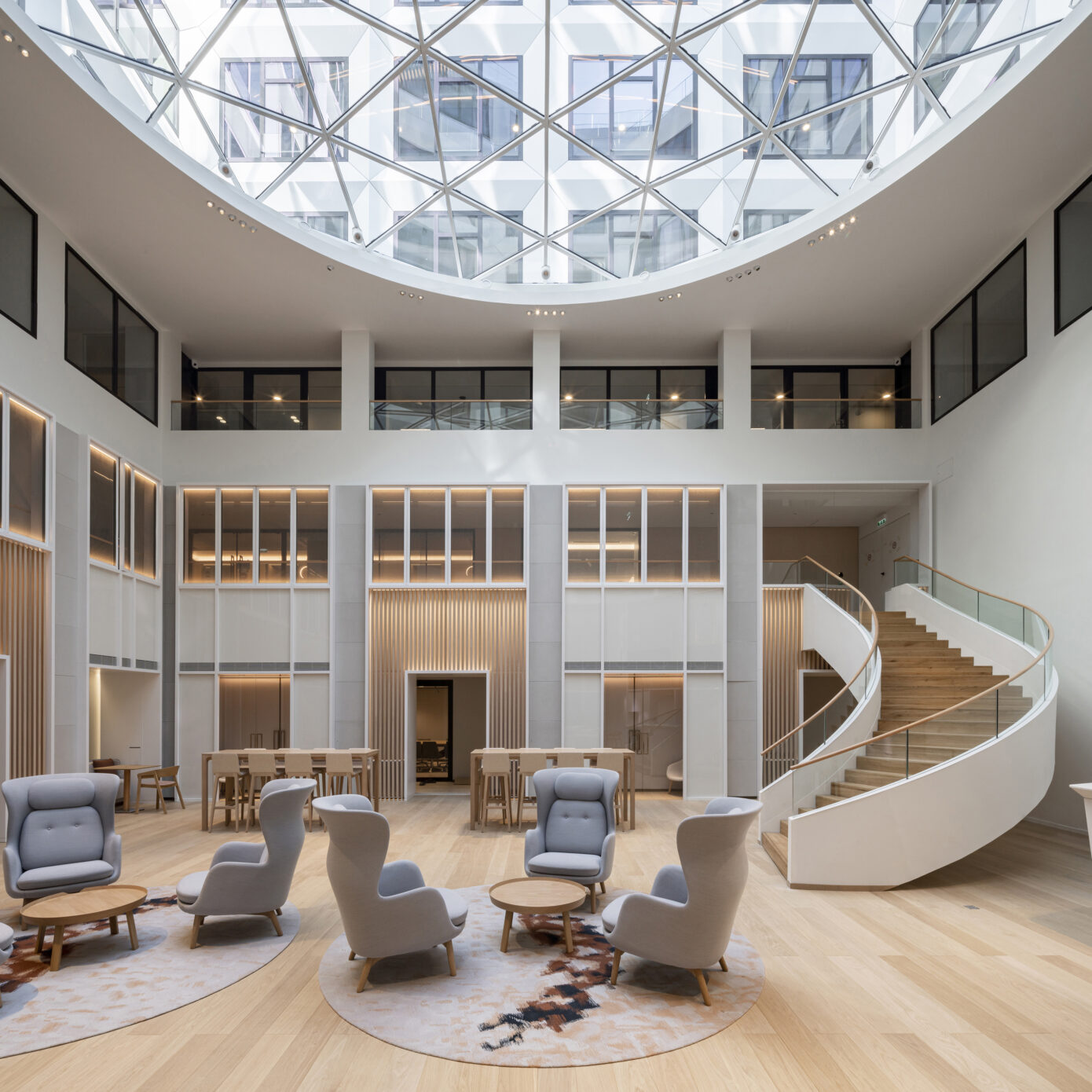
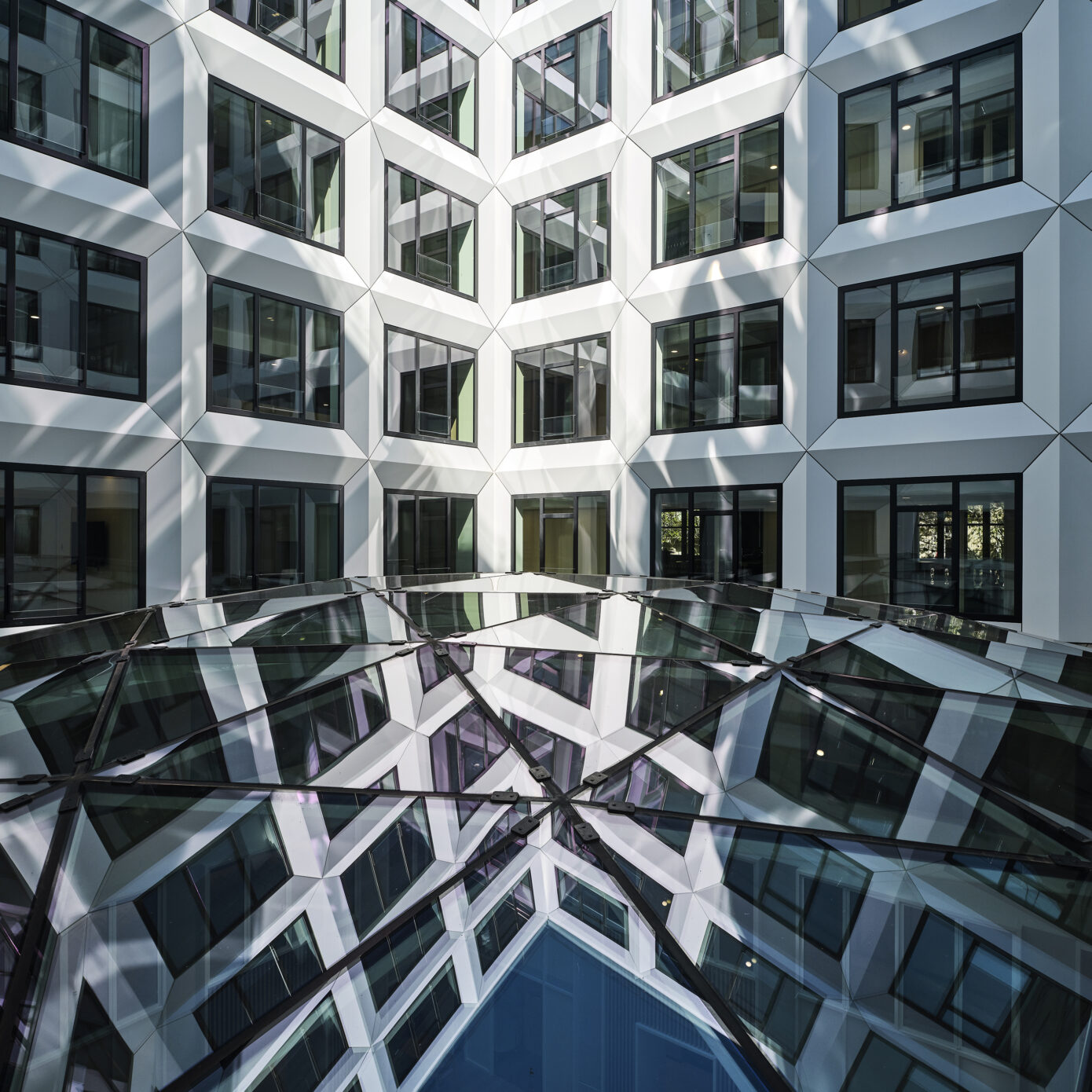
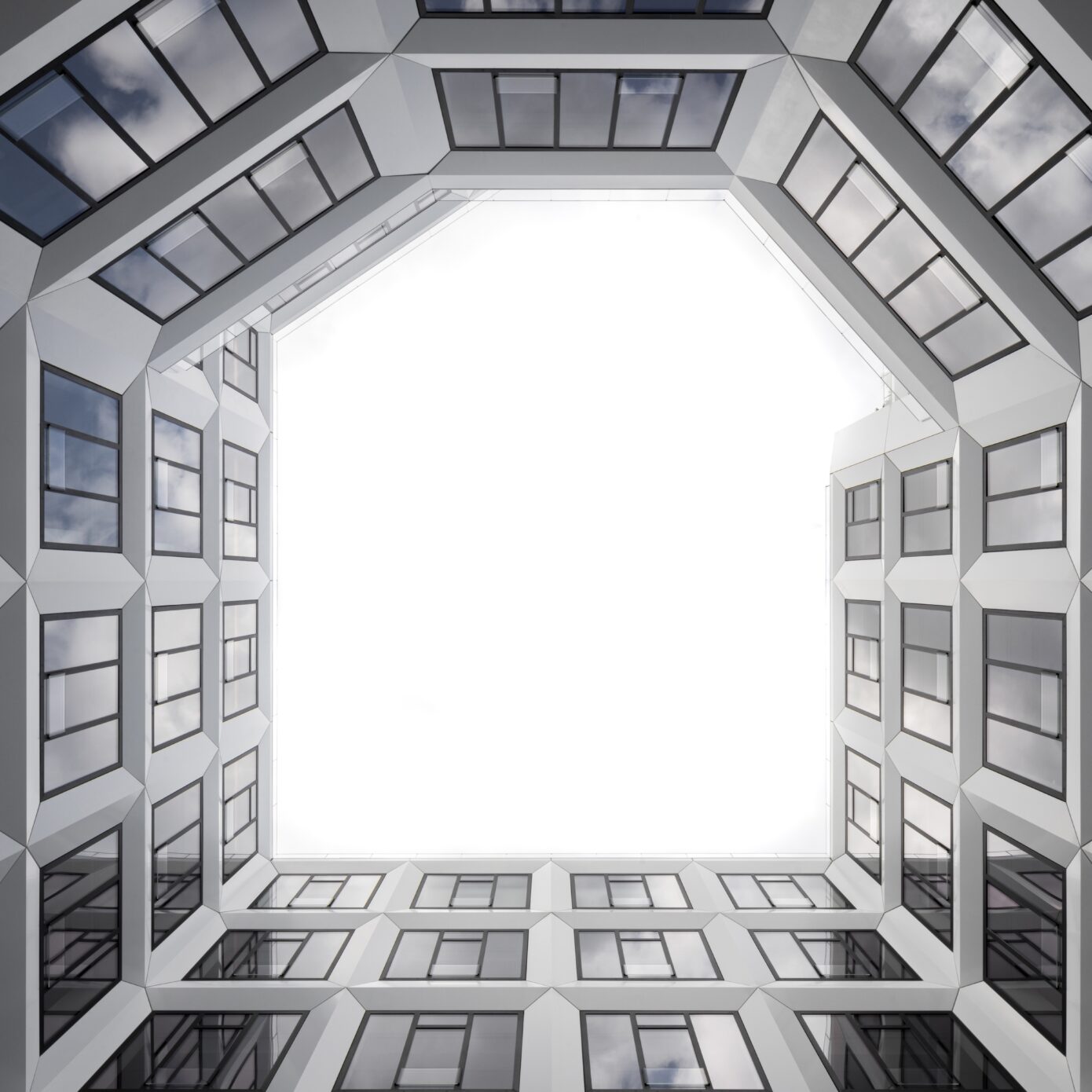
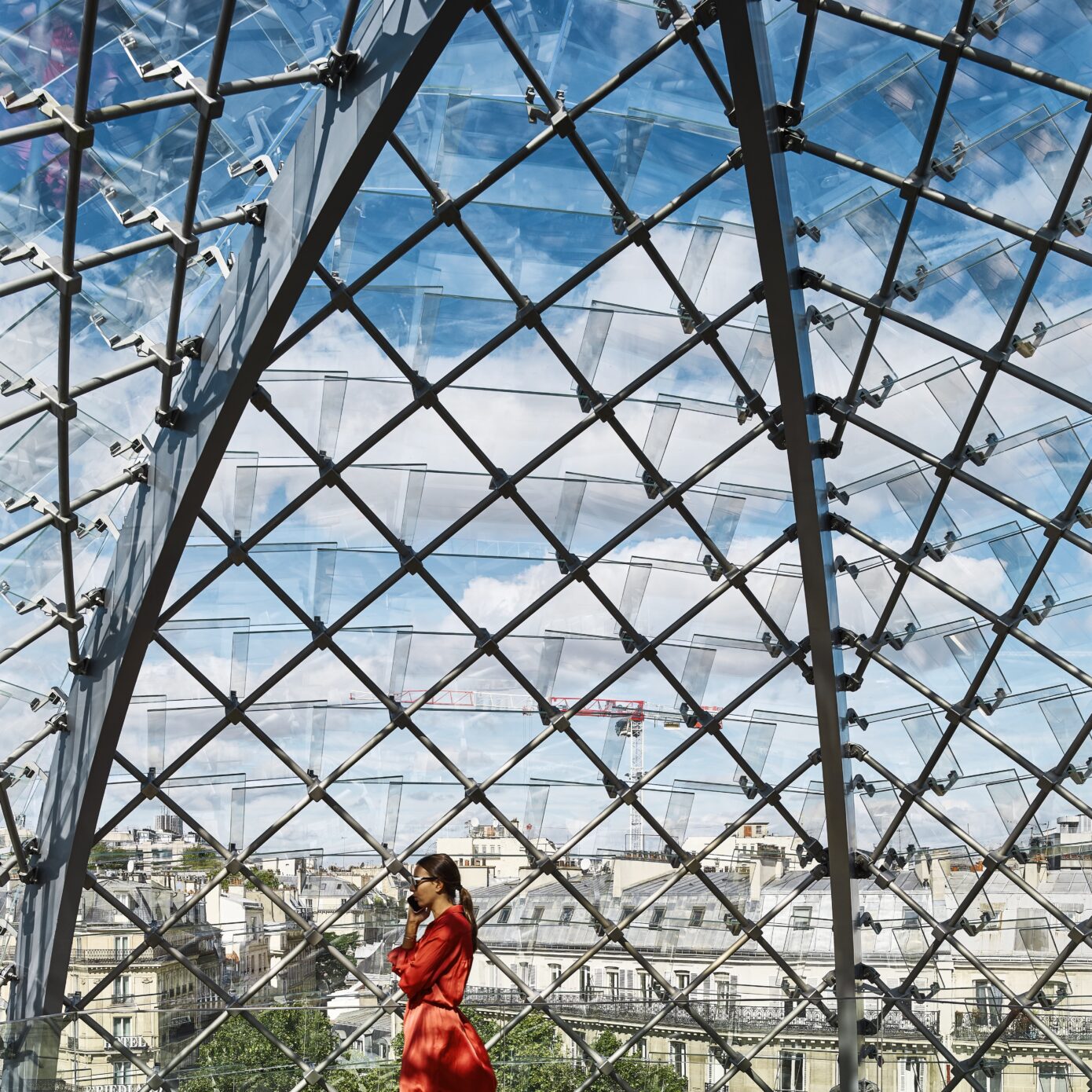
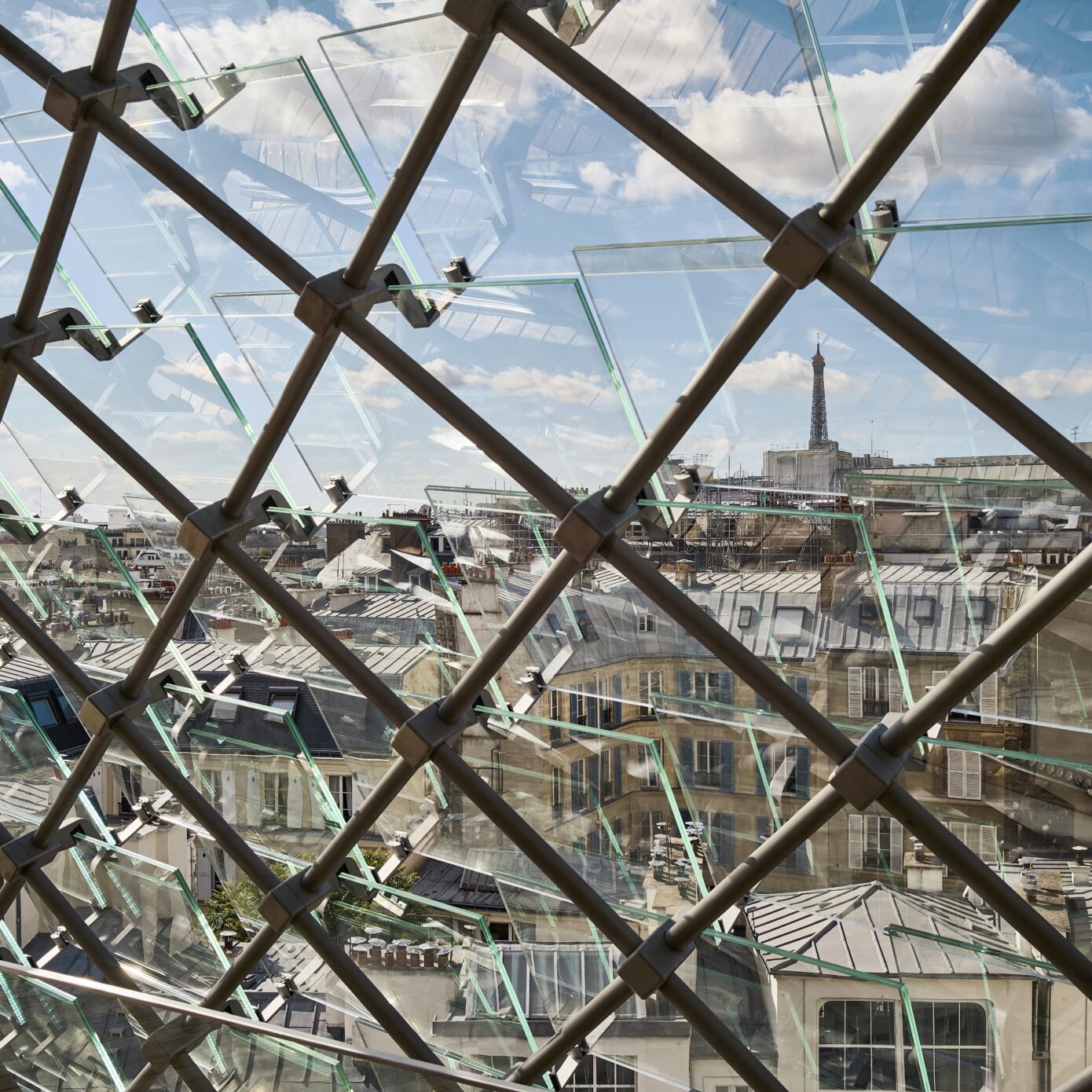
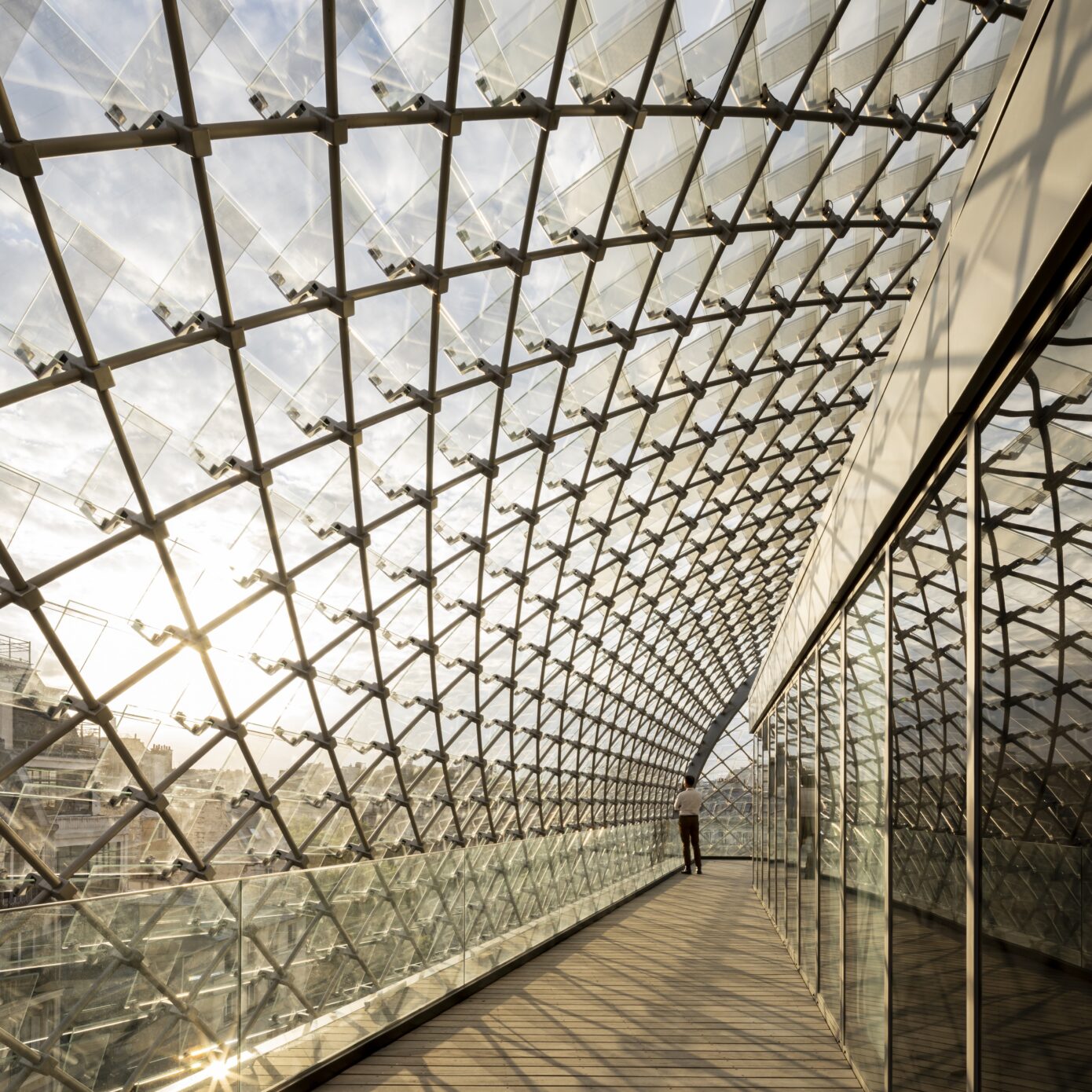
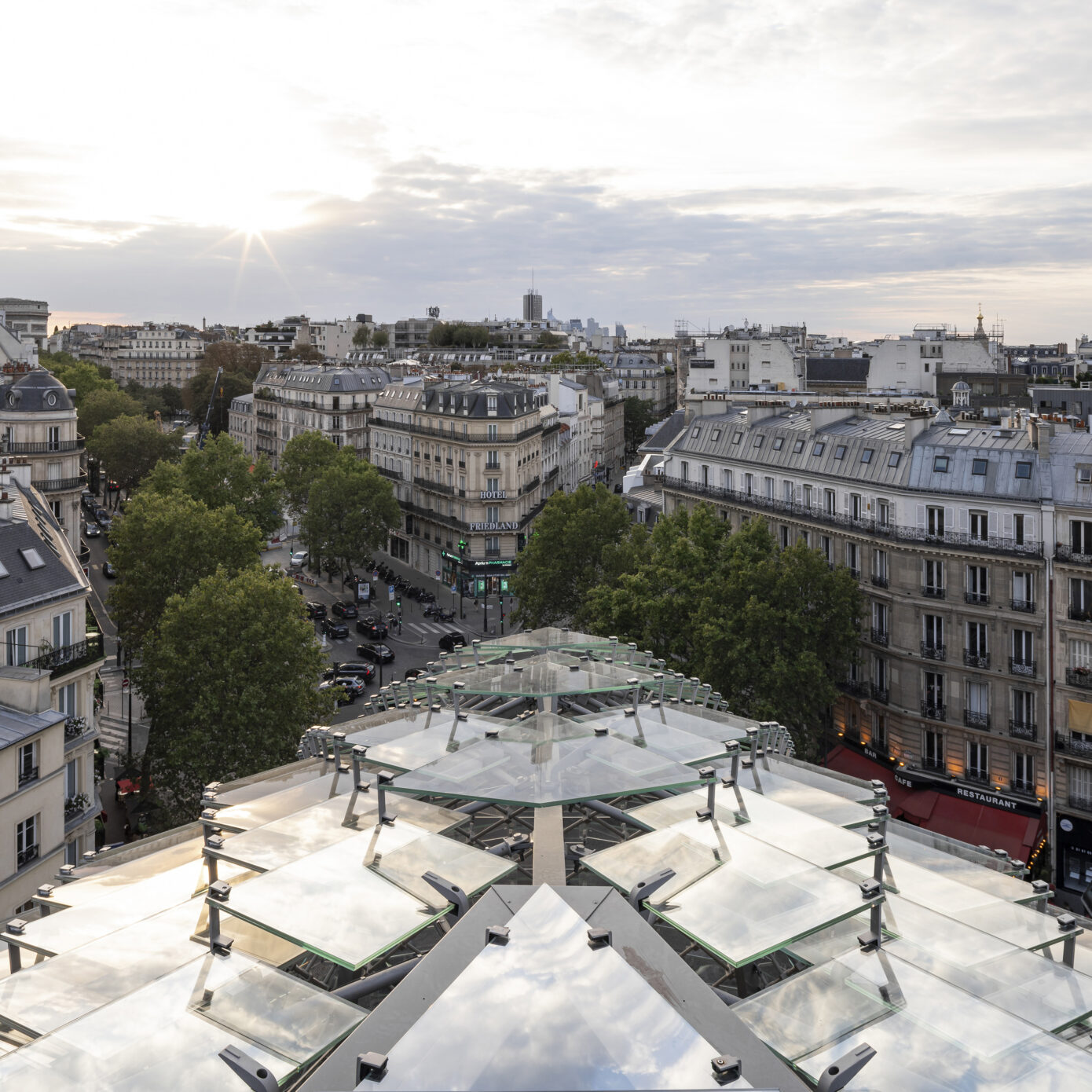
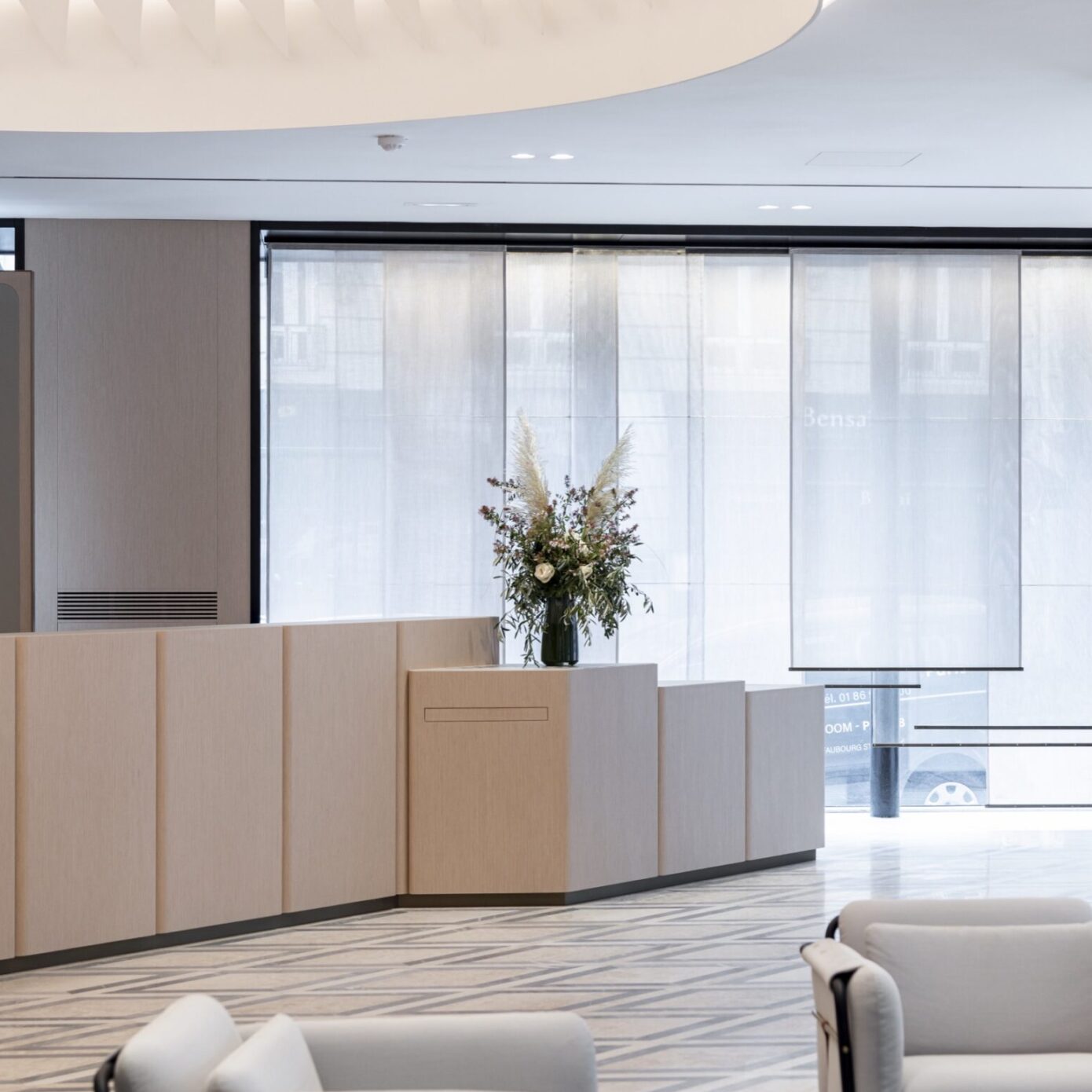
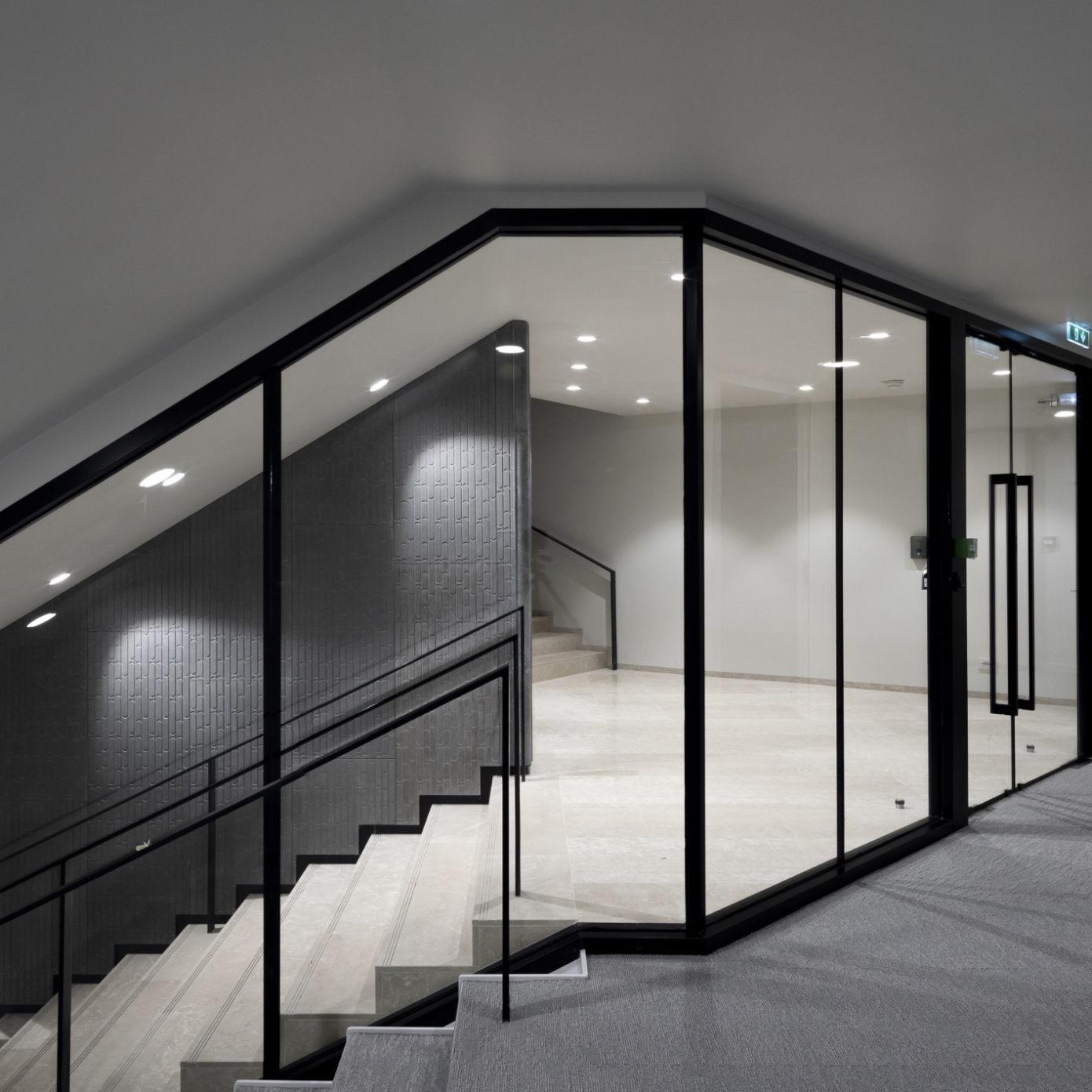
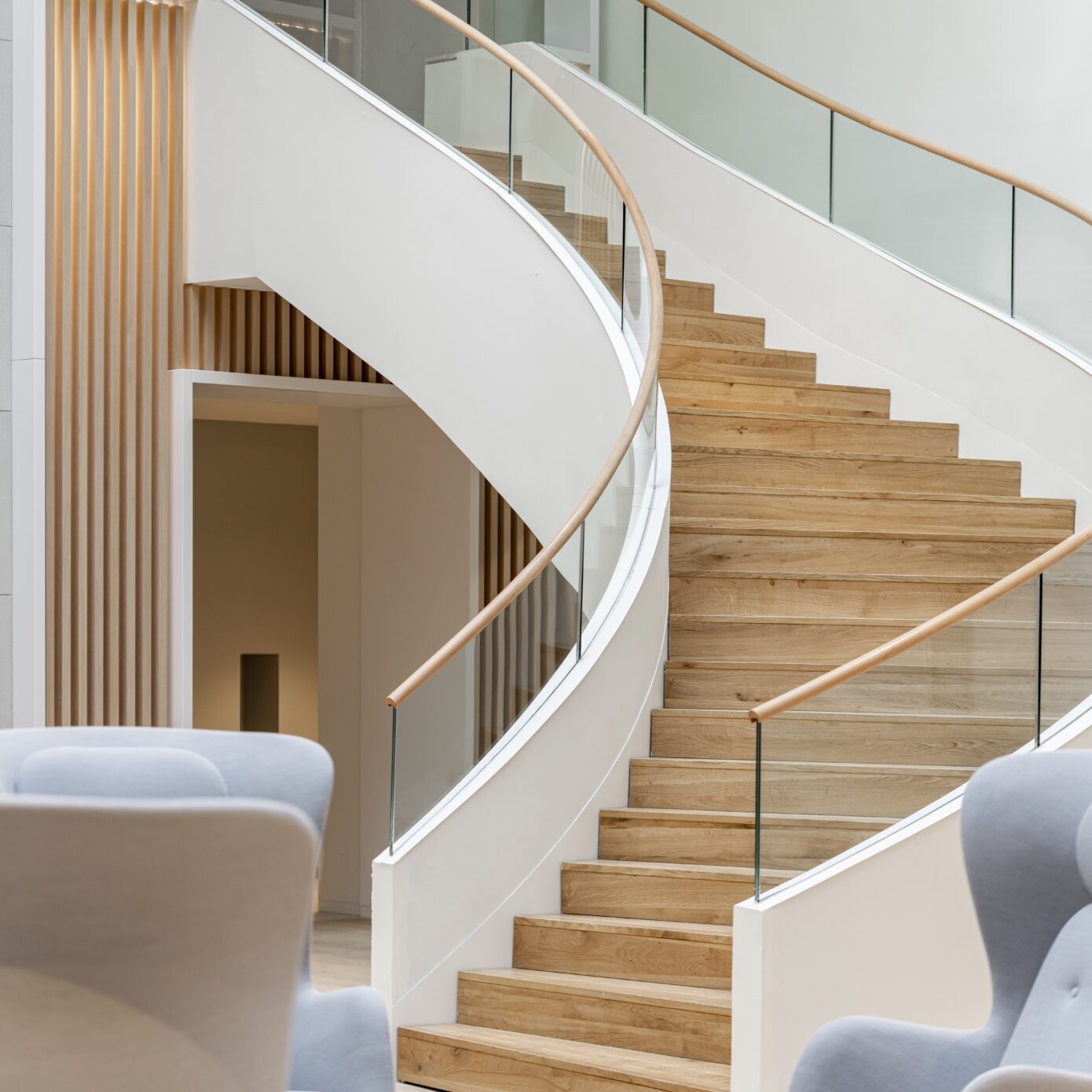
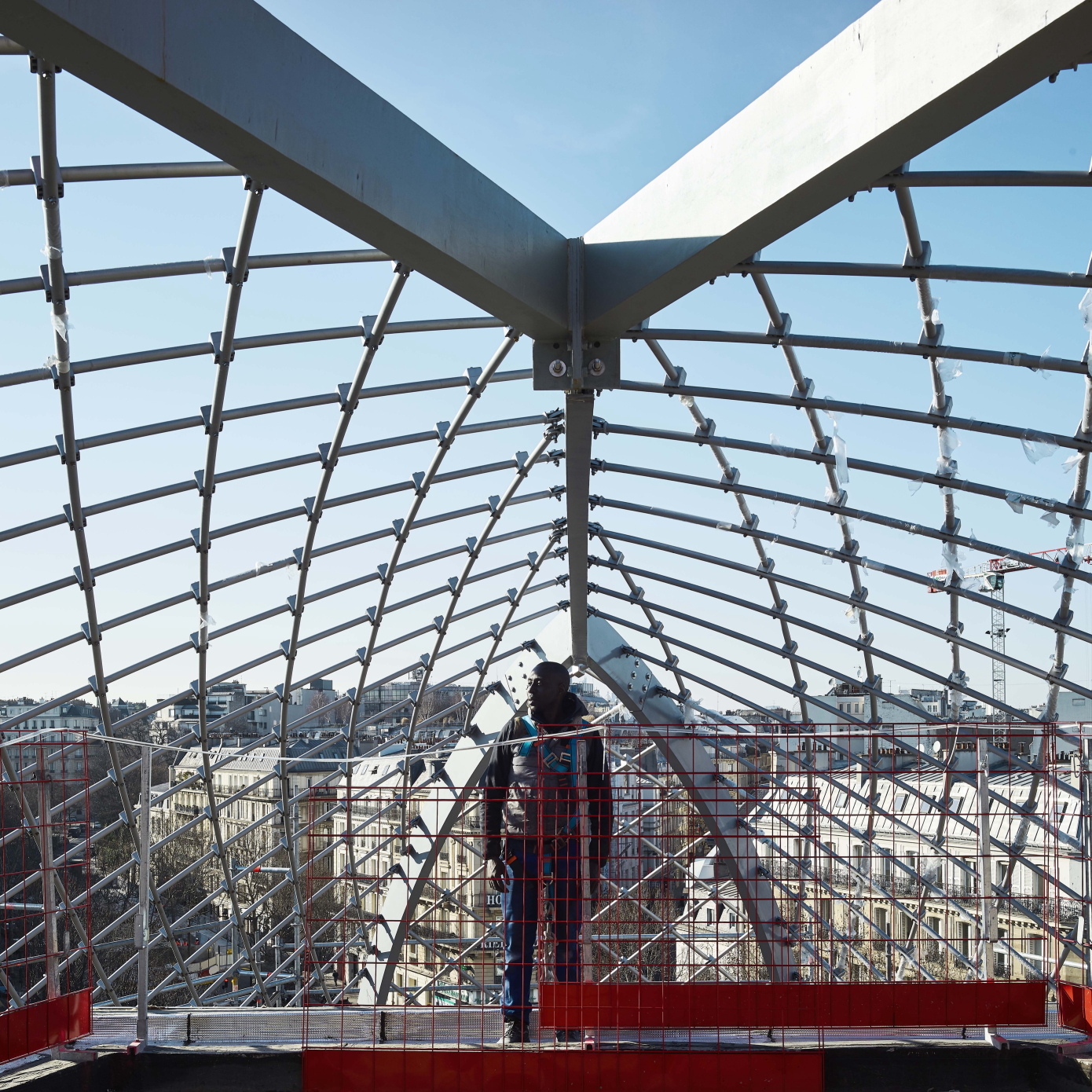
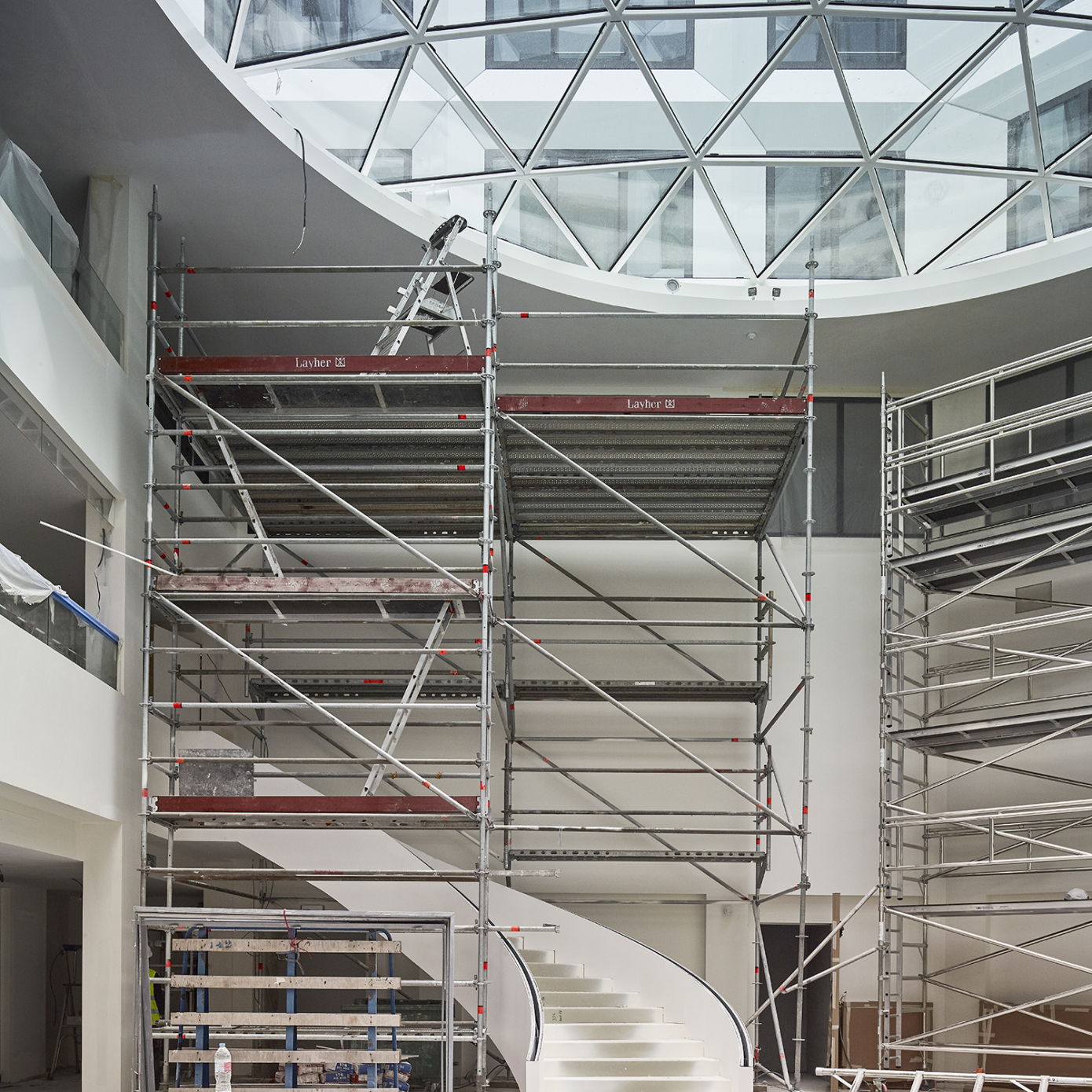
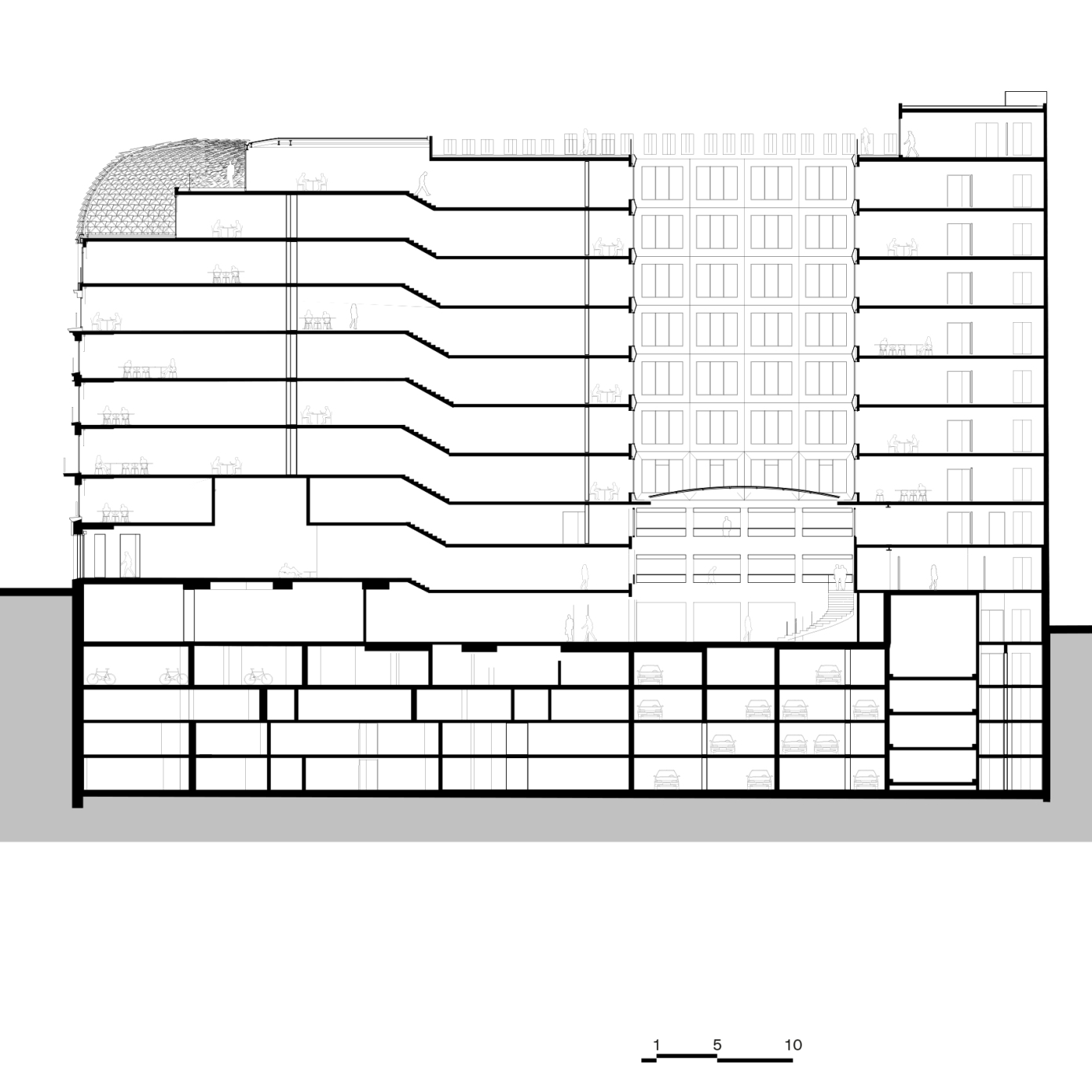
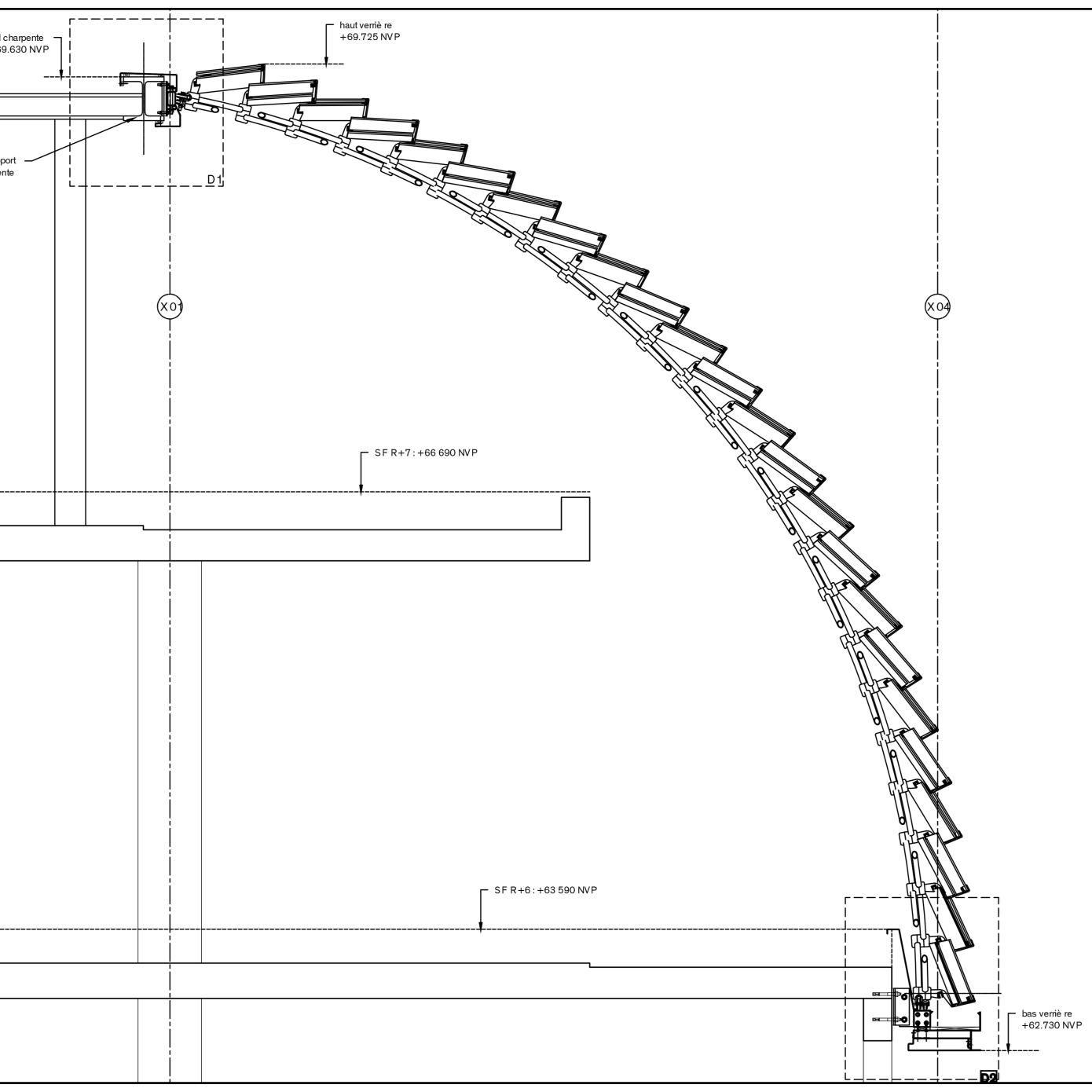
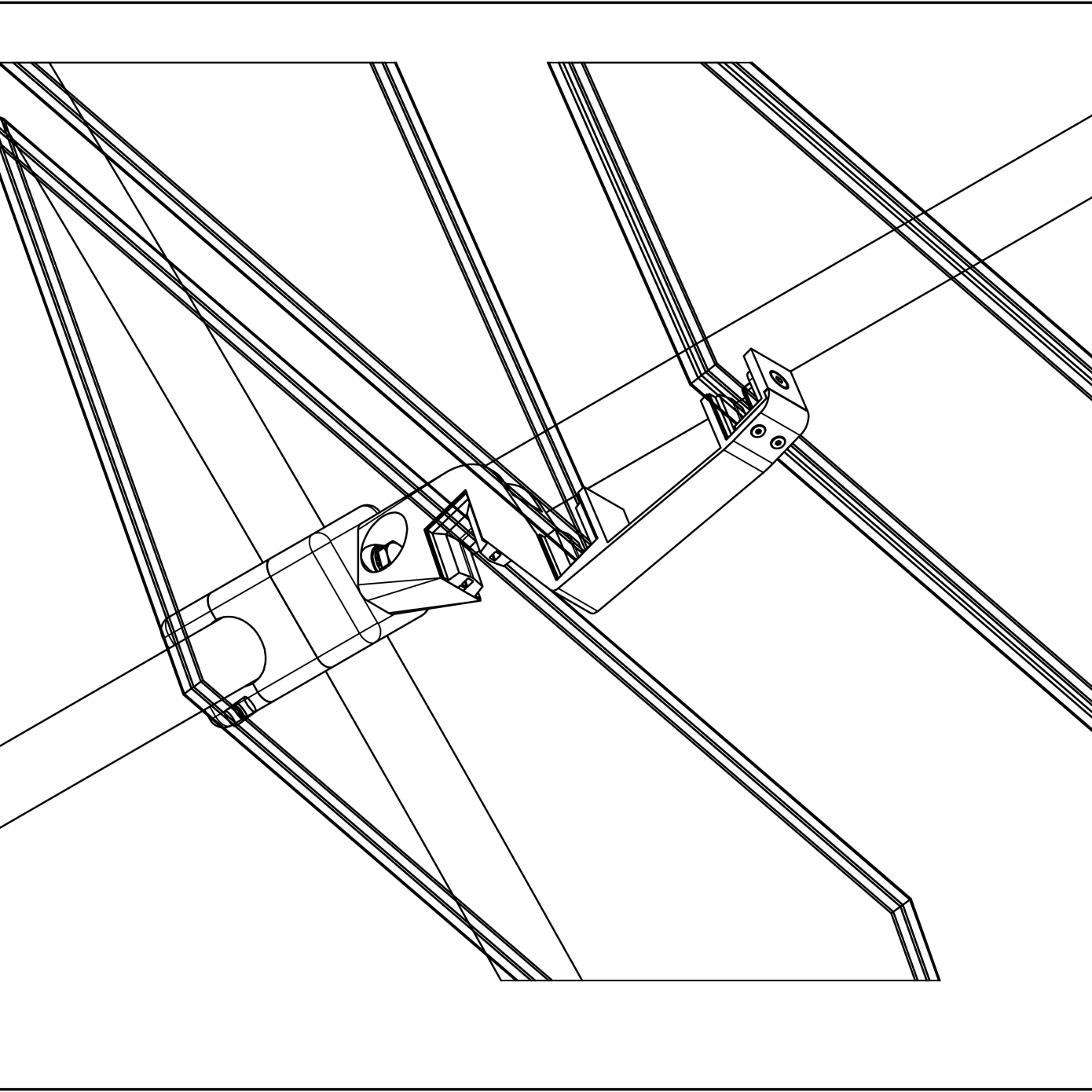
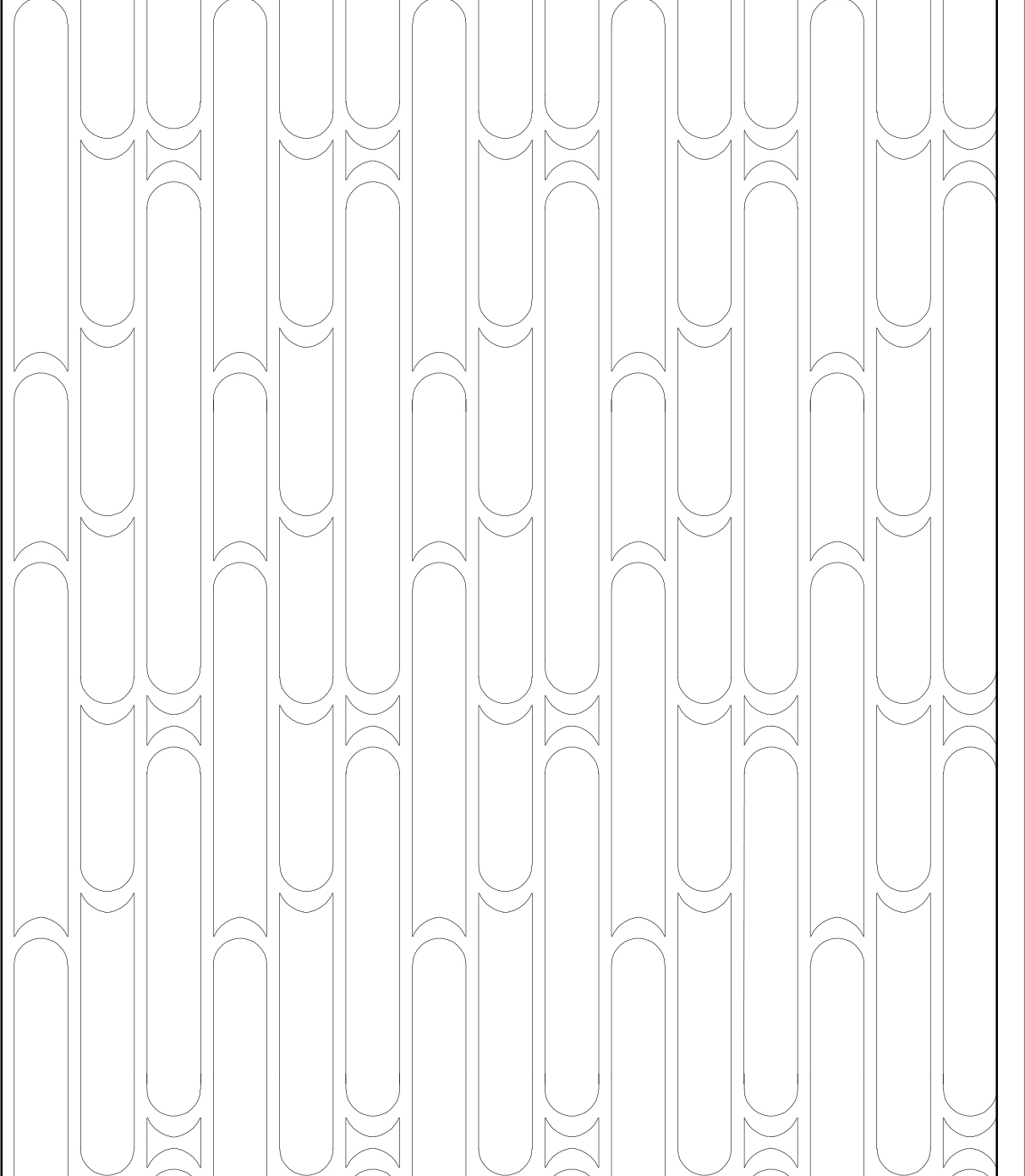
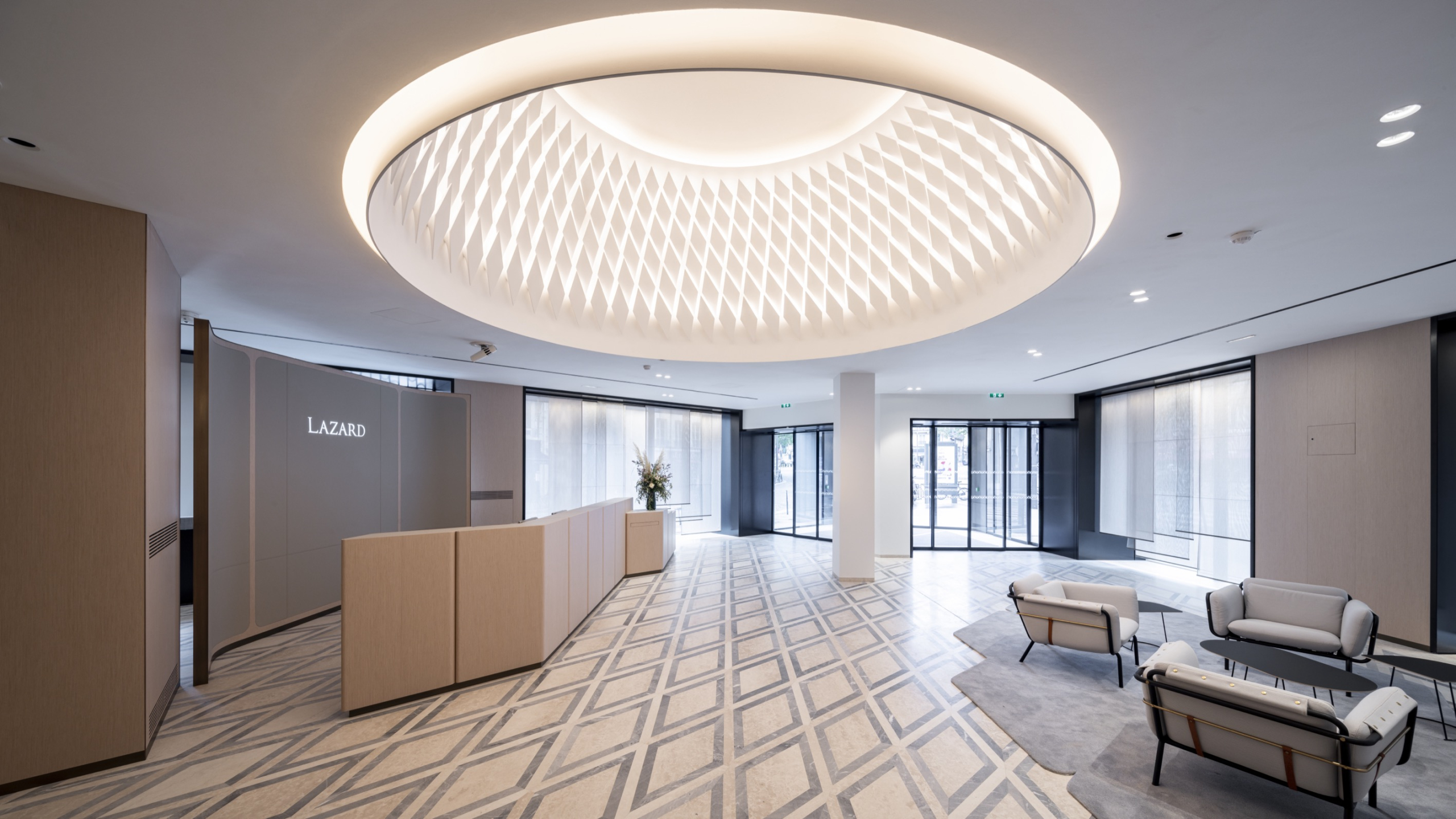
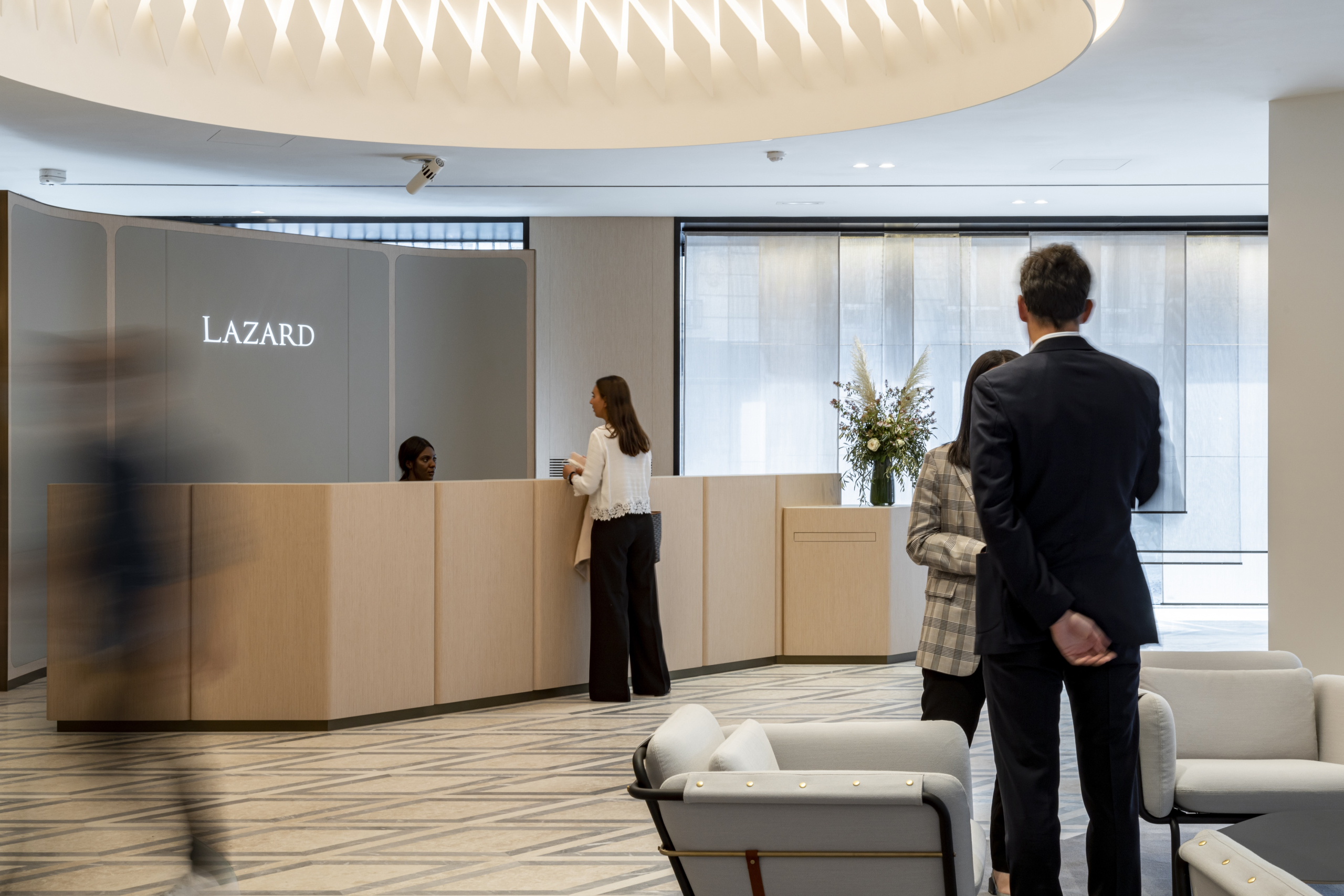
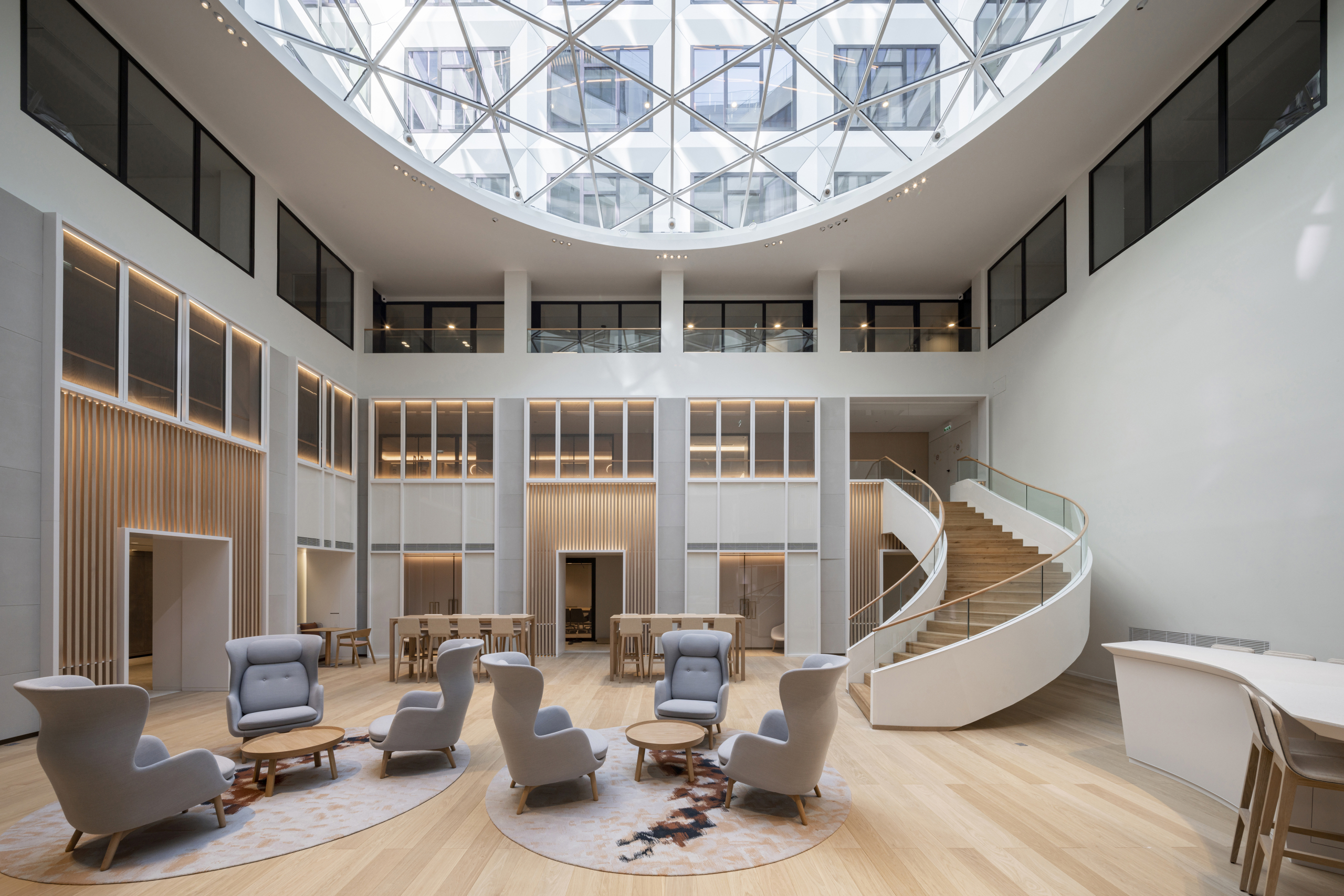
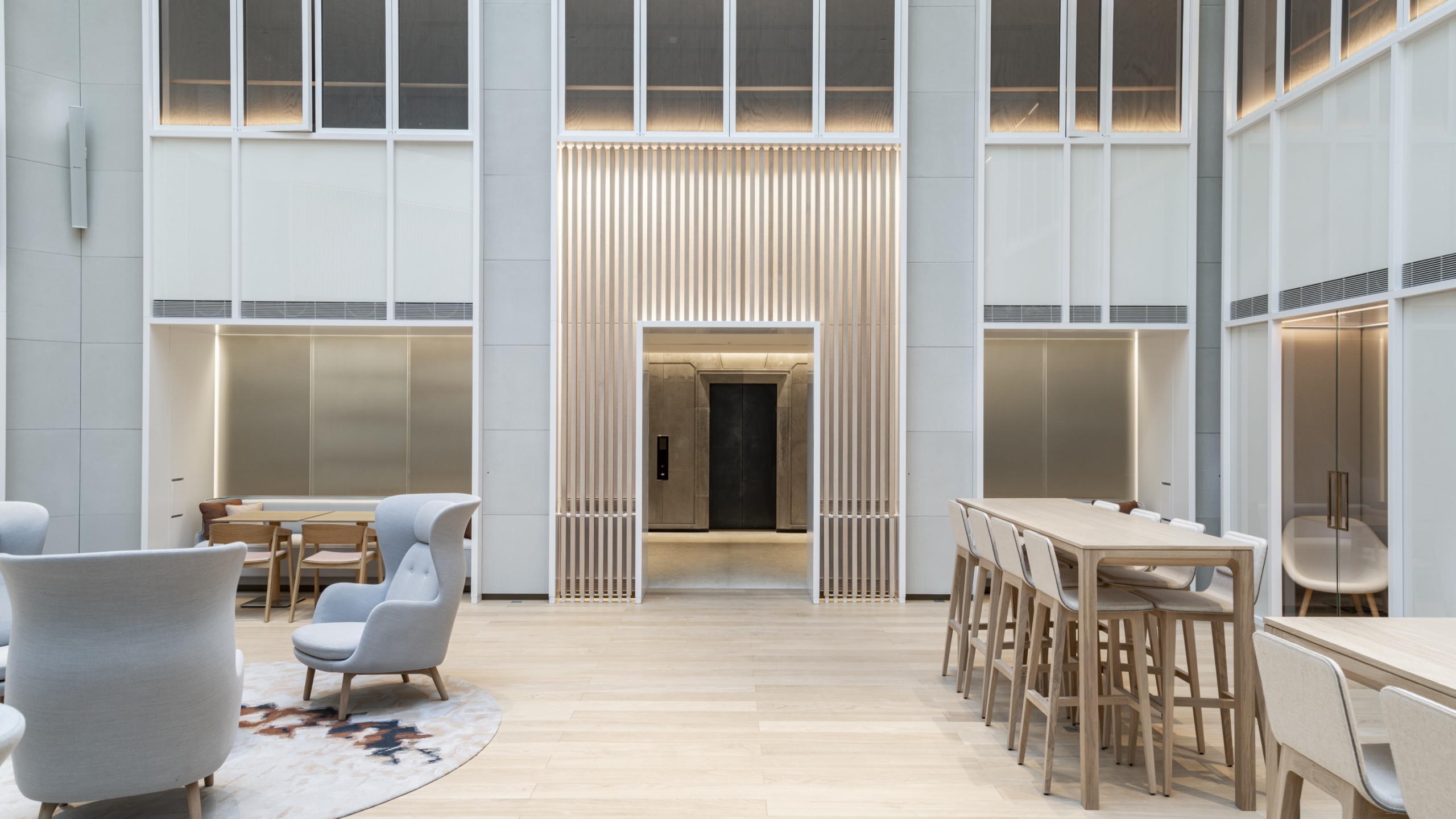
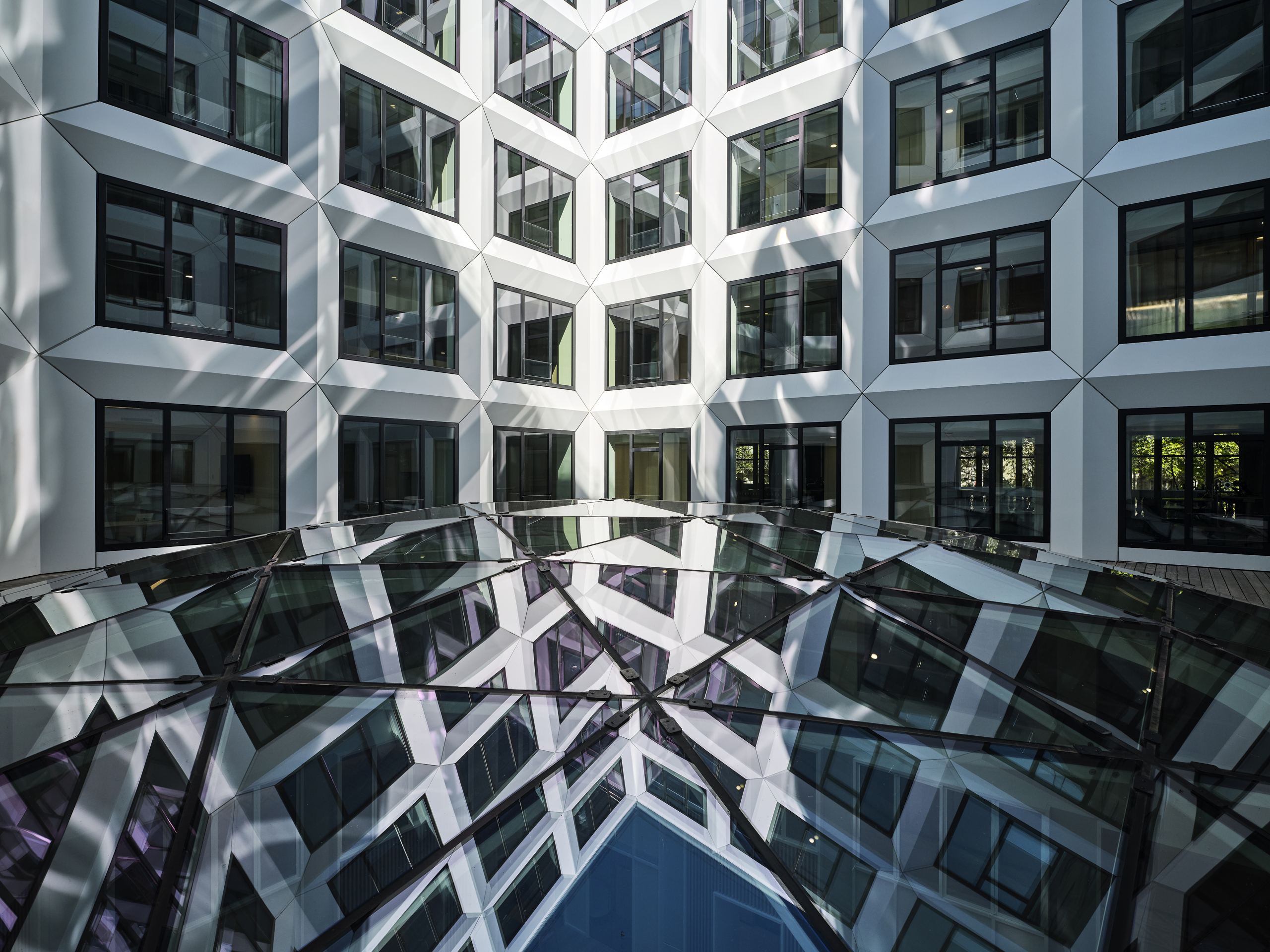
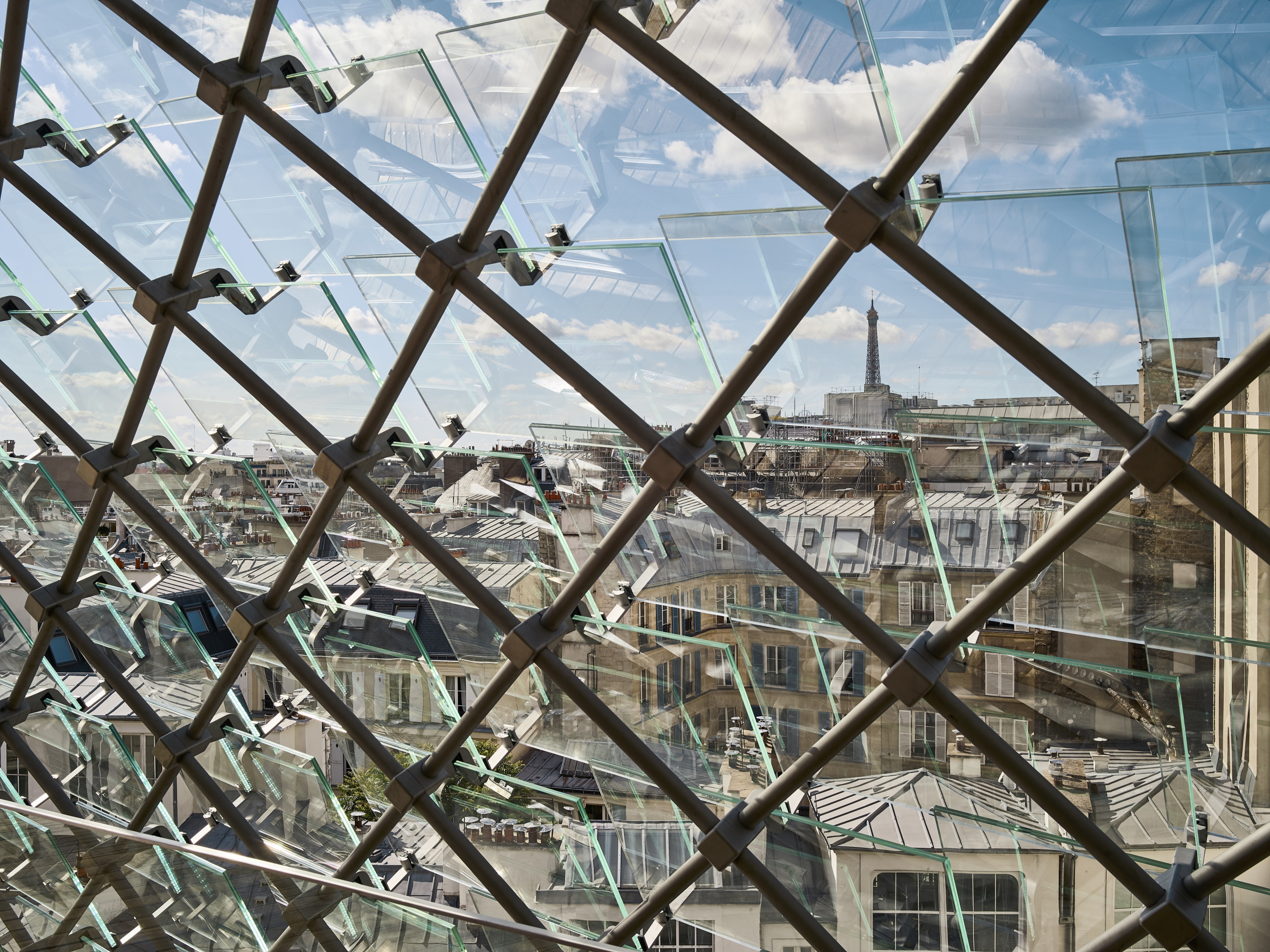
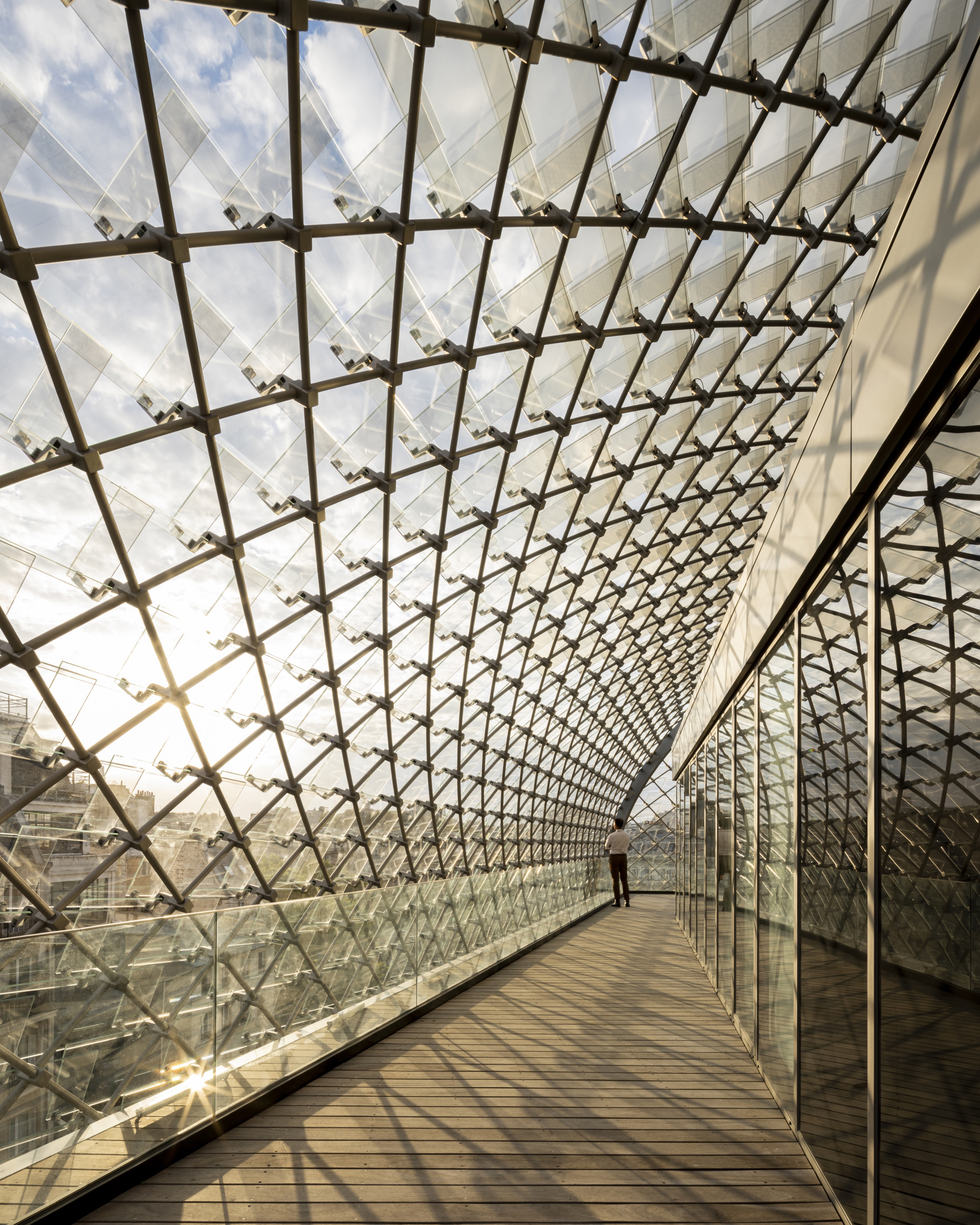
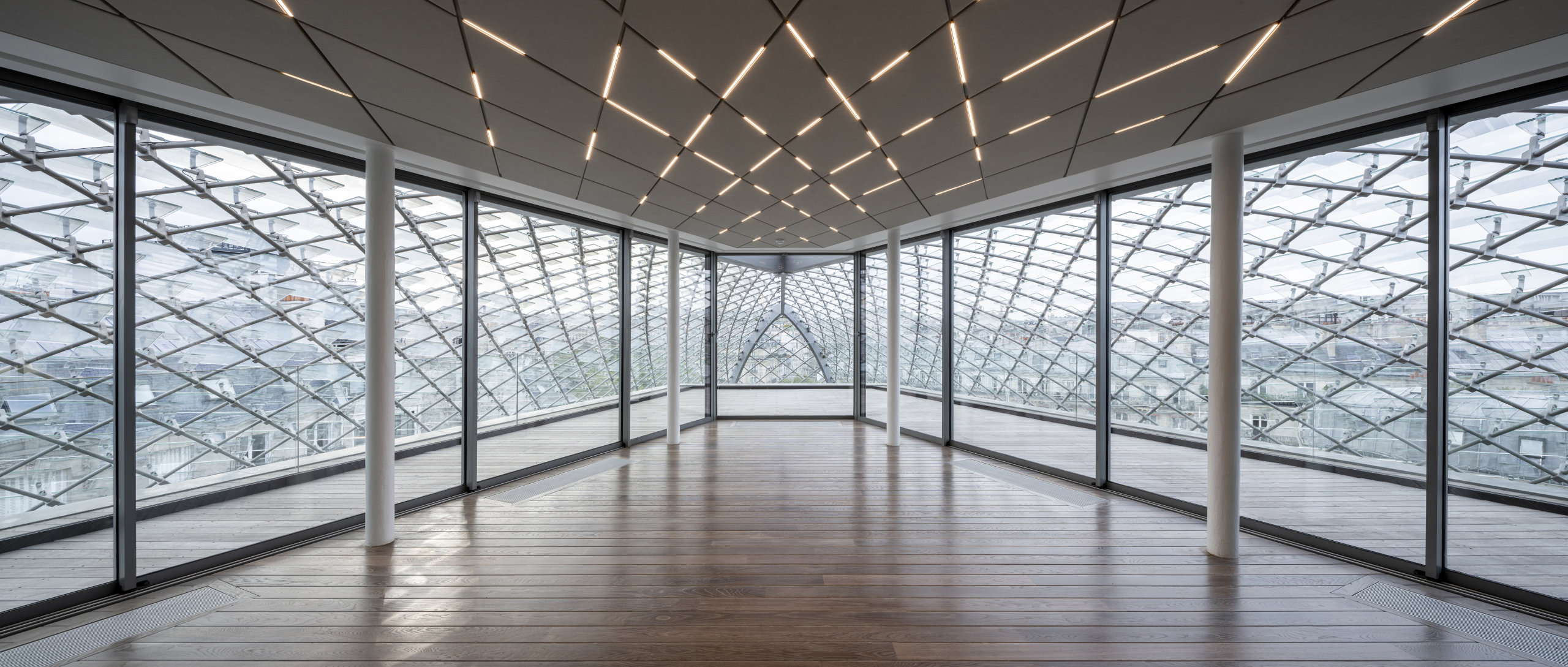
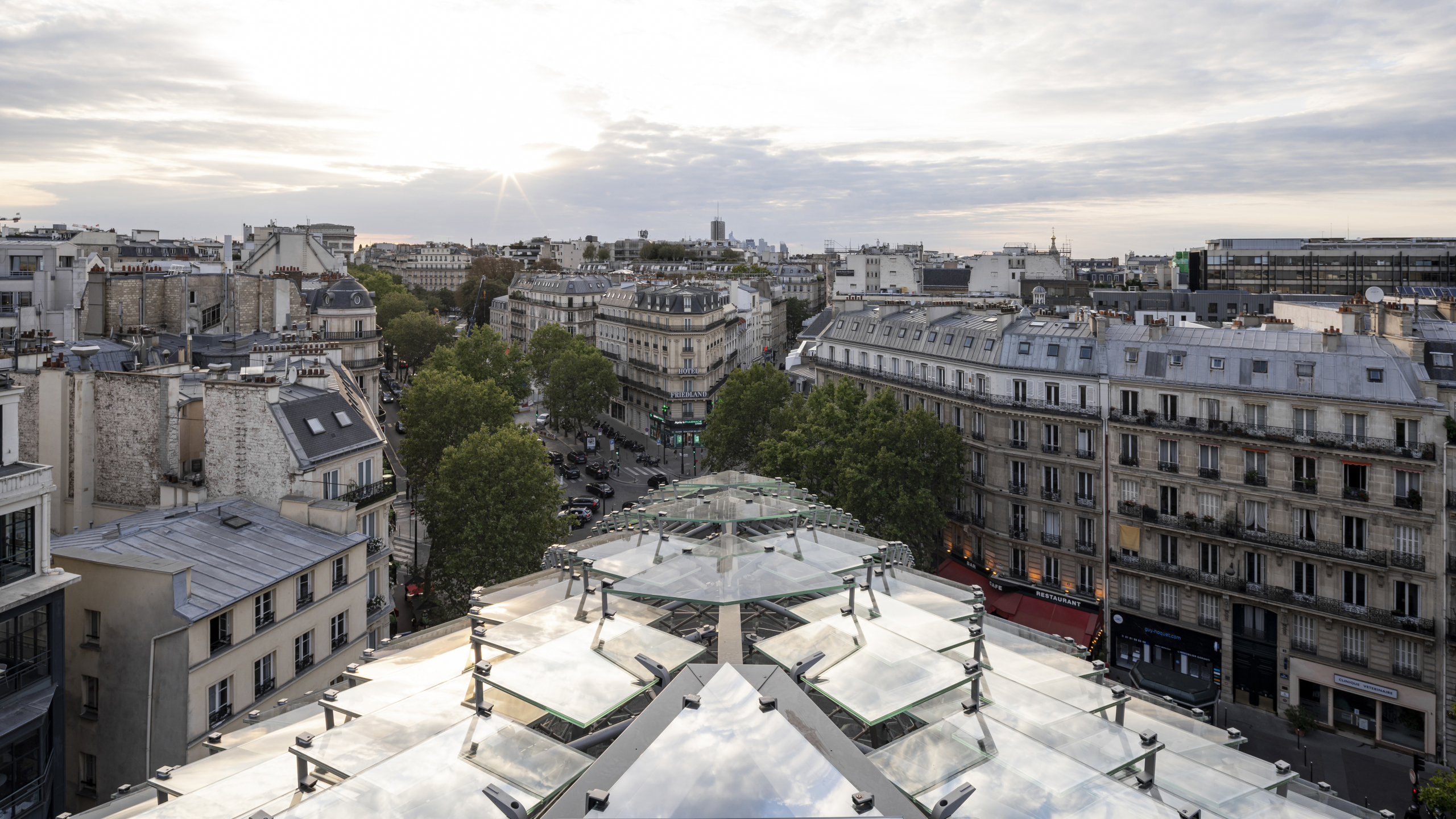
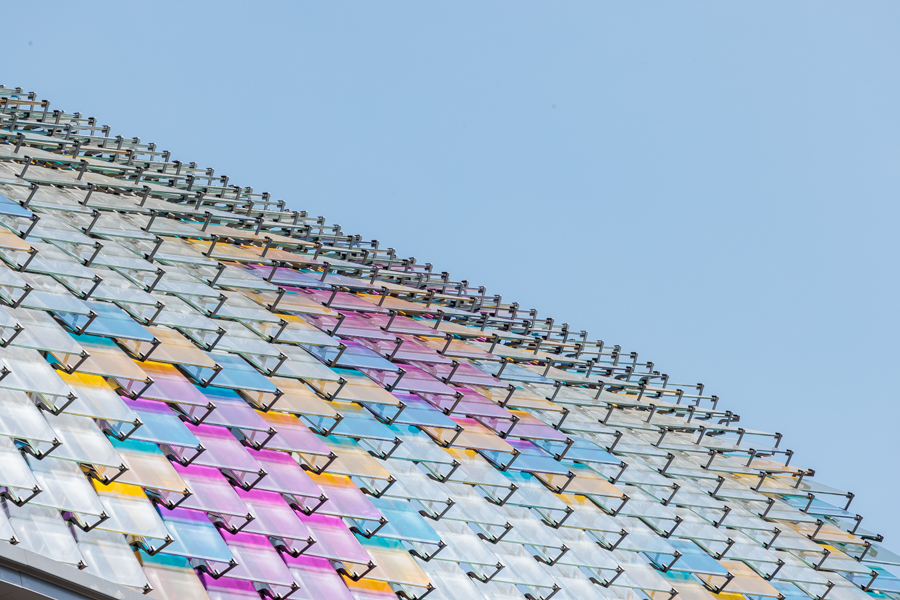
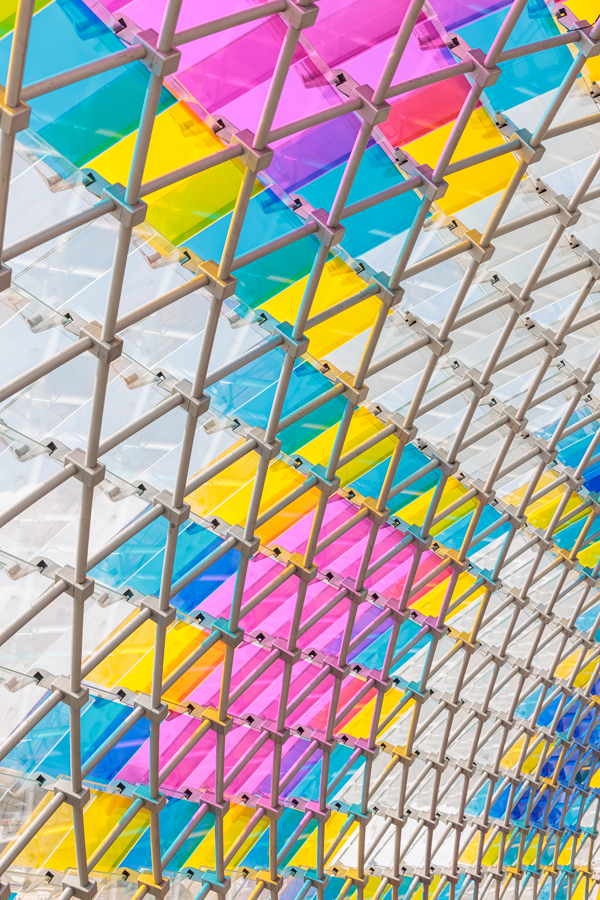
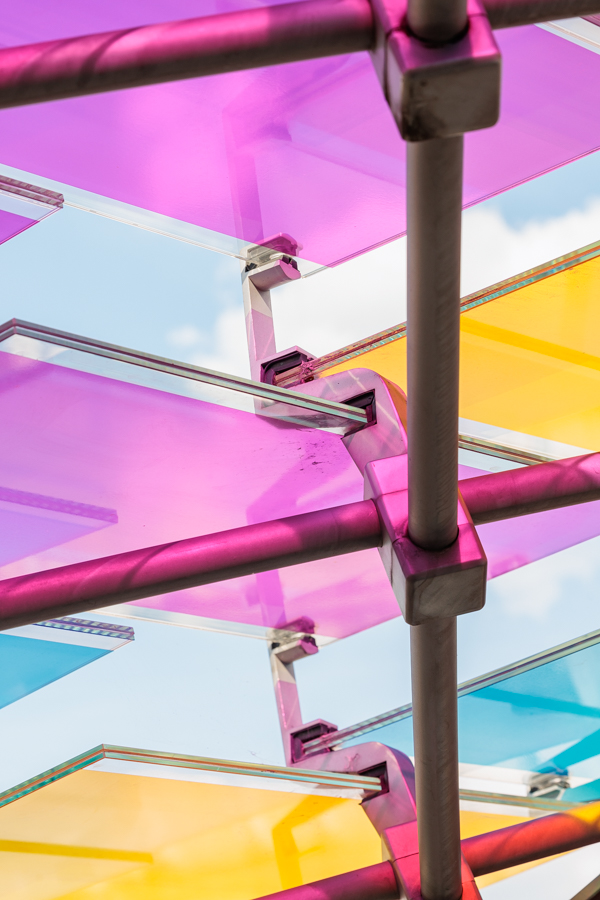
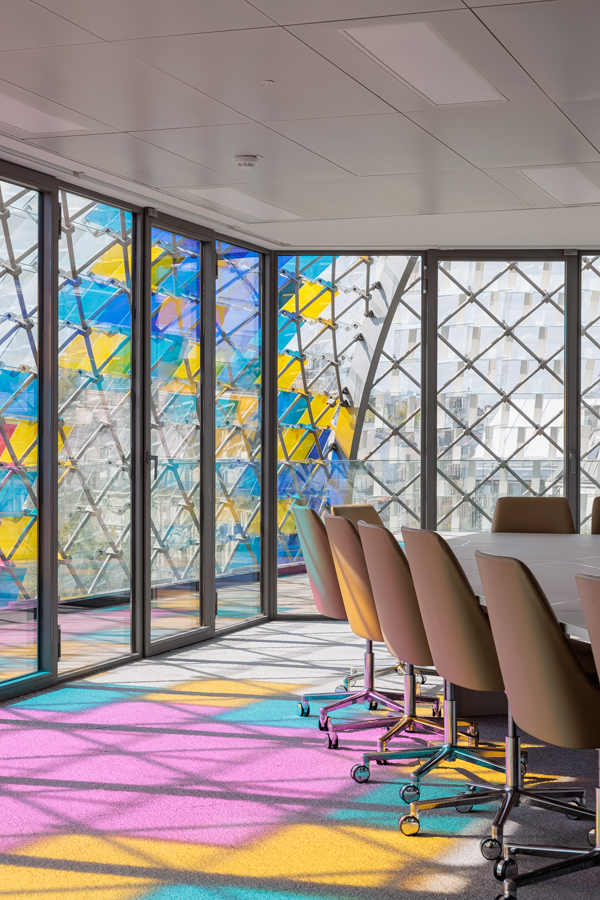
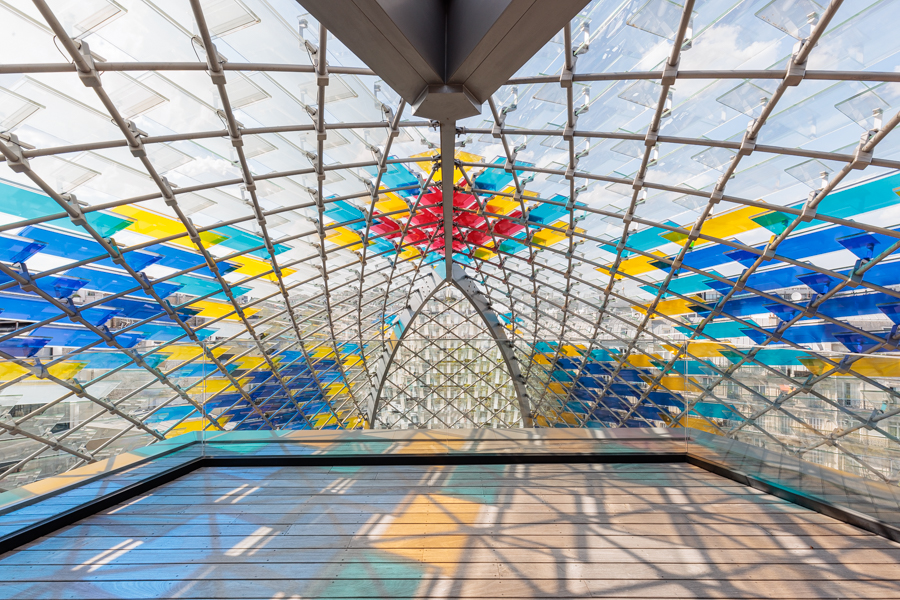
By freeing up the ground floor of the 175, access to the building was brought back to the tip, creating a majestic entrance on the axis, highlighted by a spectacular chandelier in the double height. The clarification of circulation through a redesigned core and floor plates erases the boundary between the buildings. A raised stone floor is complemented by two floors under glass, giving the whole a unique aesthetic. The glass roof reinvents the identity of 175 Haussmann by adding a contemporary element to the district’s historical and heritage context. This urban signal illustrates the new symbolic role of the head office, embodying the company’s identity, generating a sense of belonging among employees and attracting new talent.
Creating an indoor-outdoor dialogue
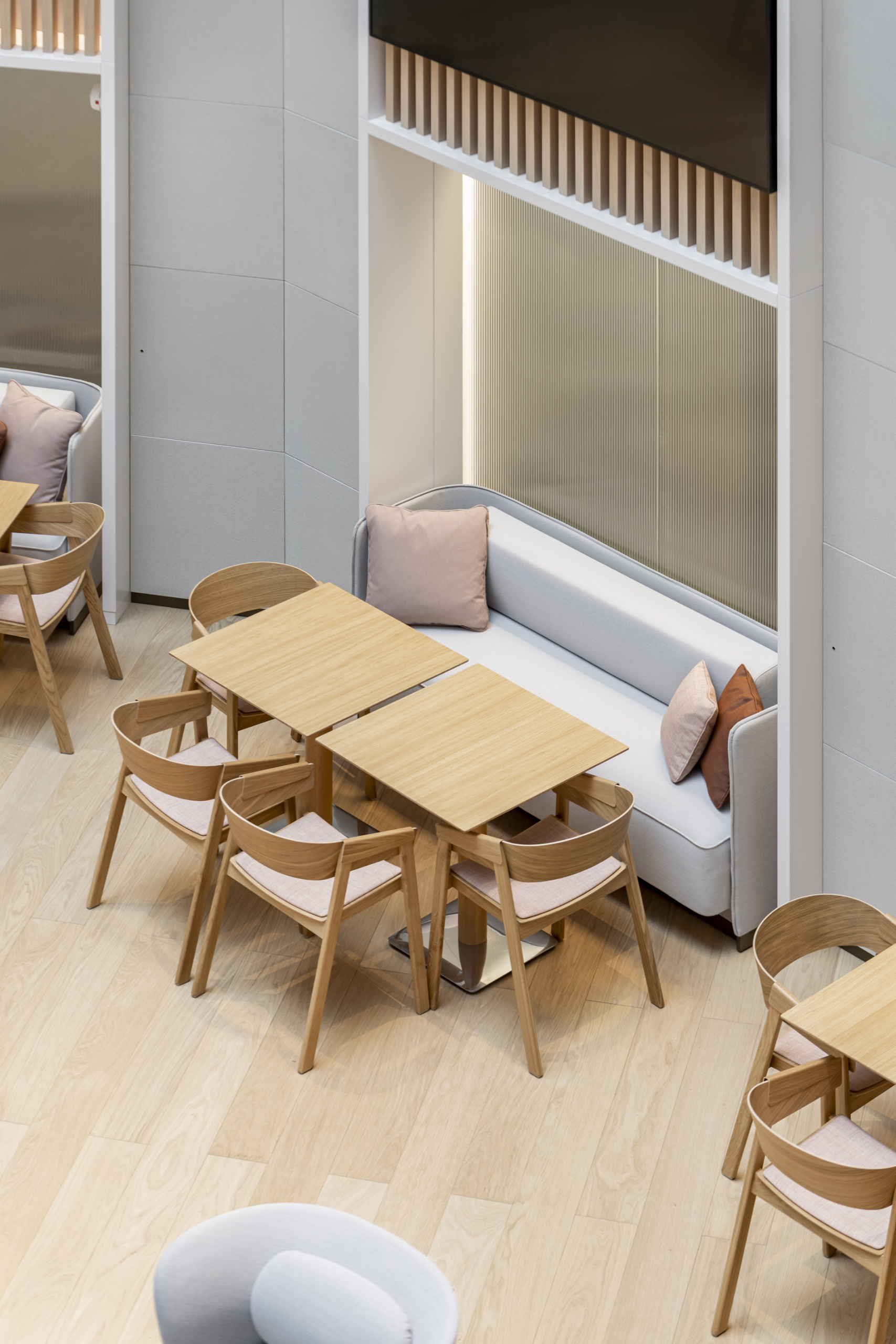
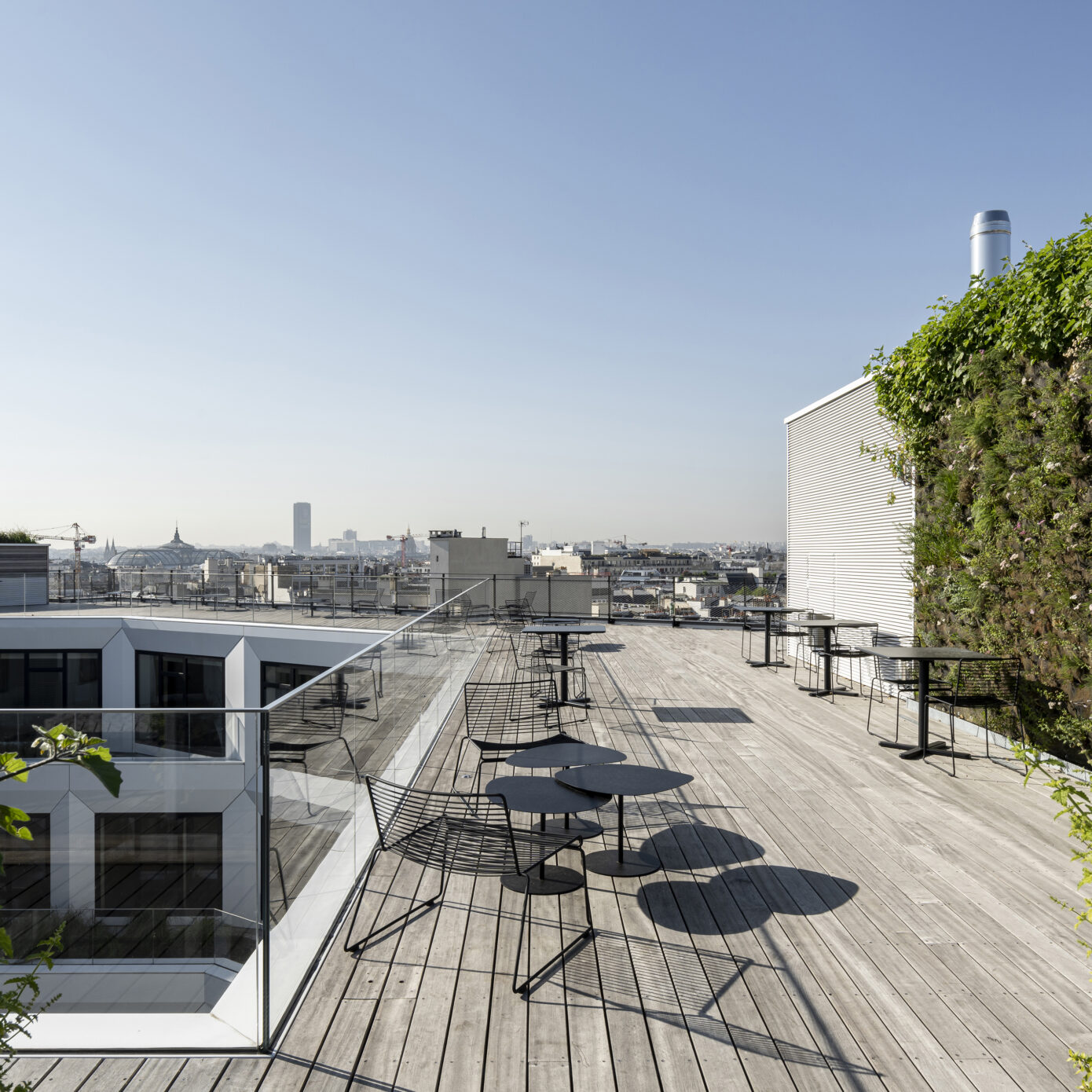
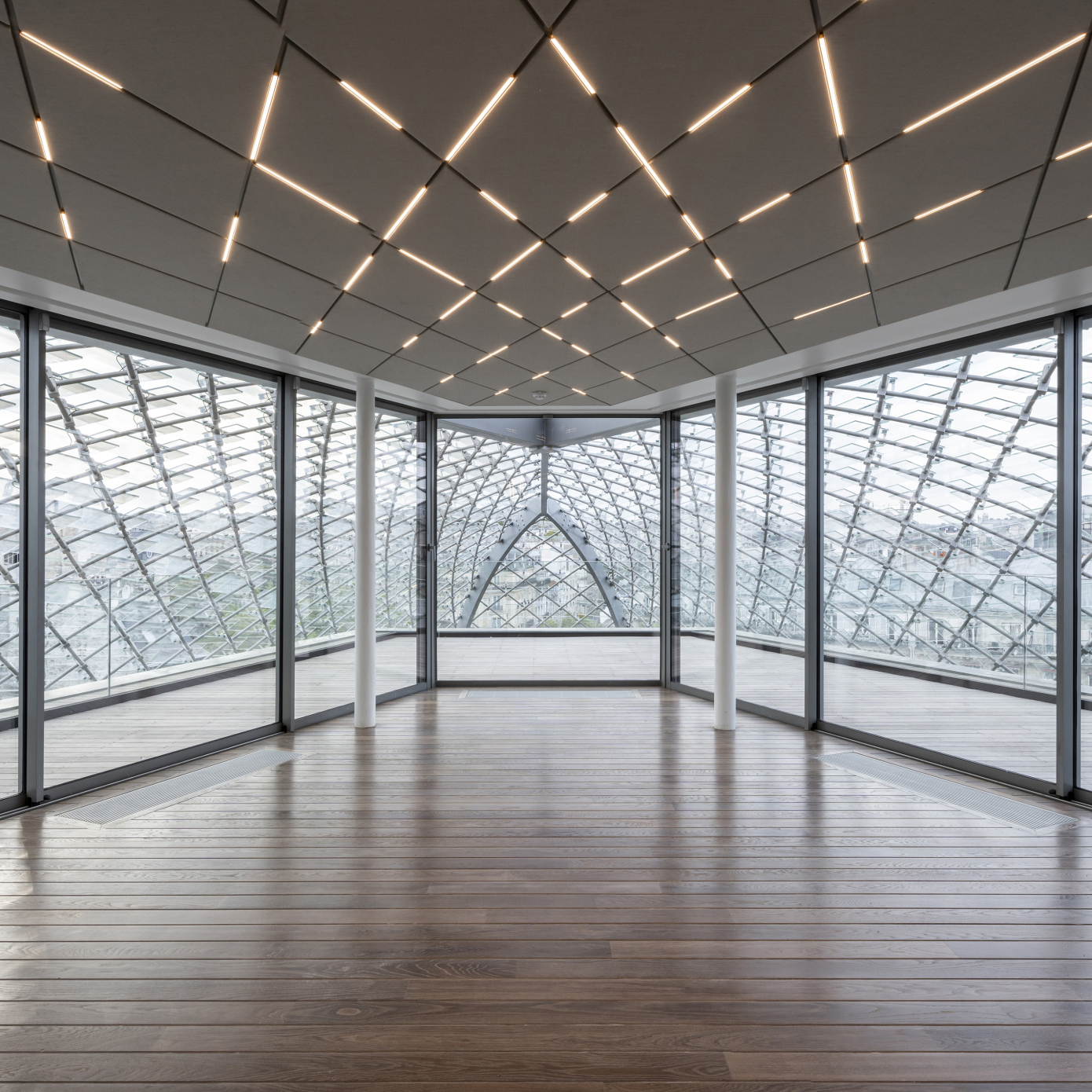
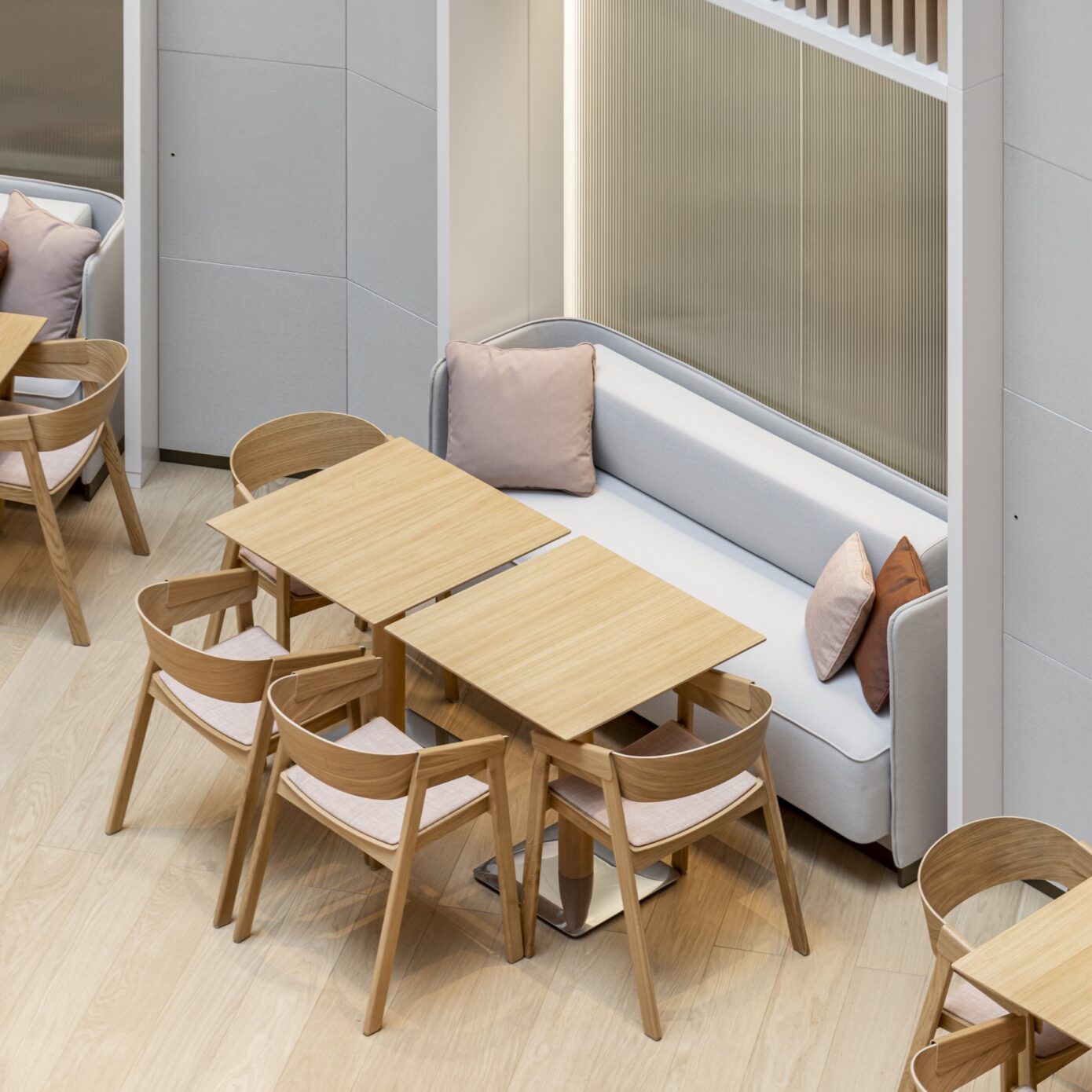
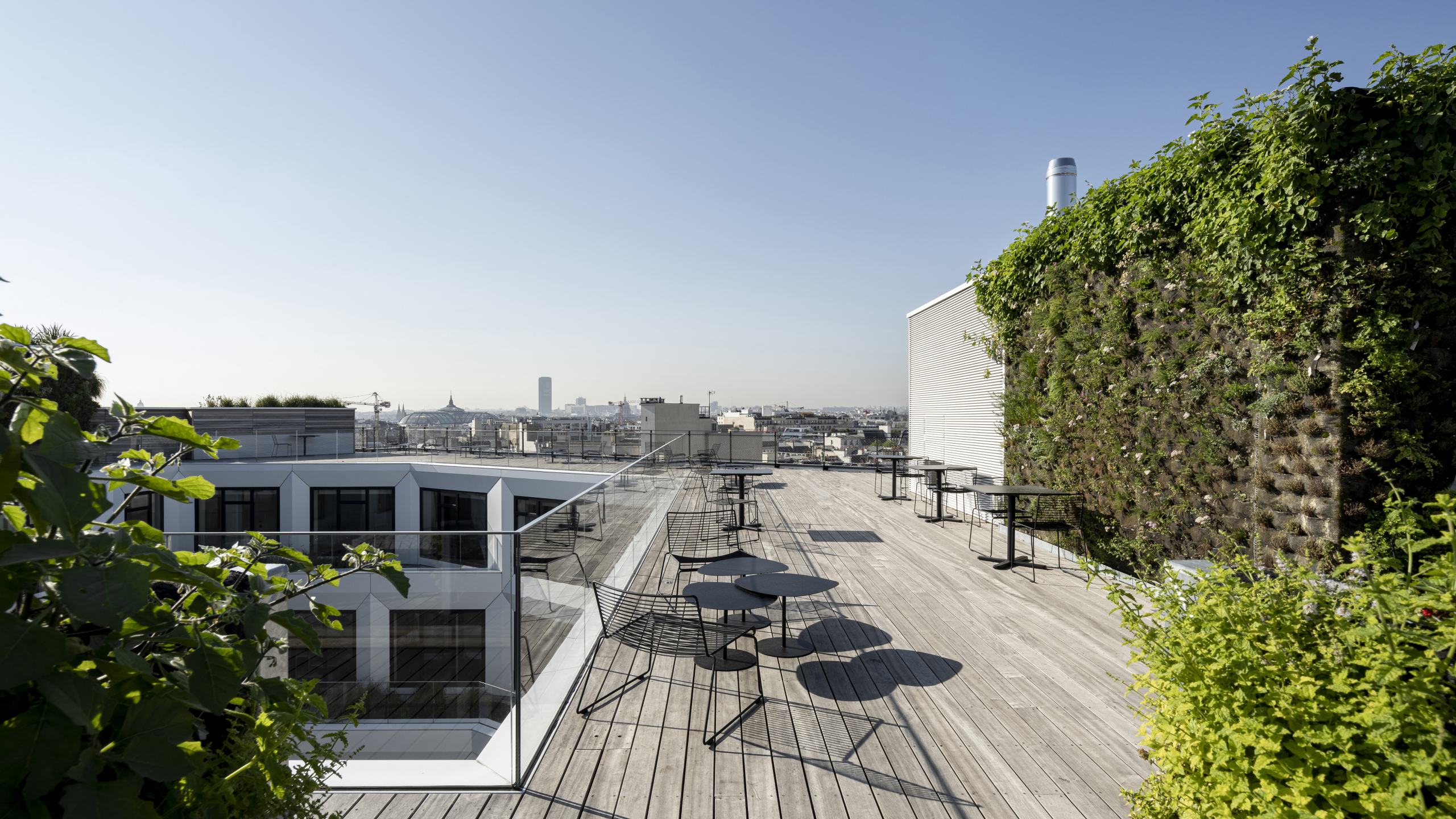
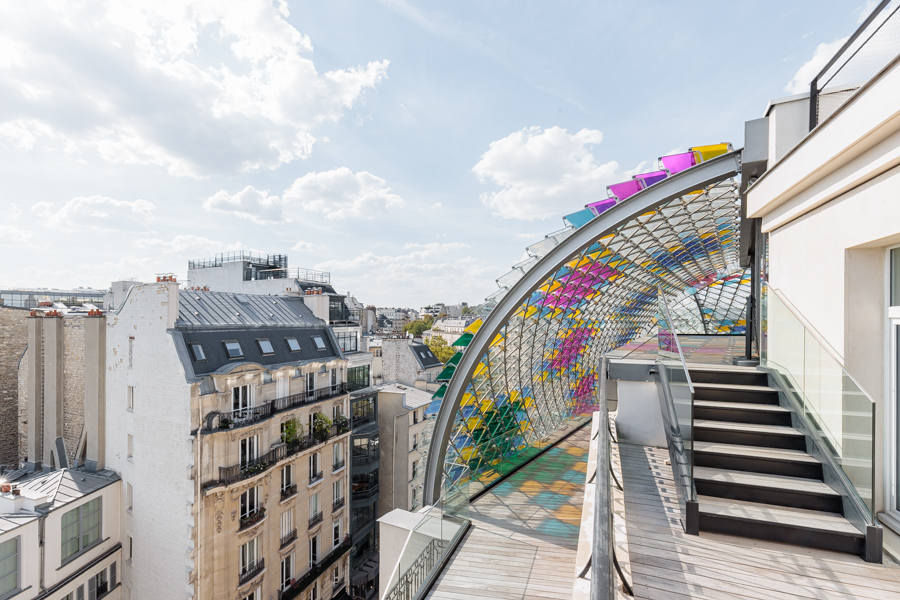
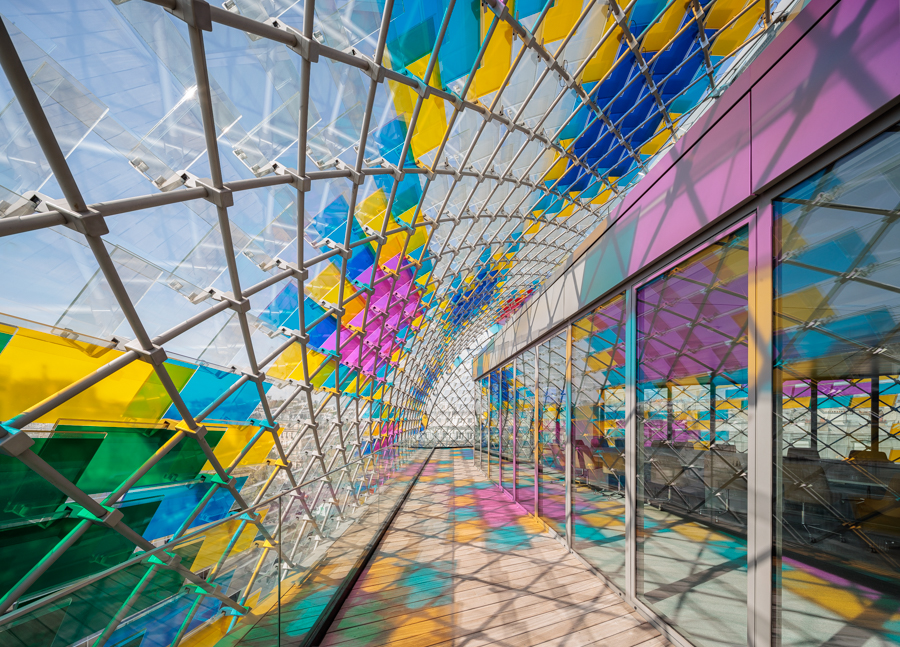
In contrast to conventional, closed, autarkic office buildings, PCA-STREAM wanted to create a dialogue between interior and exterior, using a hybrid glass roof and reclaiming the roof space. Technology is redistributed to create a landscaped terrace for living. Employees can work or relax in these informal, inspiring spaces, enjoying exceptional panoramic views over Paris. Le 175 Haussmann reconnects with its neighborhood through a restaurant accessible from outside the building. Reserved for Lazard teams at lunchtime, it is open to the public at other times. This hybridization of the company restaurant encourages the emergence of multiple uses.
An ecosystemic approach
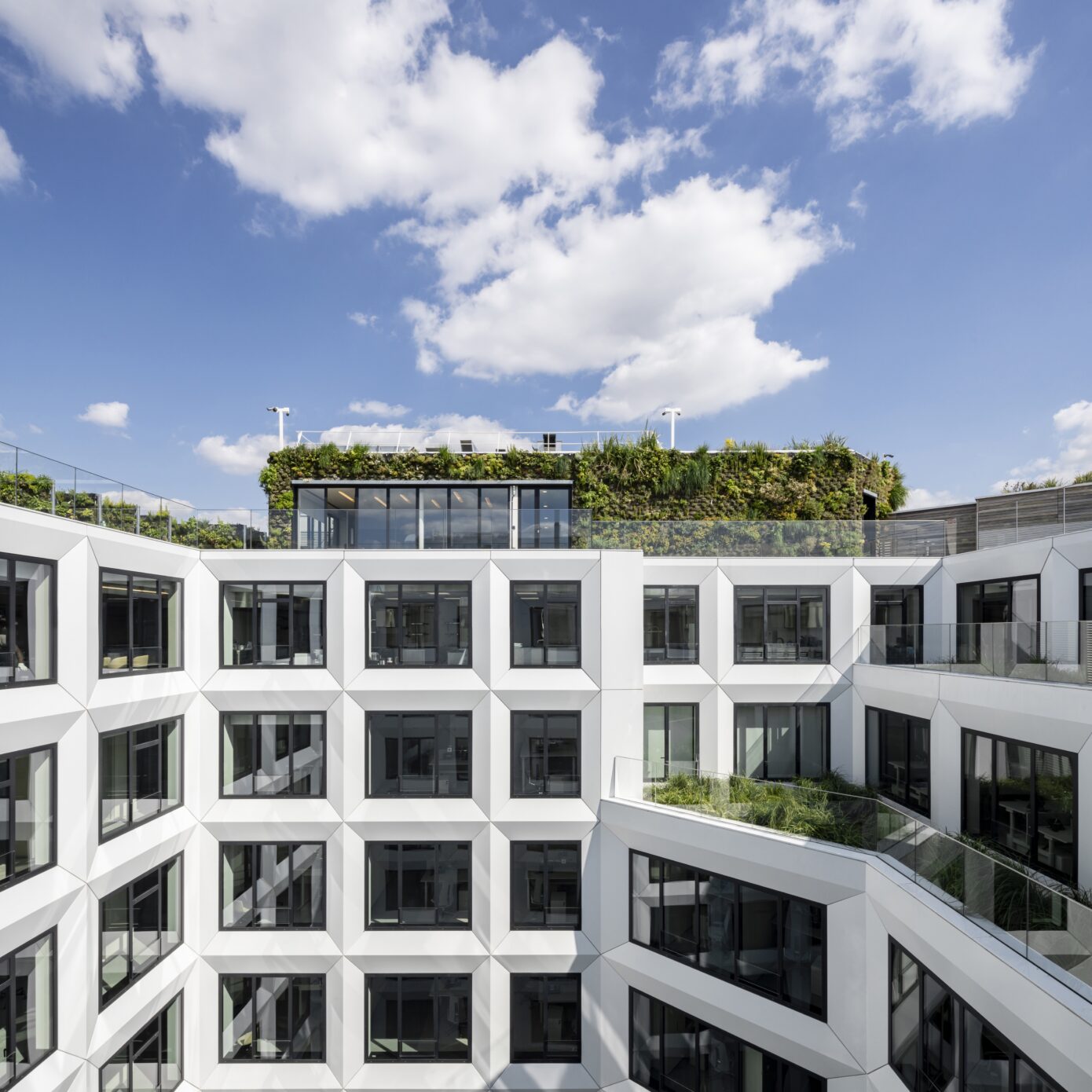
The restructuring of 175 Haussmann was designed to encourage the reconnection of the building and its users with nature. Natural ventilation and passive protection systems are complemented by photovoltaic glass integrated into the glass roof. The vegetated surfaces form a coherent and connected whole, from the sixth floor to the inaccessible roofs. They combine the quest for aesthetic quality with a positive environmental impact. The green roof terrace features an innovative vertical urban permaculture technique, developed in collaboration with the start-up Sous les Fraises. The district’s biodiversity is enriched by a wide range of Ile-de-France plant varieties, cultivated using organic growing methods. The vegetation allows water to be recycled within the building via a plant purification system.