Aéroville

Le Tremblay-en-France

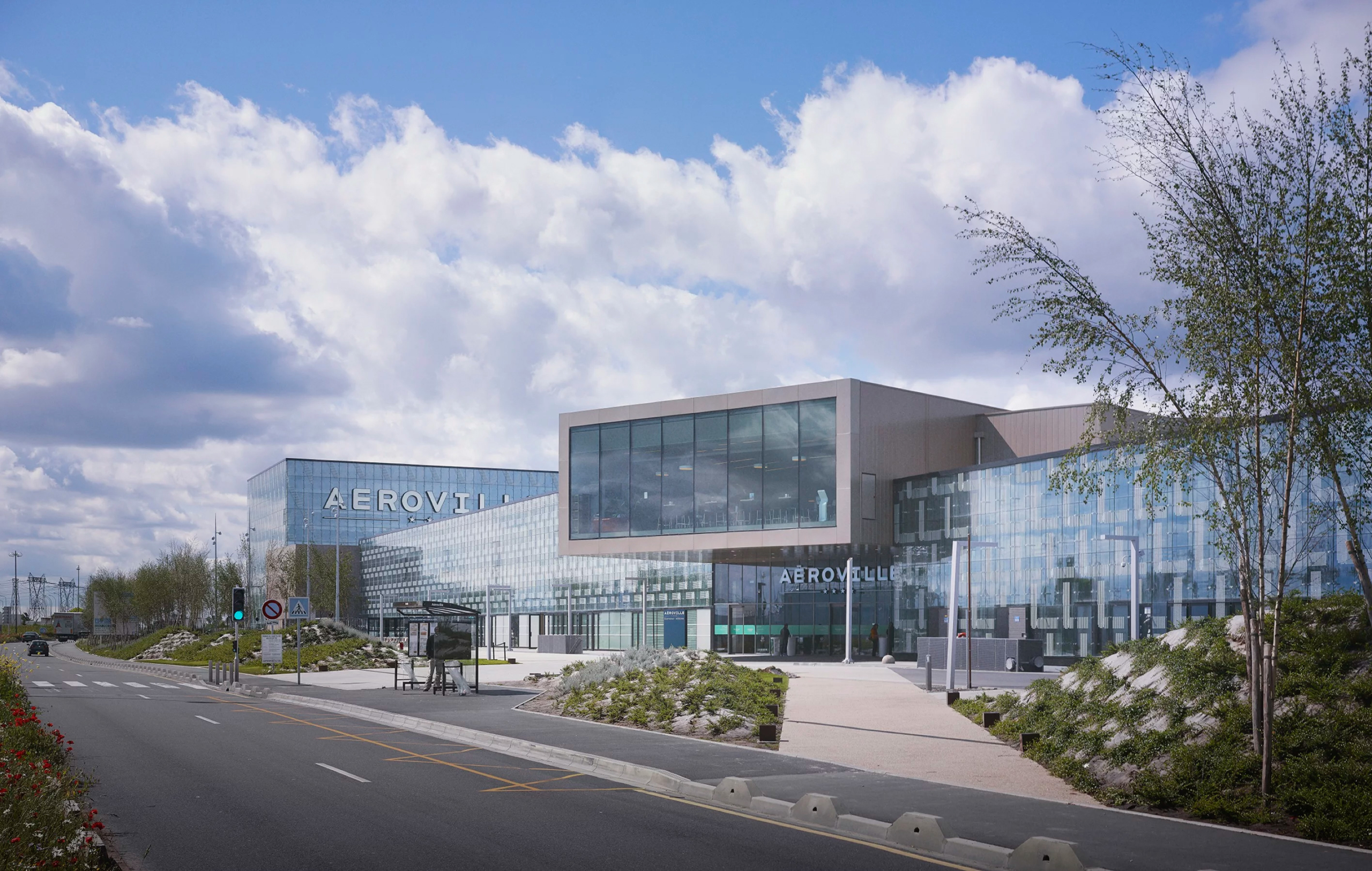
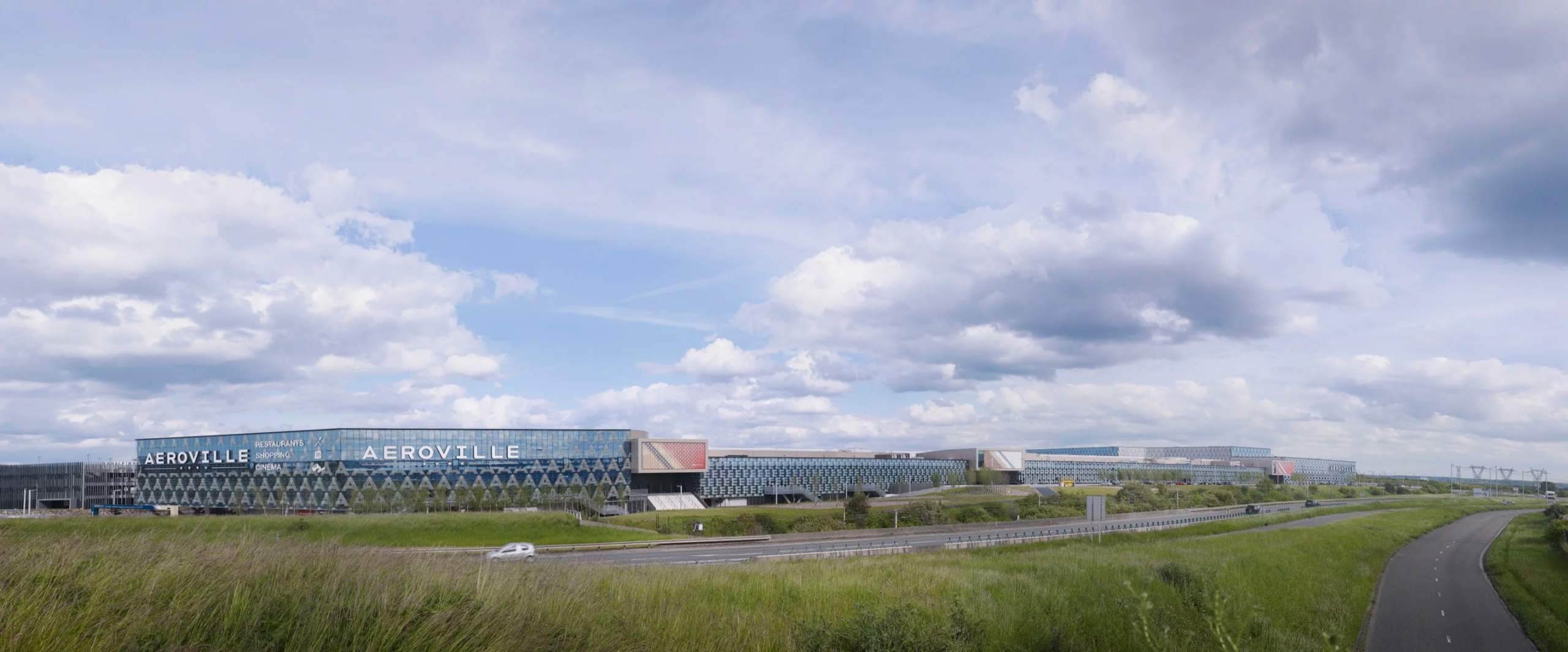
PCA-STREAM designed and completed a commercial and leisure center destined to become a new urban centrality in the Roissy-Charles de Gaulle airport area. Aéroville is inspired by the travel imaginary and diverts the codes of the international flagship store. It is a public space that hybridizes the codes of the airport with those of mixed-use activities of an urban center. Built in less than four years of studies and construction, it was delivered to the client, Unibail-Rodamco, in October 2013.

Com_PhilippeChiambretta_AeroVille_20140509
COVER_PROJETS_AEROVILLE
com_pca_aeroville_b_20140525_08959

Photos

Process

Paris-Charles-de-Gaulle est le premier hub d’Europe, et sa zone aéroportuaire constitue le premier pôle d’emploi en Île-de-France après La Défense. Si les projets du Grand Paris renforcent la puissance de ce hub mondial, porte de la capitale et du pays, ce territoire souffrait de l’absence d’un lieu de centralité offrant à ses usagers les facilités d’un centre-ville : services, commerces, loisirs, culture. Pour pallier ce manque, Aéroports de Paris, en partenariat avec Unibail-Rodamco, a imaginé un équipement d’envergure à la frange de la zone aéroportuaire, à moins de 10 minutes en voiture ou bus pour les salariés de la zone, les voyageurs ou les habitants de Roissy et Tremblay. À moins de 30 minutes en voiture, c’est une population de 1,8 million d’habitants qui est concernée. Inspiré de l’imaginaire du voyage, Aéroville, centre de commerces et de loisirs, est pensé comme le centre-ville jusqu’alors introuvable de cette vaste zone. C’est un espace ouvert dans lequel l’aéroport a inoculé sa dimension cosmopolite de voyage, et la ville celle d’activités mixtes.

Répondre à la topographie

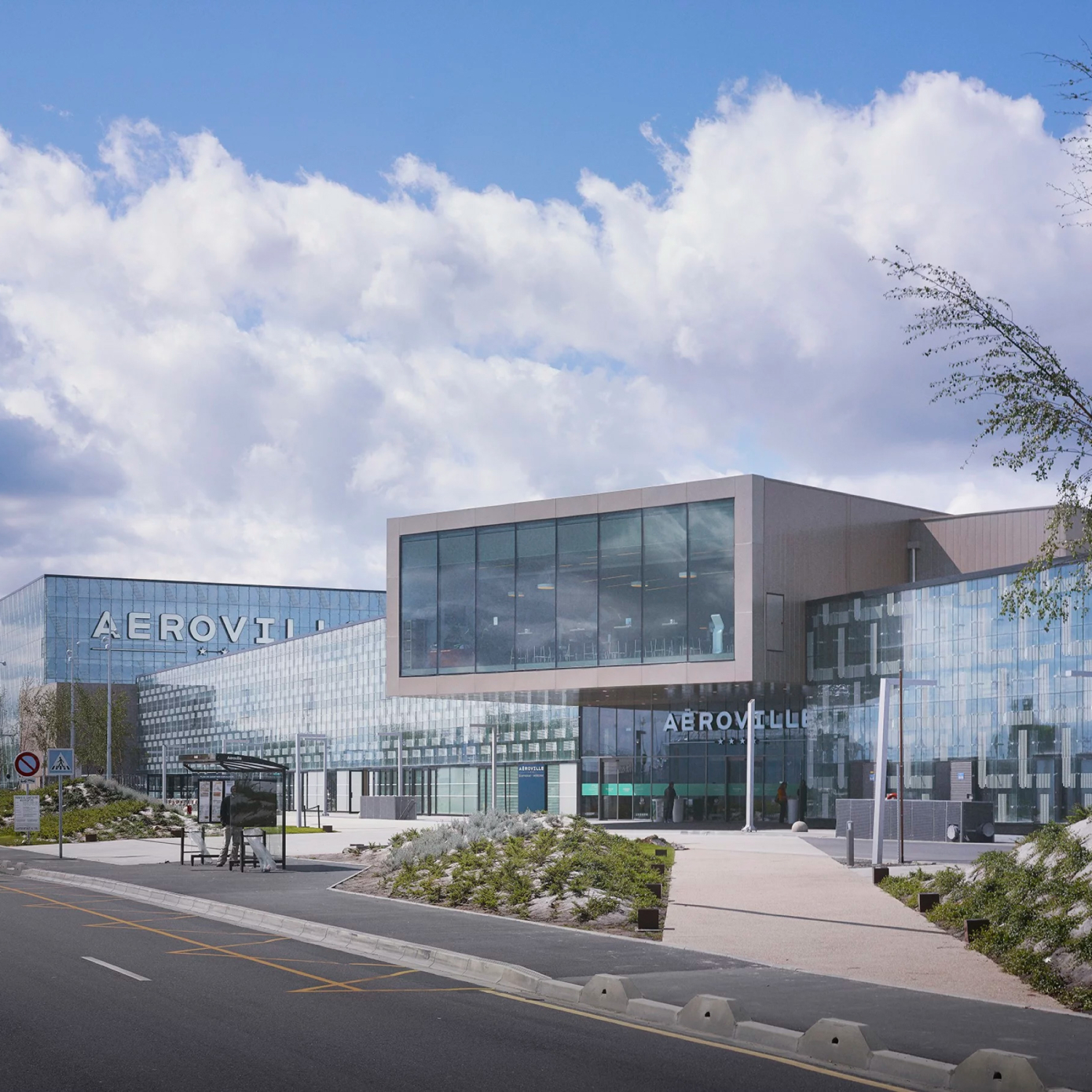
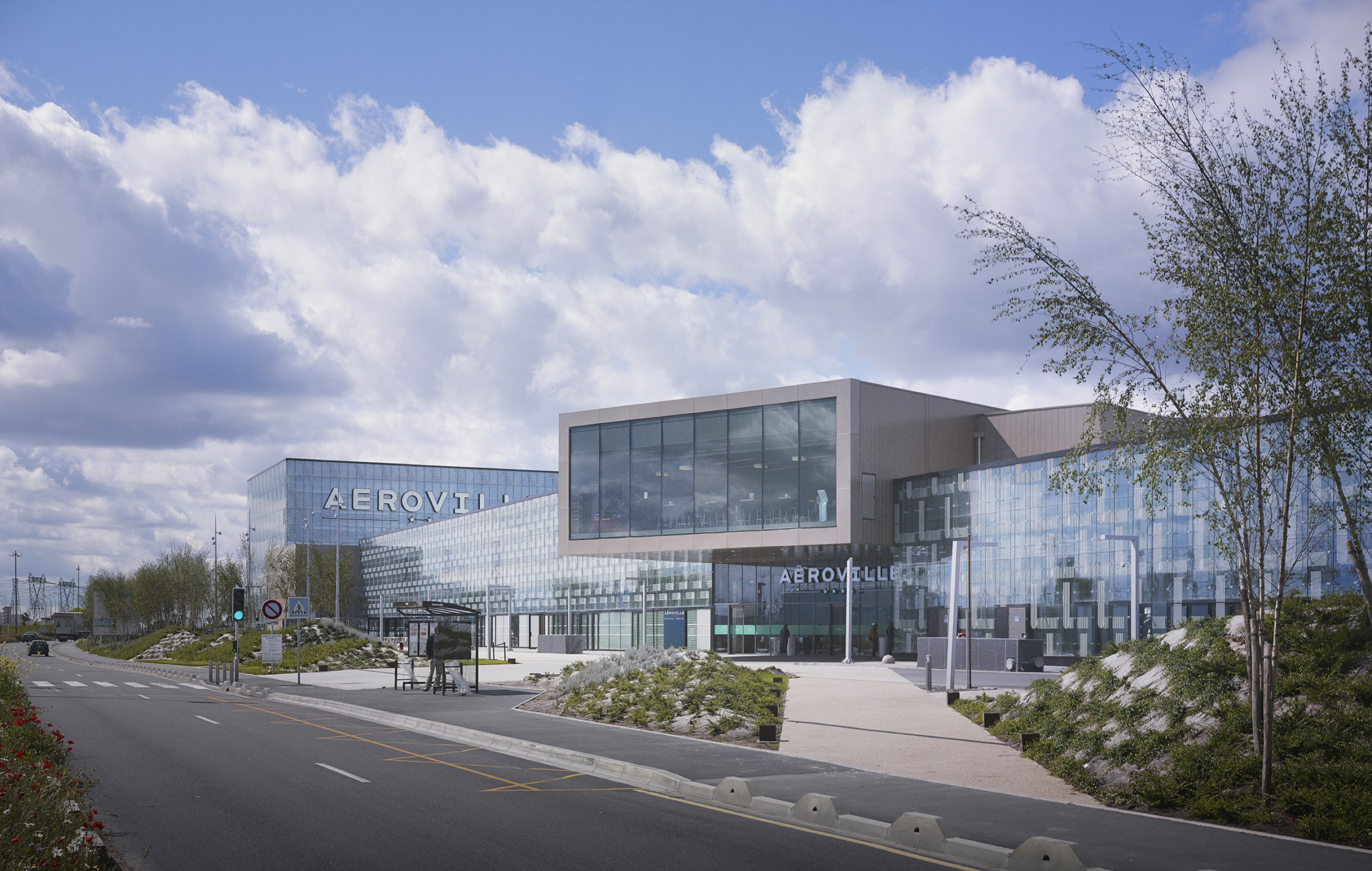
Le projet présente l’originalité de développer les commerces sur un seul niveau, autour d’une rue intérieure en forme de huit, accessible de plain-pied depuis la rue des Buissons, en face des arrêts de bus et des bureaux de la zone de fret. Les parkings sont dissimulés au-dessus et en dessous du bâtiment. Le projet tire également parti de la déclivité du site. L’entrée nord, située au niveau du terrain naturel, apporte lumière et ventilation naturelle au parking. Les parkings du personnel et du cinéma sont implantés sur le toit du centre. Les abords libérés des stationnements automobiles sont végétalisés pour permettre la reconstitution d’un écosystème.

Un vocabulaire urbain

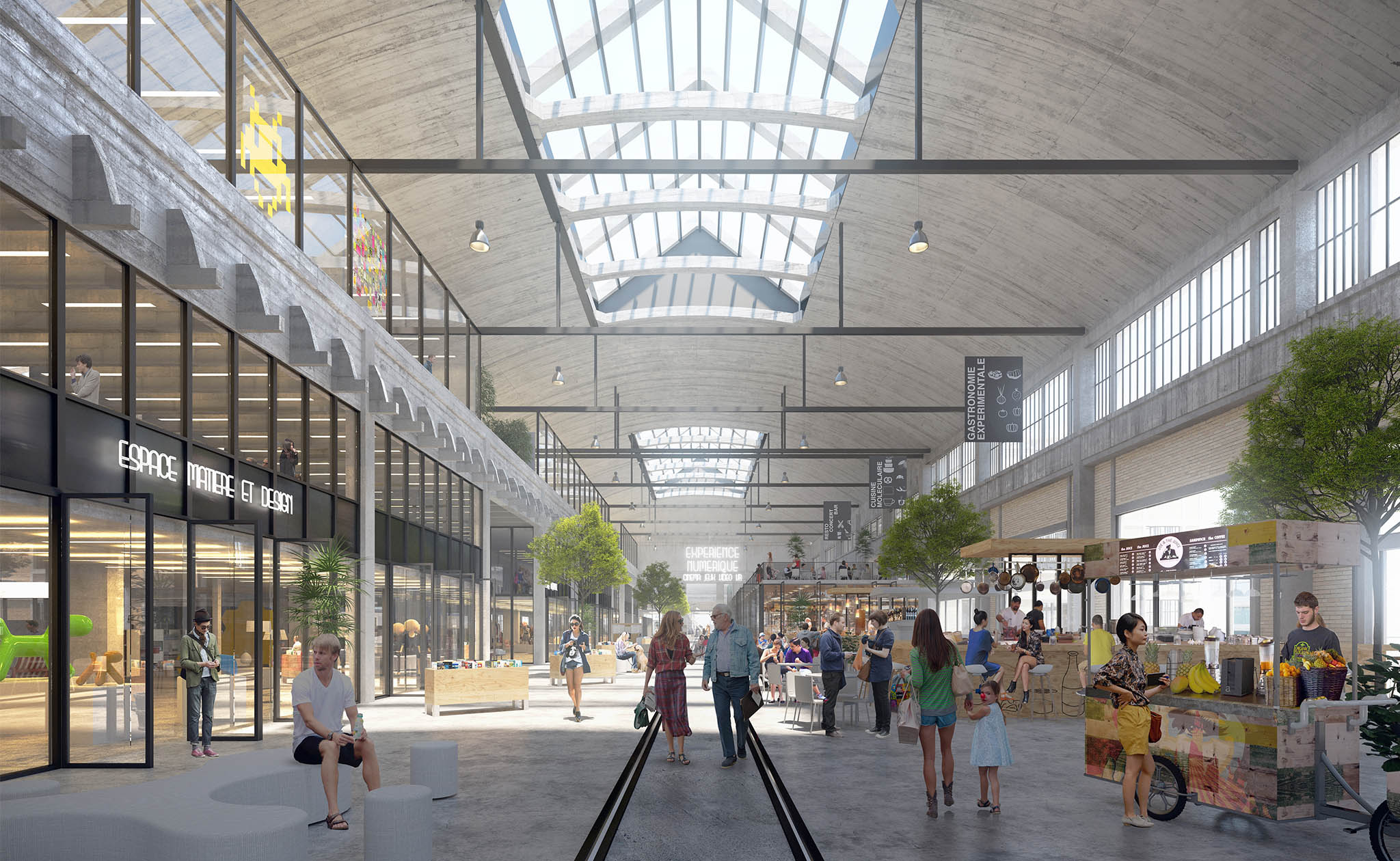
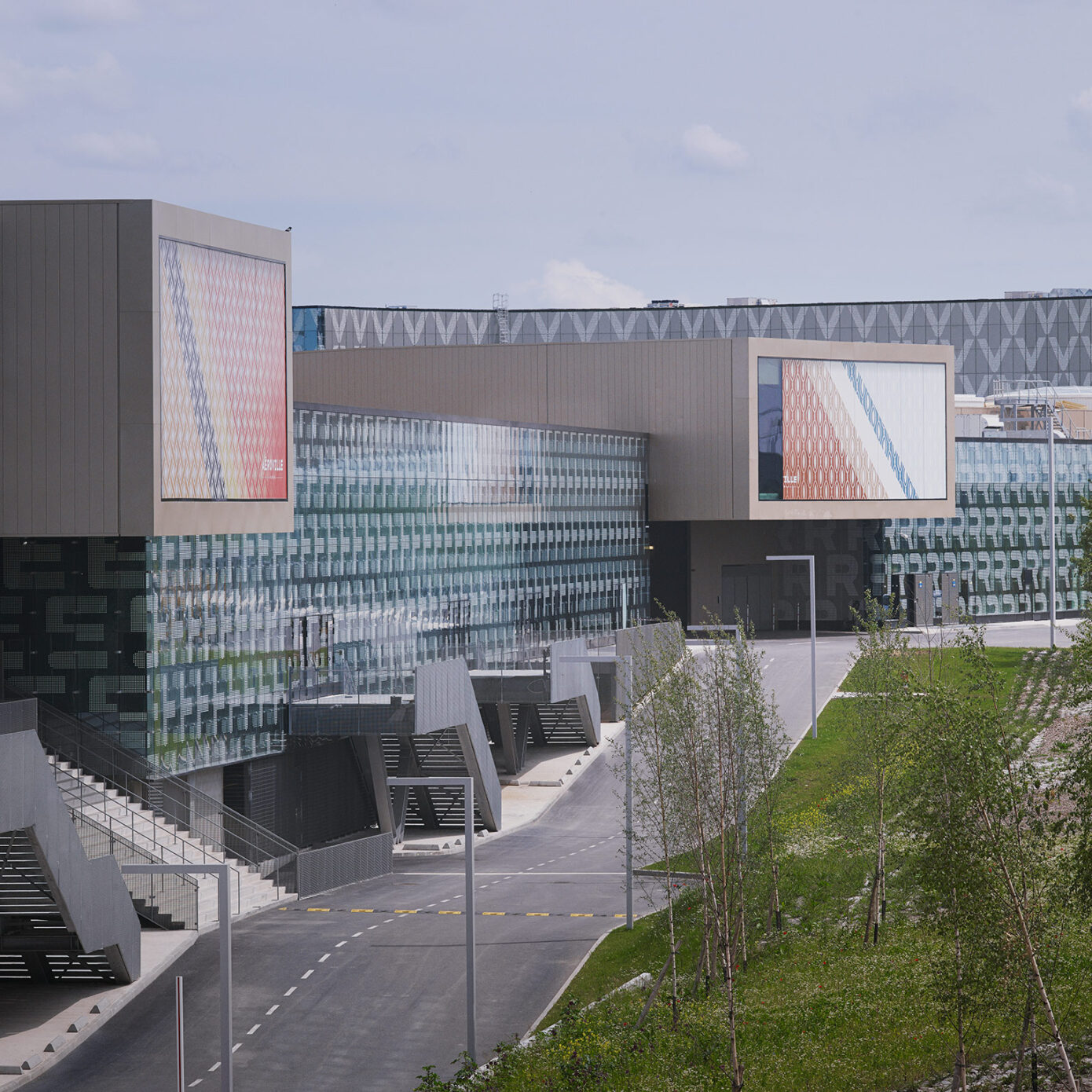
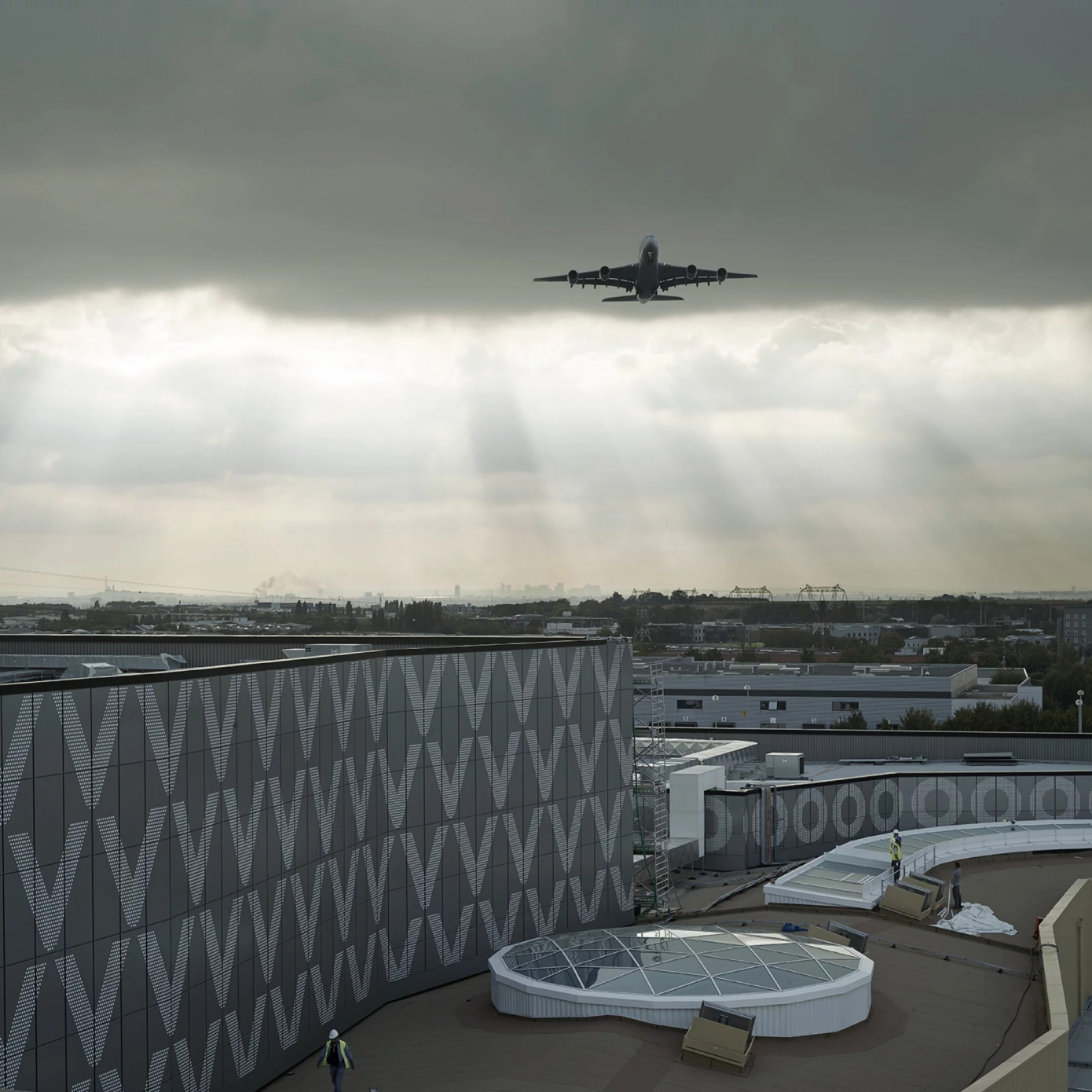
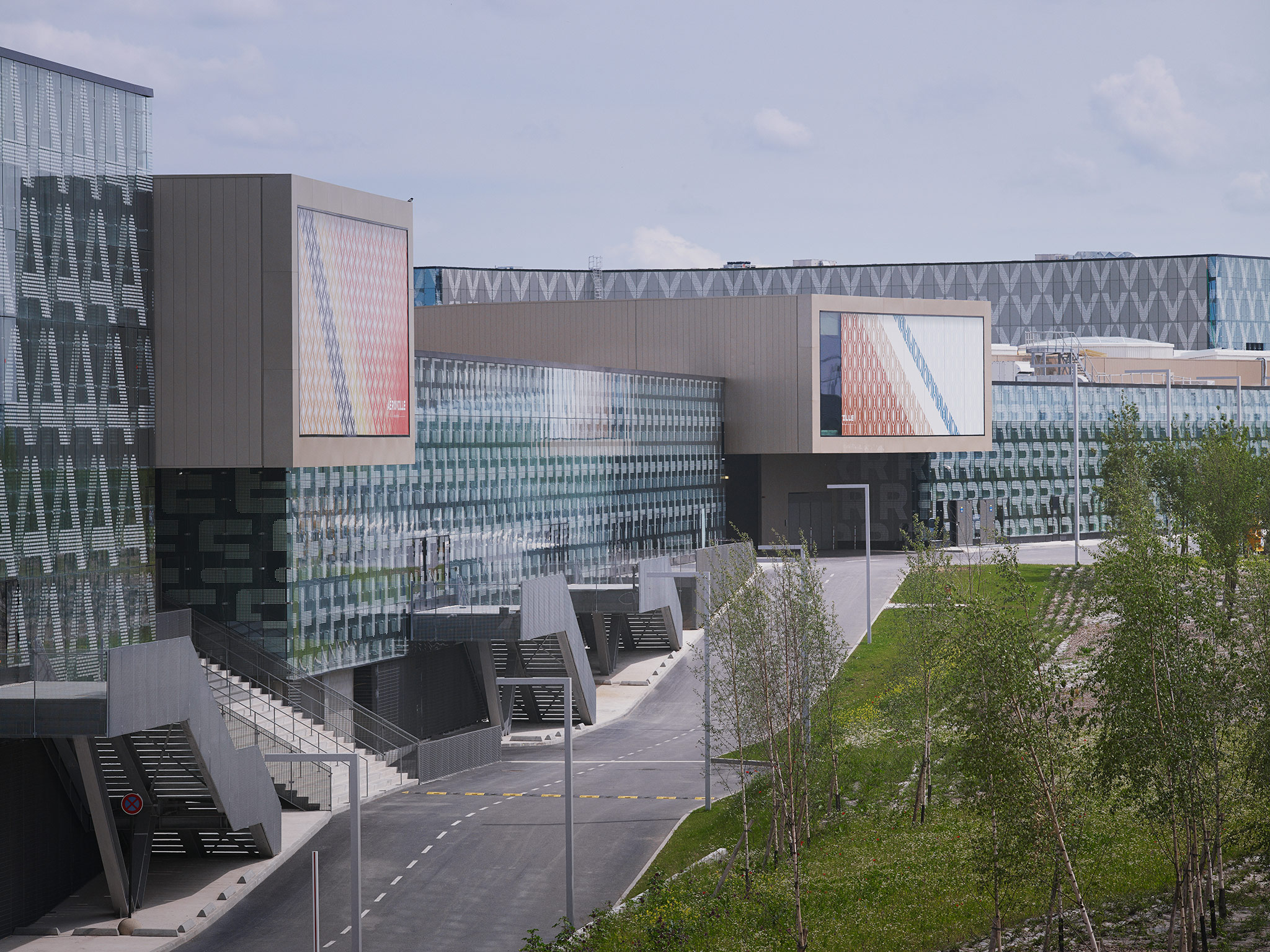
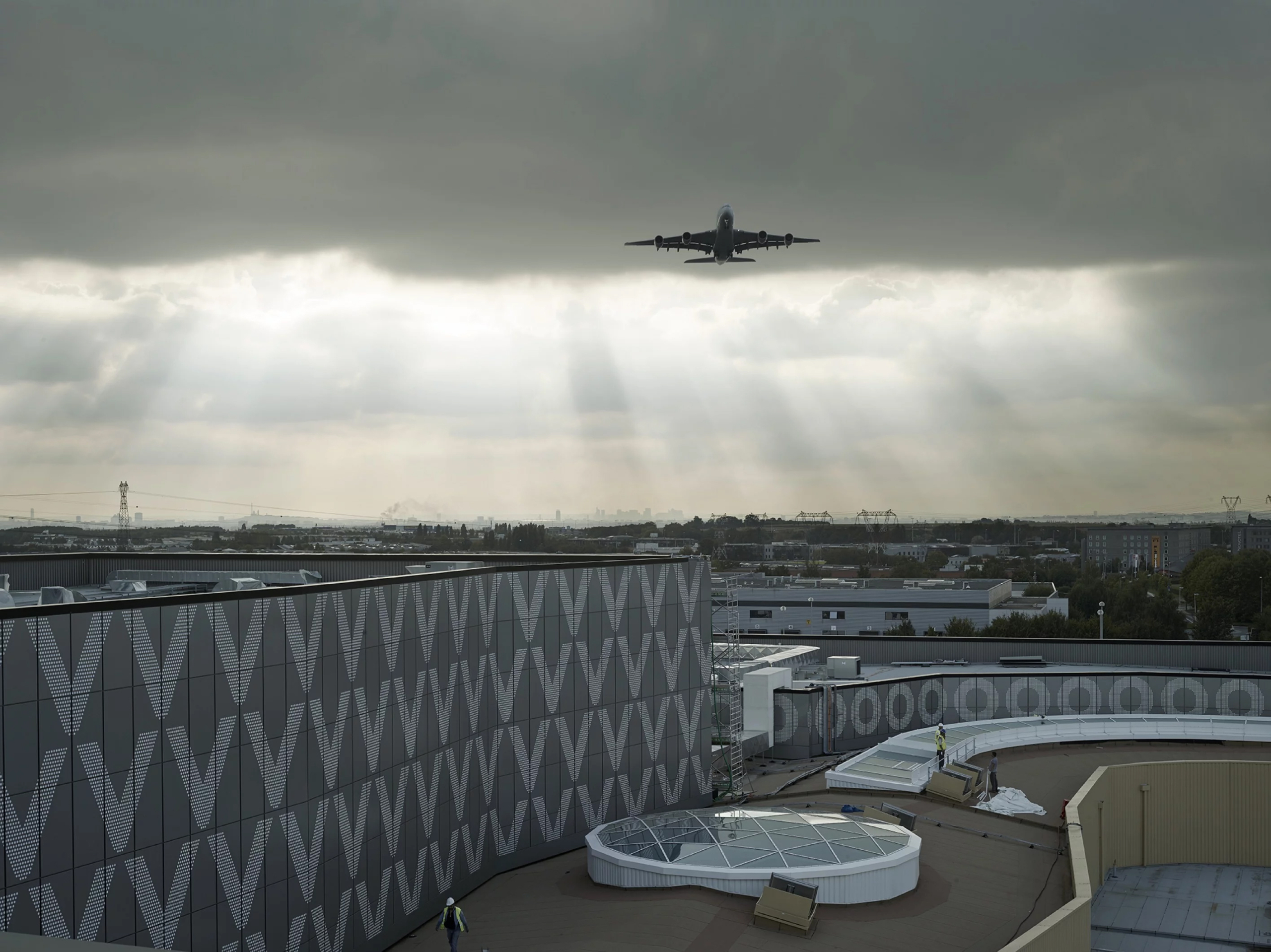
Comme dans un aéroport, la rue intérieure dispose de lumière naturelle et de vues vers le ciel. Sa verrière zénithale est étudiée pour limiter l’éclairage artificiel et éviter toute réchauffement thermique. La rue intérieure s’élargit en plusieurs points pour former des places plus hautes sous plafond, plus lumineuses, qui correspondent aux cinq hubs de liaisons verticales reliant le parking au centre. Le parcours de 1,1 km de long est éclairé par des verrières continues et se projette vers l’extérieur au travers de « plugs » rythmant la façade. Contrairement aux centres commerciaux classiques, renfermés sur eux-mêmes, les rues intérieures d’Aéroville se prolongent jusqu’en façade avec ces émergences s’inspirant des plugs des passerelles d’aéroport, ici transformées en belvédères offrant des vues sur le paysage et l’envol des avions.

Enveloppe

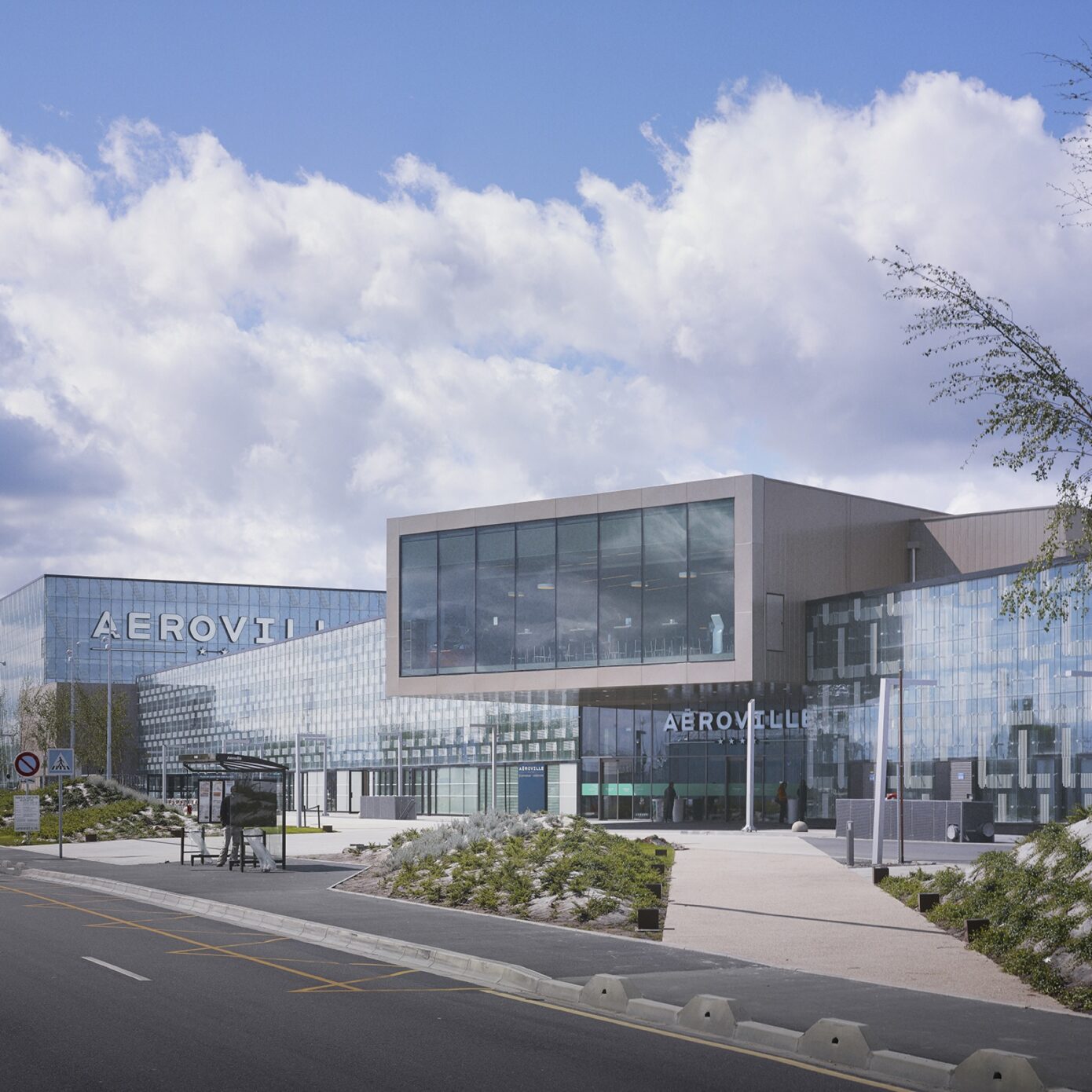
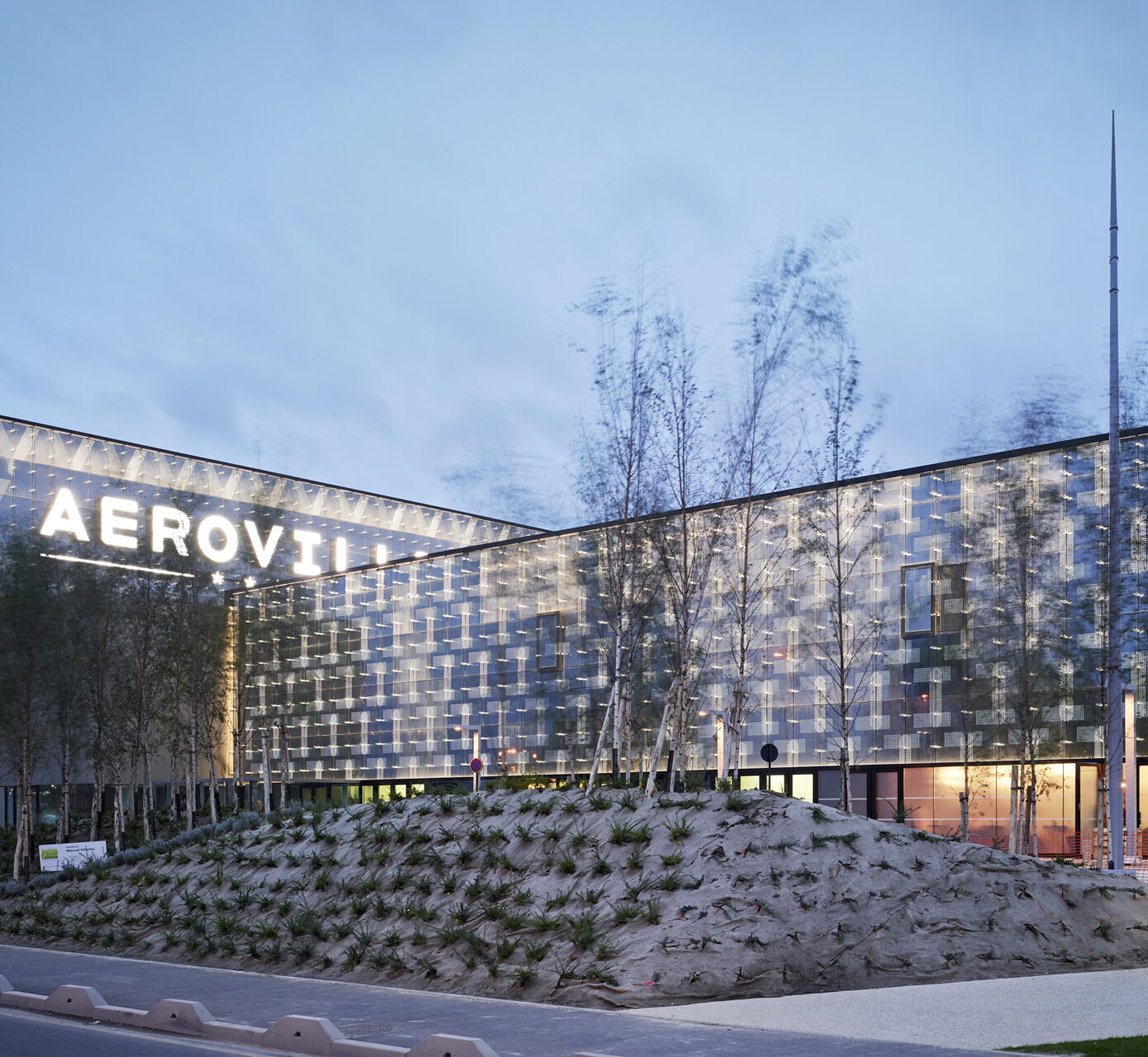
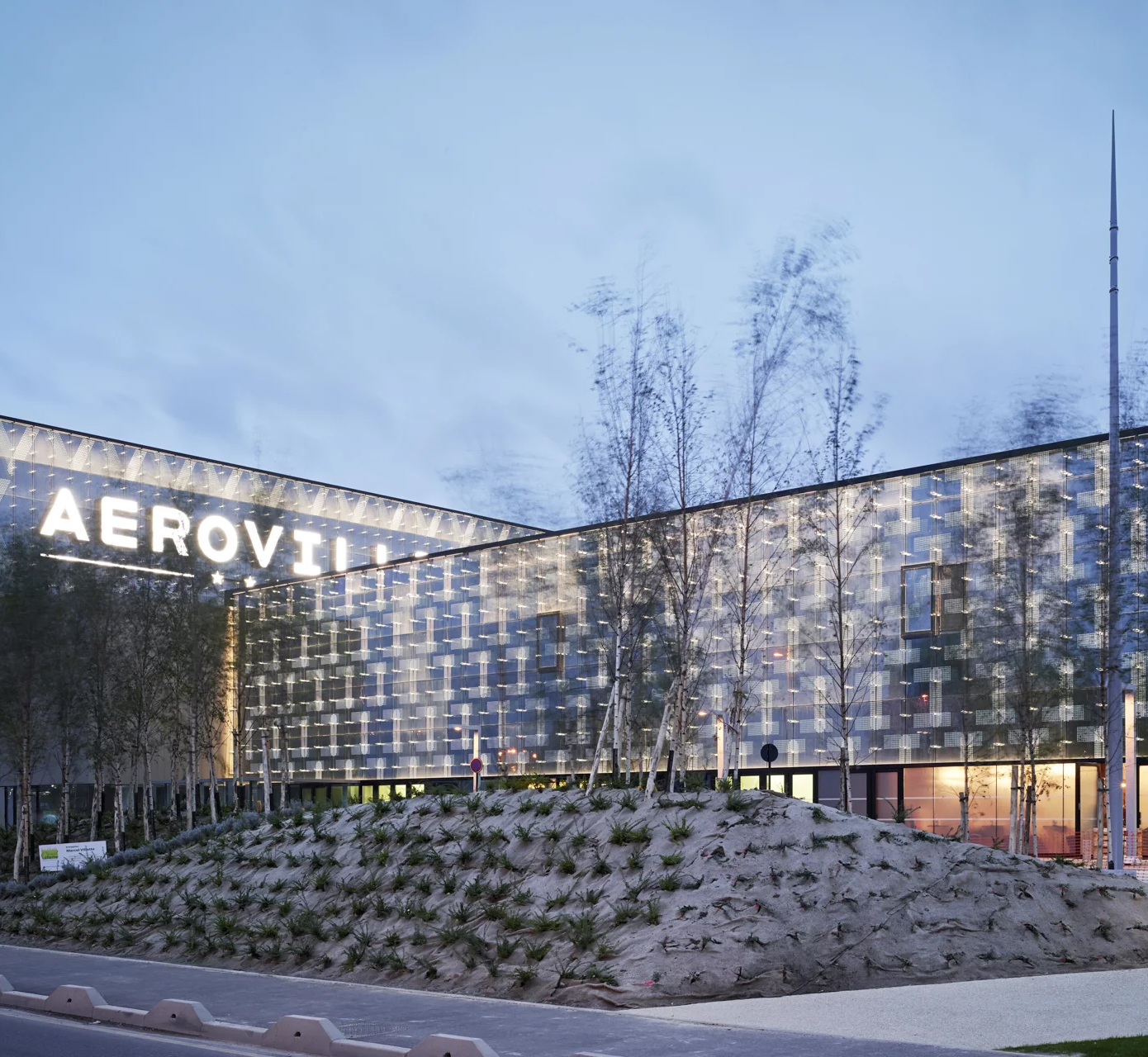
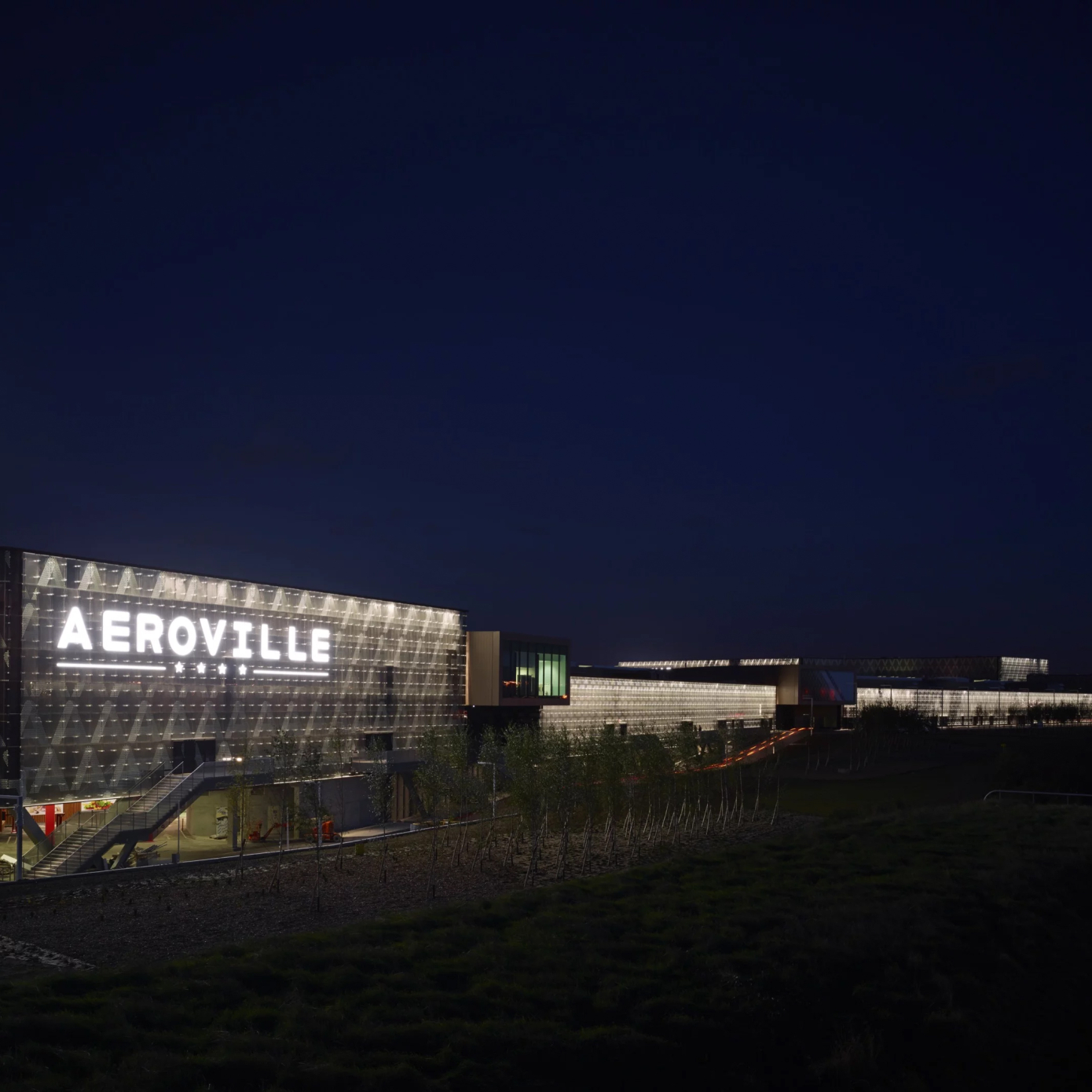
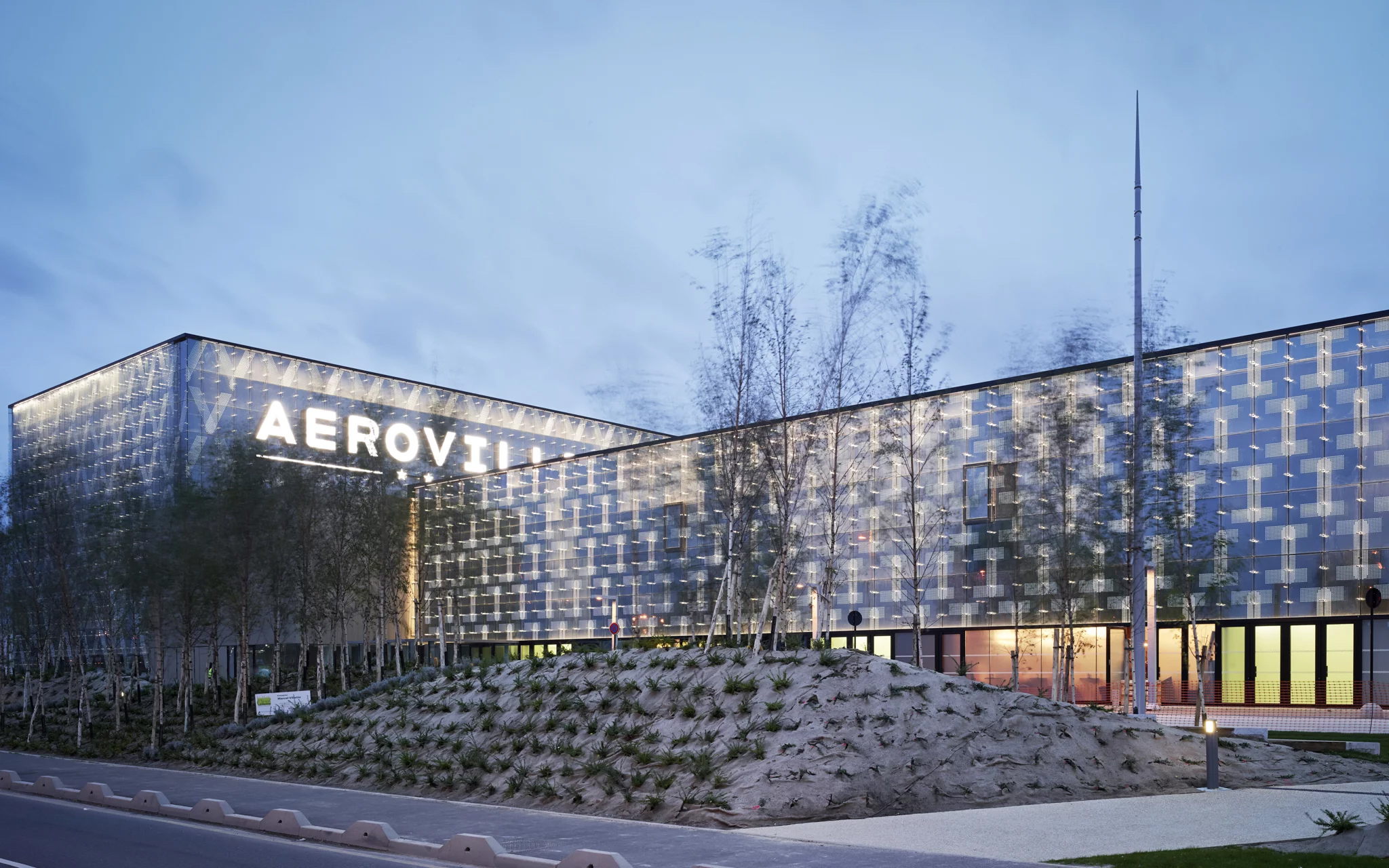
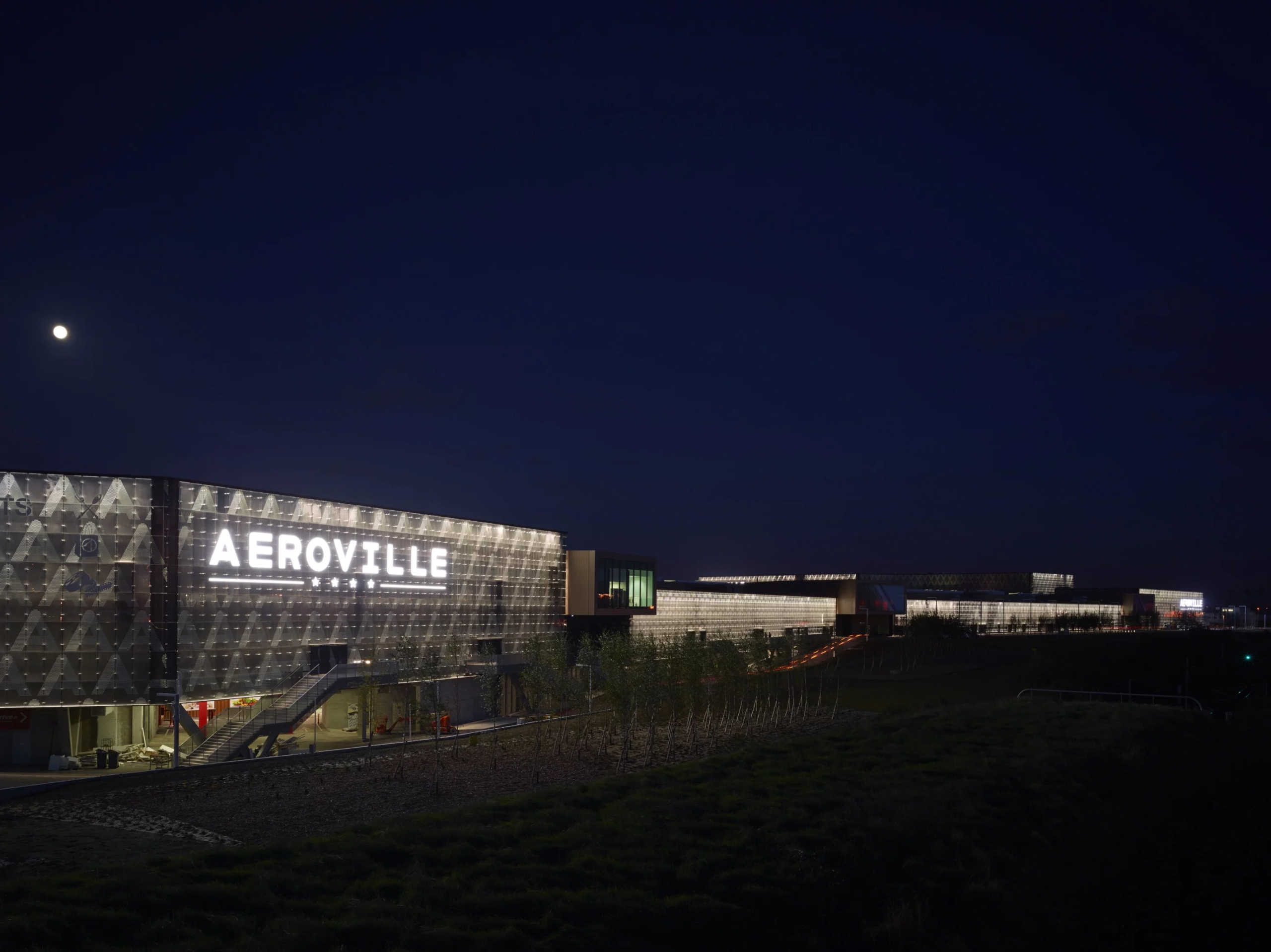
L’enveloppe a été pensée en rupture avec l’image de la périphérie. Jouant du simulacre, Aéroville s’affirme comme une association de flagships précieux – ces bâtiments griffés et sophistiqués que les marques de luxe ont développé dans les capitales mondiales -, dont les noms et logos, signés par le duo graphique deValence, sont de simples lettres : A, E, R, O, V, I, L, L, E, comme autant de monogrammes originaux. En « tatouant » l’enveloppe du centre commercial, ces lettres fantasment la marque imaginaire que serait « Aéroville ».

Démarche environnementale

Visant des certifications environnementales ambitieuses, le bâtiment a été construit sur des terres viabilisées plutôt qu’agricoles. Le centre et son parking ont été superposés pour libérer des espaces extérieurs et maîtriser l’imperméabilisation. Afin de respecter et valoriser les ressources naturelles, les travaux de terrassement ont été très limités. Ils ont permis de créer un paysage compensatoire favorisant la biodiversité tout en réduisant l’impact du bâtiment sur le cycle de l’eau. Le centre est approvisionné par géothermie et les besoins énergétiques réduits de manière passive. Le paysage vient rafraîchir l’ambiance extérieure et créer naturellement des masques d’ombre.
Technical specifications

Paris-Charles de Gaulle Airport is the largest airport hub in Europe. The airport area has the largest concentration of jobs in the Île-de-France region after the La Défense CBD, with more than 120,000 employees. The projects of the Greater Paris will soon strengthen the power of this “hub,” a node of global interconnection and a gateway to the capital and the country. For years, this territory had been suffering from a lack of a centrality that could offer all the facilities of a city center to its users—services, shops, leisure, culture. To compensate for this shortcoming, Aéroports de Paris, in partnership with Unibail-Rodamco, planned the creation of a large-scale facility on the fringe of the airport area. The center is only a ten minute drive away (by car or bus) for employees working in the area, airline passengers, or residents of Roissy and Tremblay. A population of 1.8 million inhabitants lives within the catchment area of a 30 minute drive from the project.

A concept that hybridizes the codes of the airport and those of the city center

Aéroville is a commercial and leisure center inspired by the imaginary of travel; it becomes the “town center” that was lacking until then in this vast area. It is an open space in which the airport has inoculated its cosmopolitan dimension of travel, and the city that of flows and diversified activities. The airport is the emblematic place of a new global culture of migration. Transforming Aéroville into a metaphor of travel converges with this planet-wide conviviality.

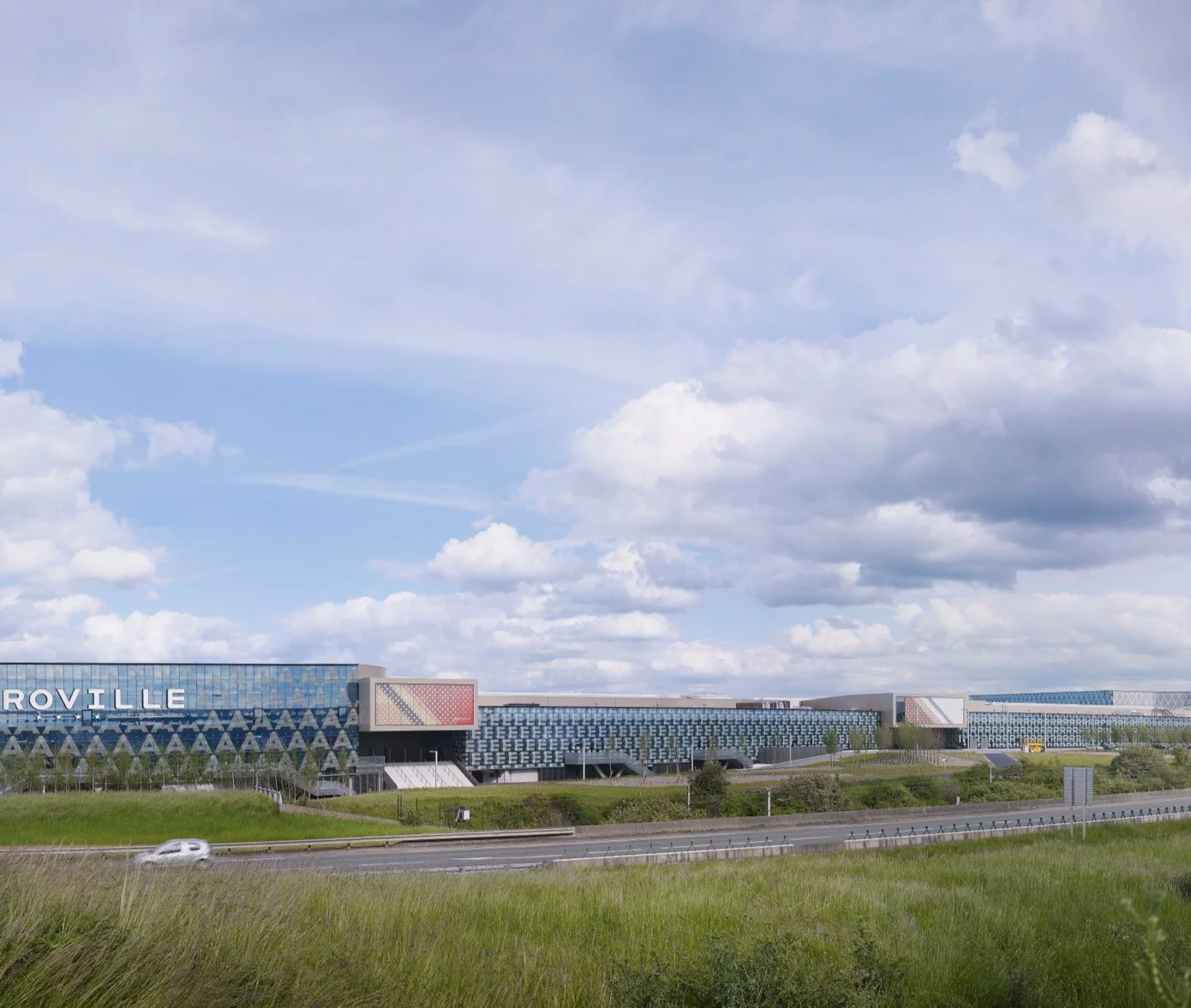
The layout of the Aéroville mall is based on that of a city, with streets that set apart the public space and the built environment. The retail program is deployed around the interior street but the gallery is fragmented into blocks of varying heights and dimensions, in the manner of city blocks. The project takes completely different proportions from the typically flat and uniform ones used for this kind of program. This makes it more consistent with its function as a place that is associated with travel and getaways. The fact that the building is open to the grounds outside and its non-generic and non-repetitive character shape both the area that is devoted to retail and a public space that is conducive to exchange and strolling.

A layout that takes advantage of the natural topography

The architectural project presents the originality of laying out the retail area on a single level, around a covered street in the shape of a figure eight. The components of the retail program are arranged along this indoor promenade. There is level access from Rue des Buissons, in front of the bus stops and the offices of the cargo area. The car parks are hidden both above and below the building. The project also takes advantage of the gradient of the site. The northern entrance, which is located at the level of the natural terrain, brings light and natural ventilation to the parking lot. The parking lot for the staff and cinema patrons is located on the roof of the center. The outskirts that are freed parking are planted, thus allowing for a restored ecosystem.

An urban grammar: streets, squares, and hubs

As in an airport, the inner street receives abundant natural light and views towards the sky. The skylight above it was specially designed to minimize the need for artificial lighting and overheating. The inner street widens in several points to form squares with higher ceilings and more light, corresponding to the five hubs with vertical connections that connect the center to the parking lot. The 1.1 km long gallery is predominately illuminated by the continuous skylight and is project towards the outside through “plugs” that line the façade. PCA-STREAM designed the building, as well as the ceilings and the skylights. The decoration and signage were developed by Saguez&Partners.

The plugs

Unlike conventional malls, which are closed on themselves, the interior streets of Aéroville extend right up to the façade in several places, as protrusions. This helps prevent the “closed universe” effect and breaks up the monotony of a continuous façade more than one kilometer long. The monolithic block is thus subdivided. It opens on the outside thanks to openings towards the sky, similar to the “plugs” of the airport jet bridges, but here they are transformed into lookouts providing views of the landscape and plane take-offs.

The envelope

The envelope of the blocks, which was inspired by the codes of the city center, has been conceived at odds with the image of the periphery. International brands have become one of the major components of the collective psyche of the globalized economy. During the past fifteen years, luxury brands have developed an architectural expression of their image through flagship stores—sophisticated designer buildings set up in major world cities. Here, the envelope is characterized by fine materials and a rich skin that is composed of several membranes. Aéroville asserts itself by posing as an association of precious flagships stores, the names and logos of which, designed by the deValence duo of graphic designers, are in fact simple letters—A, E, R, O, V, I, L, L, E, as many original monograms. These letters “tattoo” the envelope of the shopping center, which evokes an imaginary “Aéroville” brand and transforms an object of international consumption into a collective creation.

Our environmental approach

In order to achieve ambitious environmental certifications, the building was built on serviced lands rather than on agricultural land. The center and its parking lots were superimposed in order to free some outdoor space, and the soil sealing and water run-offs were addressed by creating a 4,500 m3 retention basin. In order to respect and value natural resources, we kept excavation work to the bare minimum. As a result, we were able to build a compensatory landscape that fosters biodiversity while reducing the impact of the center on the water cycle. The center is supplied with geothermal energy and its energy needs have been reduced in a passive way—the landscape refreshes the external atmosphere and naturally creates shadow masks.