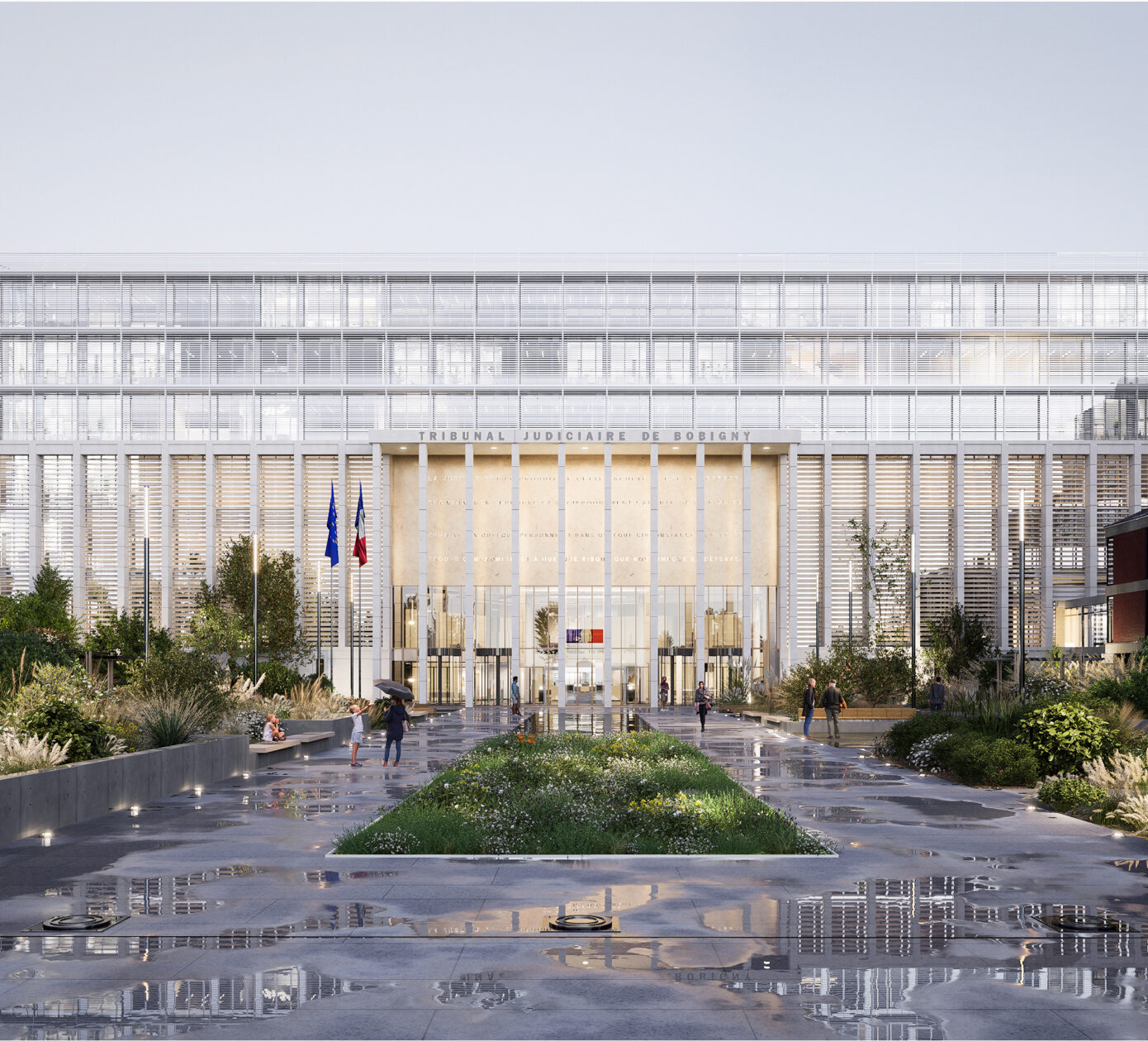
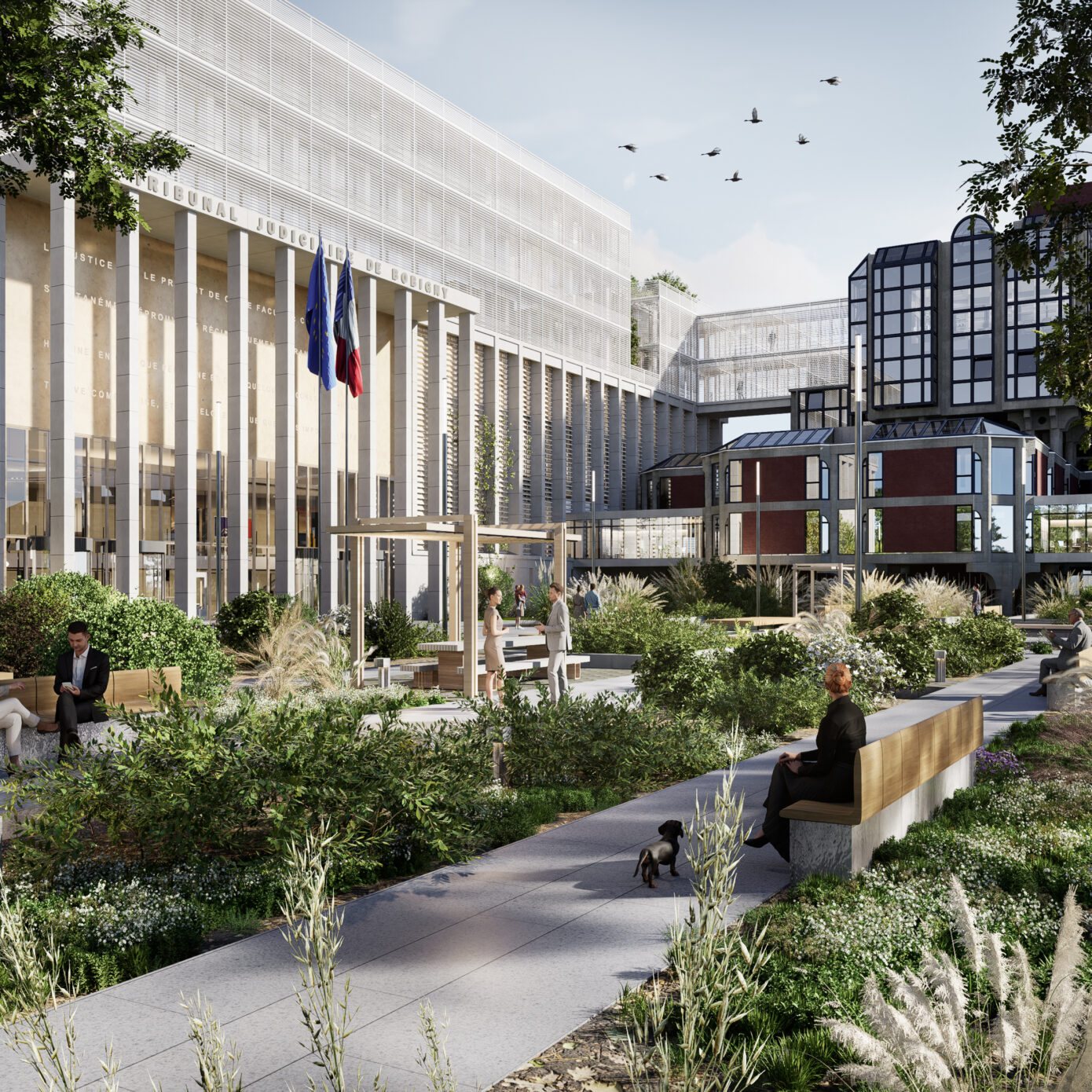
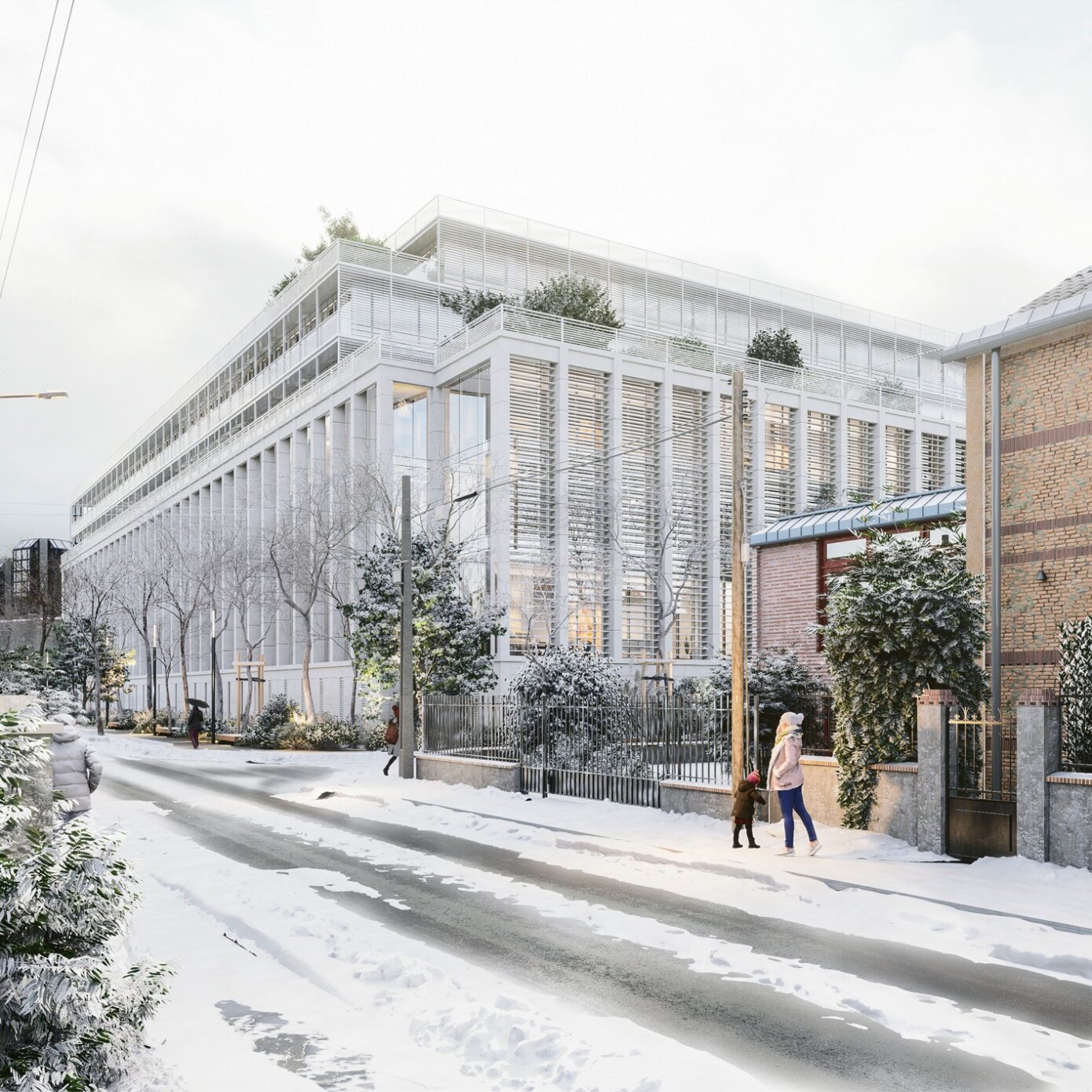
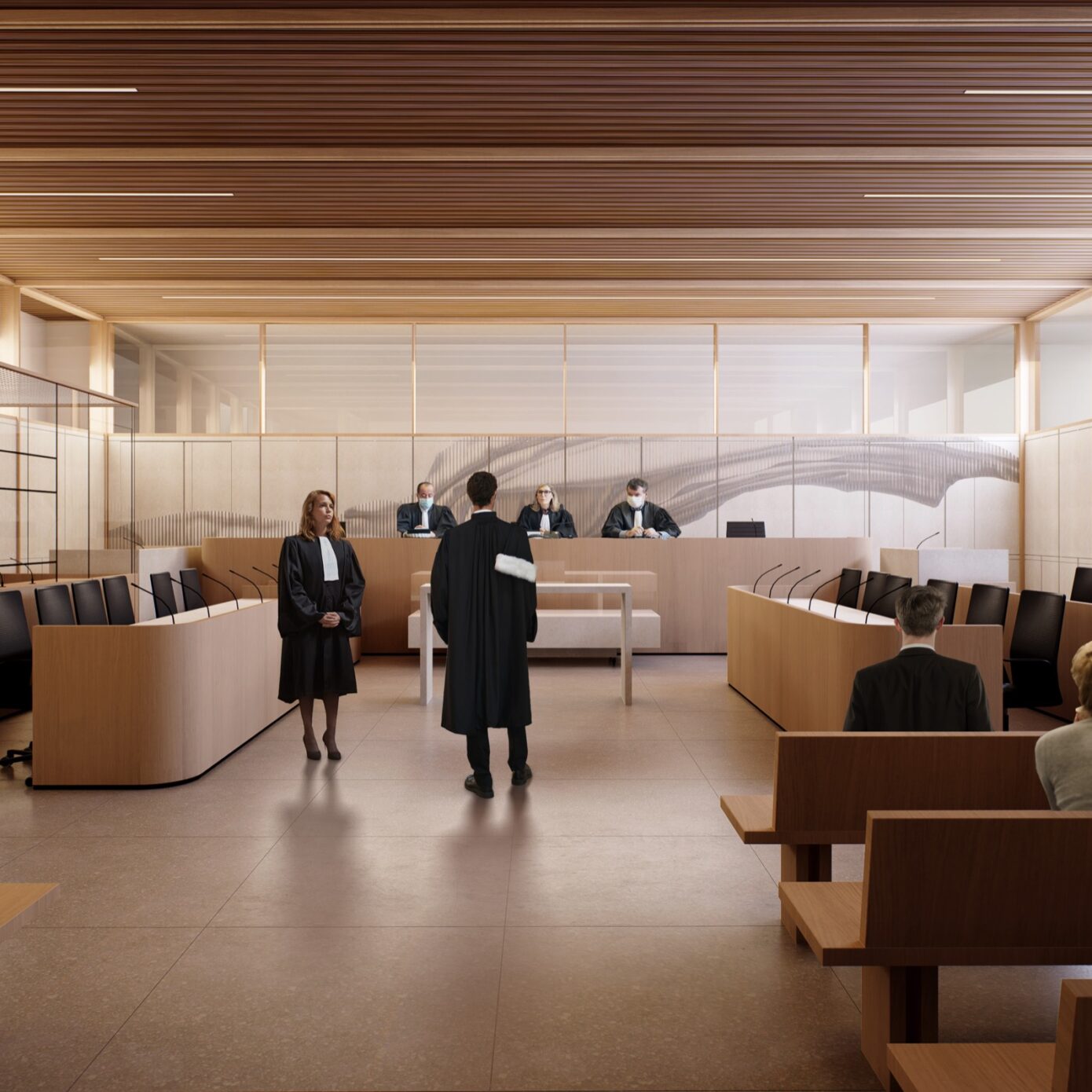
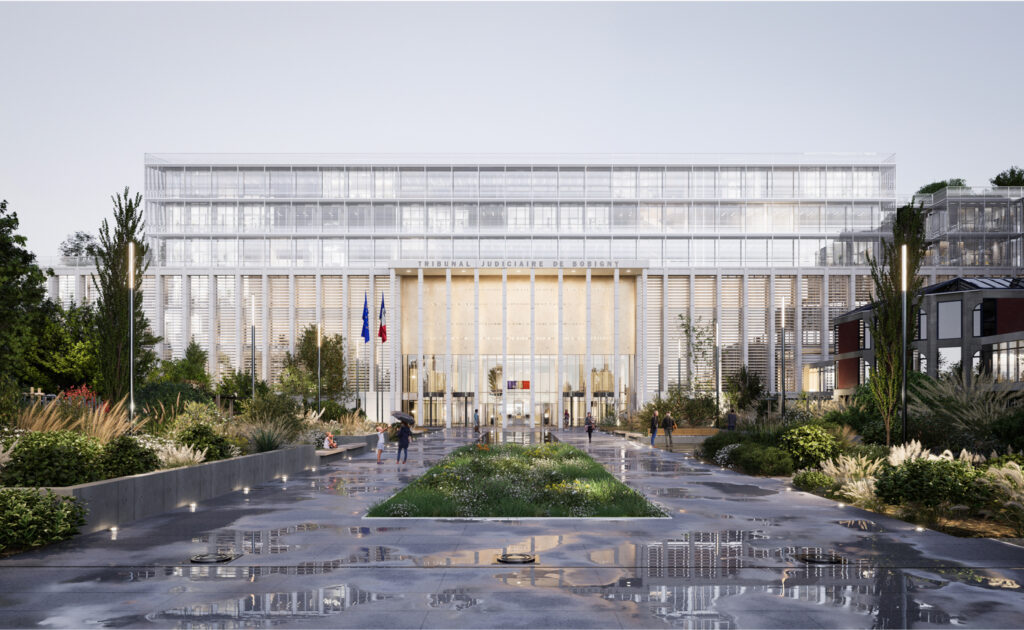
The expansion of the Bobigny Judicial Court addresses the need for new space to better administer justice in a sensitive area. Incorporating the criminal division, the juvenile court, and a new detention facility with three times the capacity of the existing one, the project reflects a commitment to improving working conditions for judicial staff and enhancing the experience for members of the public attending hearings.
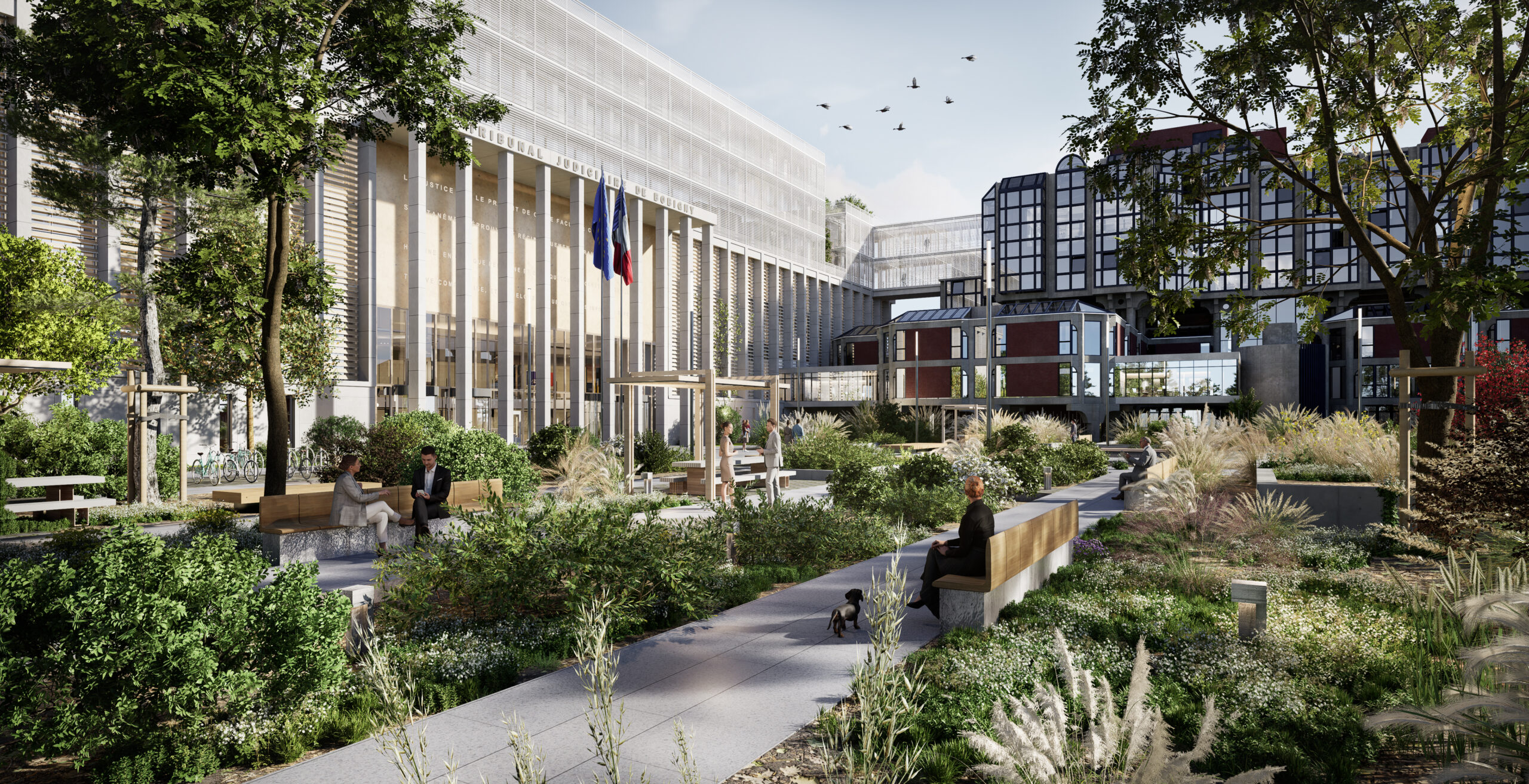
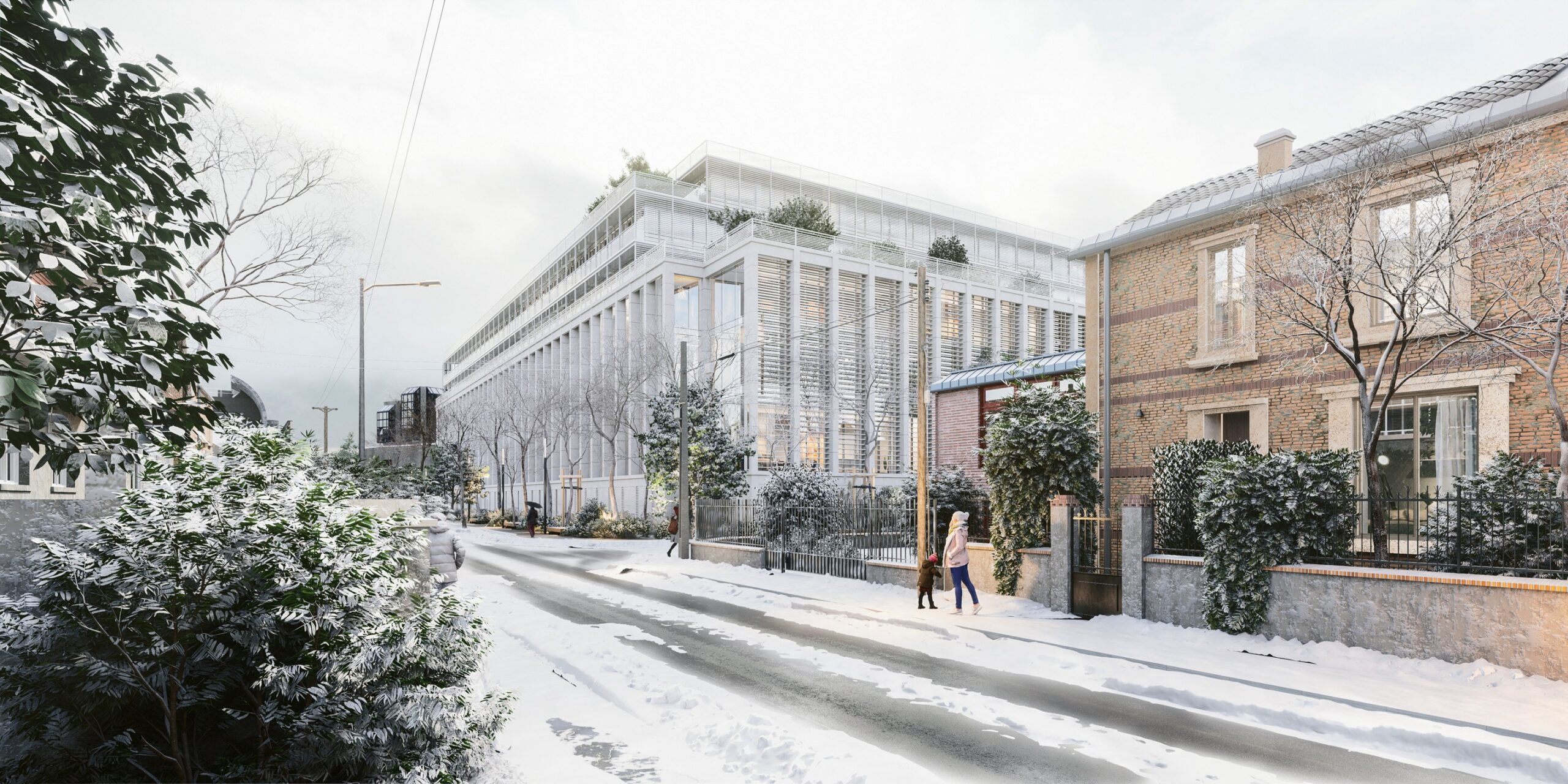
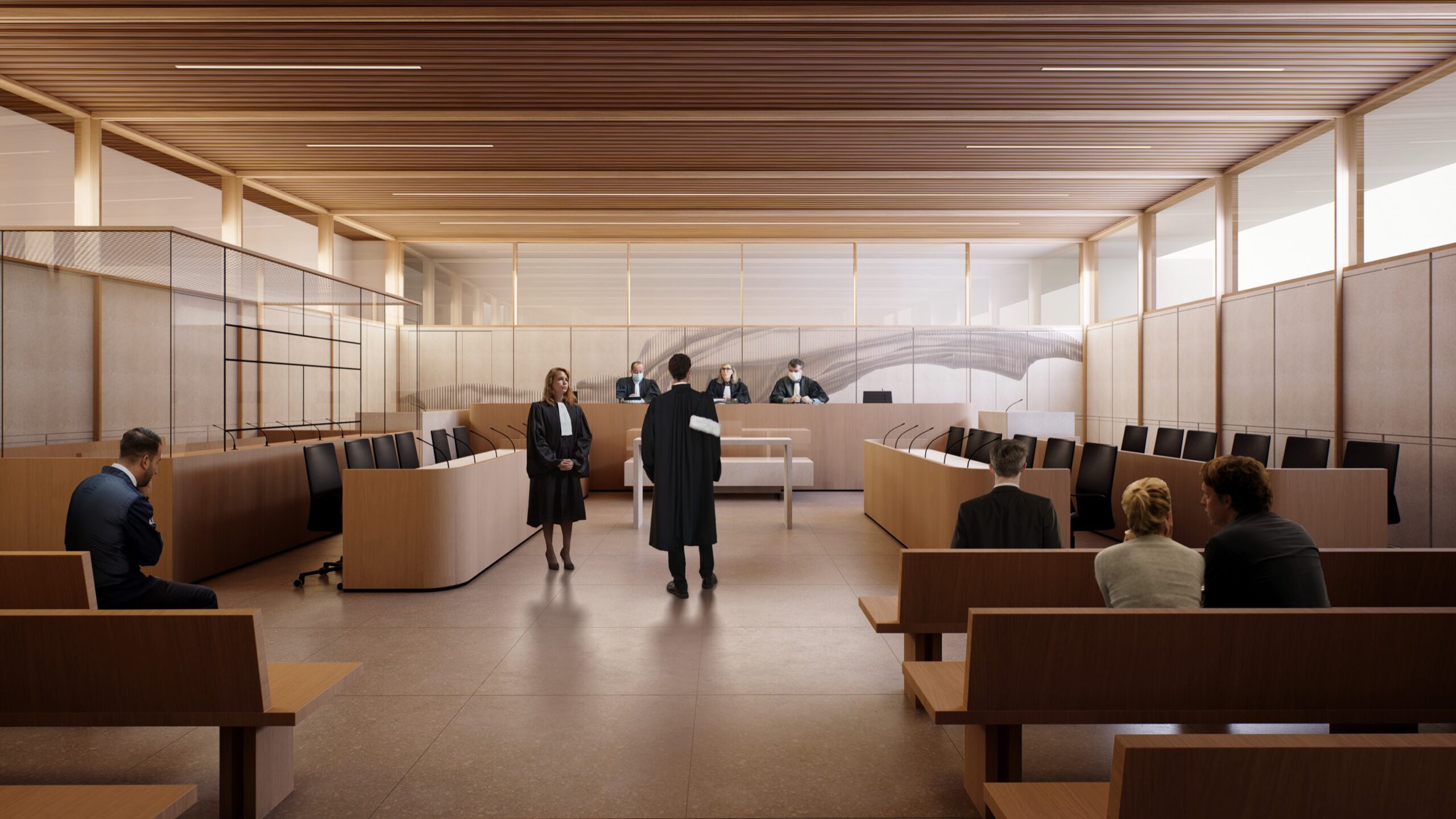
Connected by three walkways to the “historic” Bobigny Judicial Court—which opened in 1987 and is set to undergo renovation—the new 20,000-square-meter building will double the floor space of this overburdened court, which is currently cramped in a building that has become obsolete. It will provide six public courtrooms, forty-four chambers, and nearly six hundred workstations. With its balanced monumentality, the extension will become the new gateway to France’s second-largest judicial complex.
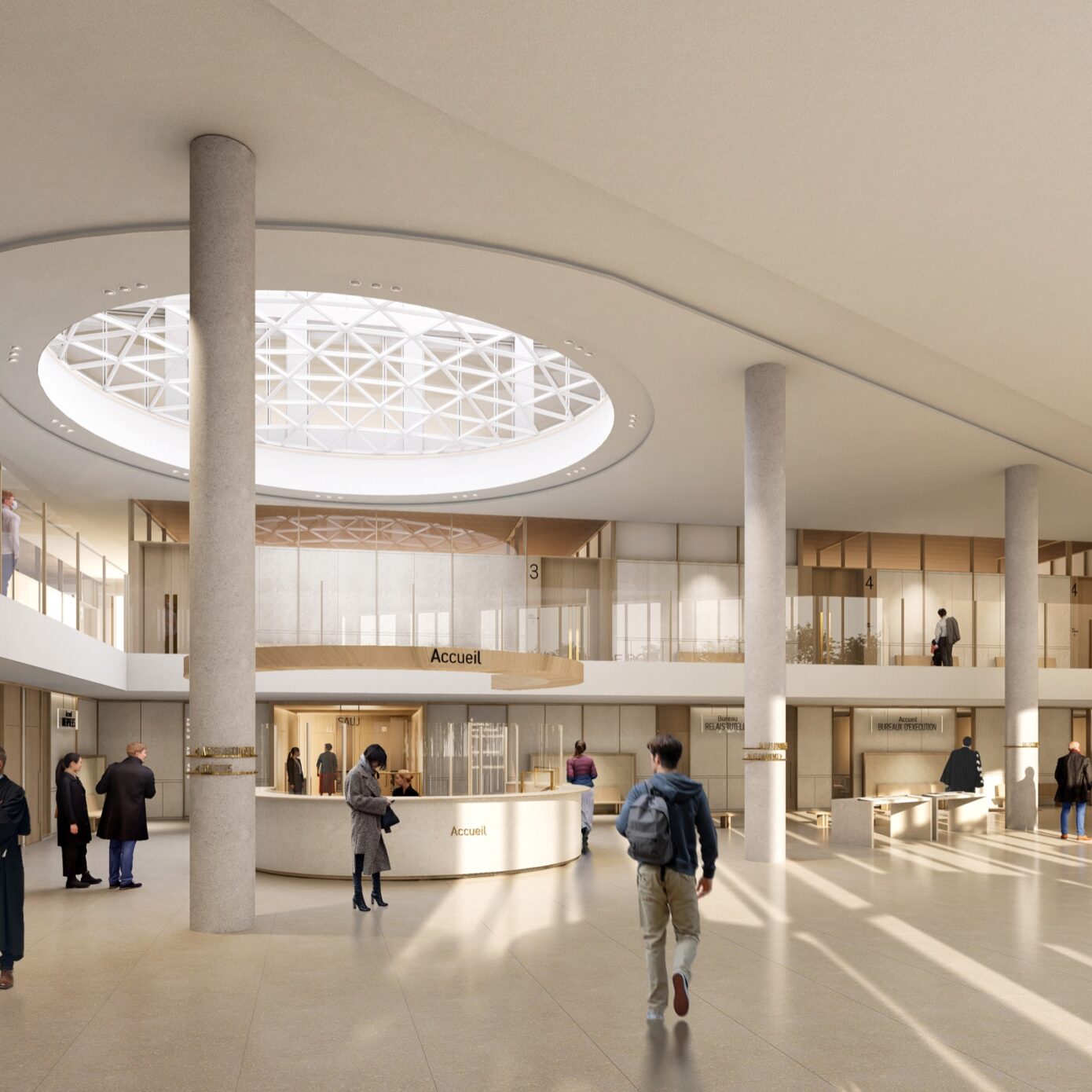
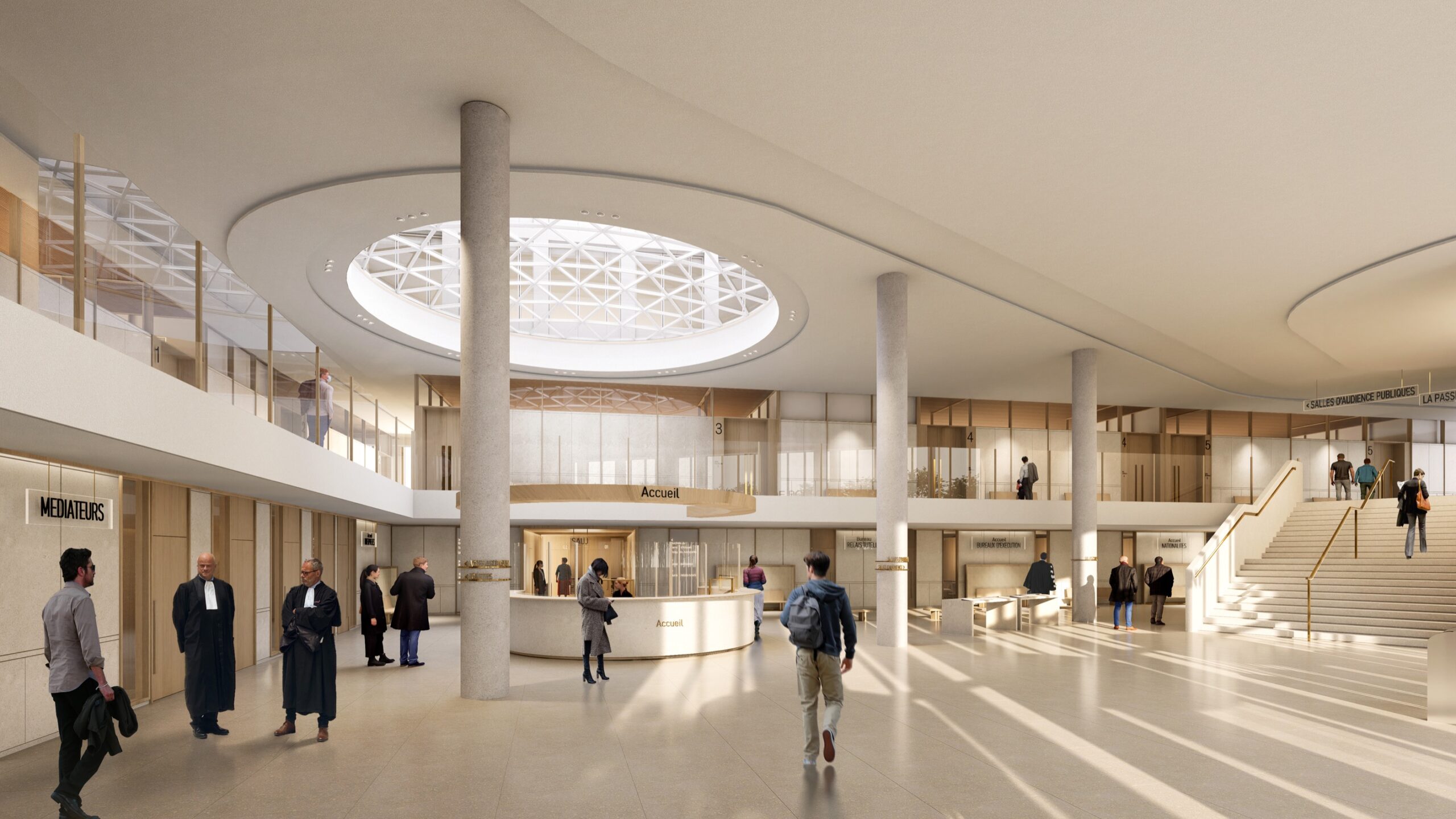
The PCA-STREAM project carries strong architectural symbolism by embodying the authority of the judicial institution through a reinterpretation of the classical codes of the courthouse (frontality, symmetry, and colonnade) in a contemporary language. Its solemn integration into the urban landscape takes place along a tree-lined forecourt. Public reception and access to the courtrooms, via the double-height lobby, take place in a spacious volume bathed in direct and overhead light. Its wooden decor is designed to be welcoming and serene. The offices of the court’s various departments, finally consolidated on a single site, are arranged in a ring above the skylight illuminating the public spaces, ensuring a clear separation of functions. This particularly clear and rational solution provides an ultra-functional response to the challenge of separating traffic flows within a courthouse.
The building’s bioclimatic design, which incorporates passive thermal regulation strategies, reduces energy consumption and environmental impact. It combines an environmental approach with user comfort by emphasizing glazed transparency and green spaces, particularly around the vast open plaza that opens directly onto the city.
Bobigny Courthouse
Bobigny
PCA-STREAM won the competition for the expansion of the Bobigny Courthouse by proposing a building of balanced monumentality that reaffirms the solemnity of the judicial process without excessive theatricality. The new courthouse will be a functional and exemplary building, embodying the idea of a justice system rooted in care.

Images

Process
Technical specifications
Related projects
Îlot Perrée
Paris, 2022
Centre Pompidou Francilien — fabrique de l'art
Massy, 2026
Tourist Office of Versailles
Paris, 2024
Saint-Ouen University Campus
Saint-Ouen-sur-Seine, 2030