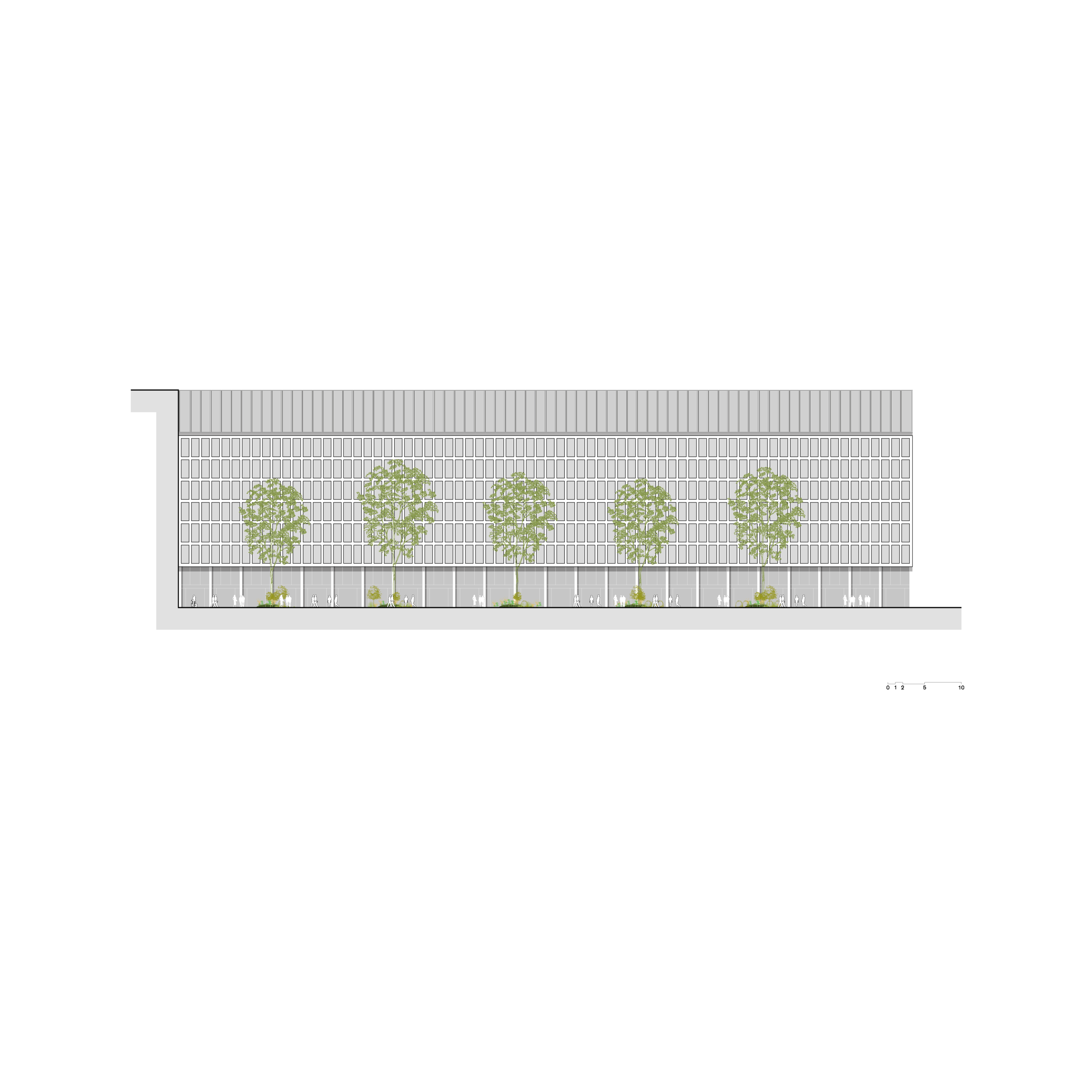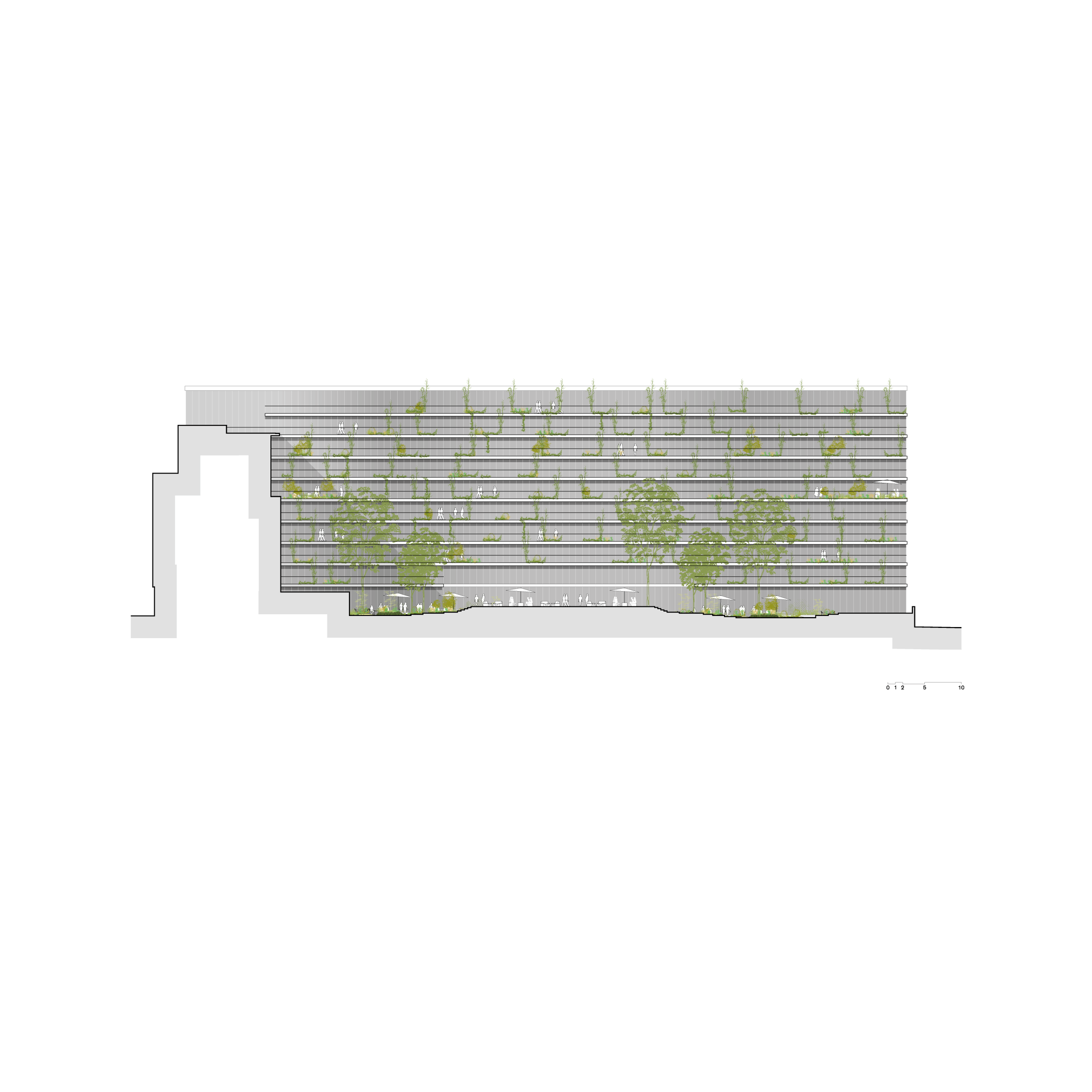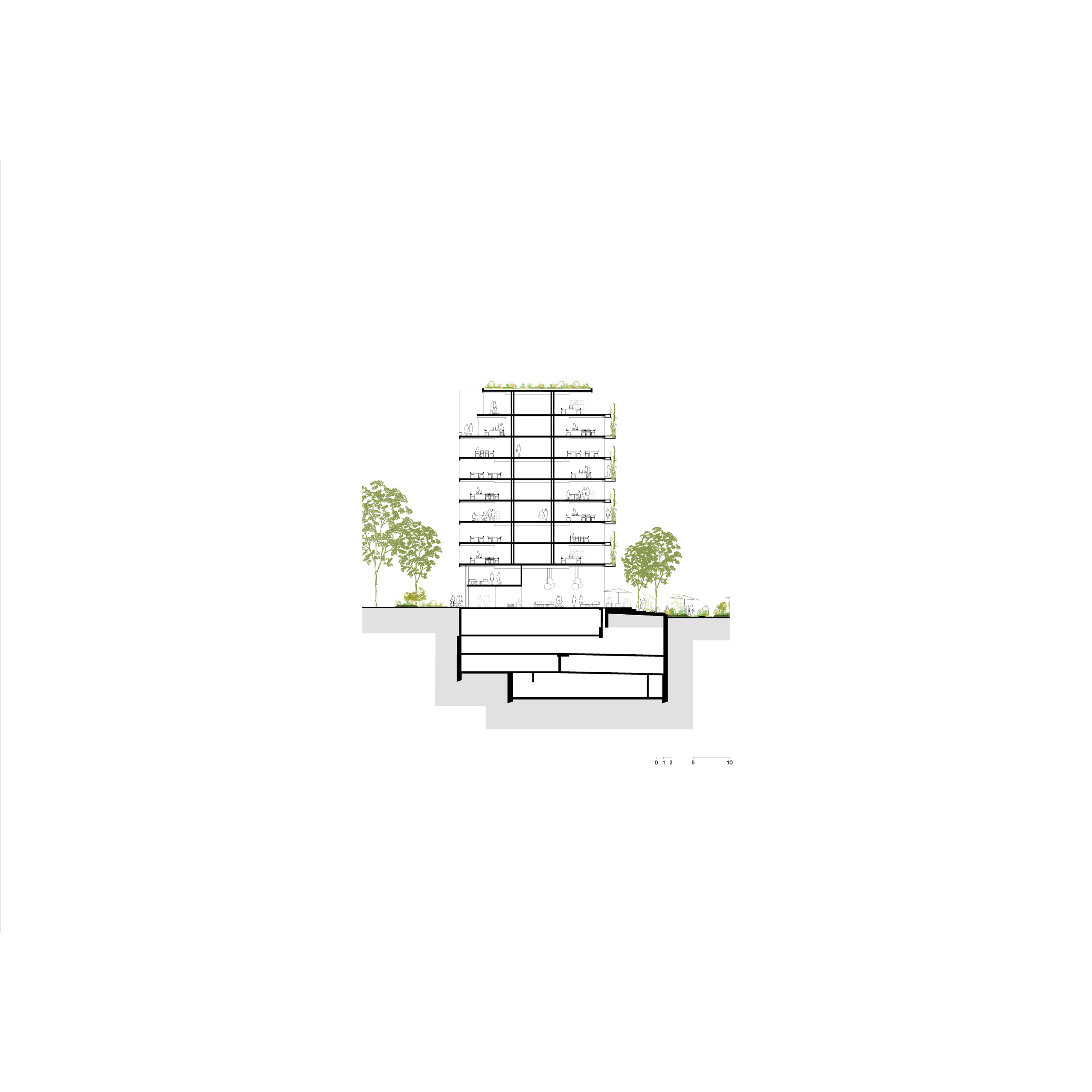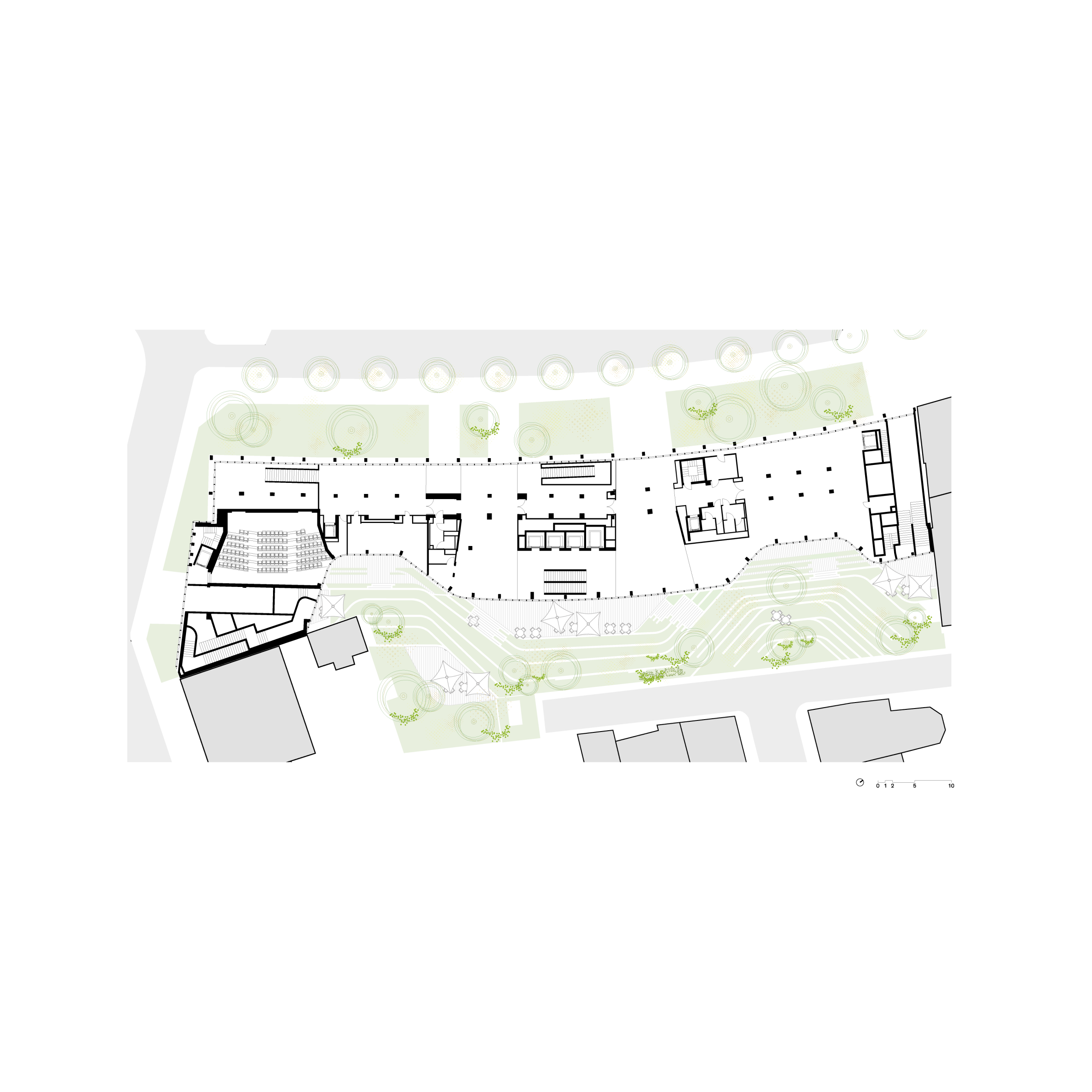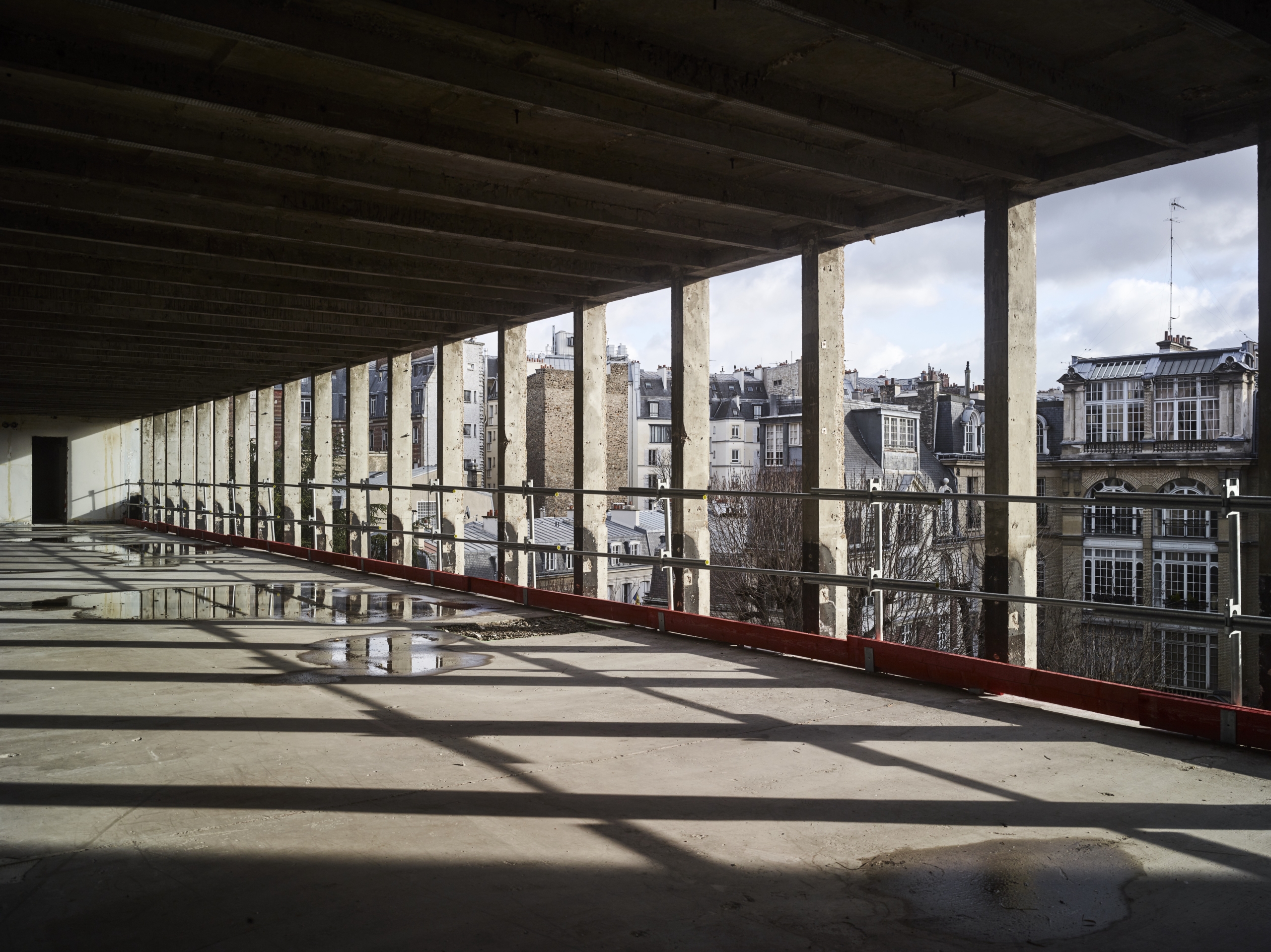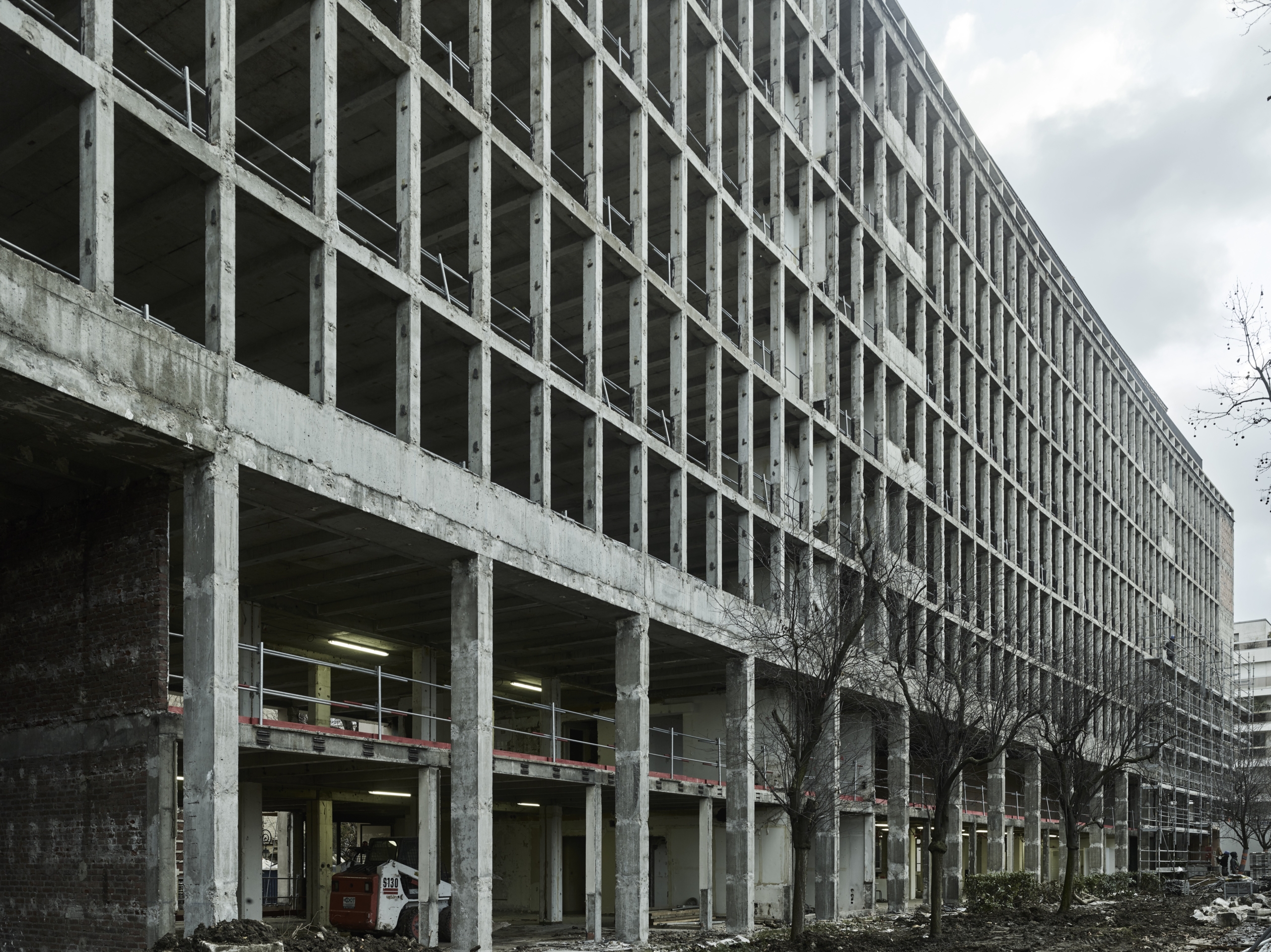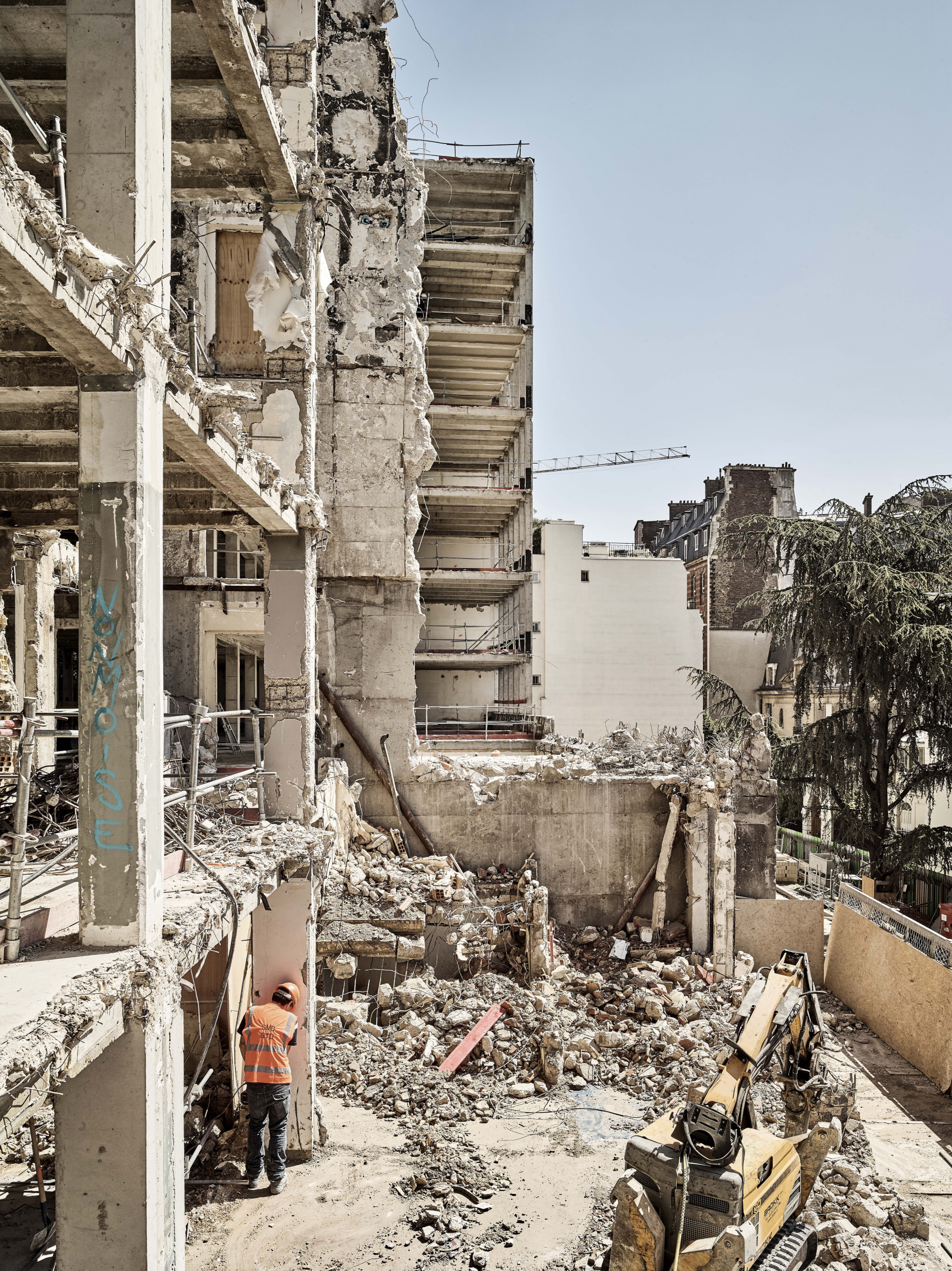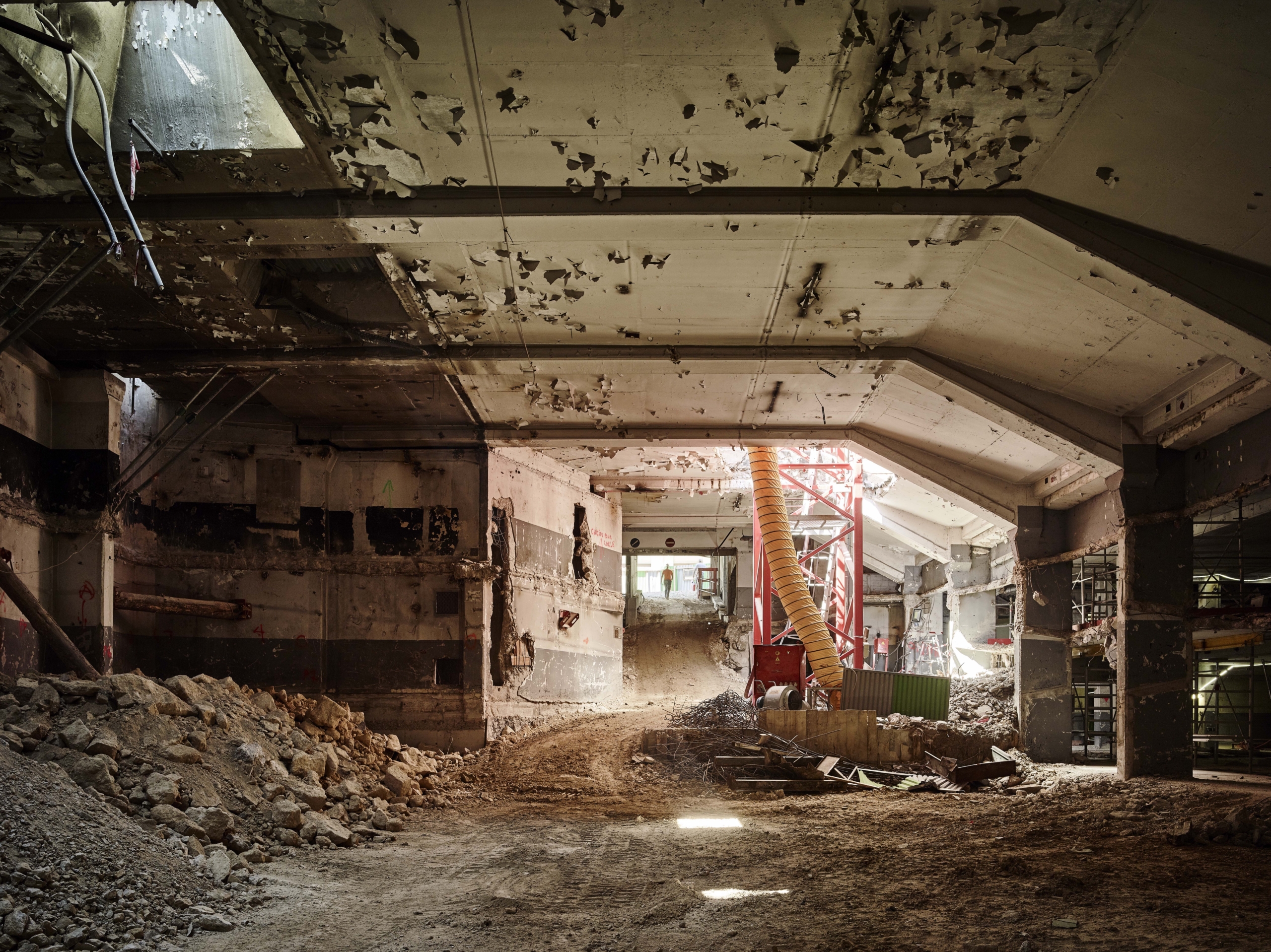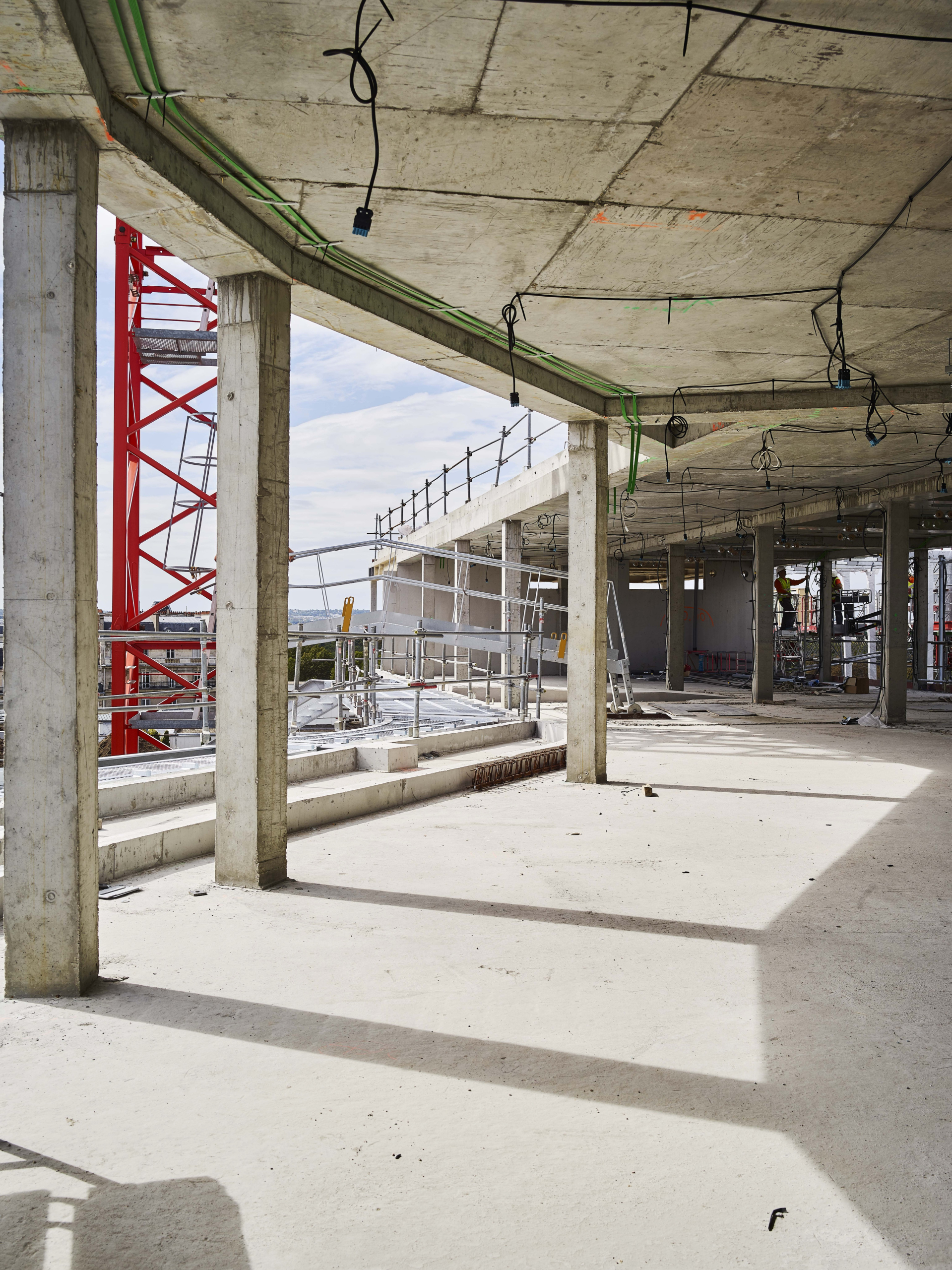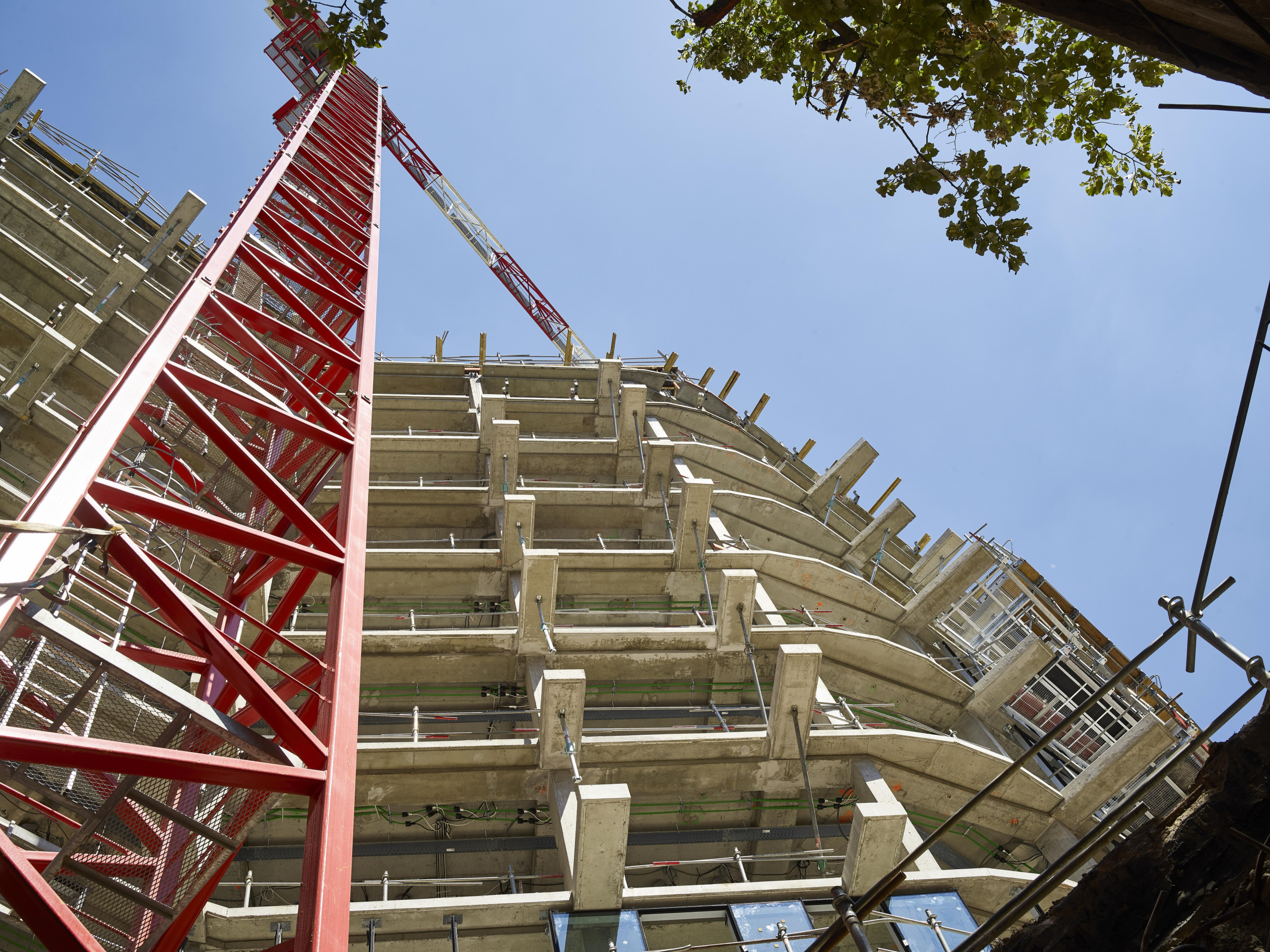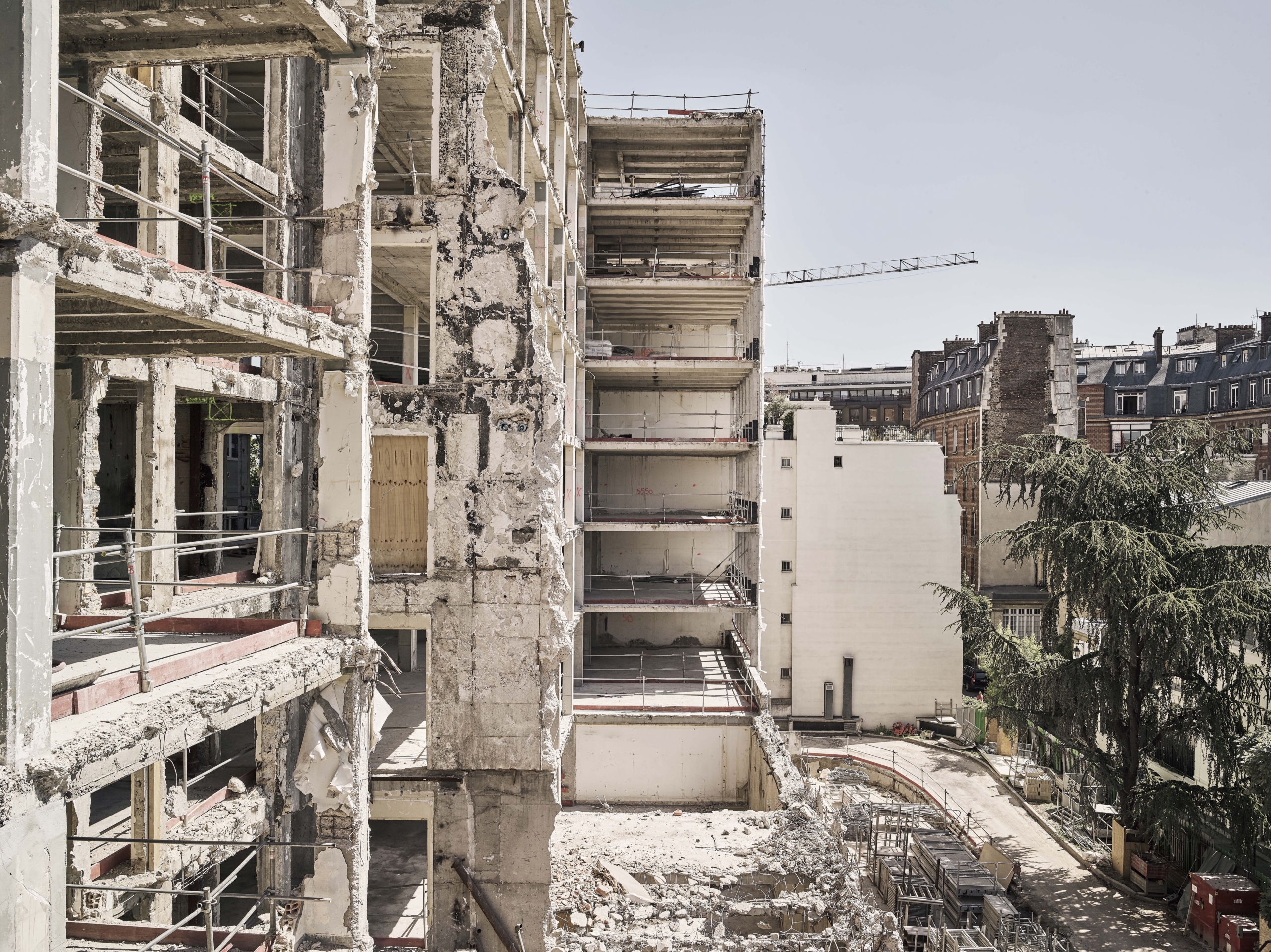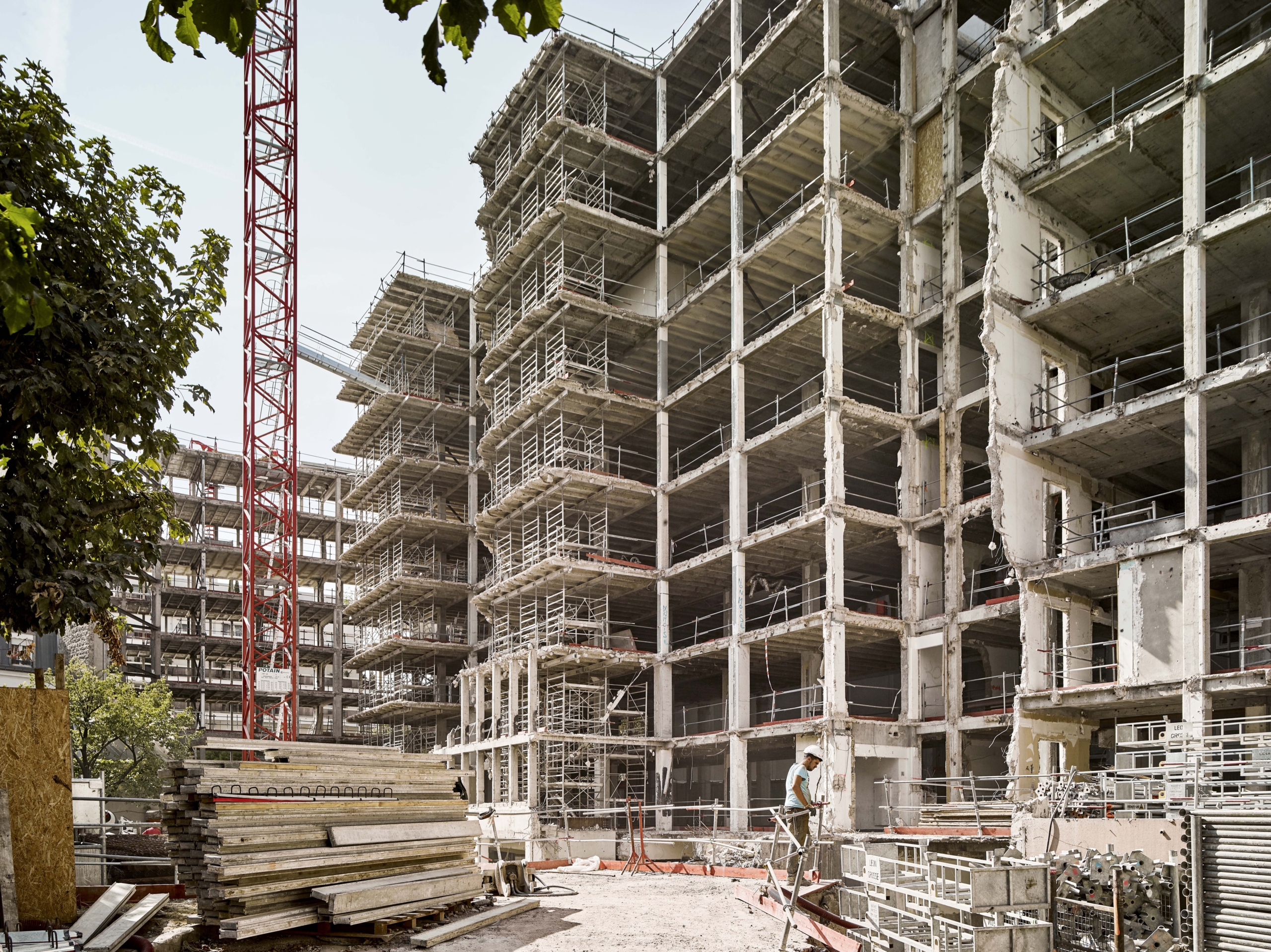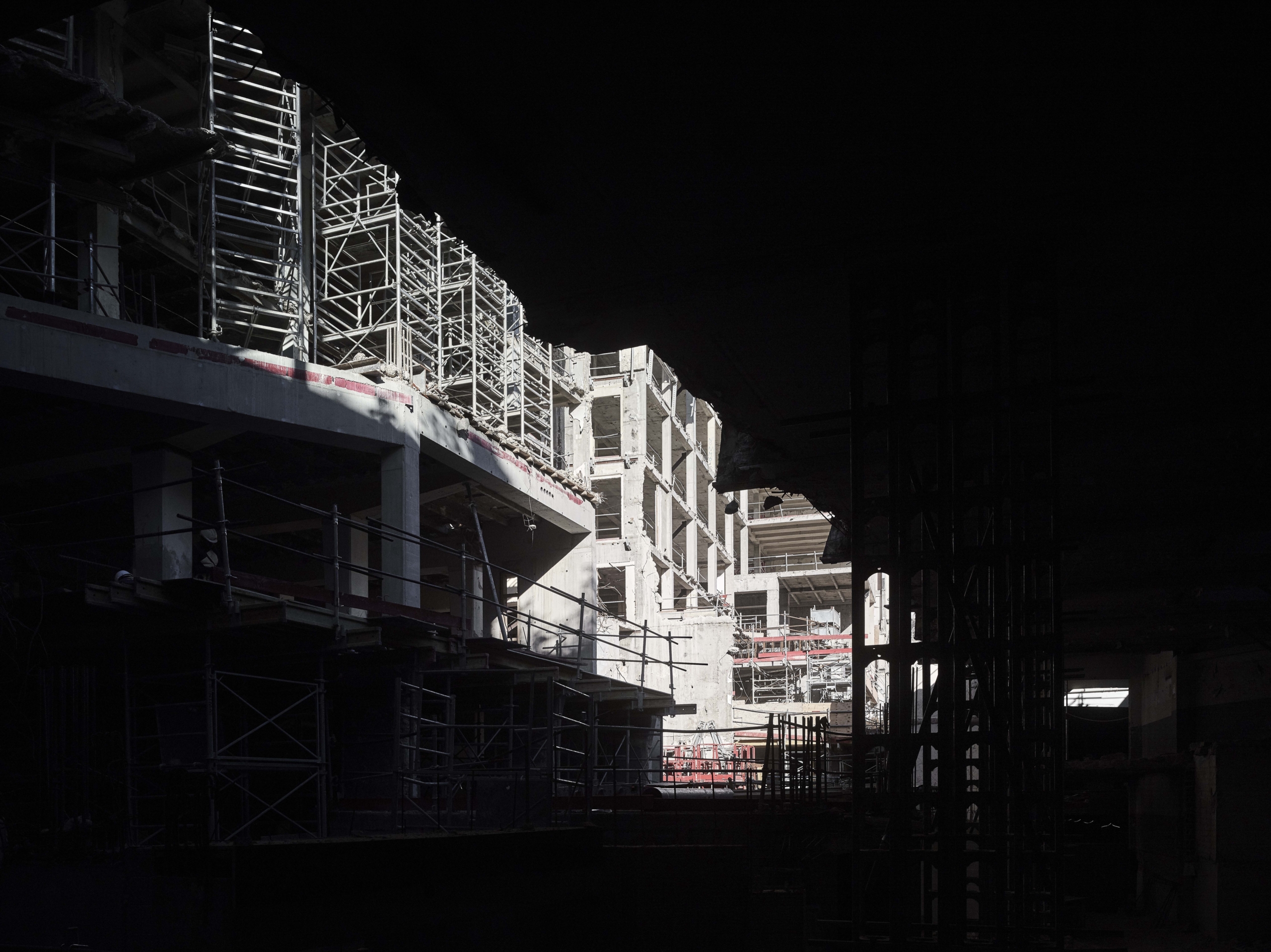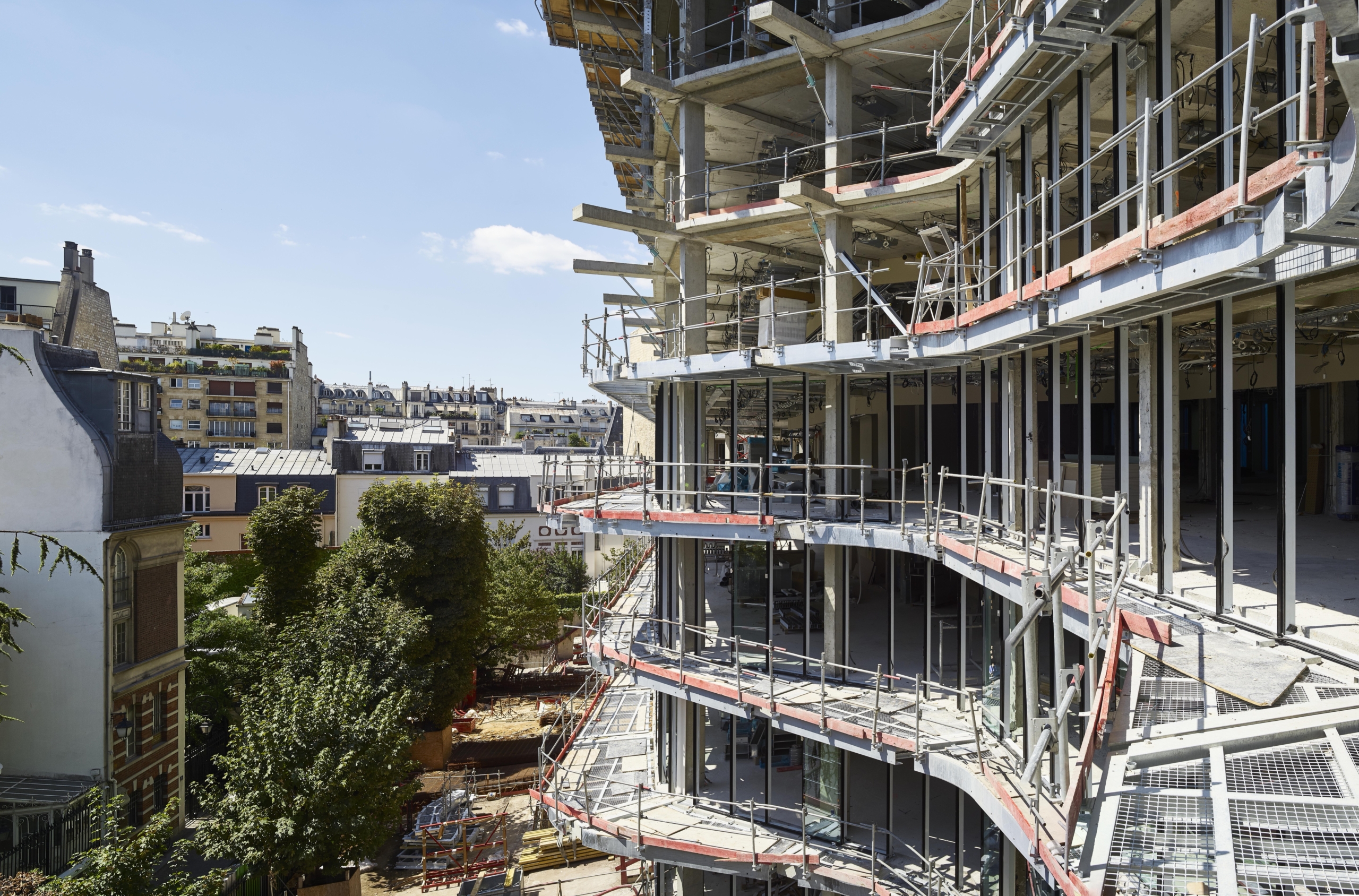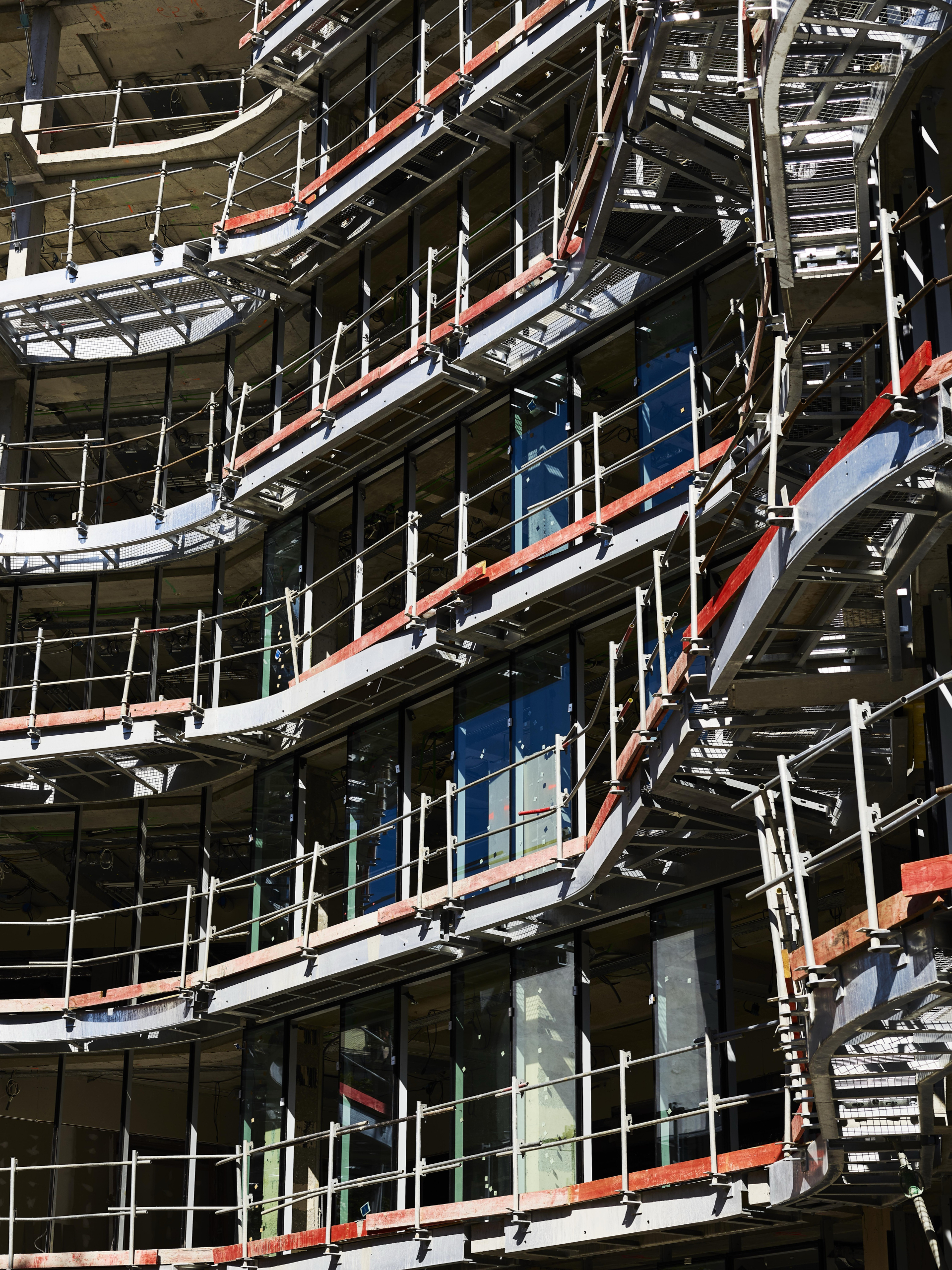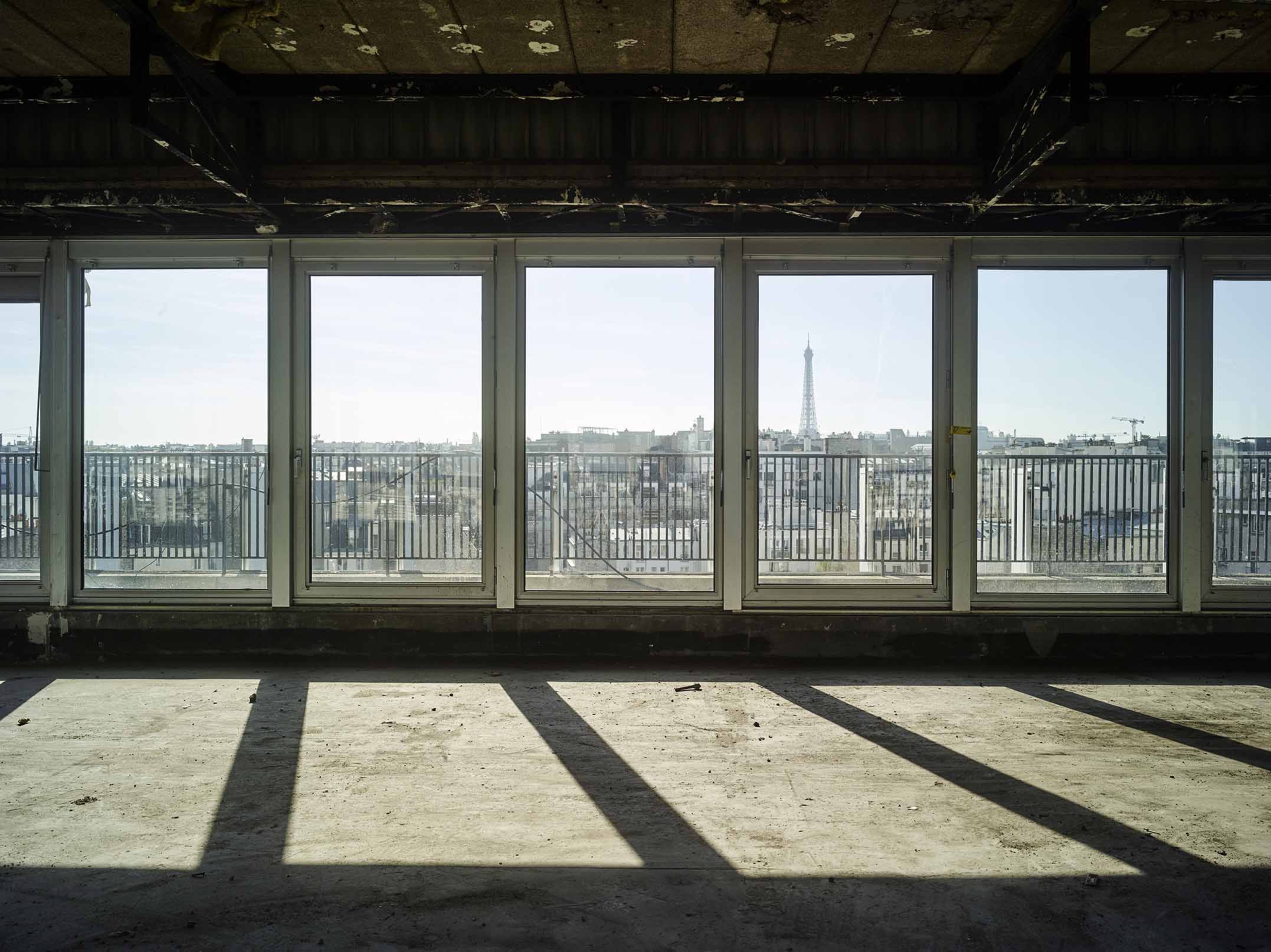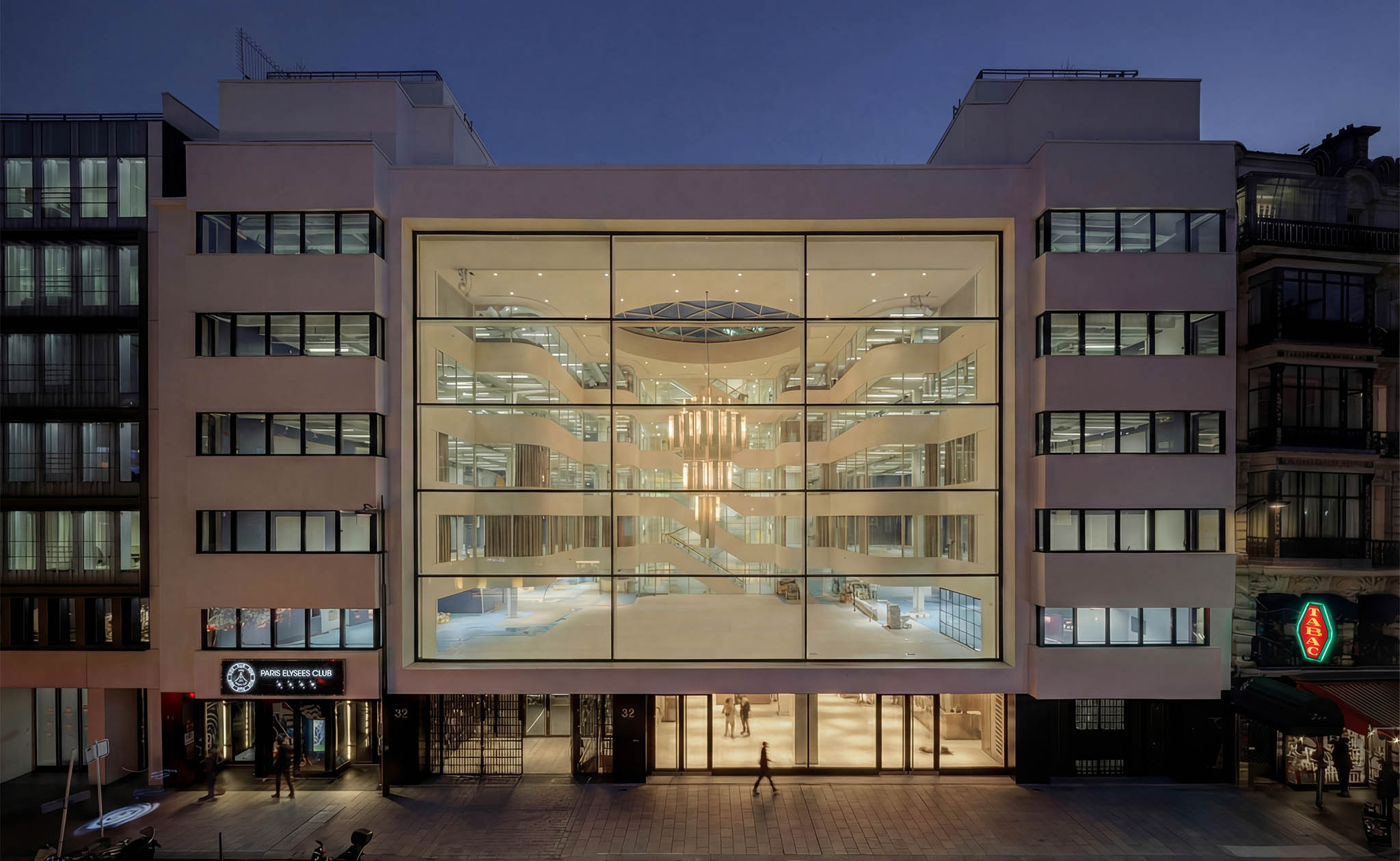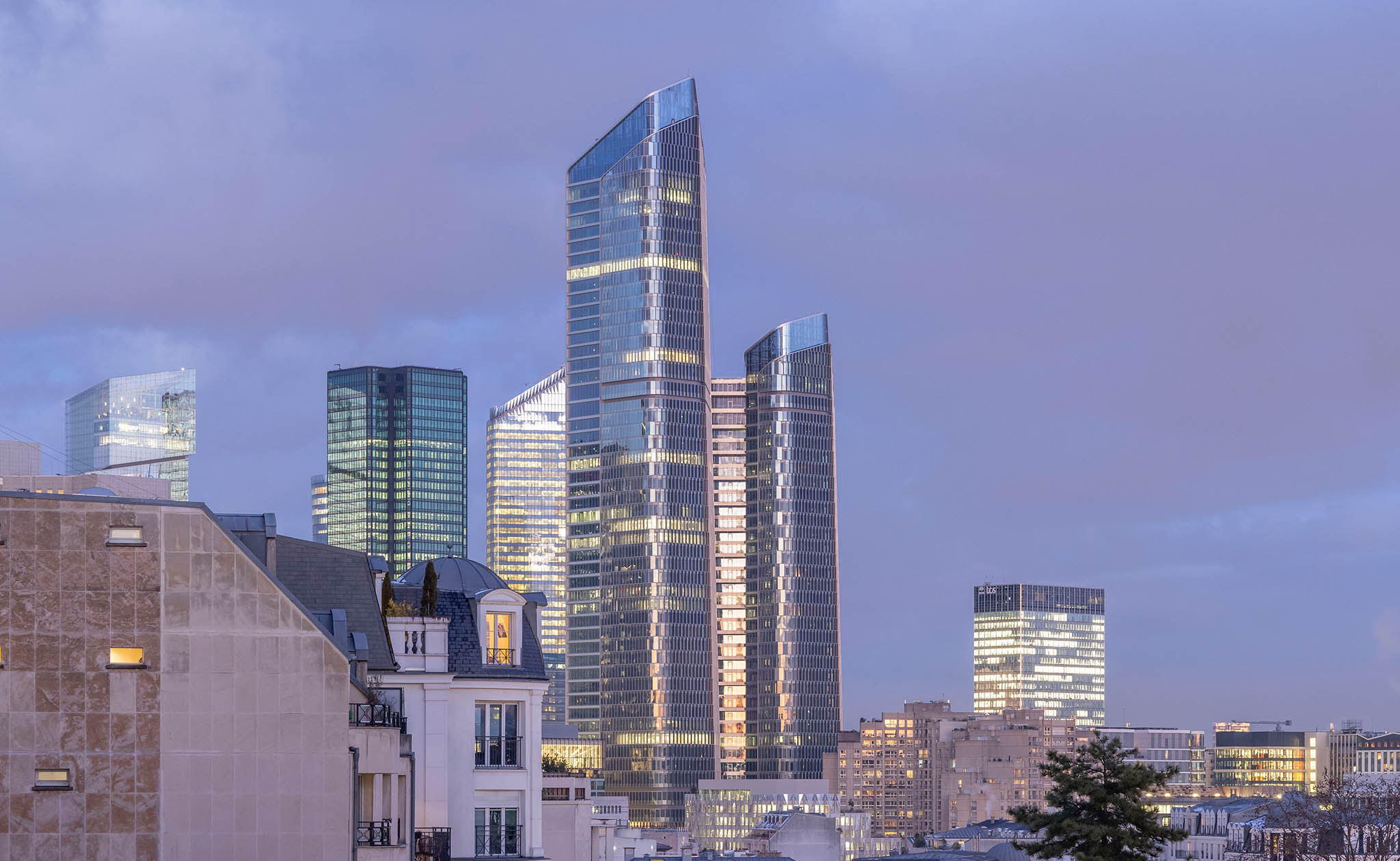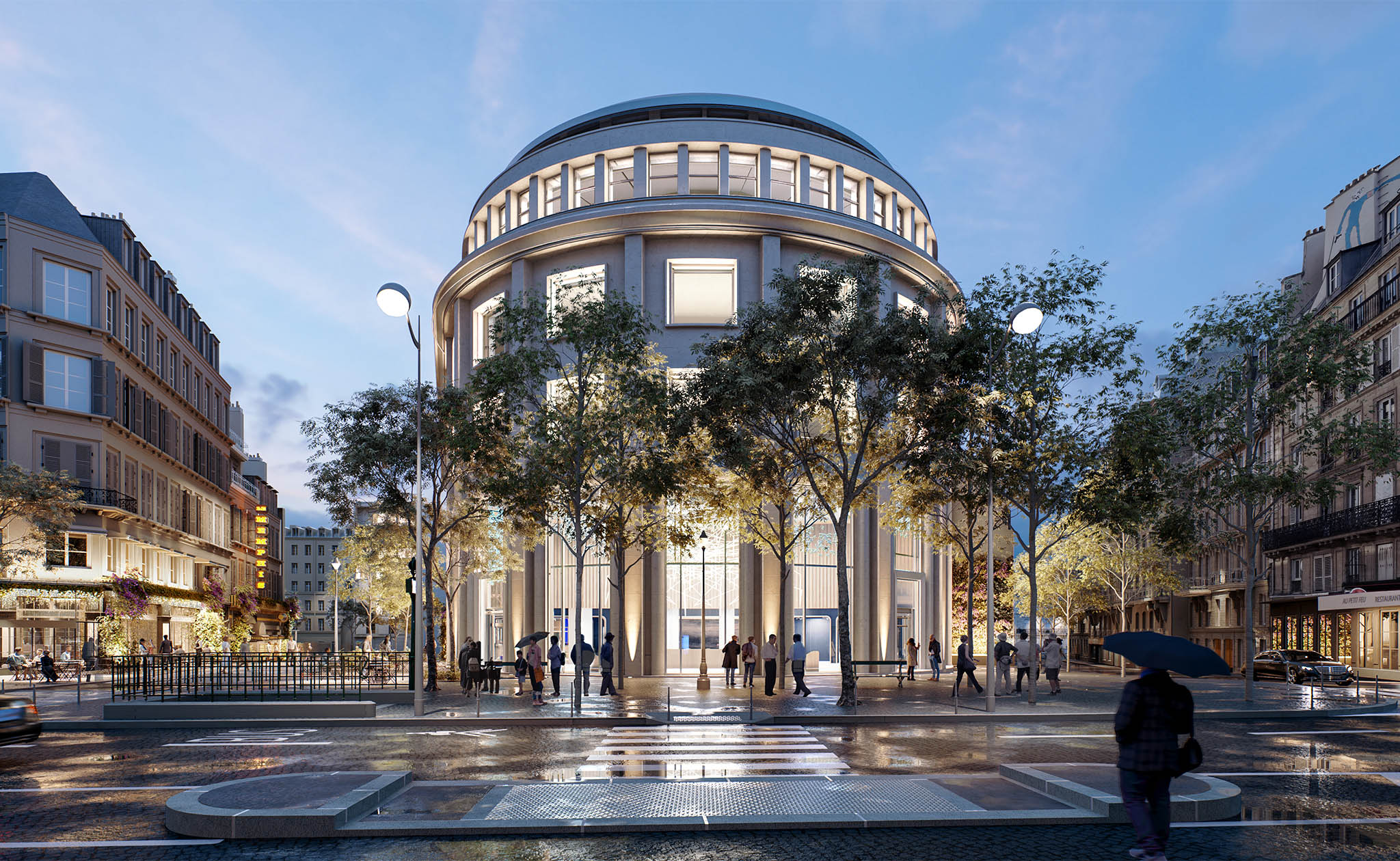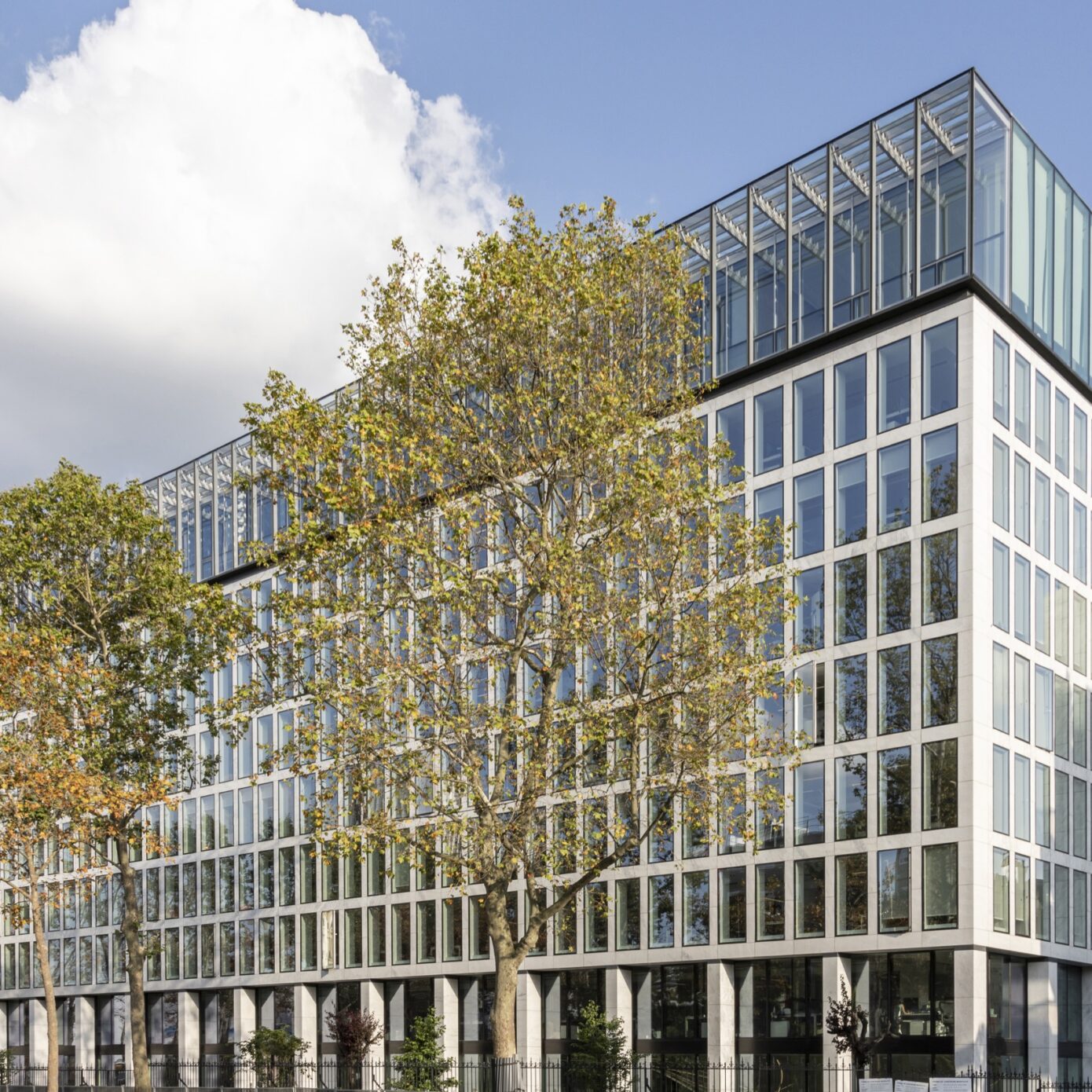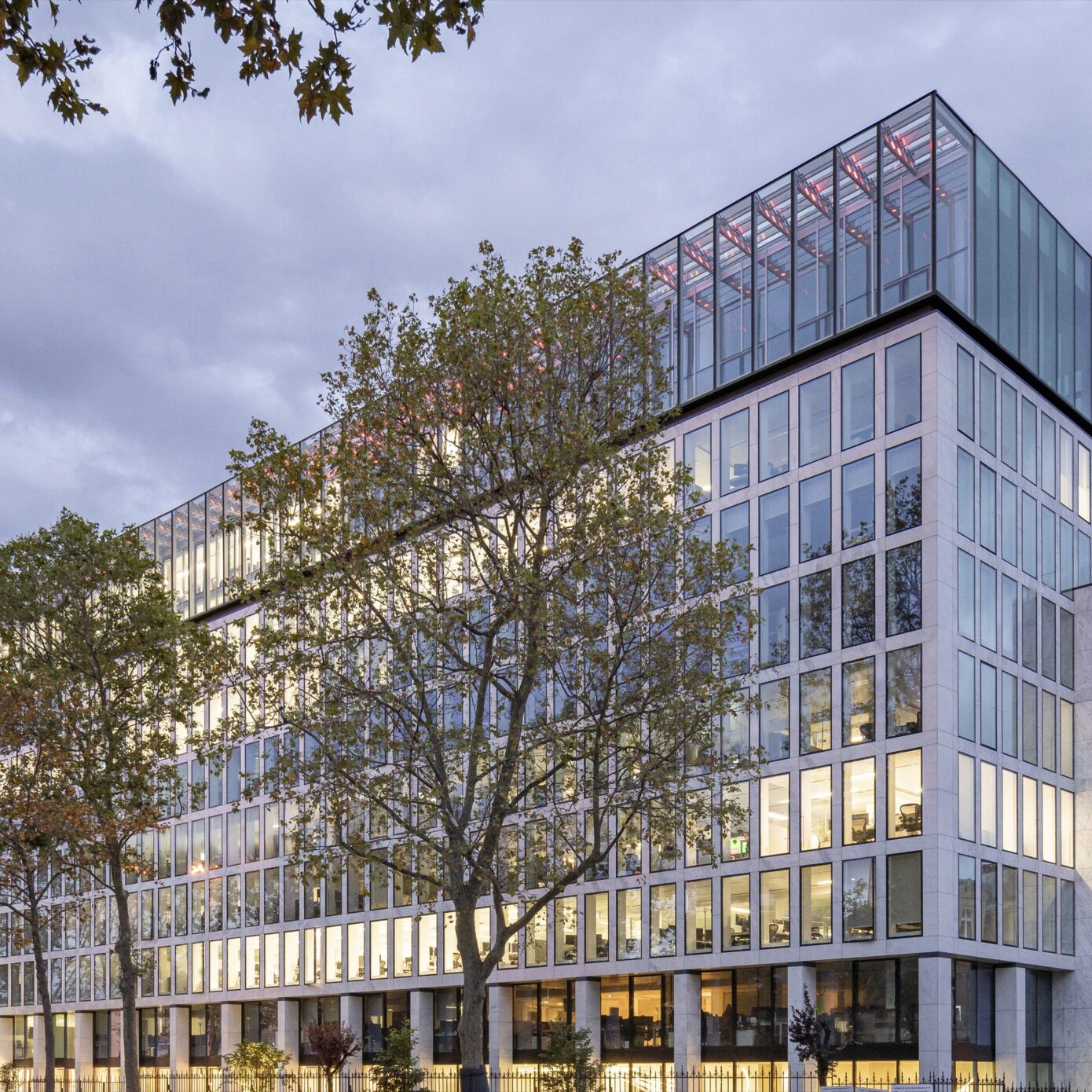
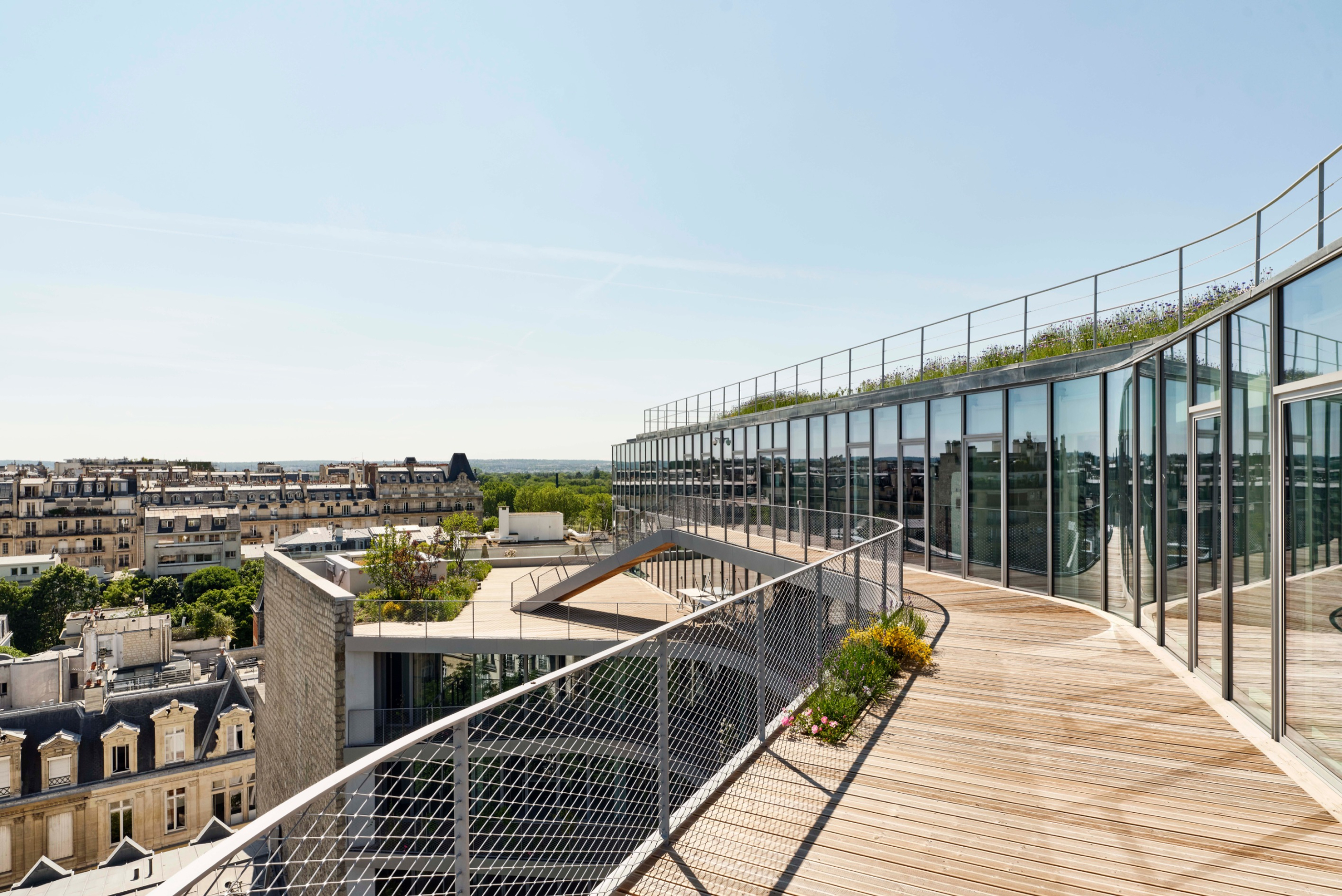
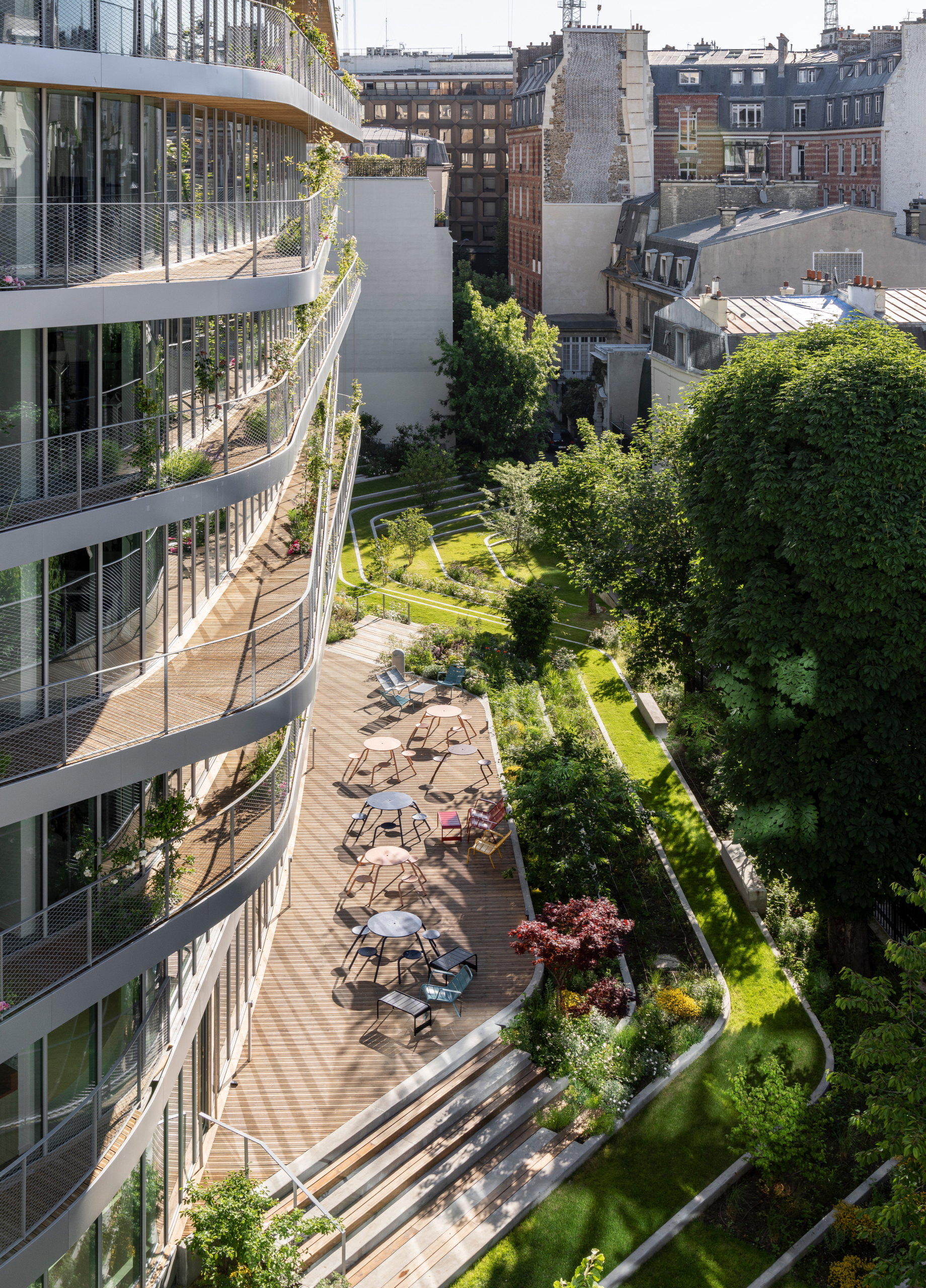
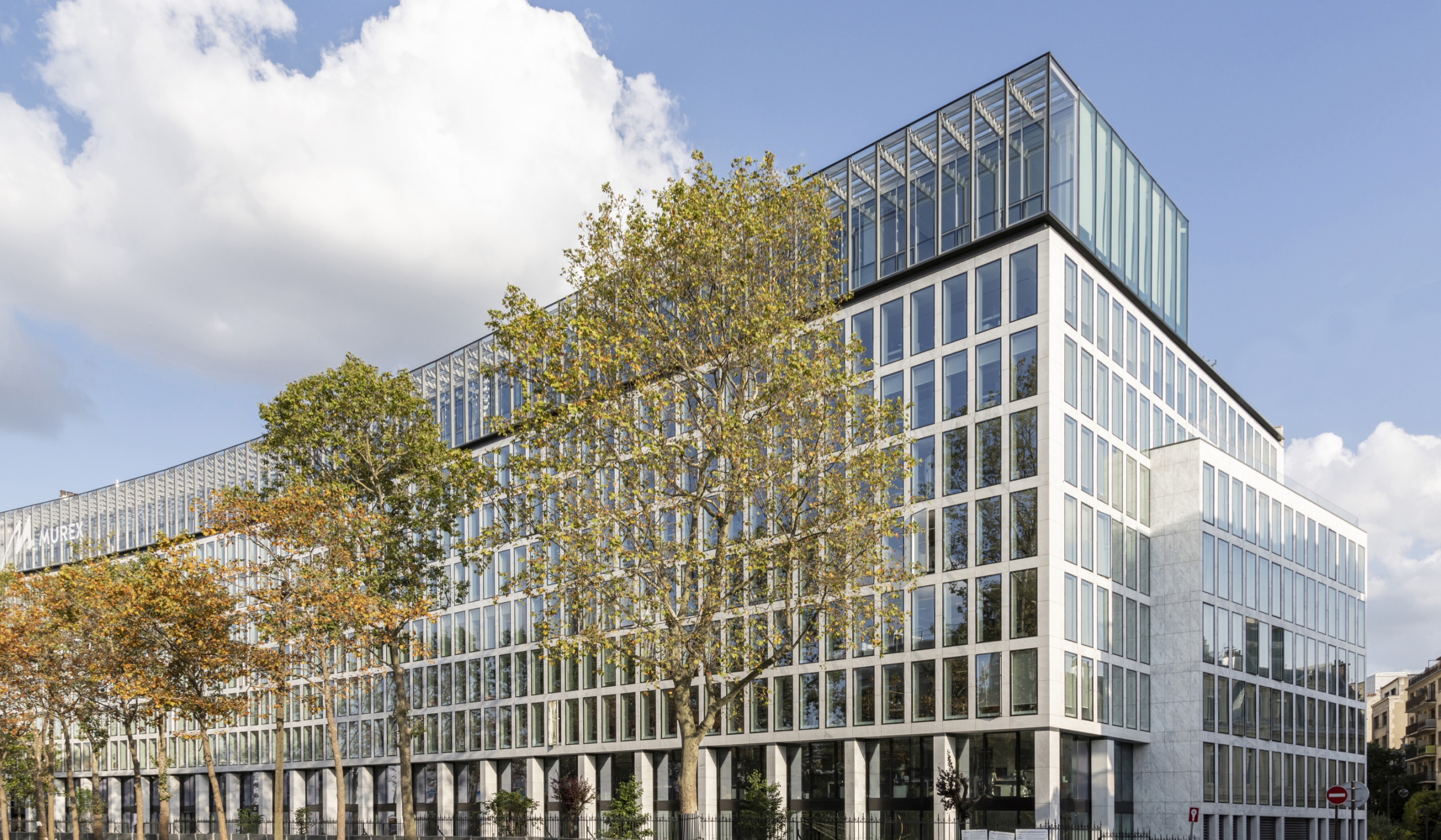
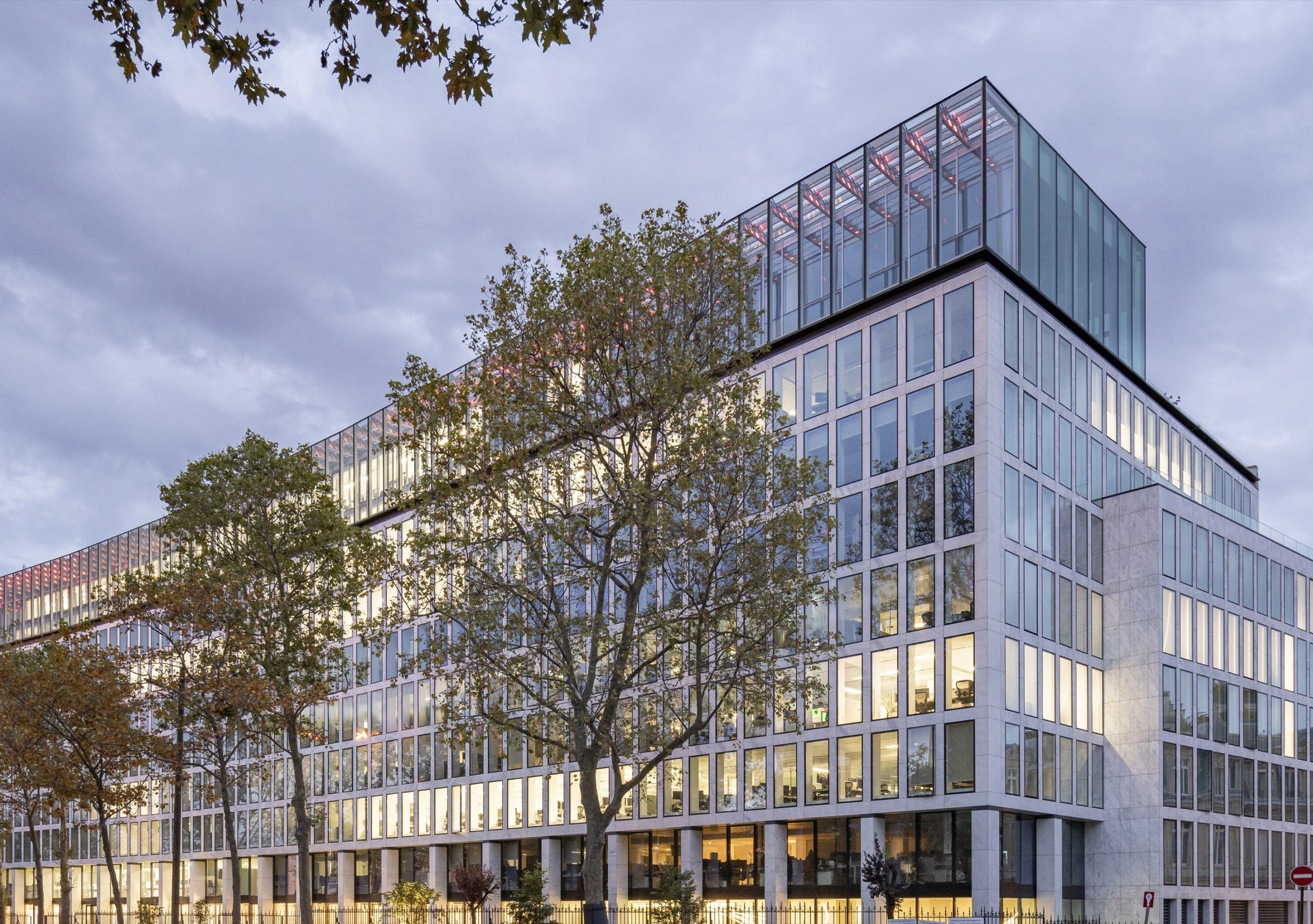
The reinvention of Freedom stands out as one of the pioneering projects in the revitalization of Porte Maillot, which is the focus of an ambitious redevelopment project aimed at transforming the traffic circle into a public square. Now traffic-calmed and equipped with a multimodal hub that transforms it into a metropolitan transportation center, Porte Maillot offers a new, livelier, and more dynamic face that fits into the redesign of the Axe Majeur, stretching from the Tuileries to La Défense.
A heritage to be reinvented
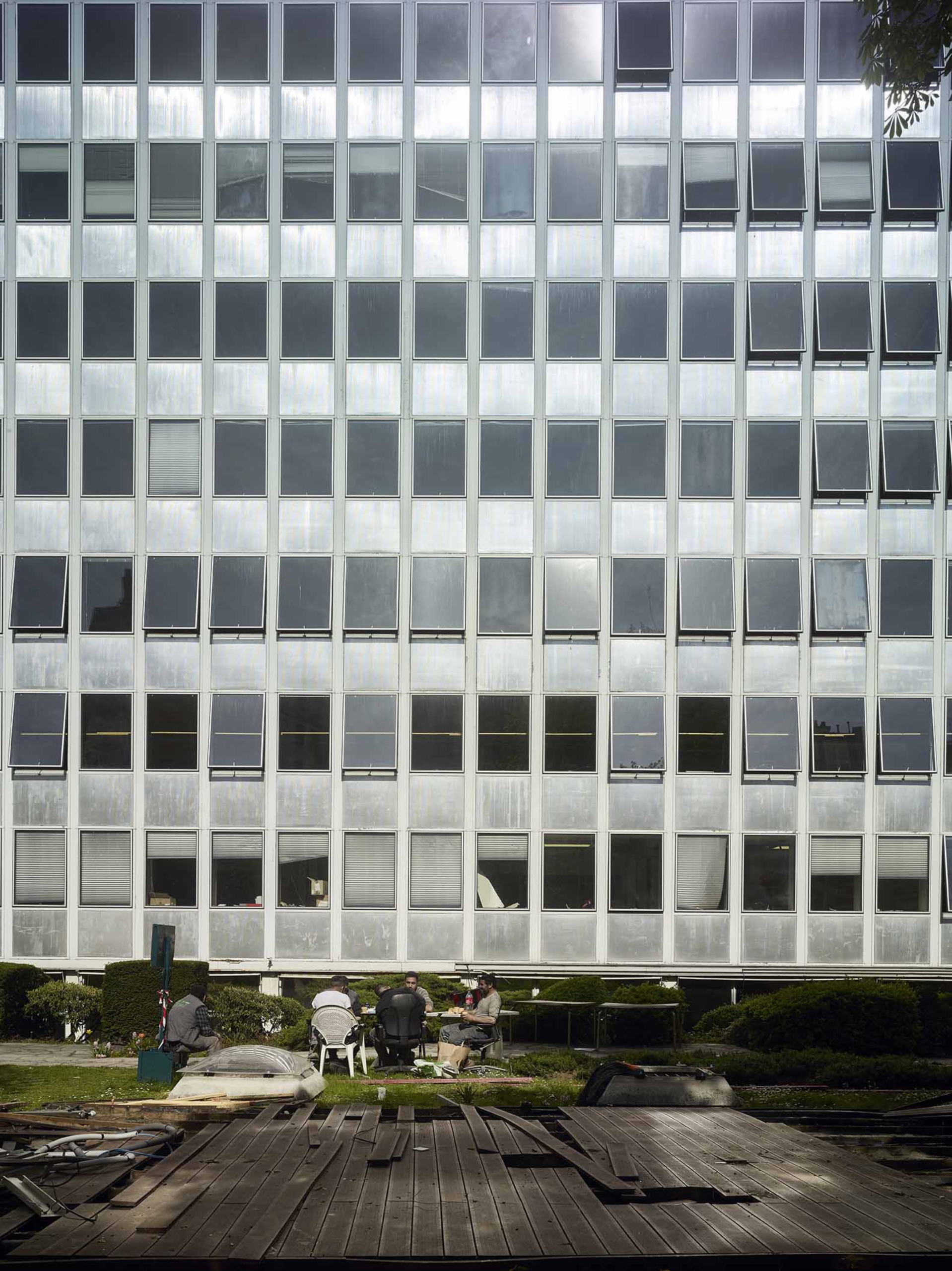
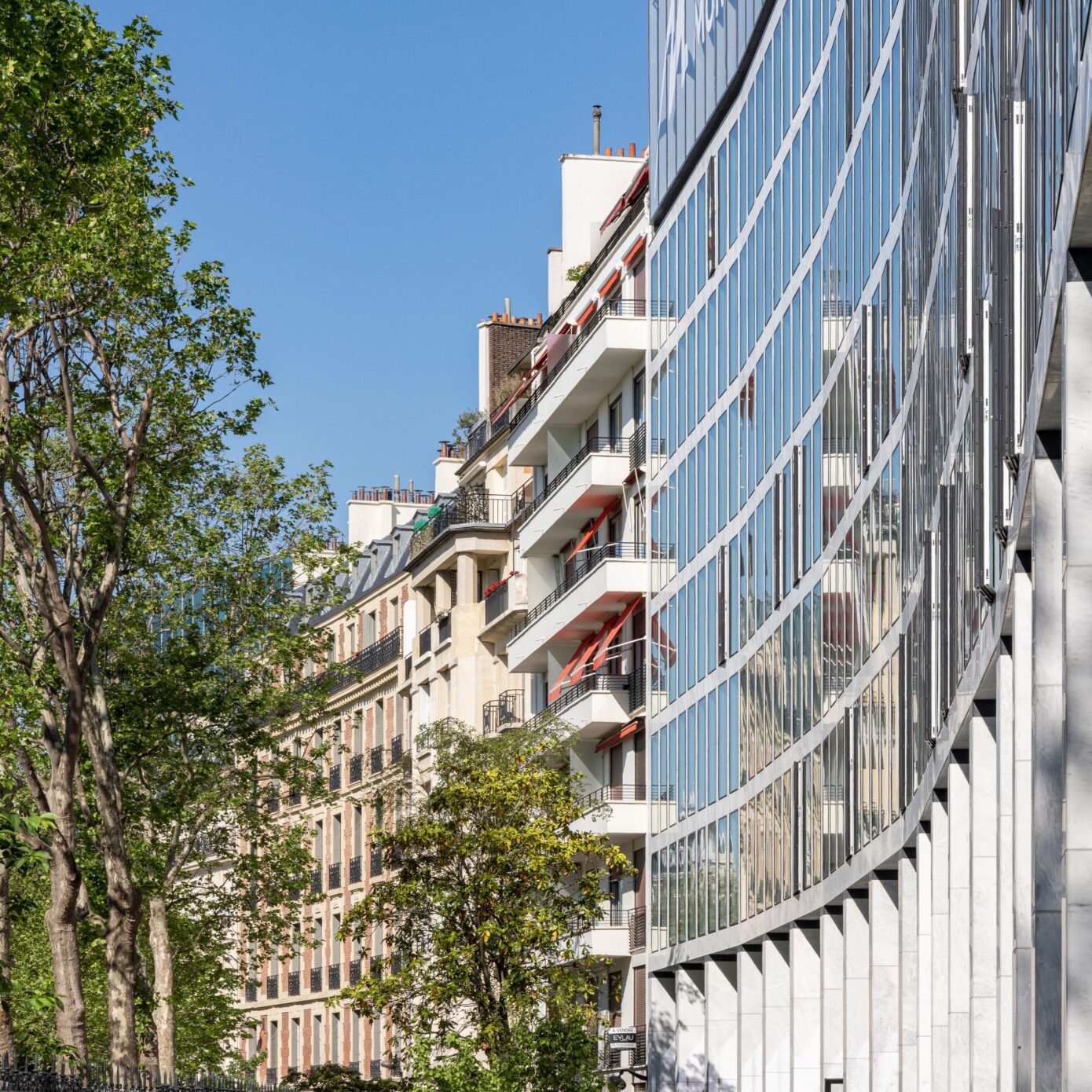
Built in the mid-1960s for the Kuhlmann Group, Freedom is a fine example of postwar functionalist modernism. Exceptional in its linearity, the building features a rigorous, sober, and monumental structure, typical of the prestigious office buildings of the Trente Glorieuses. Designed by René-André Coulon, a collaborator of Robert Mallet-Stevens, the building was widely featured in the architectural press of the 1960s and is still cited today in reference works. It embodied a certain vision of modernity and luxury in this affluent corner of the Central Business District.
A complex in disrepair
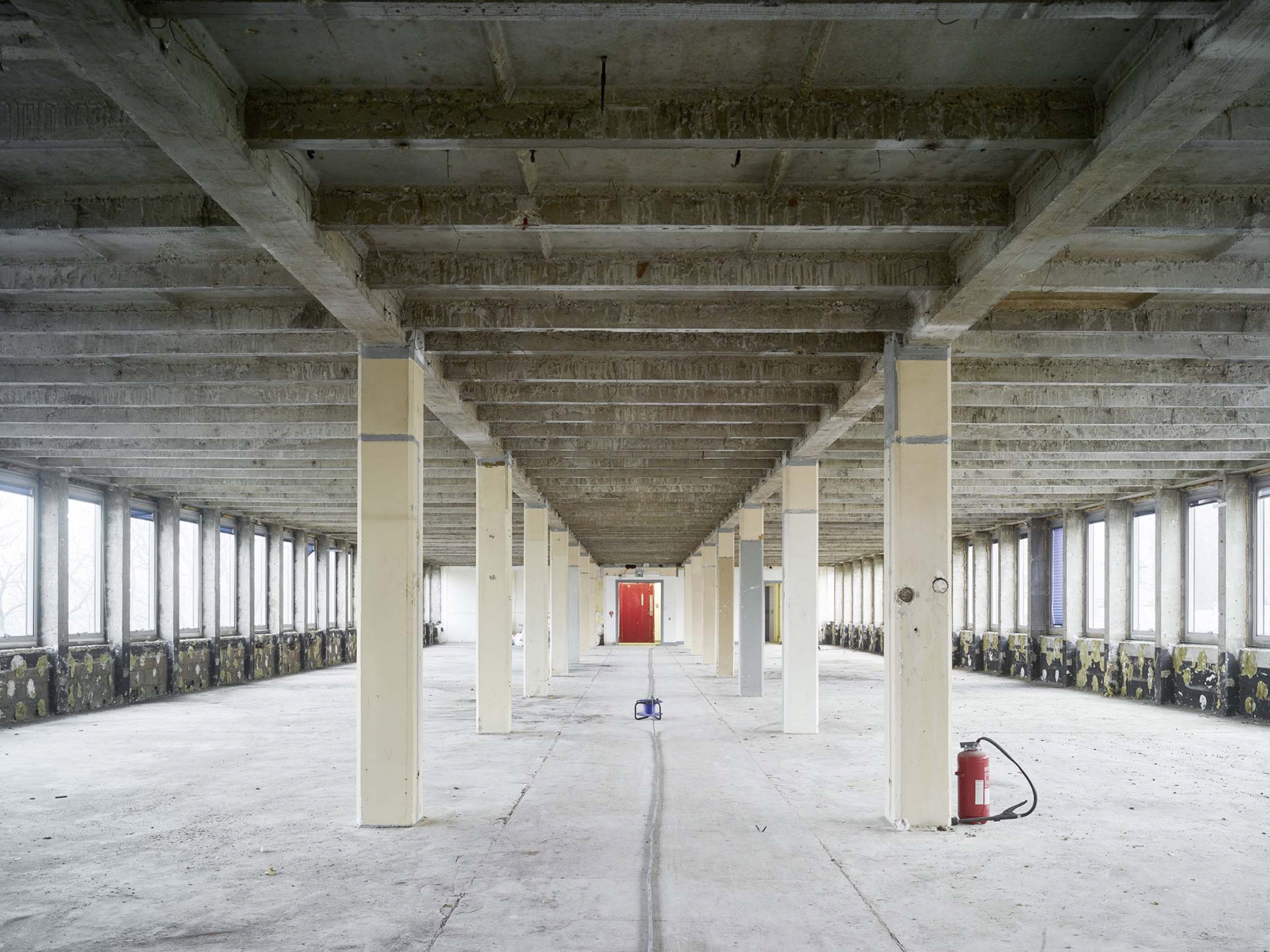
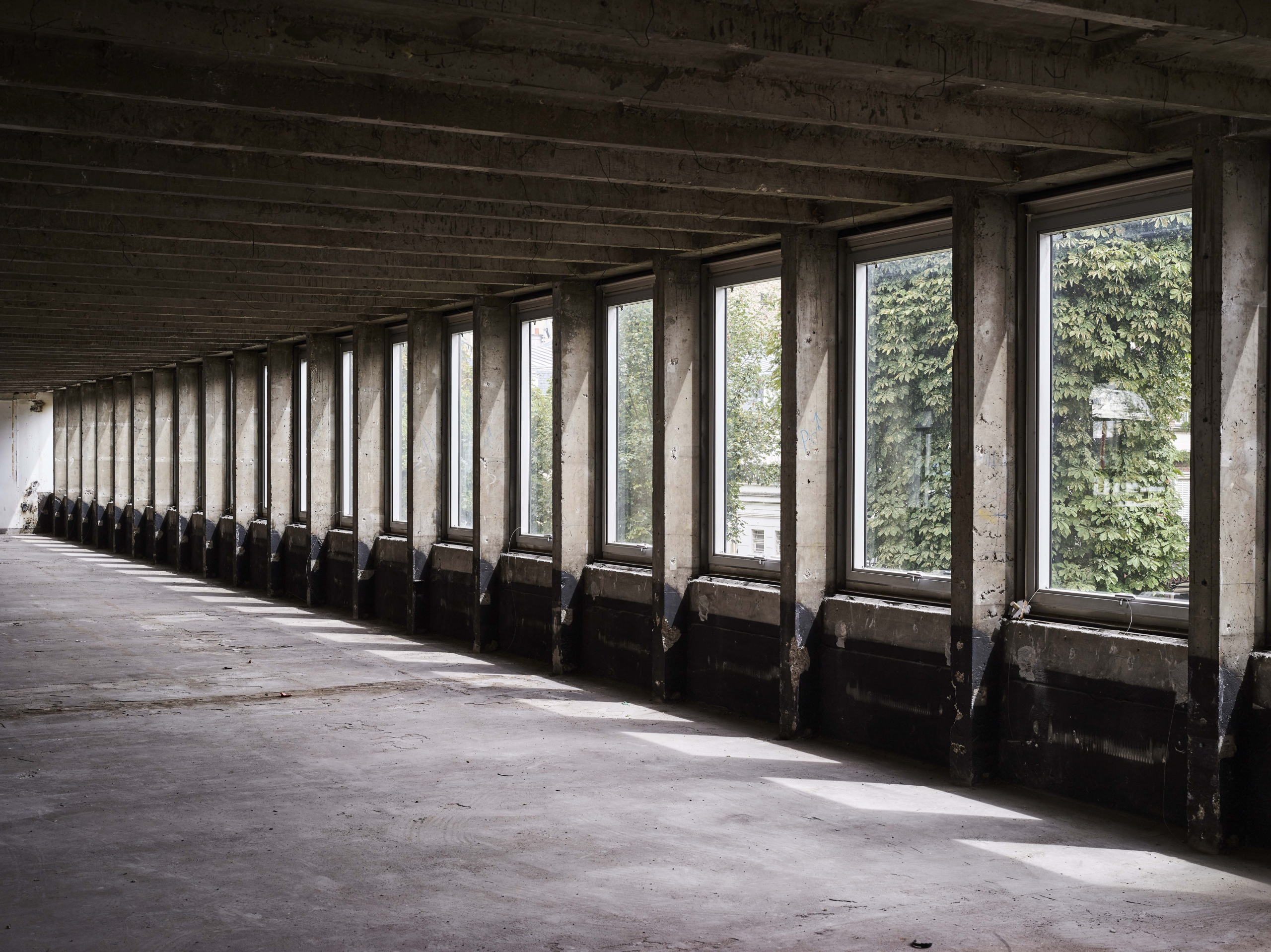
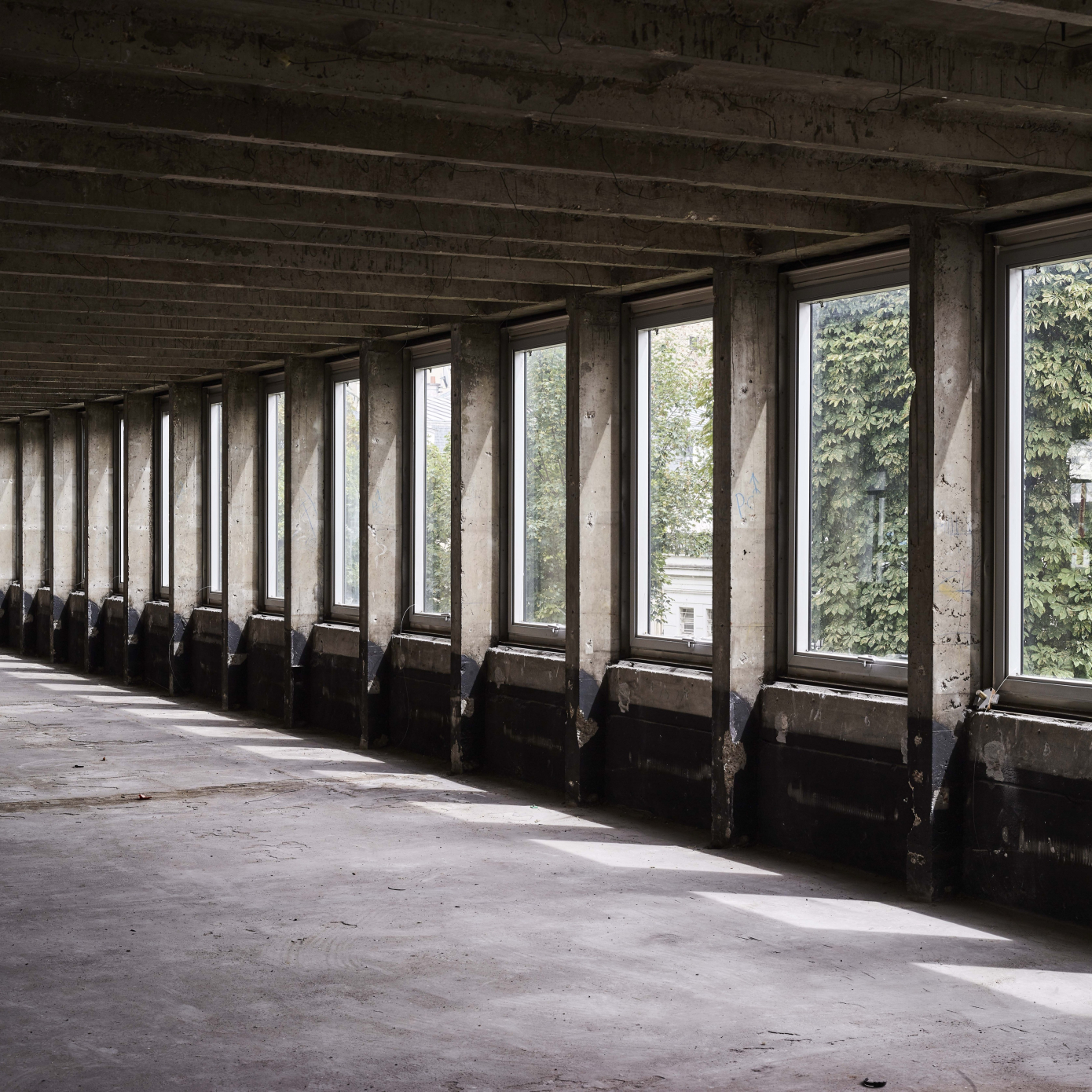
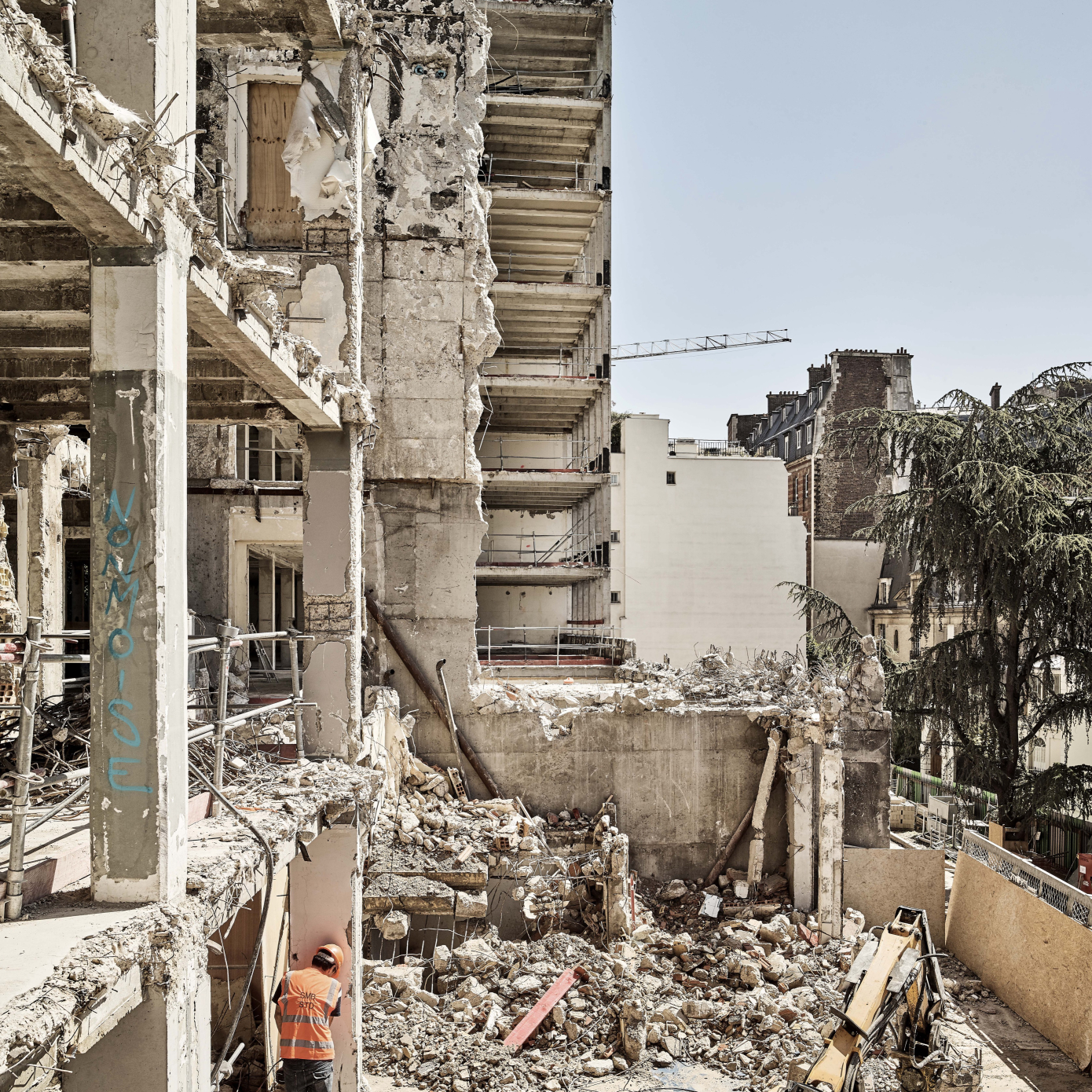
Fifty years later, Freedom presented a tarnished appearance, barely visible despite its linear form. Functionally organized but lacking any particular quality, and now technically non-compliant with standards, it had suffered from uninspired renovation campaigns. Externally, it featured a cladding that was aesthetically degraded and energy-inefficient. The interior decoration had lost its integrity, and the garden, cluttered with delivery areas and utility sheds, had lost all visual and functional appeal.
Making a Statement
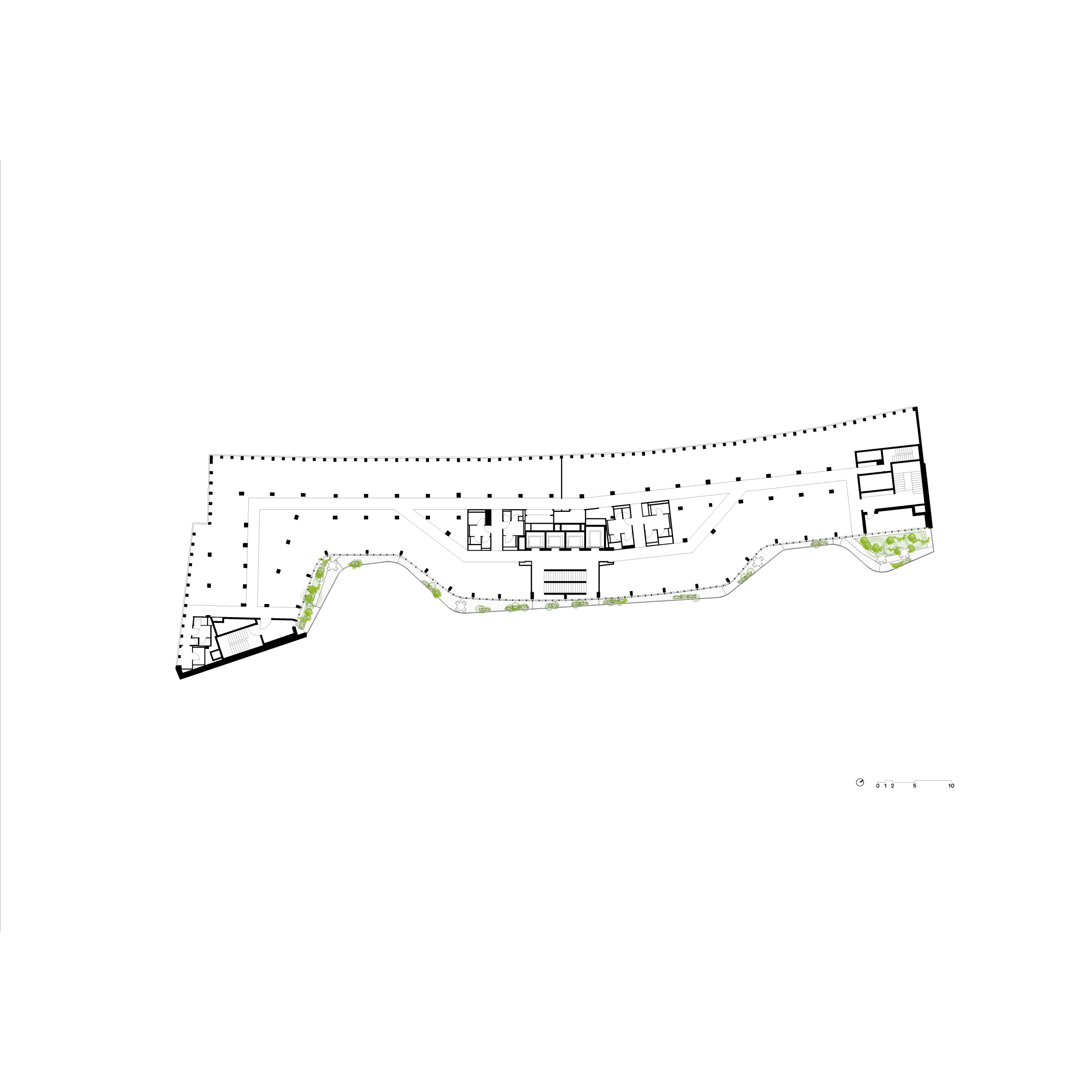
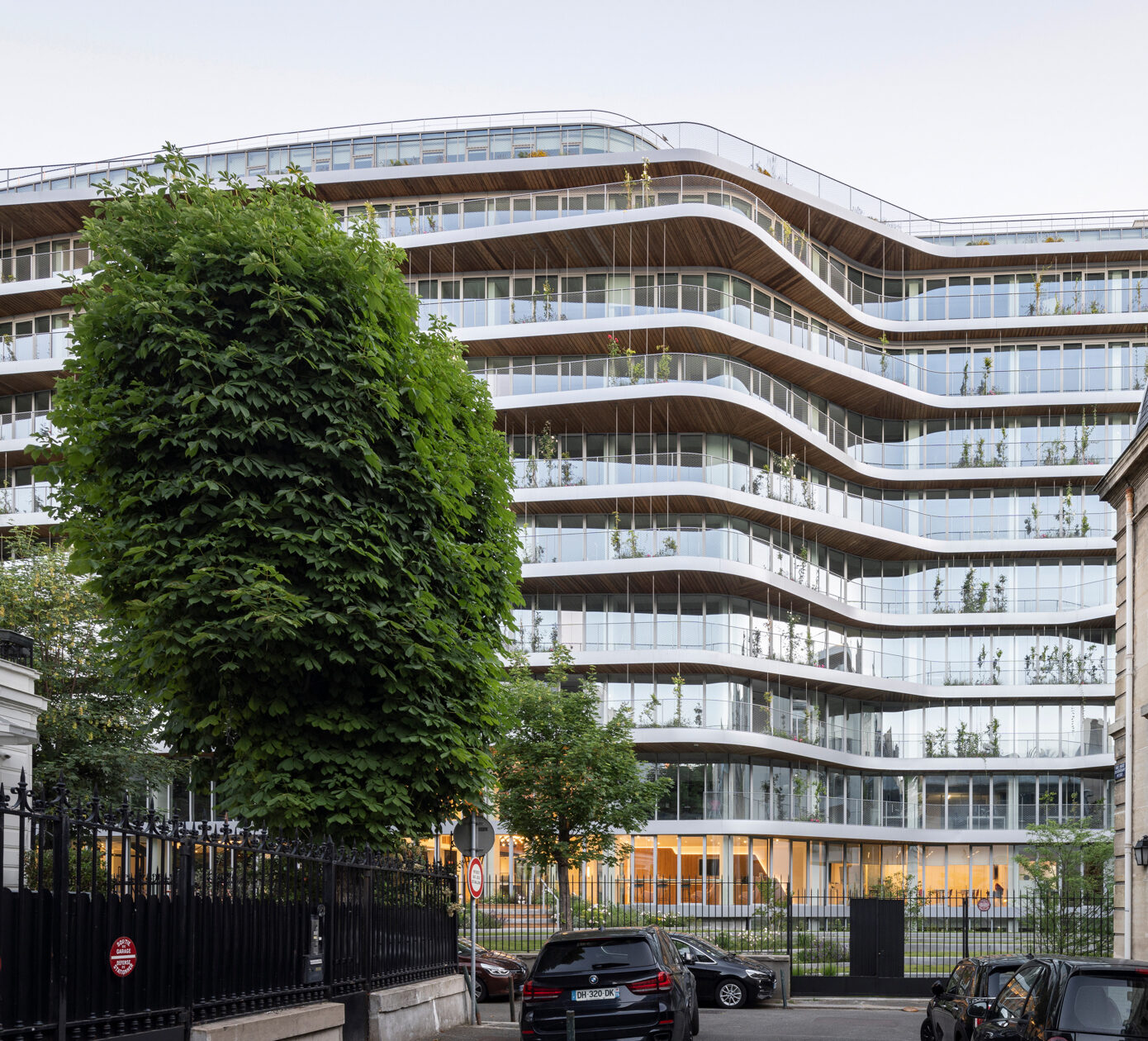
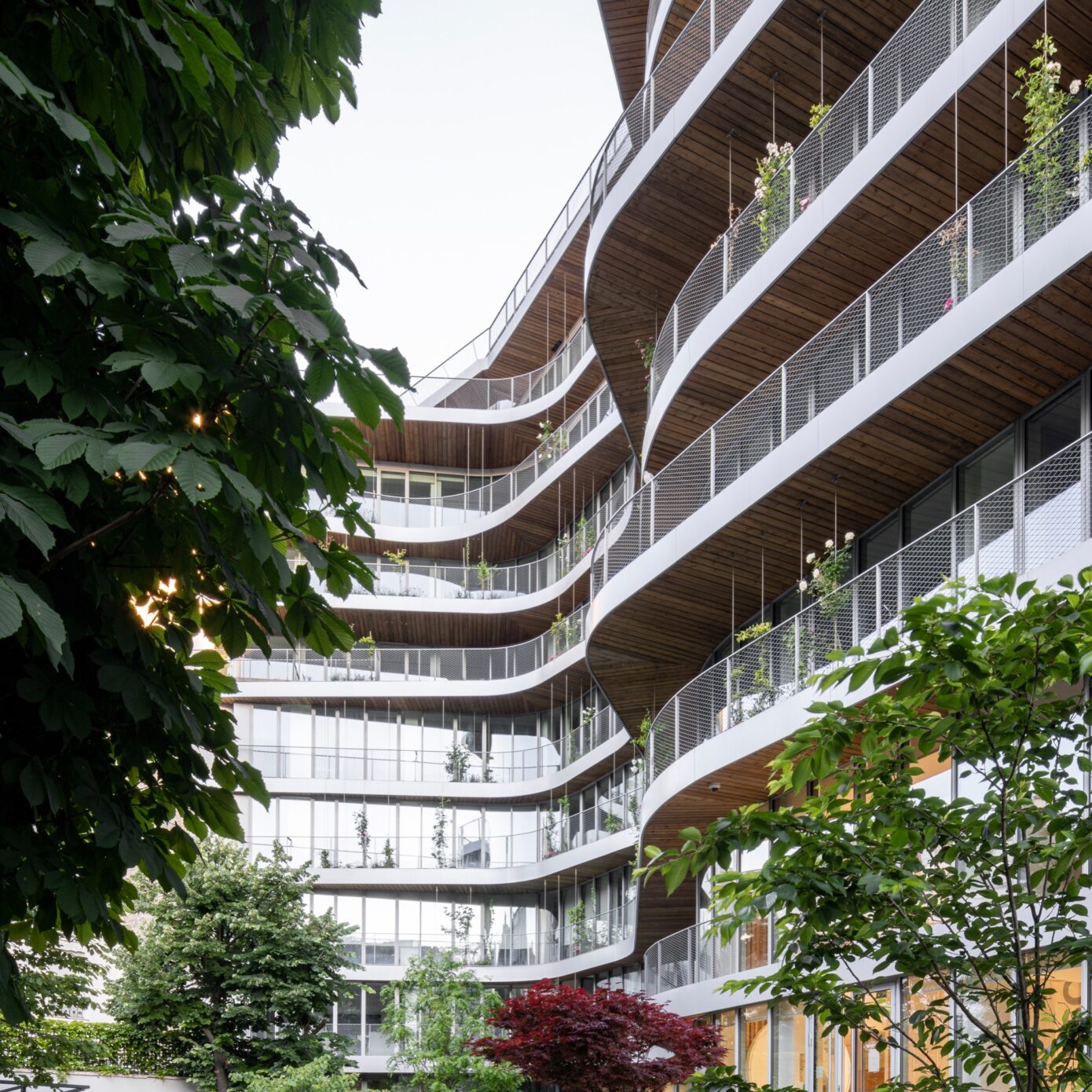
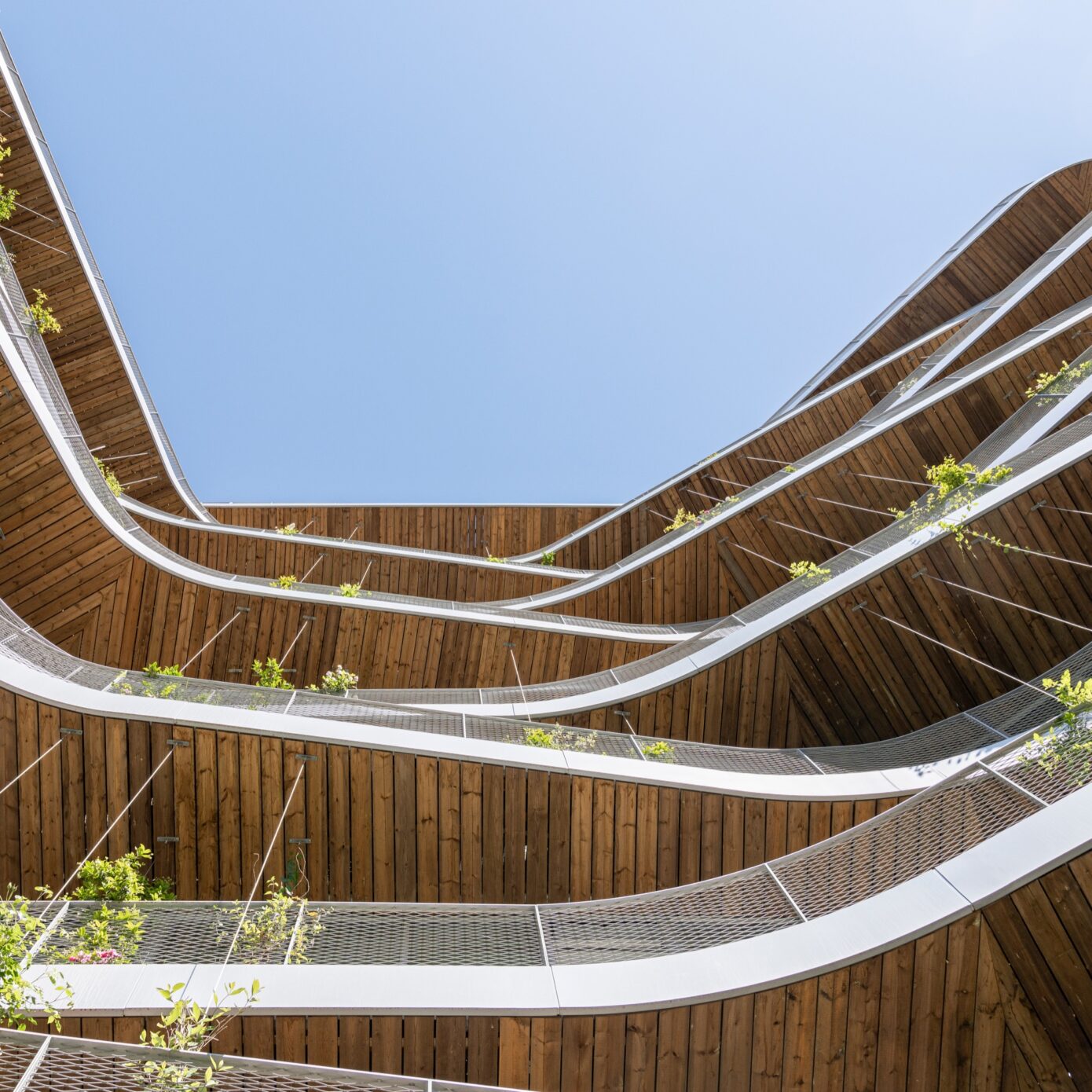
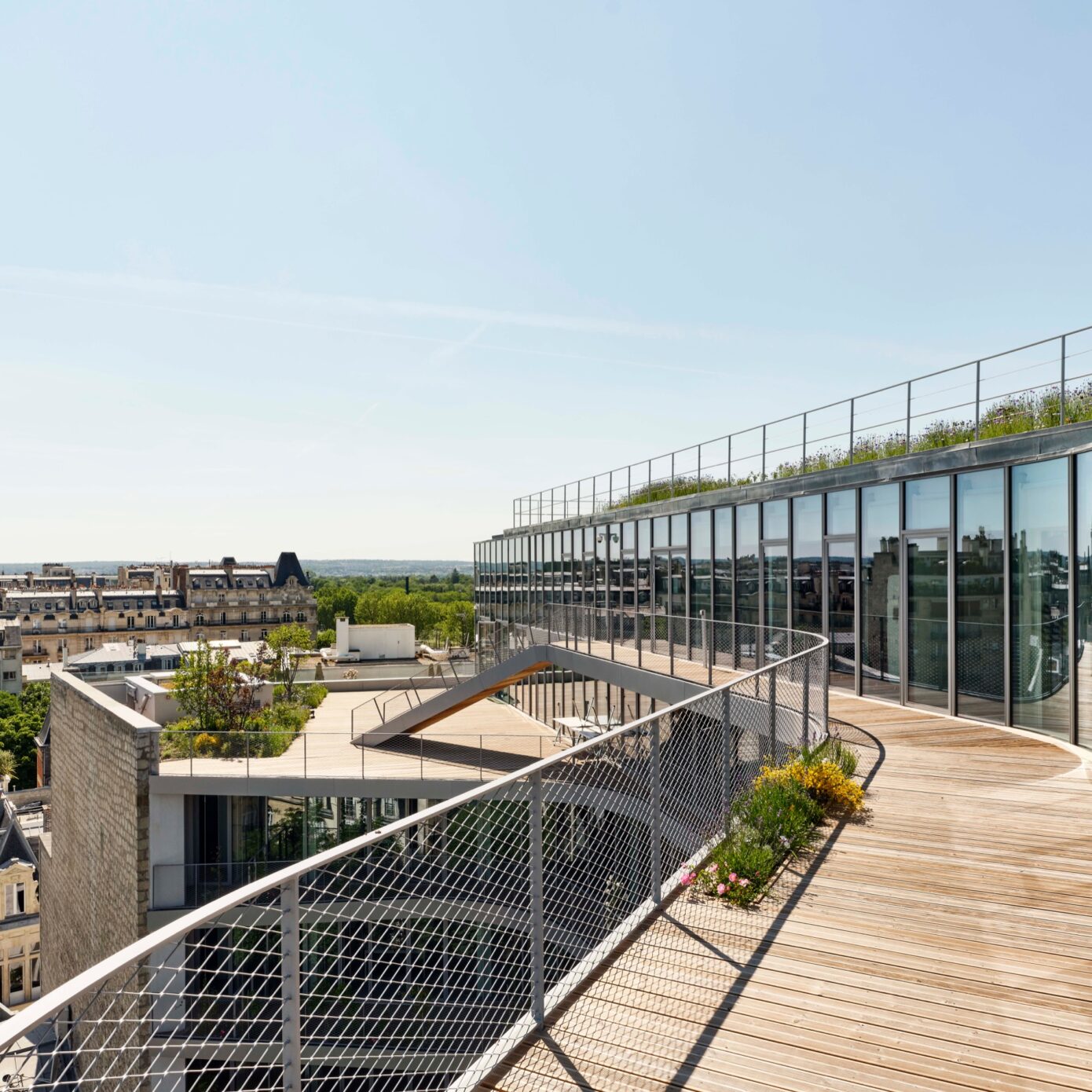
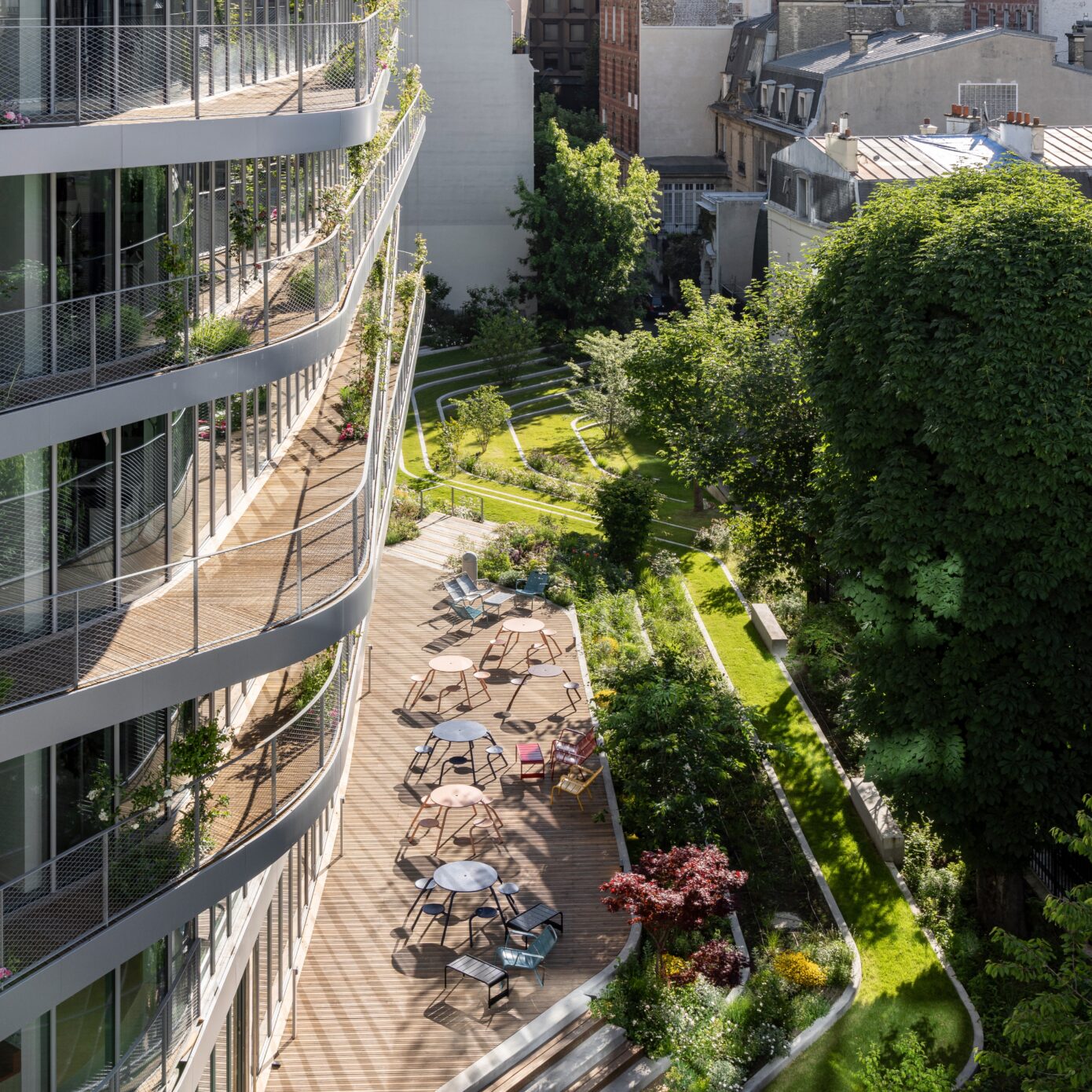
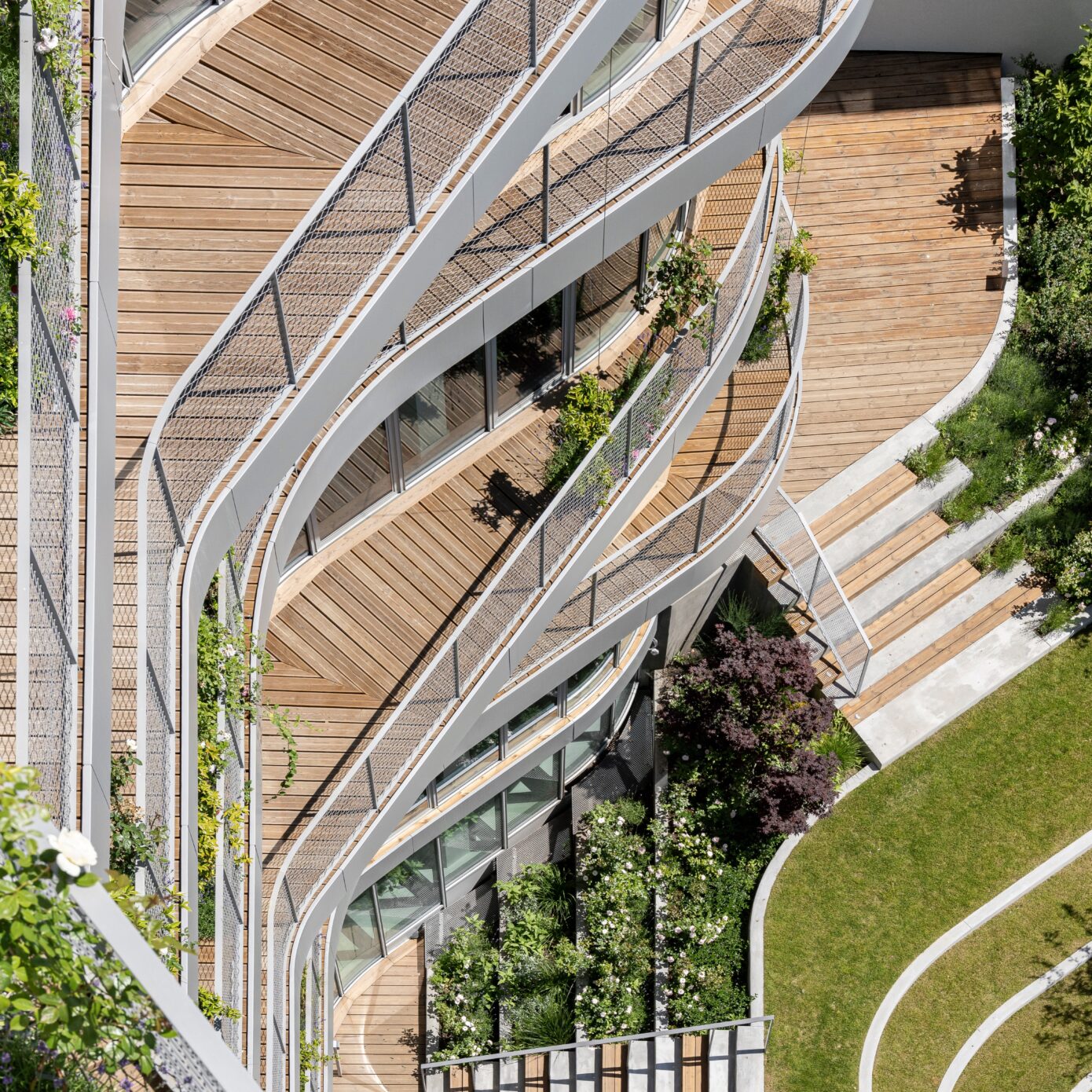
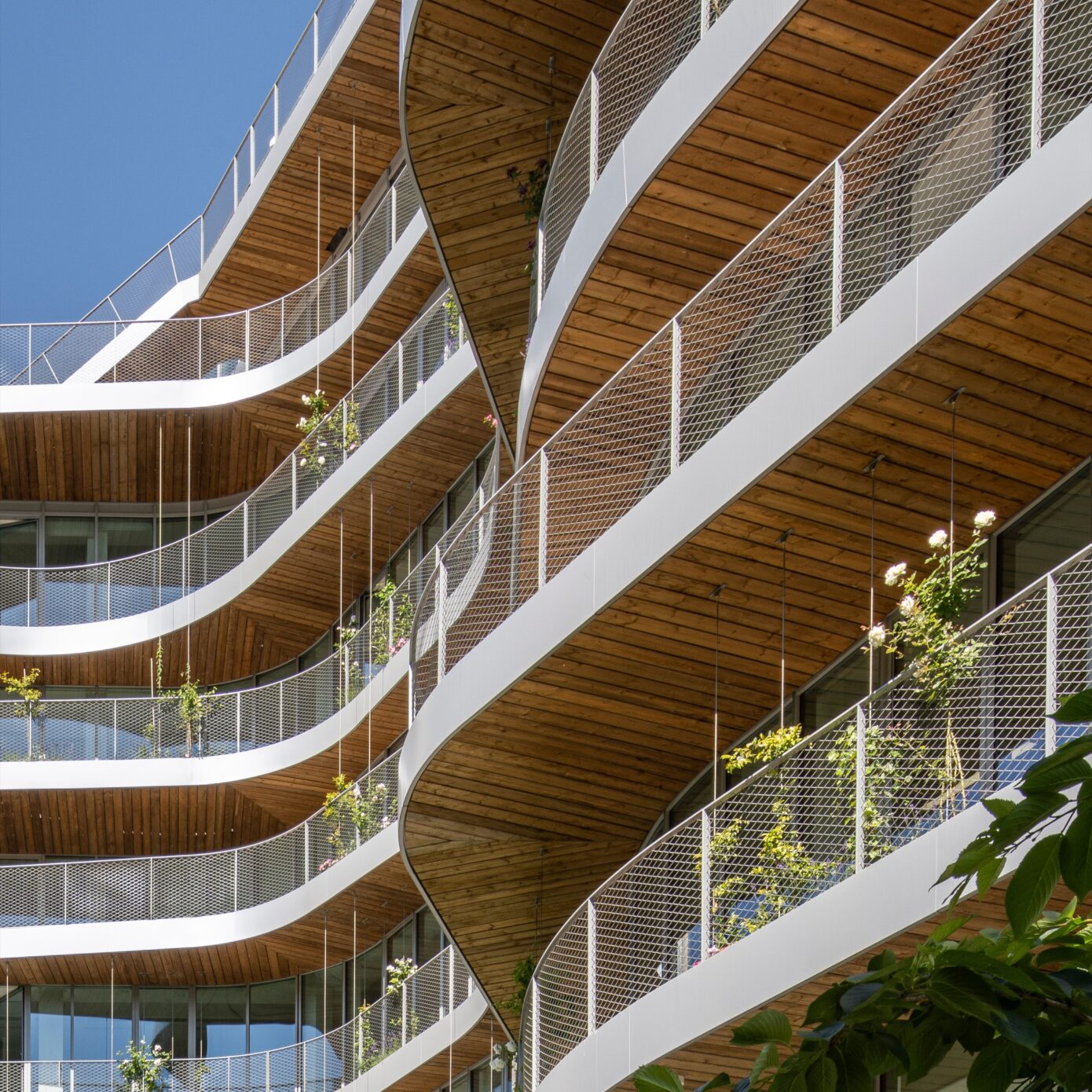
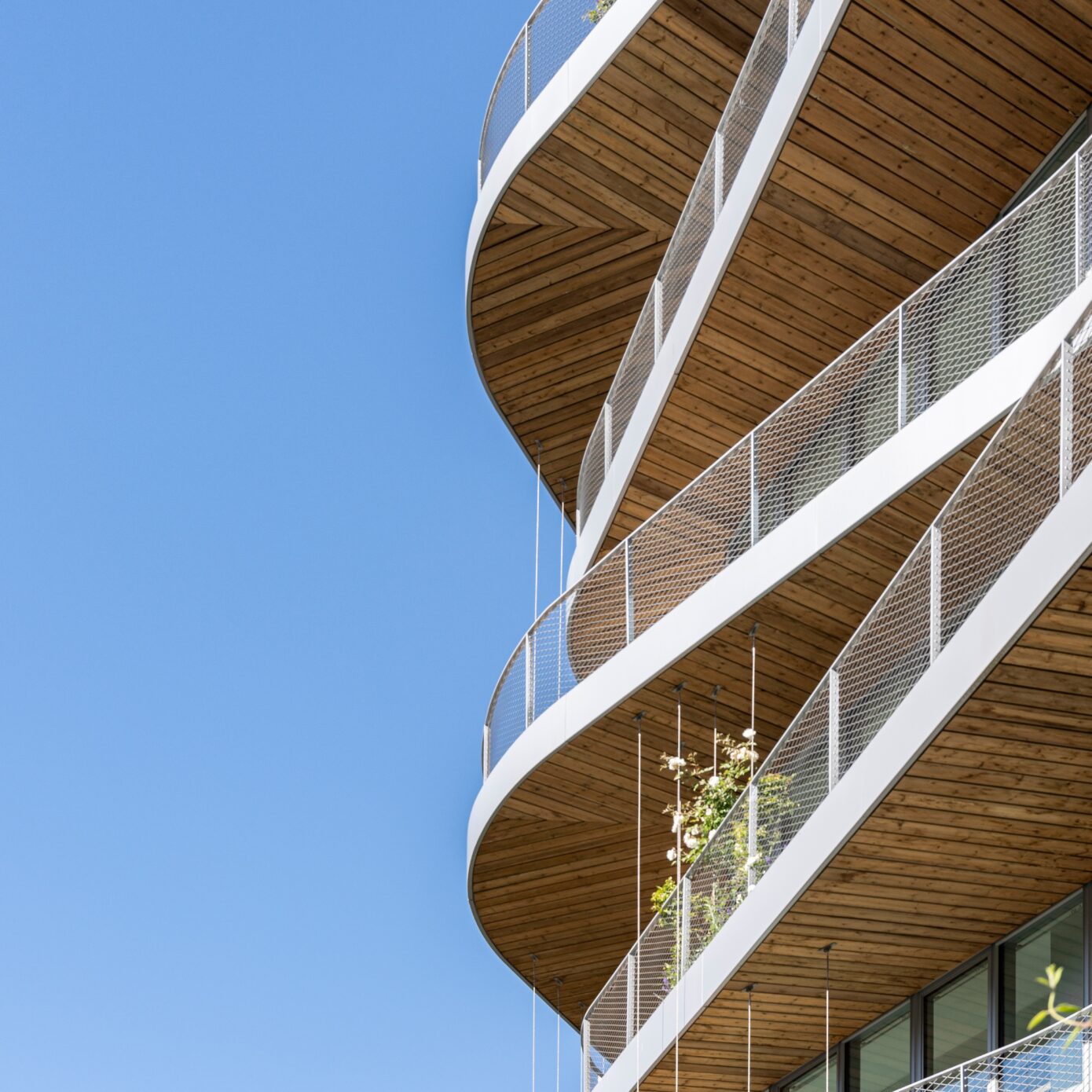
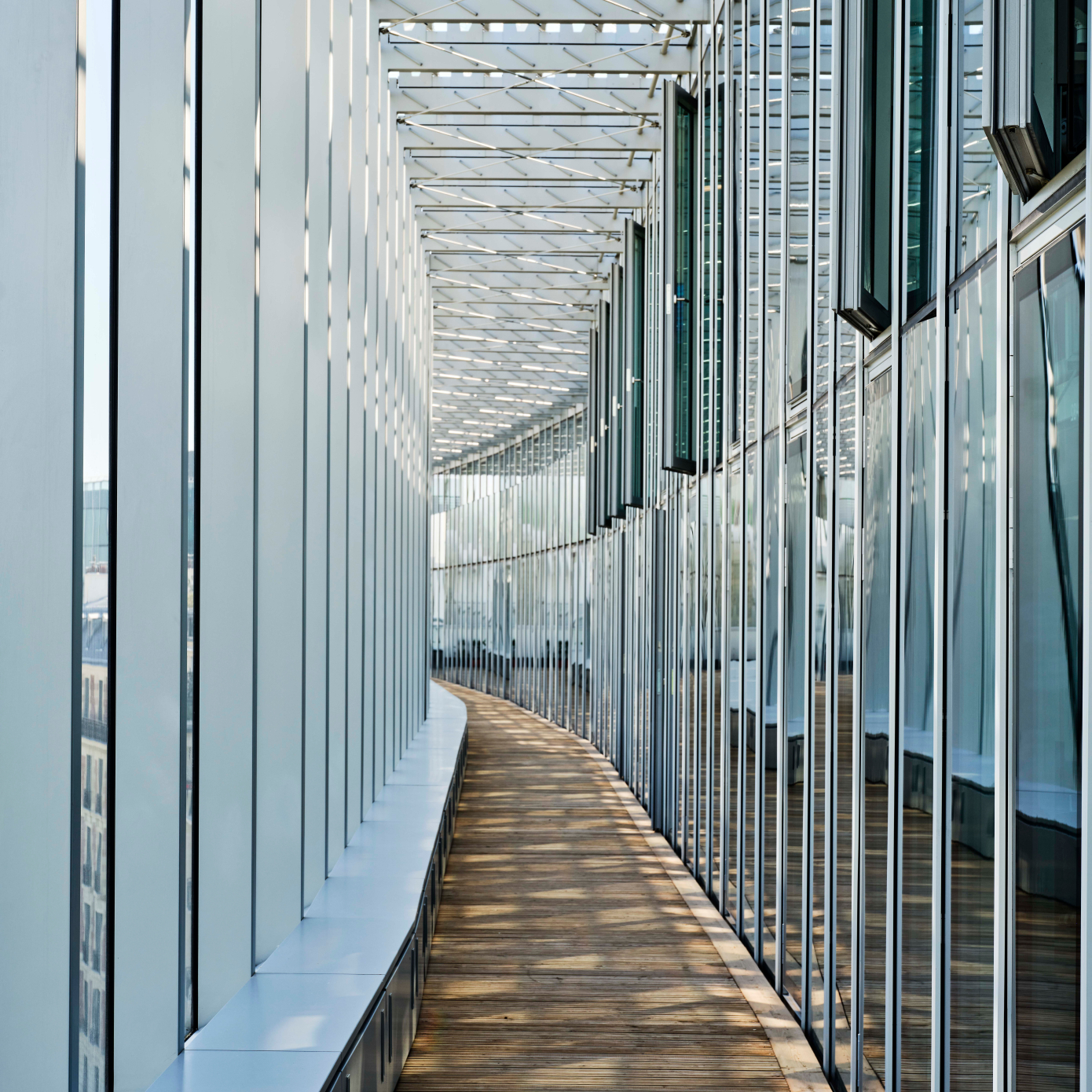
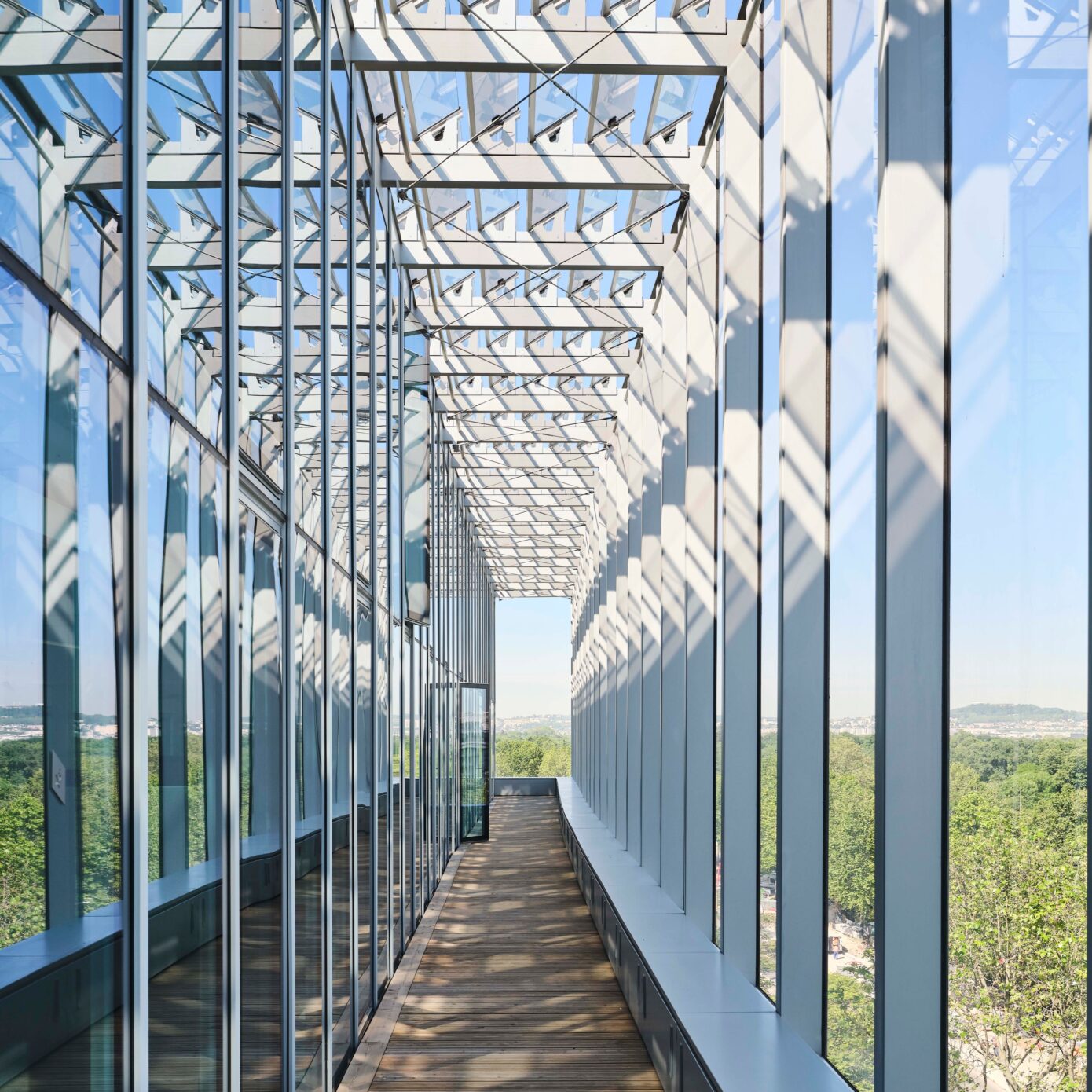
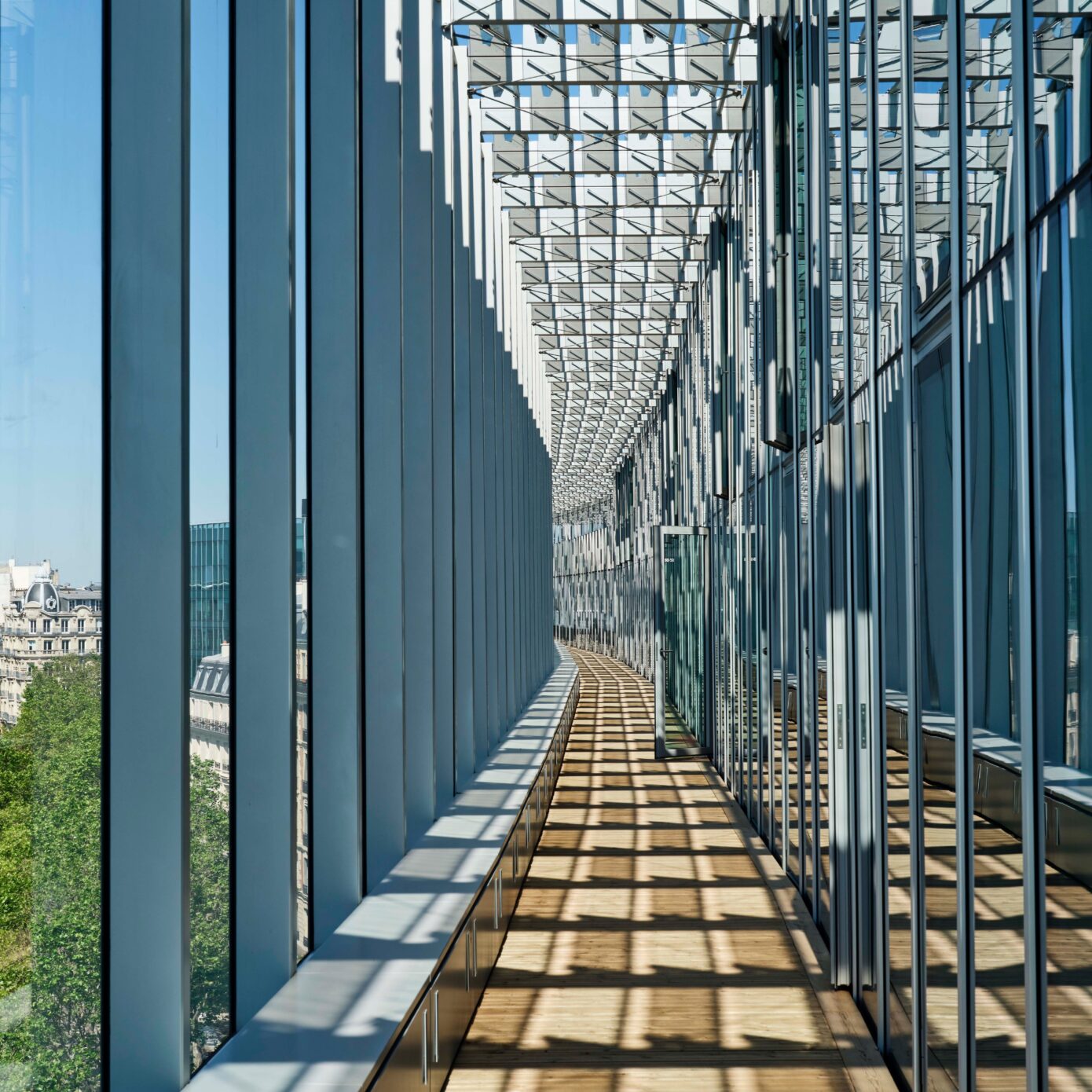
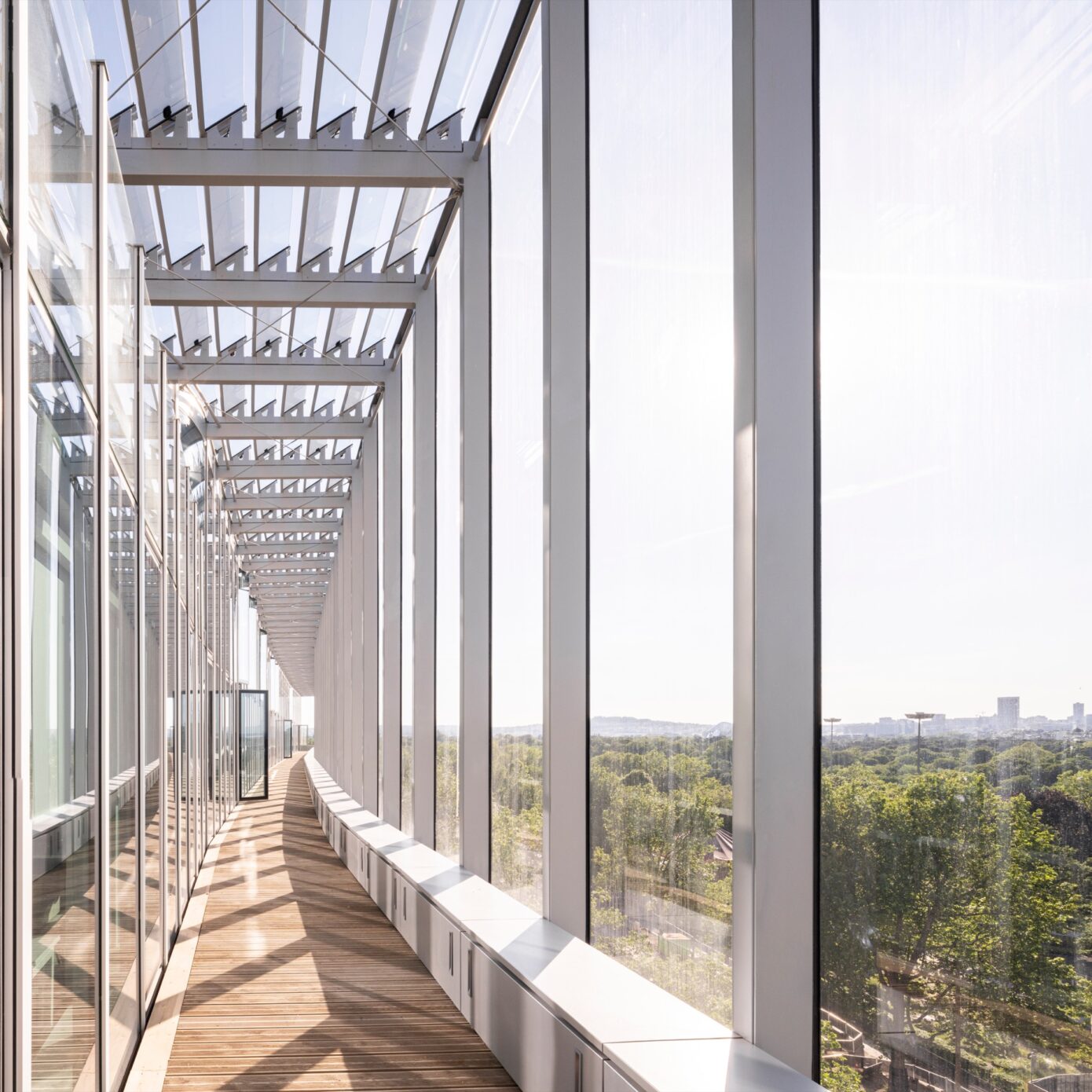
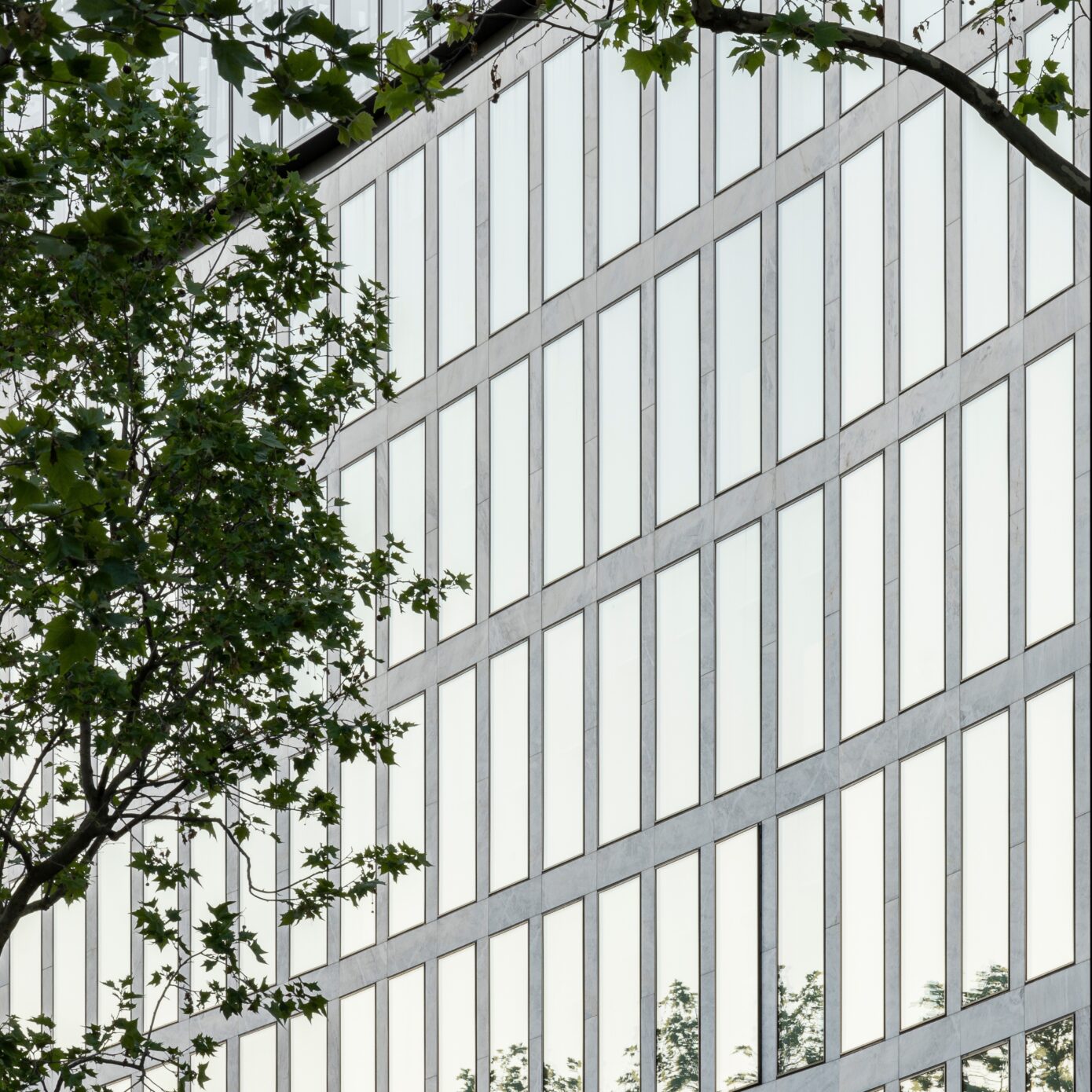
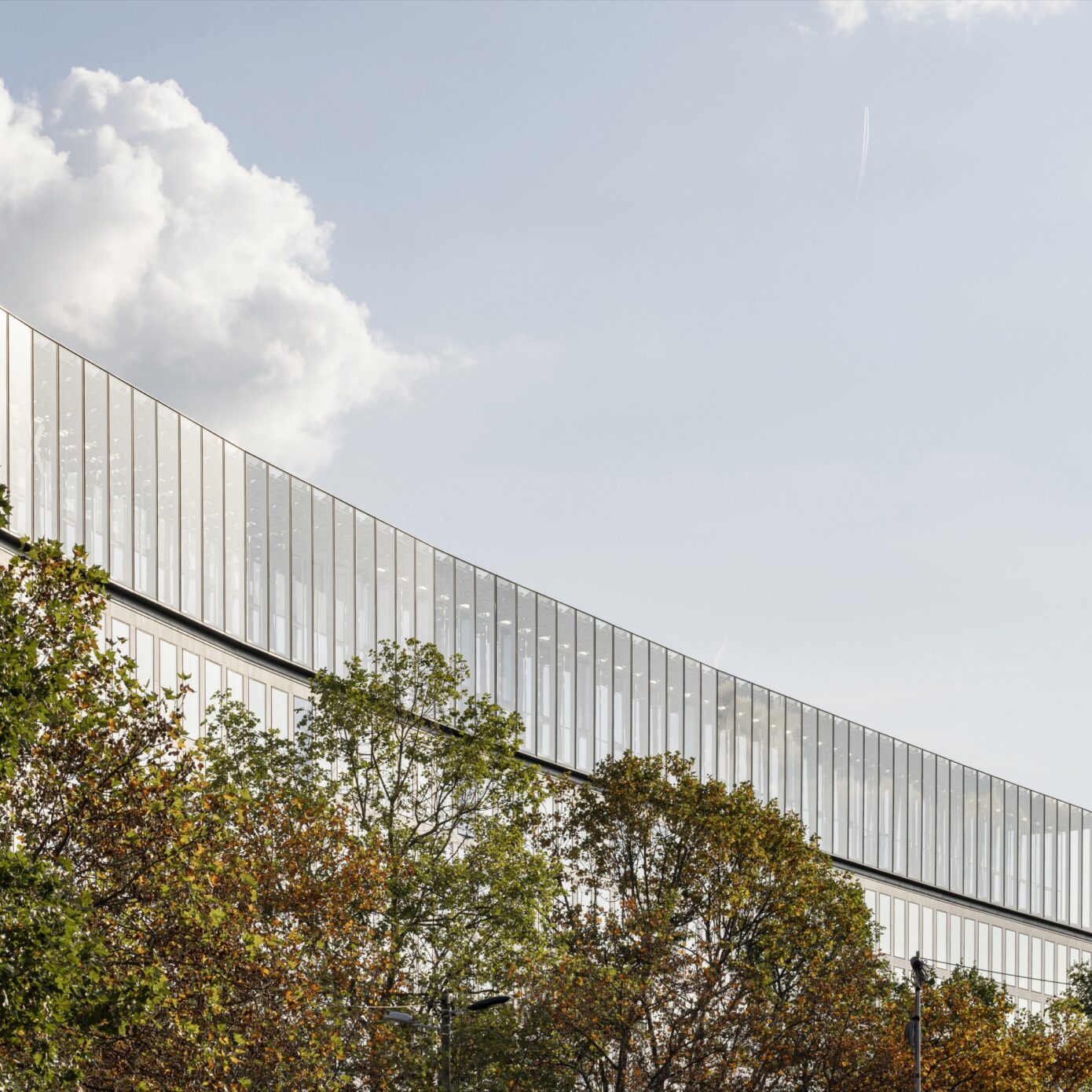
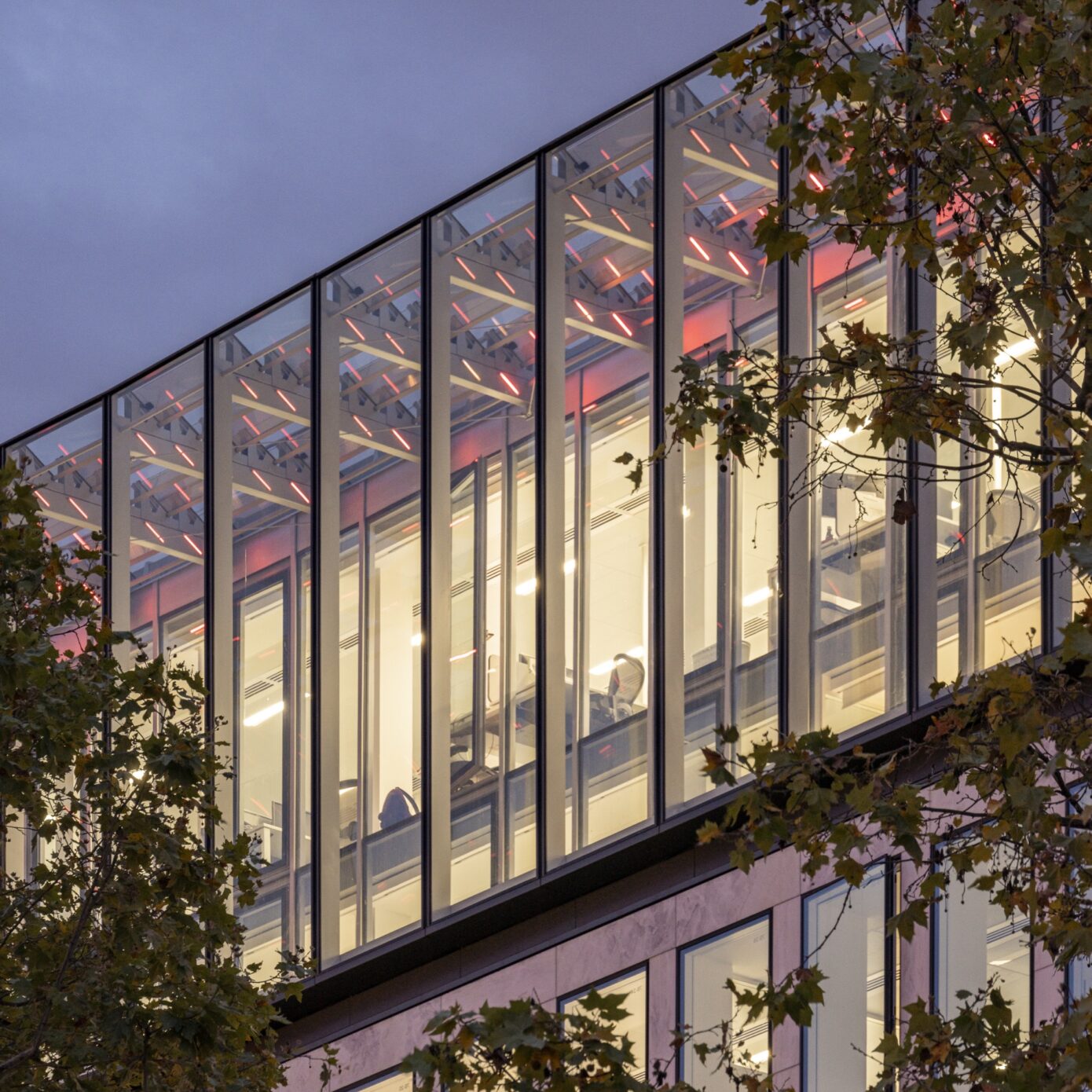
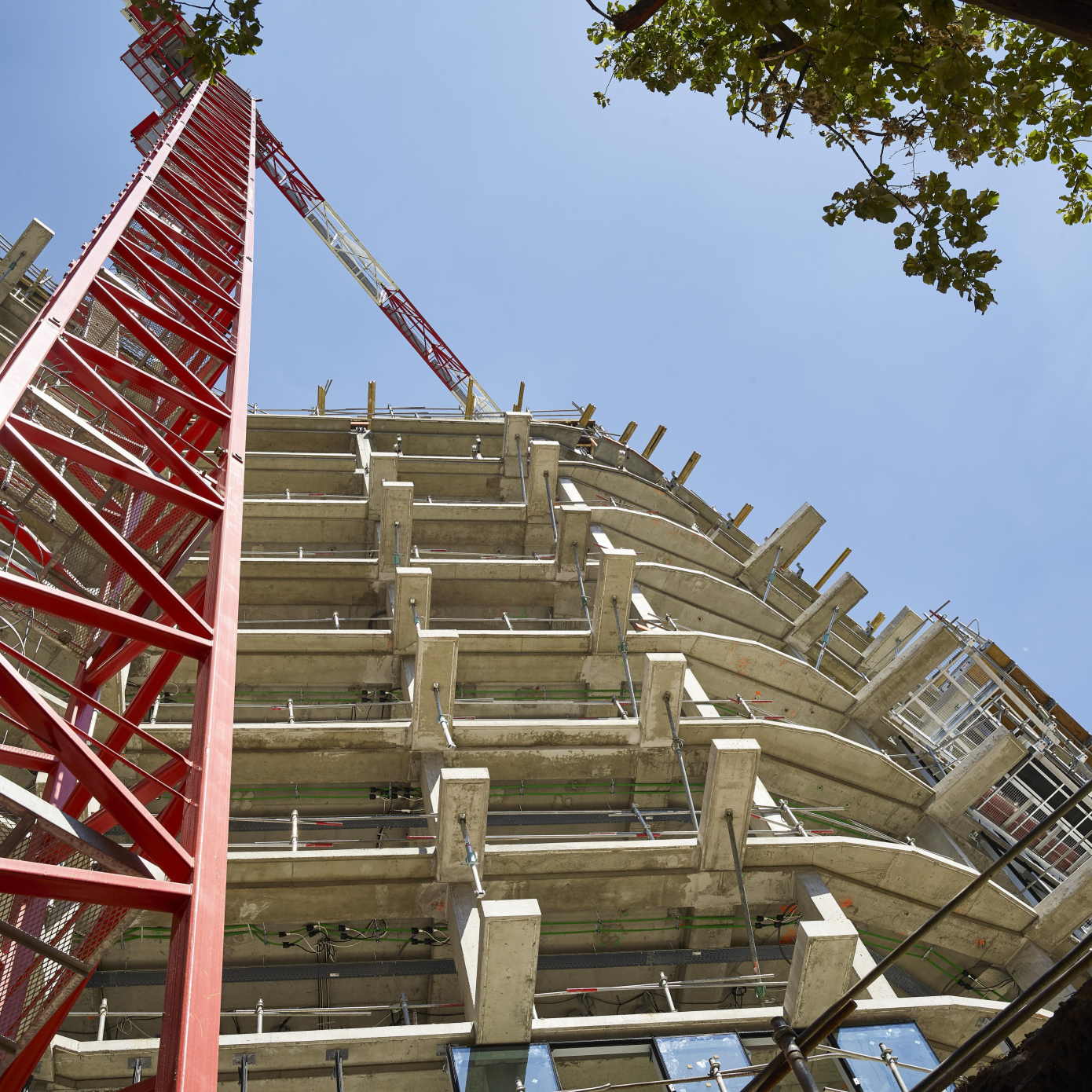
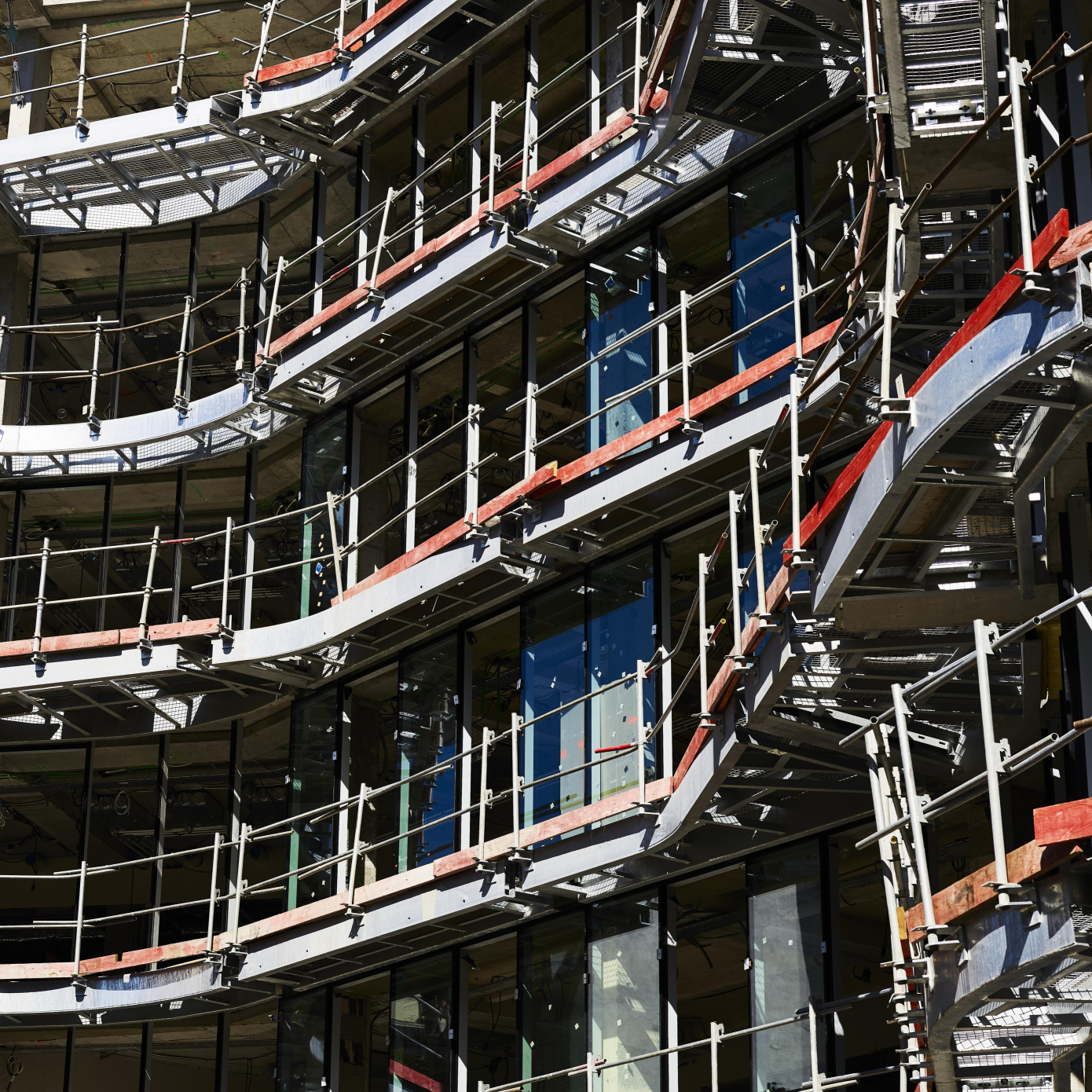
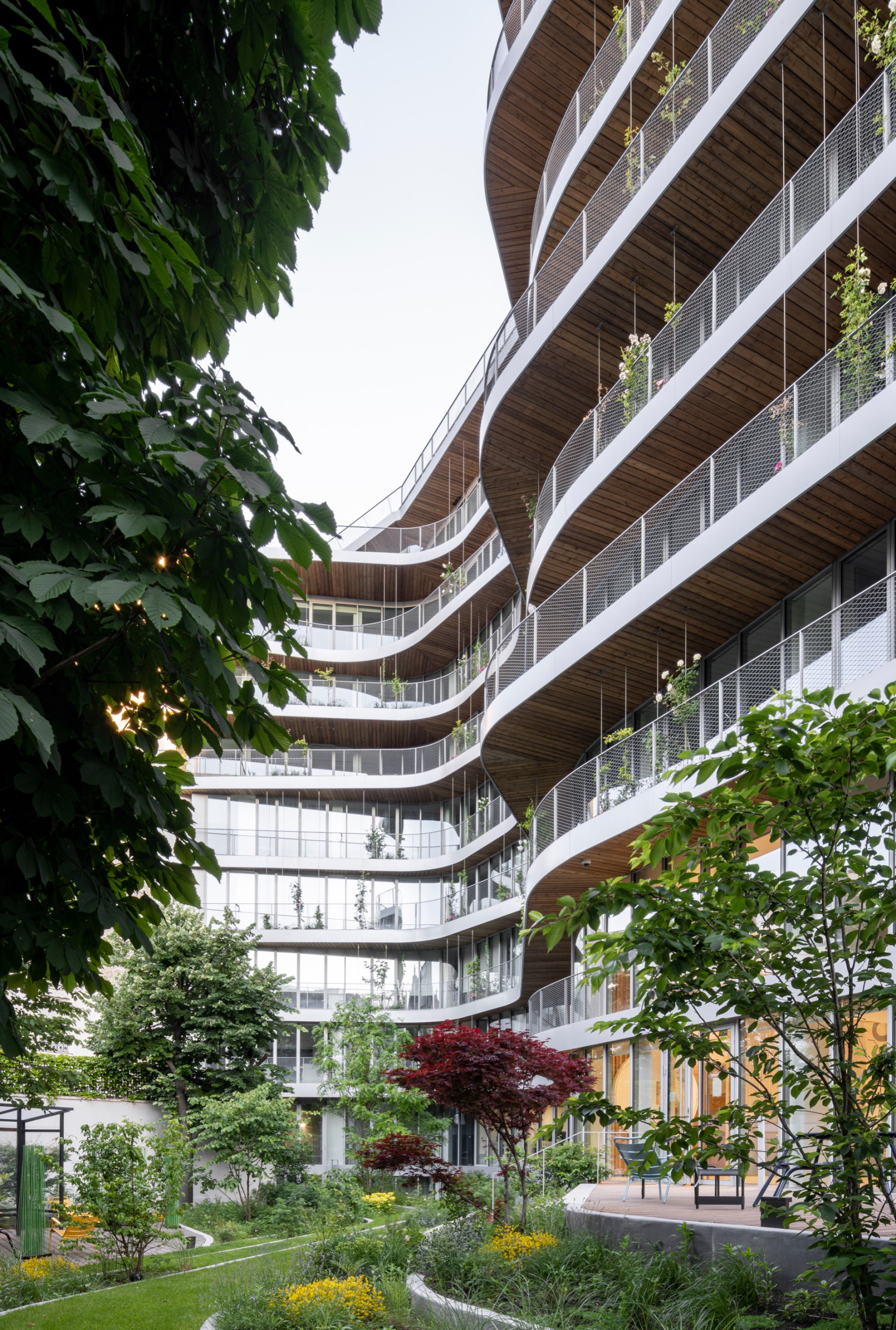
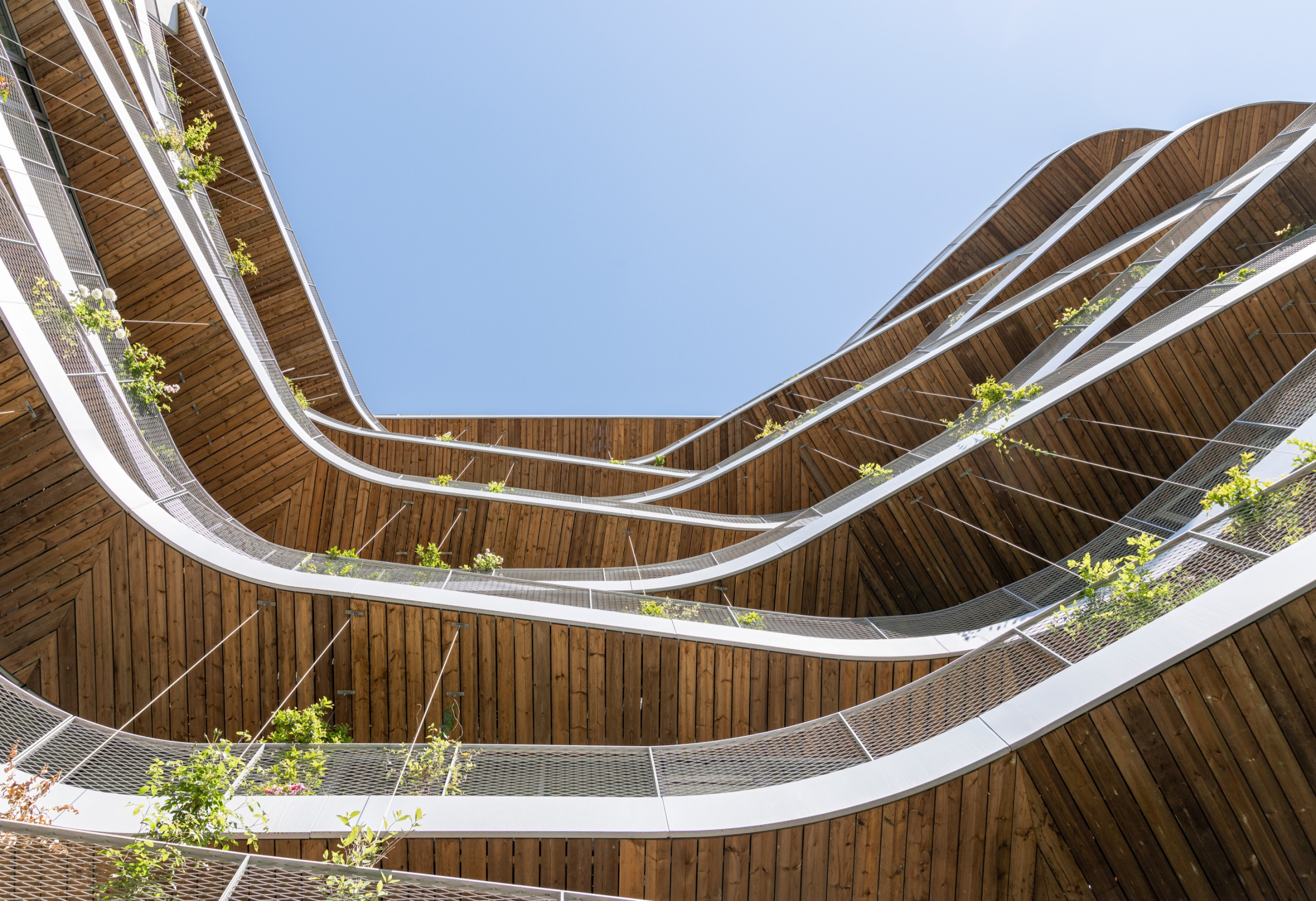
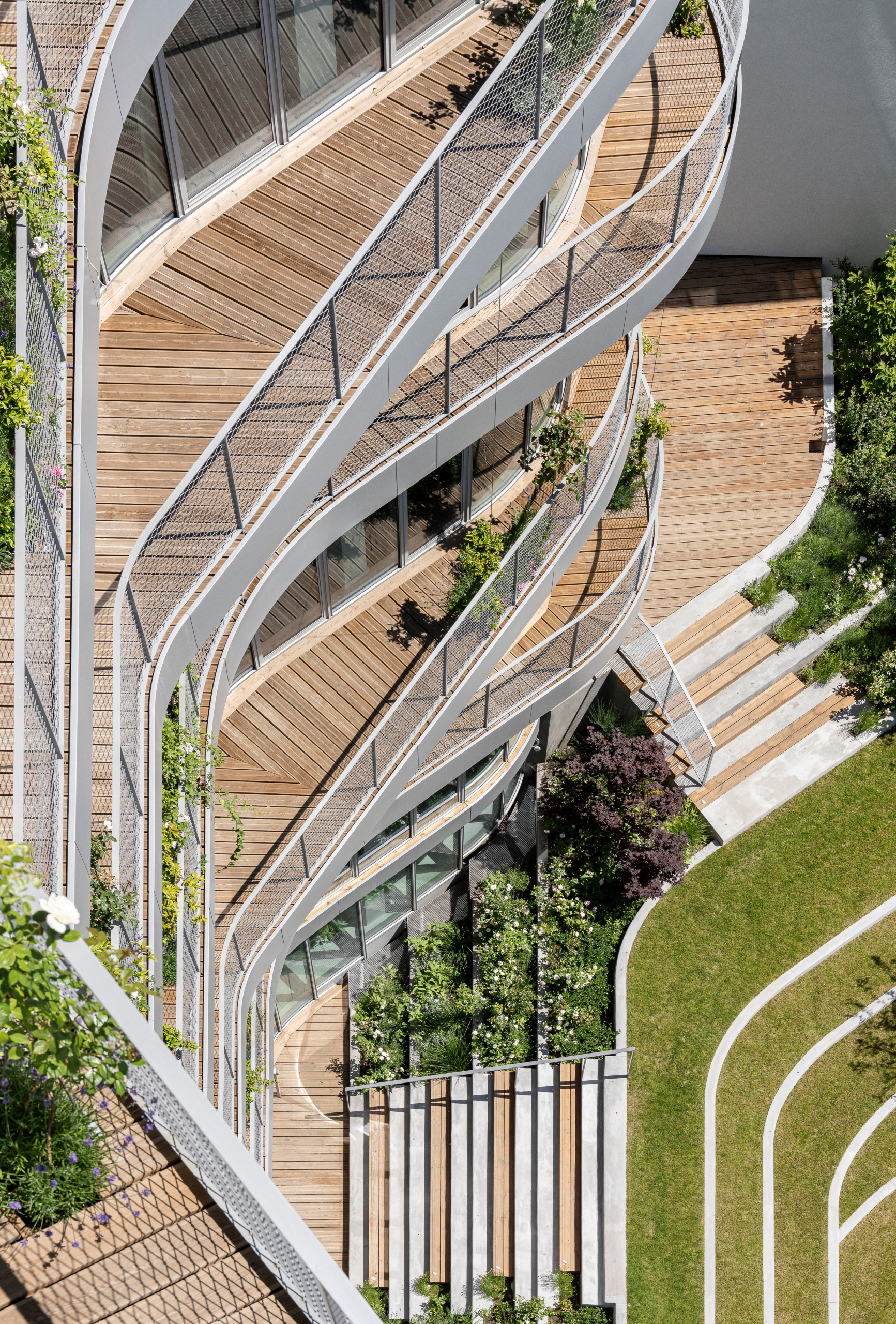
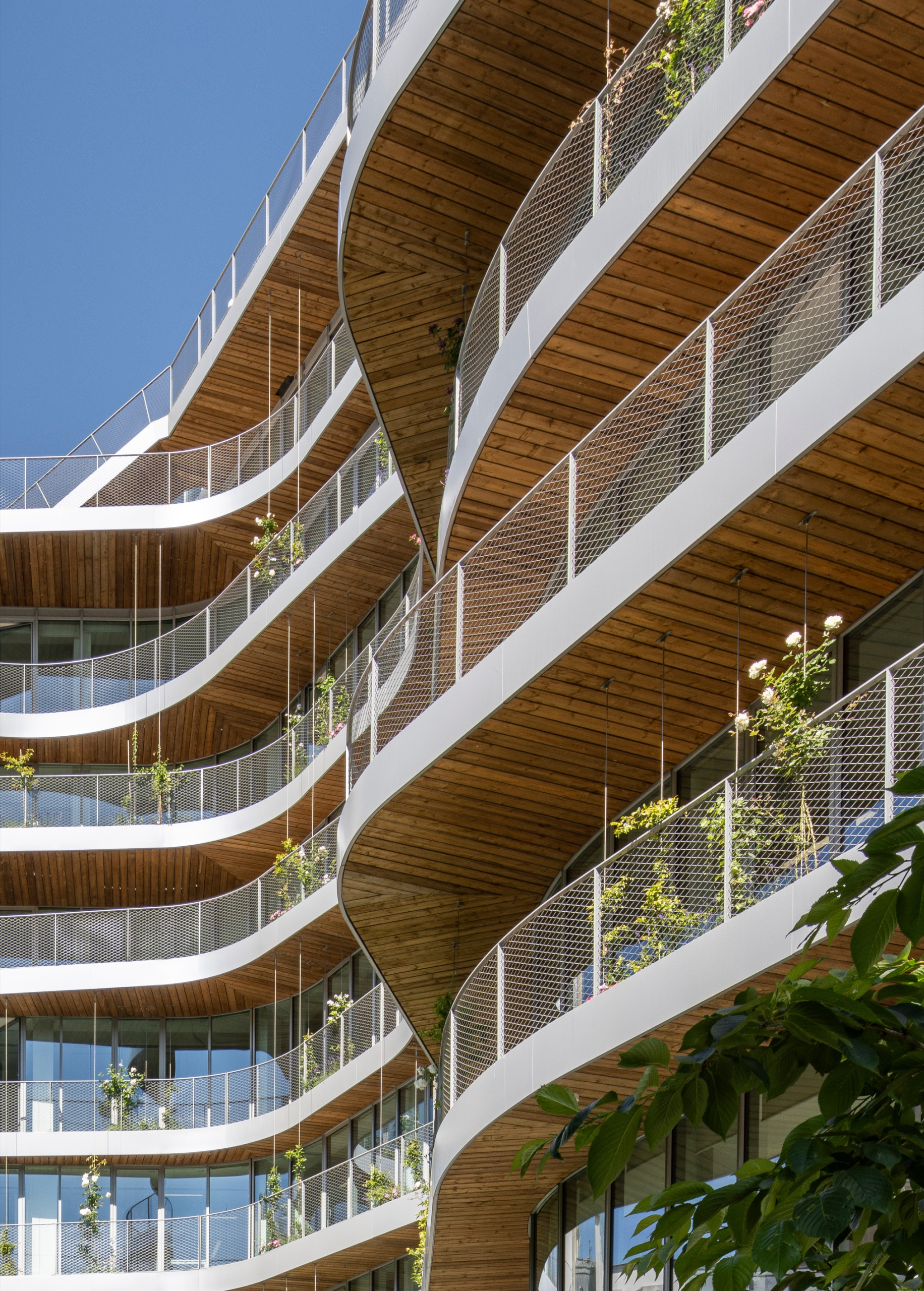
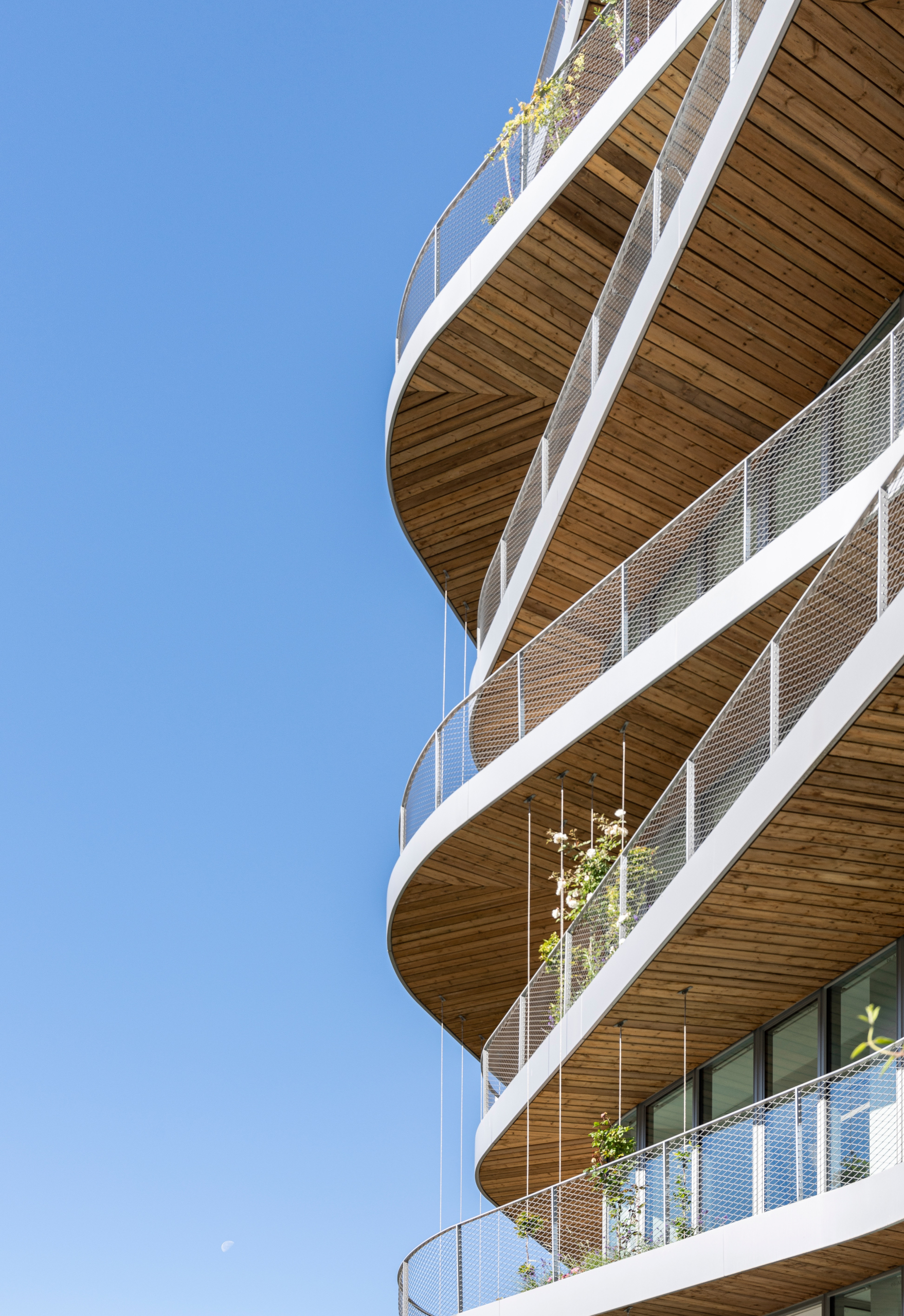
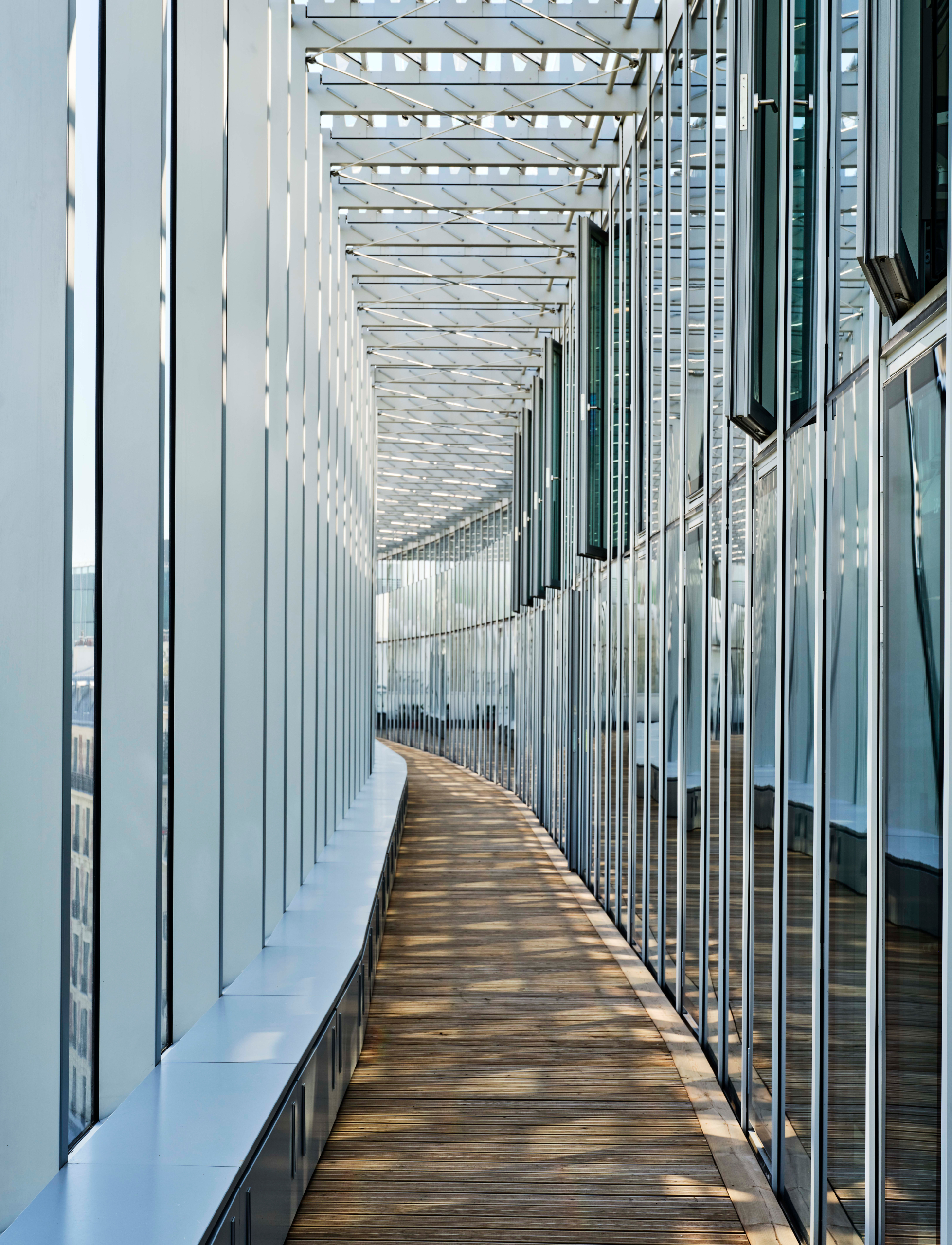
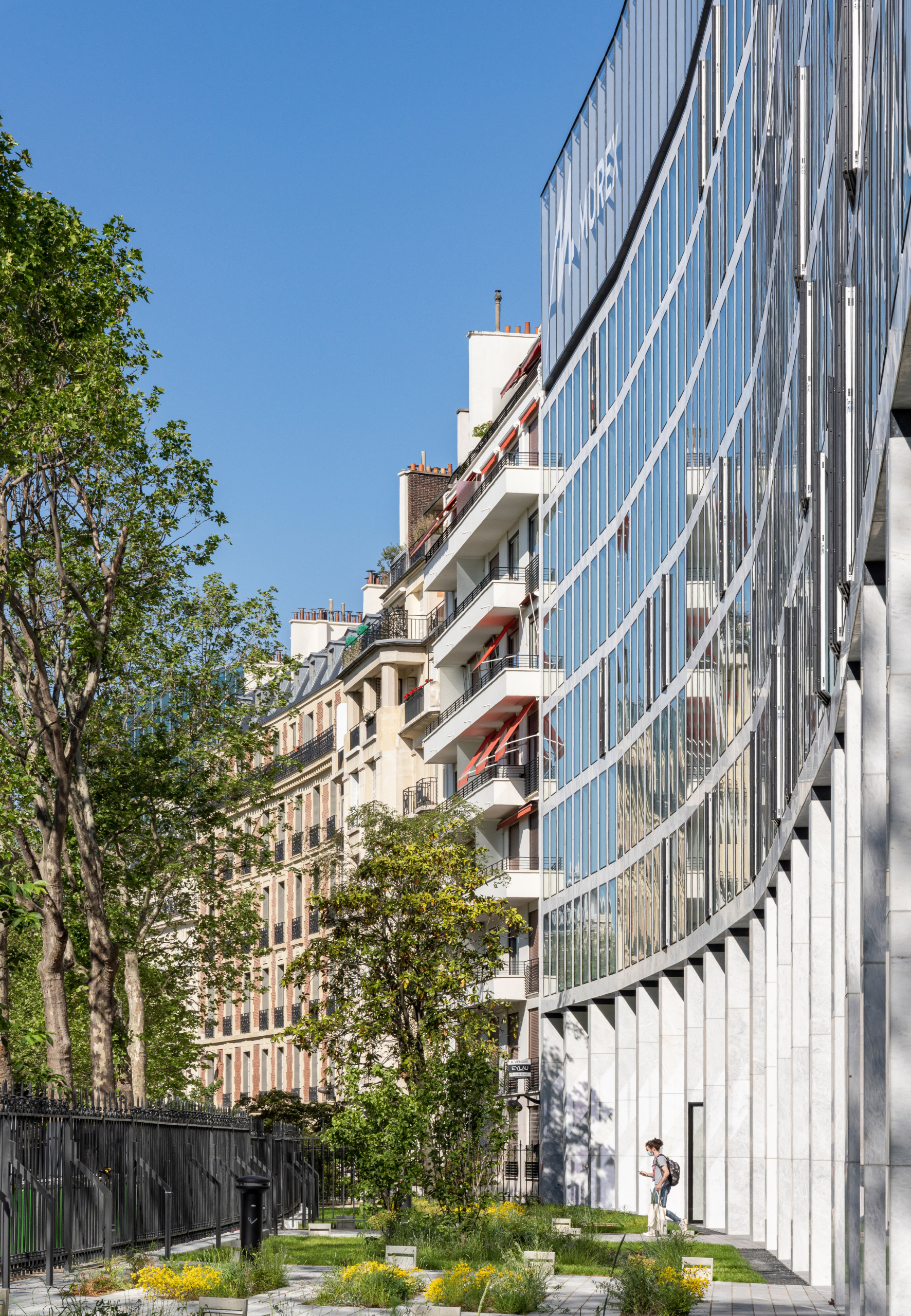
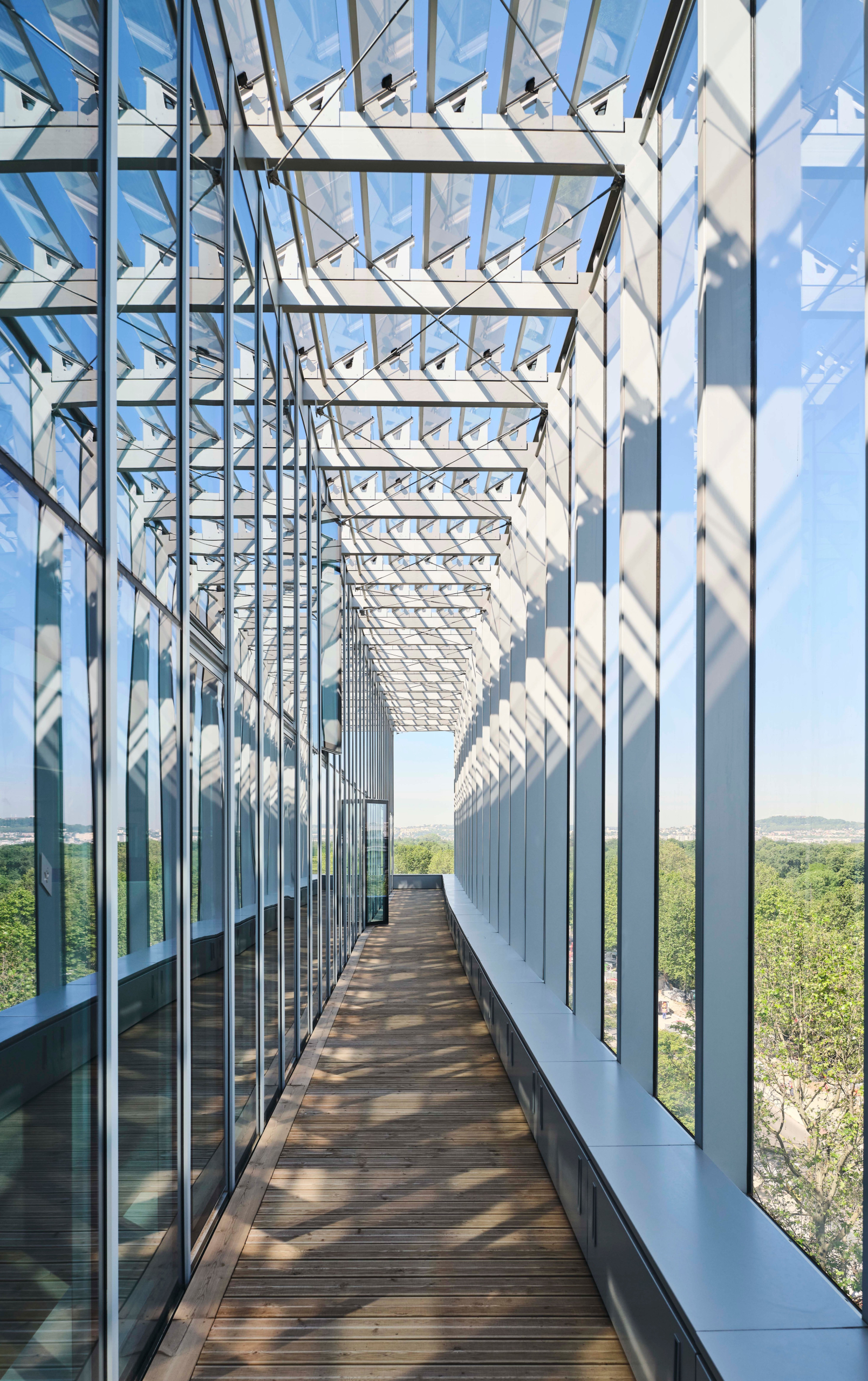
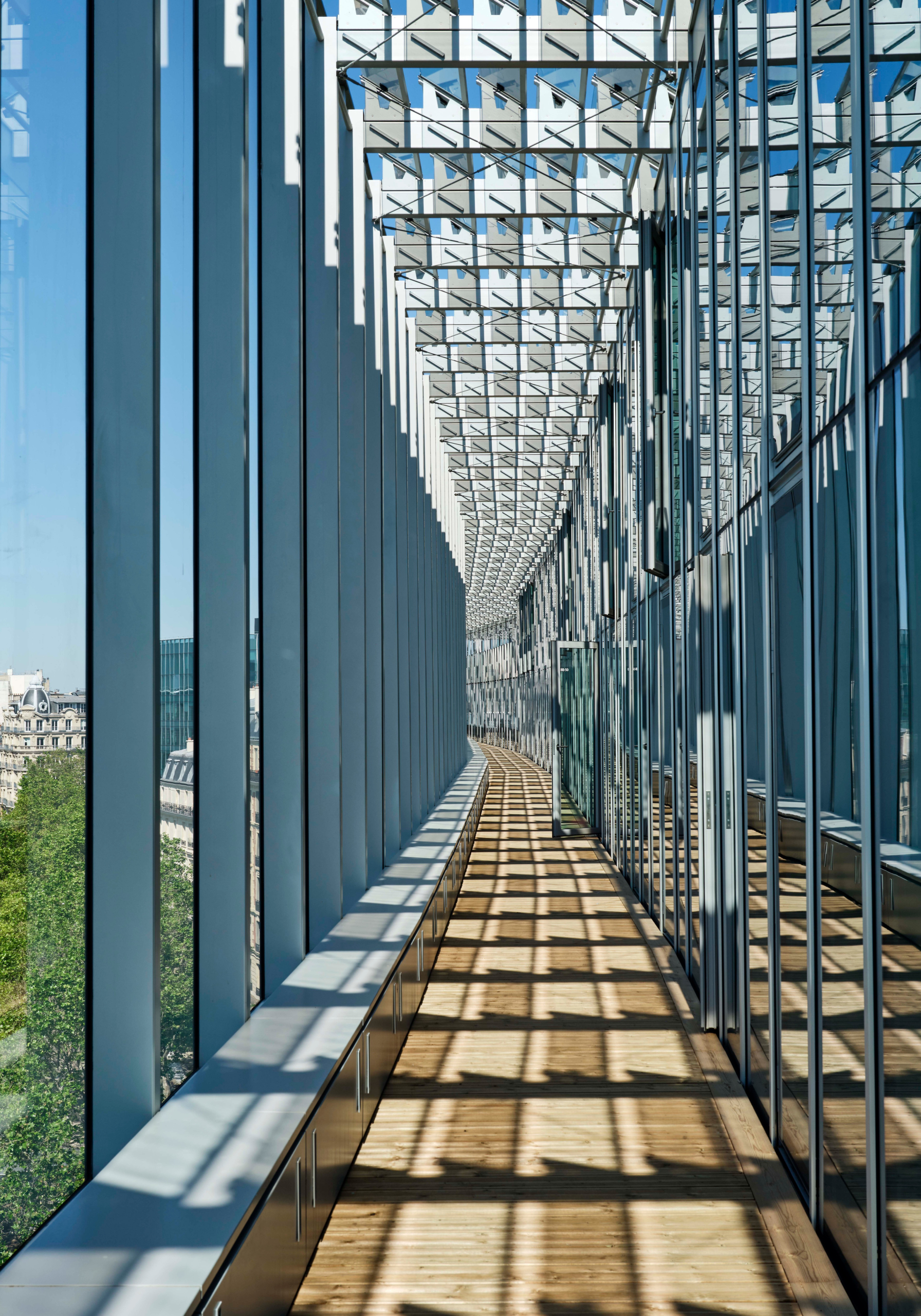
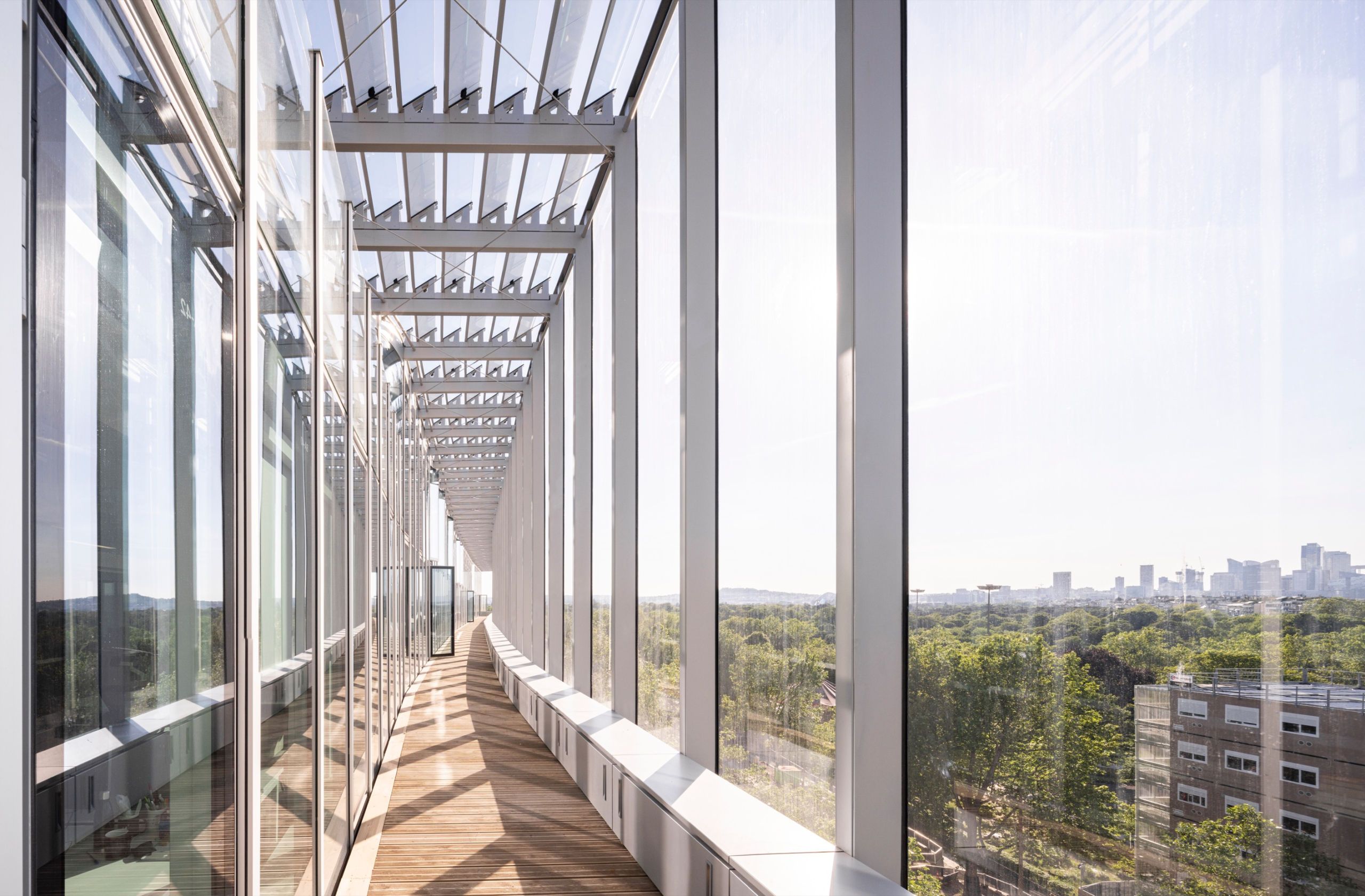
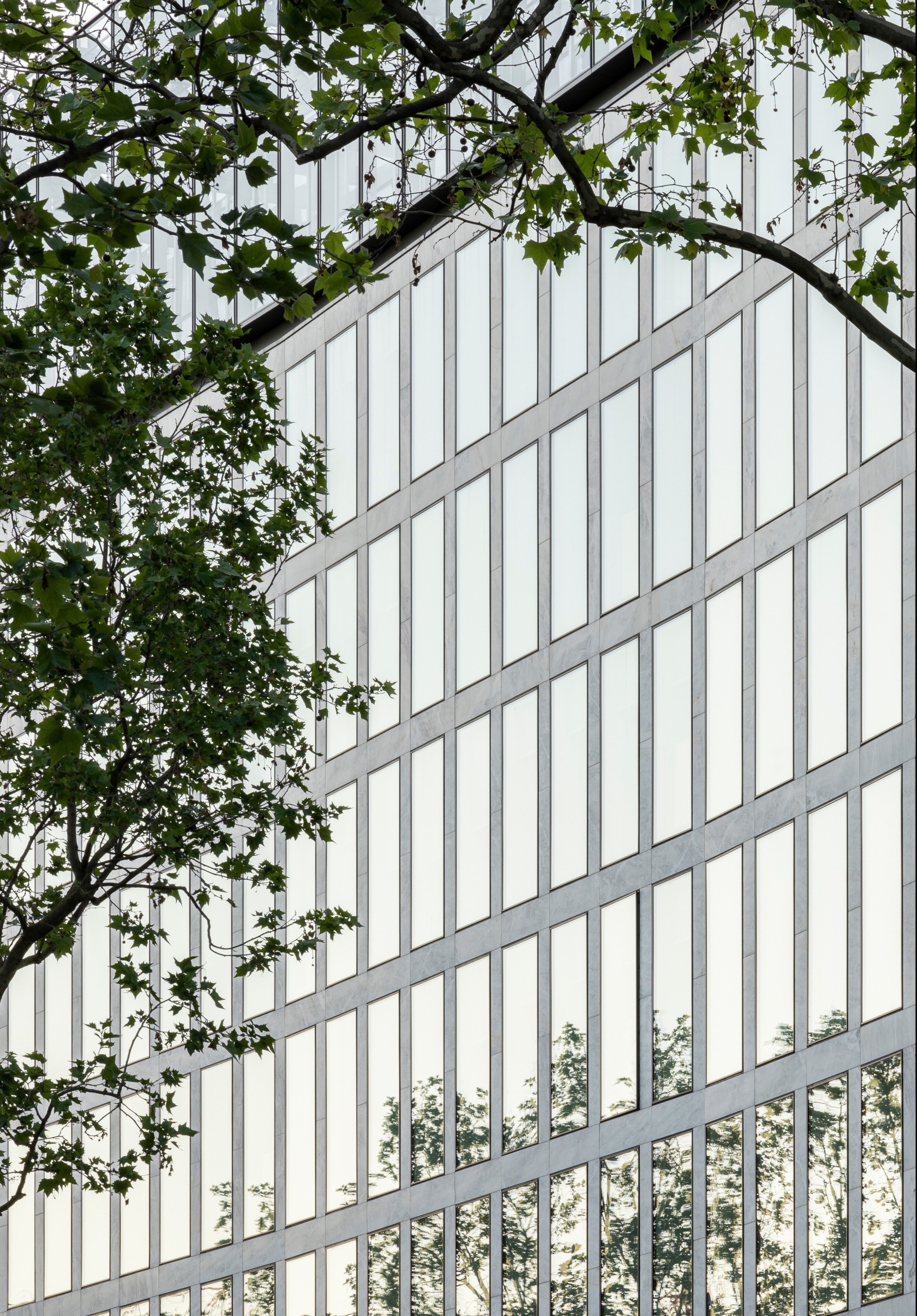
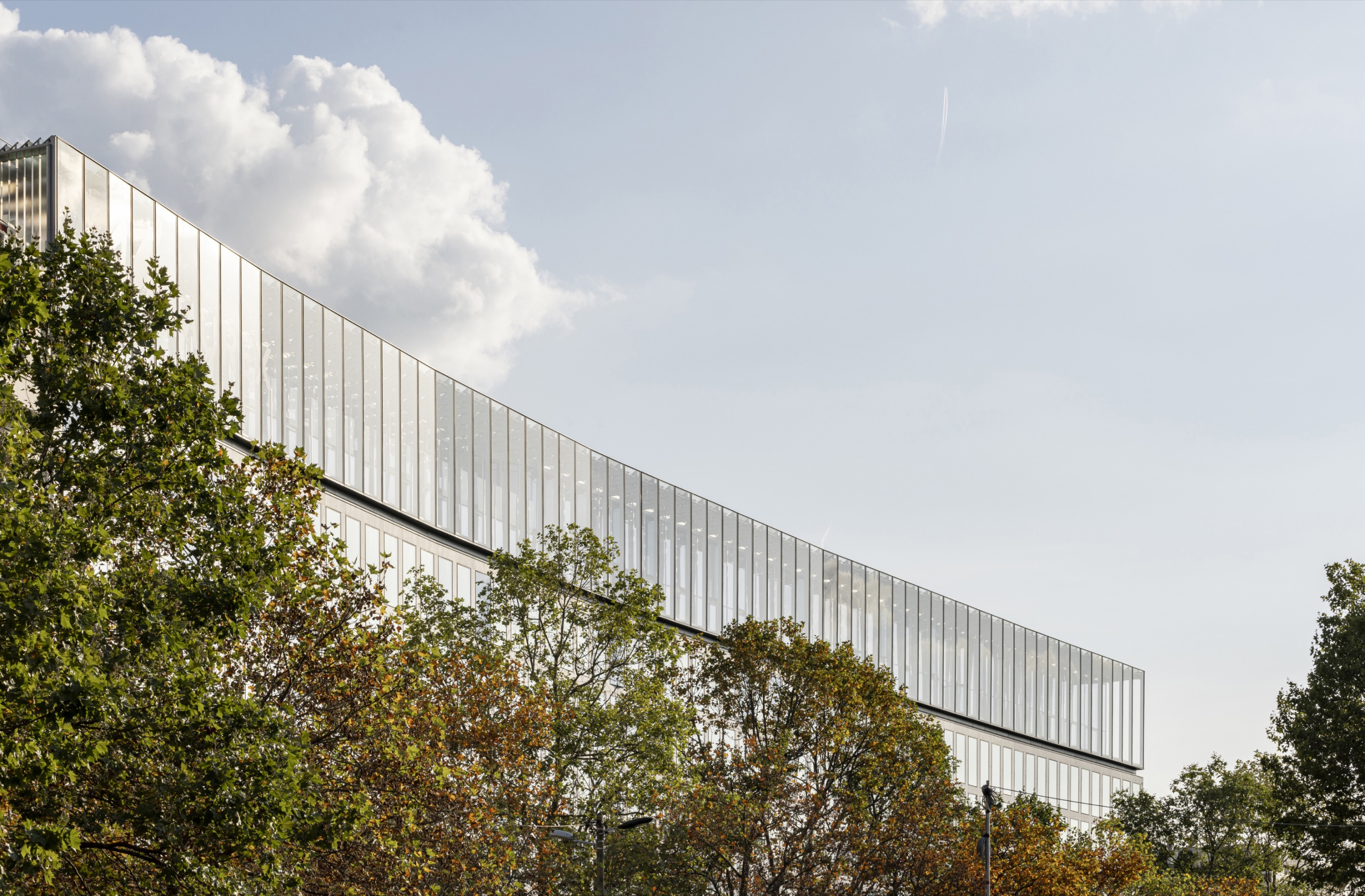
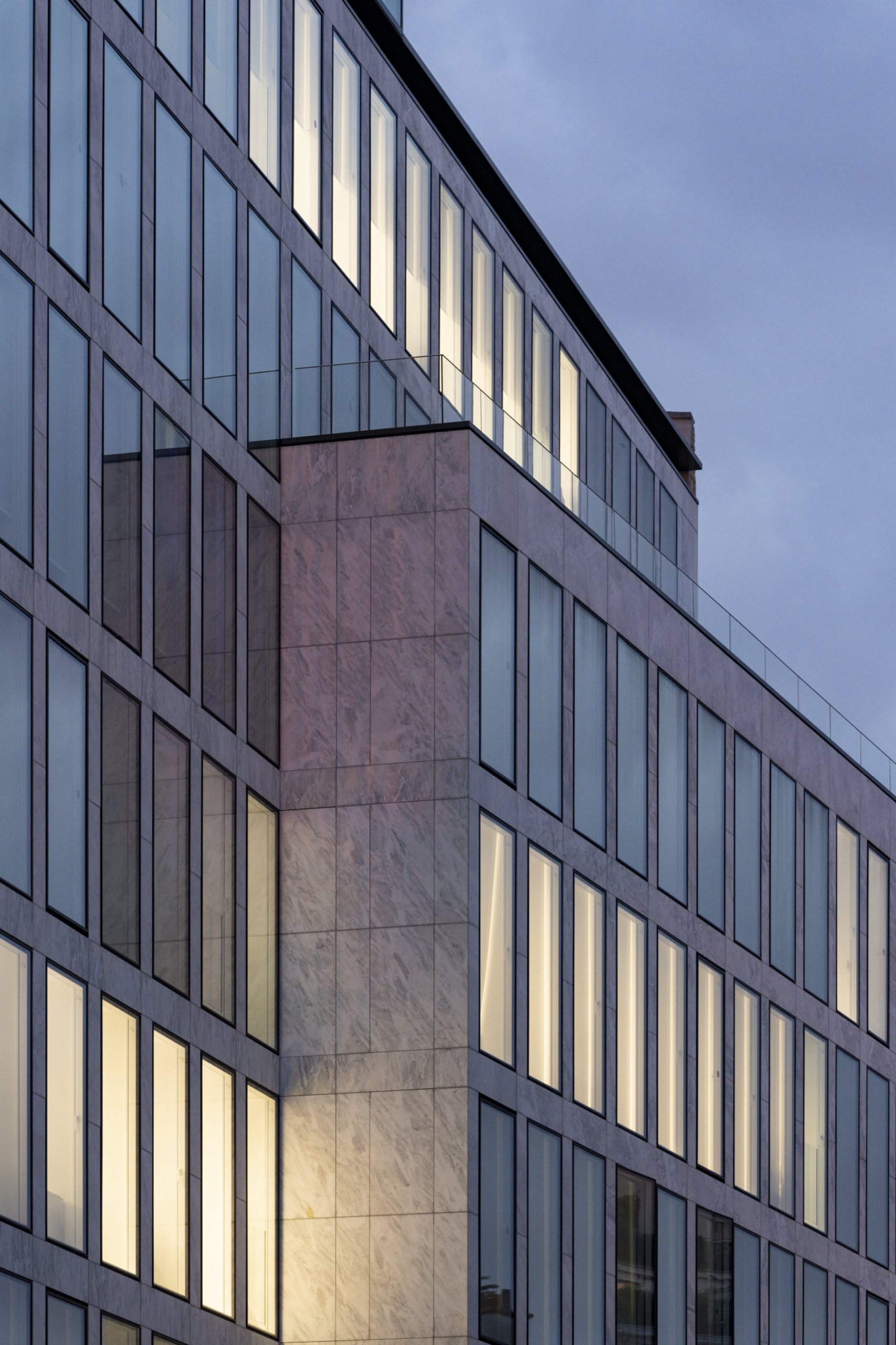
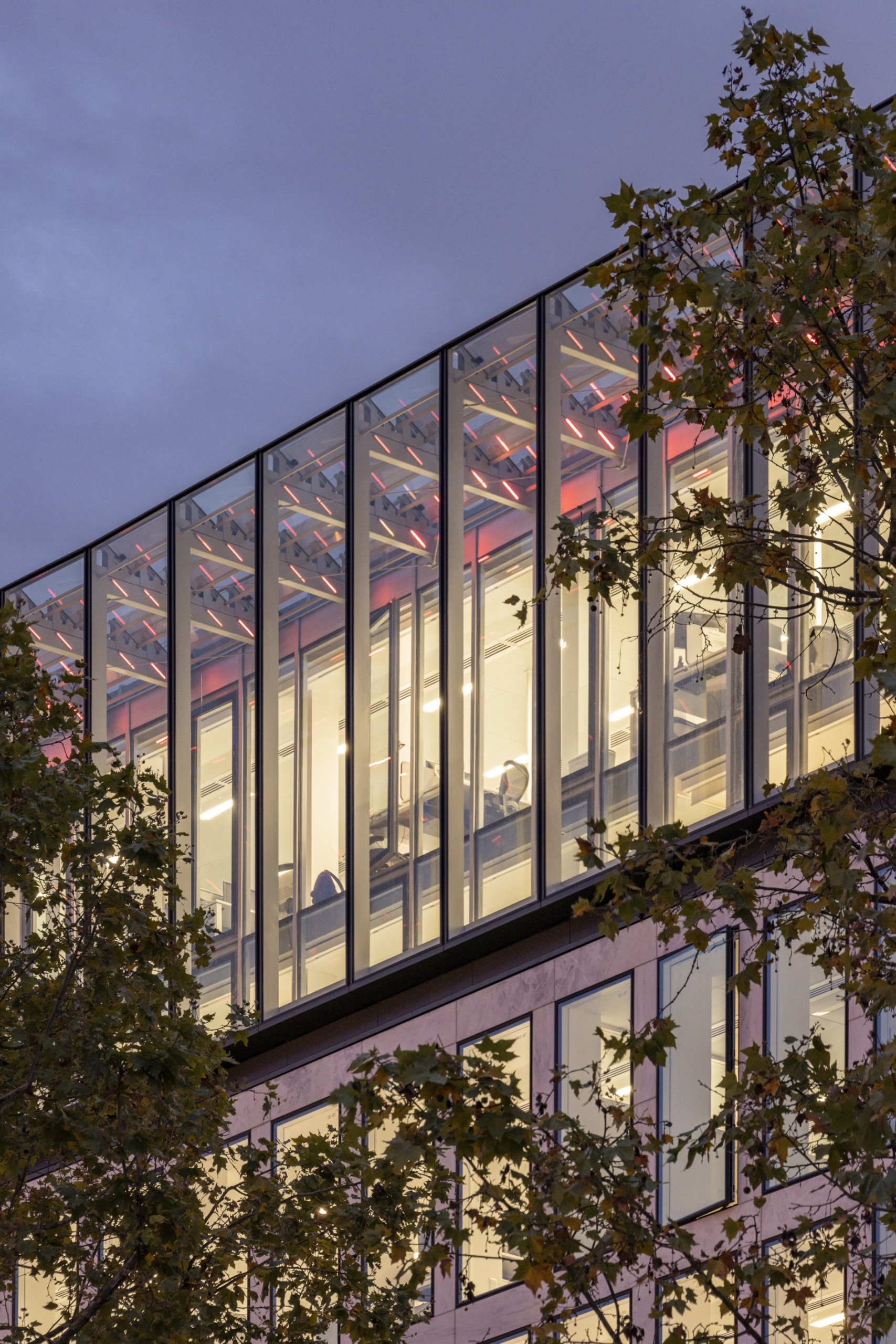
PCA-STREAM opted for a modernized reinterpretation, emphasizing the concept of a Janus-like building: on the Porte Maillot side, the building’s architectural rigor is preserved and updated both technically and stylistically. The use of marble underscores the building’s monumentality, reinforced by a grand double-height entrance and a luminous attic gallery crowning the complex; its photovoltaic glass panels light up at night like an urban lighthouse. On the south side, a new, vibrant façade is enhanced by outdoor terrace spaces; with its organic forms and climbing vegetation, it blends into the more domestic character of this side facing the gardens of private mansions.
New Uses
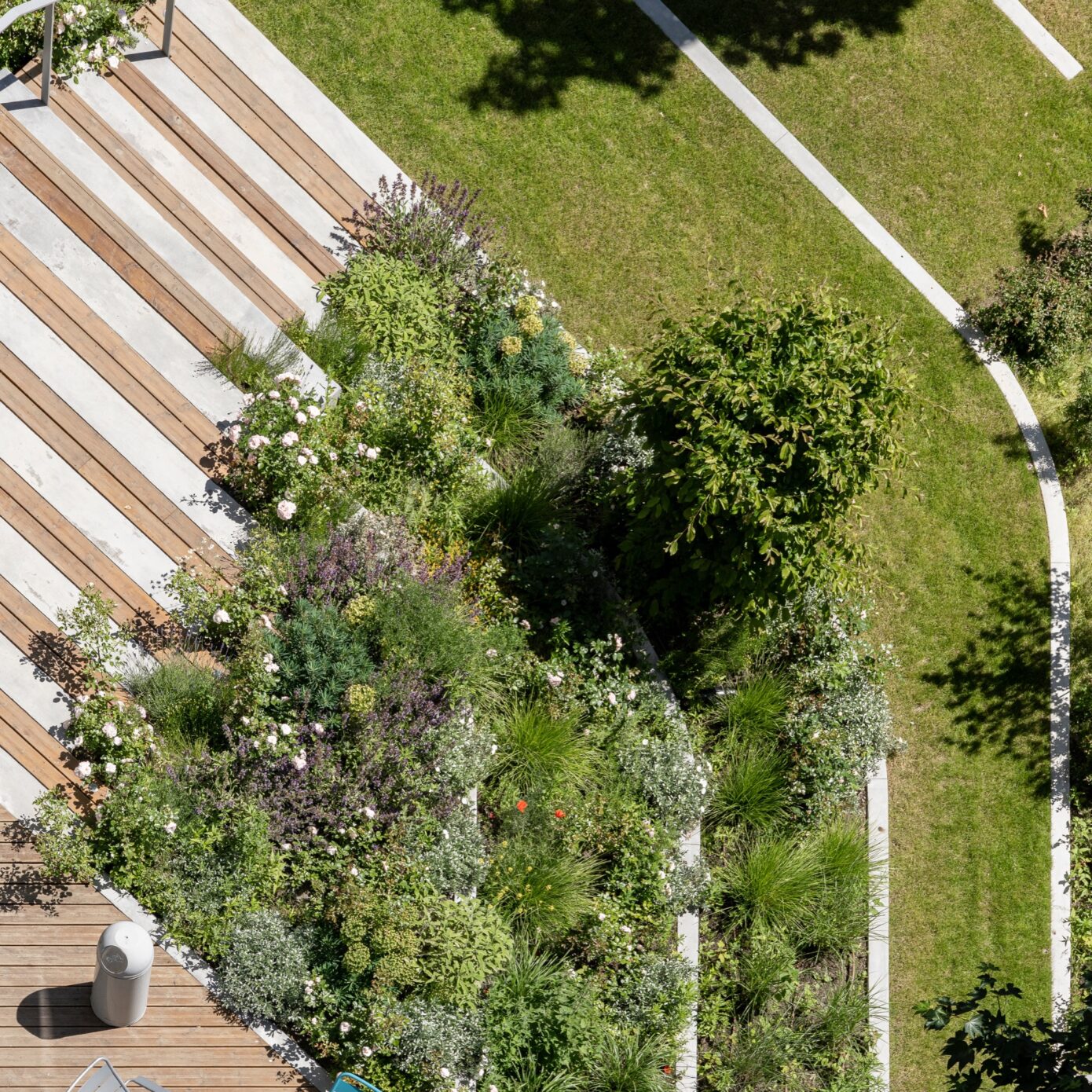
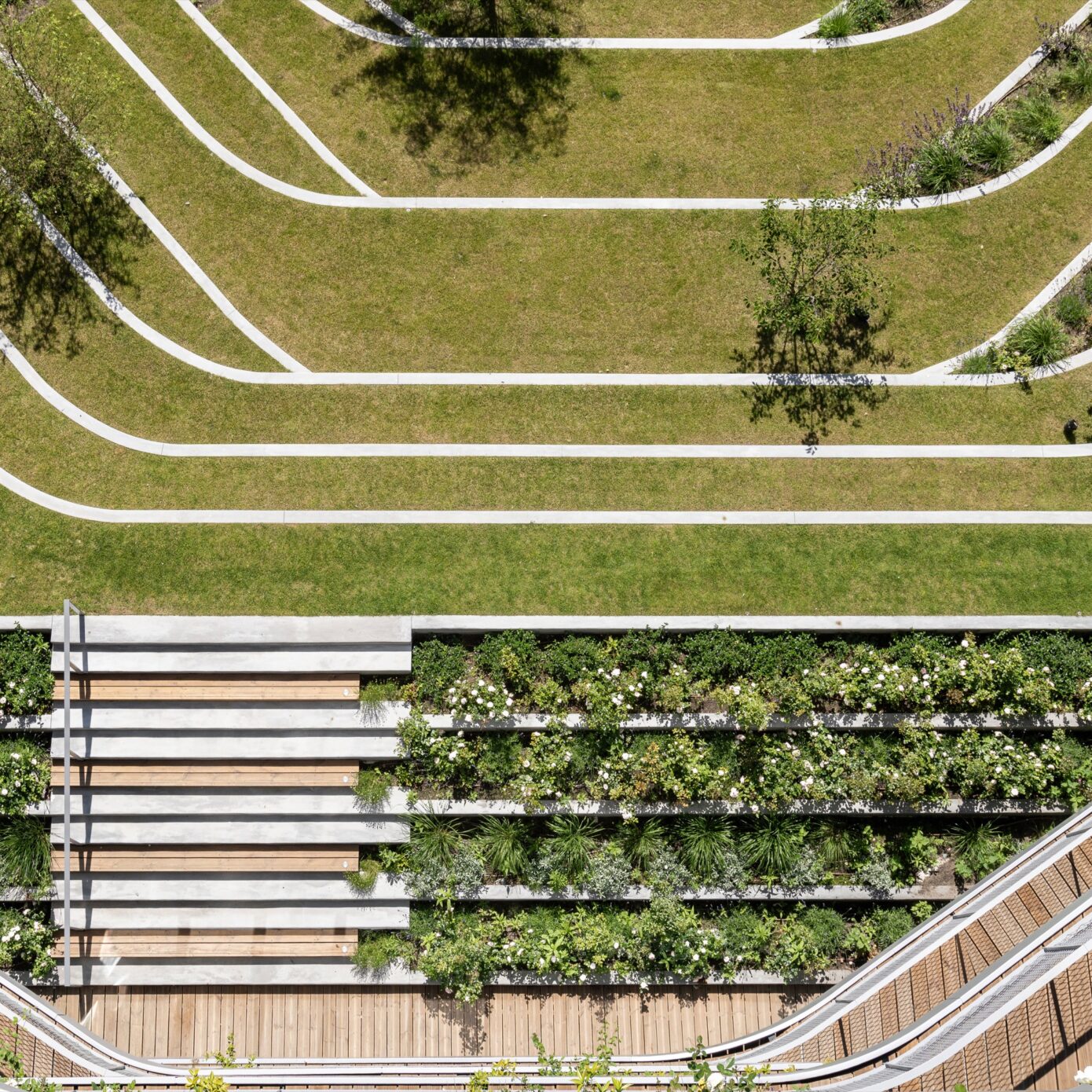
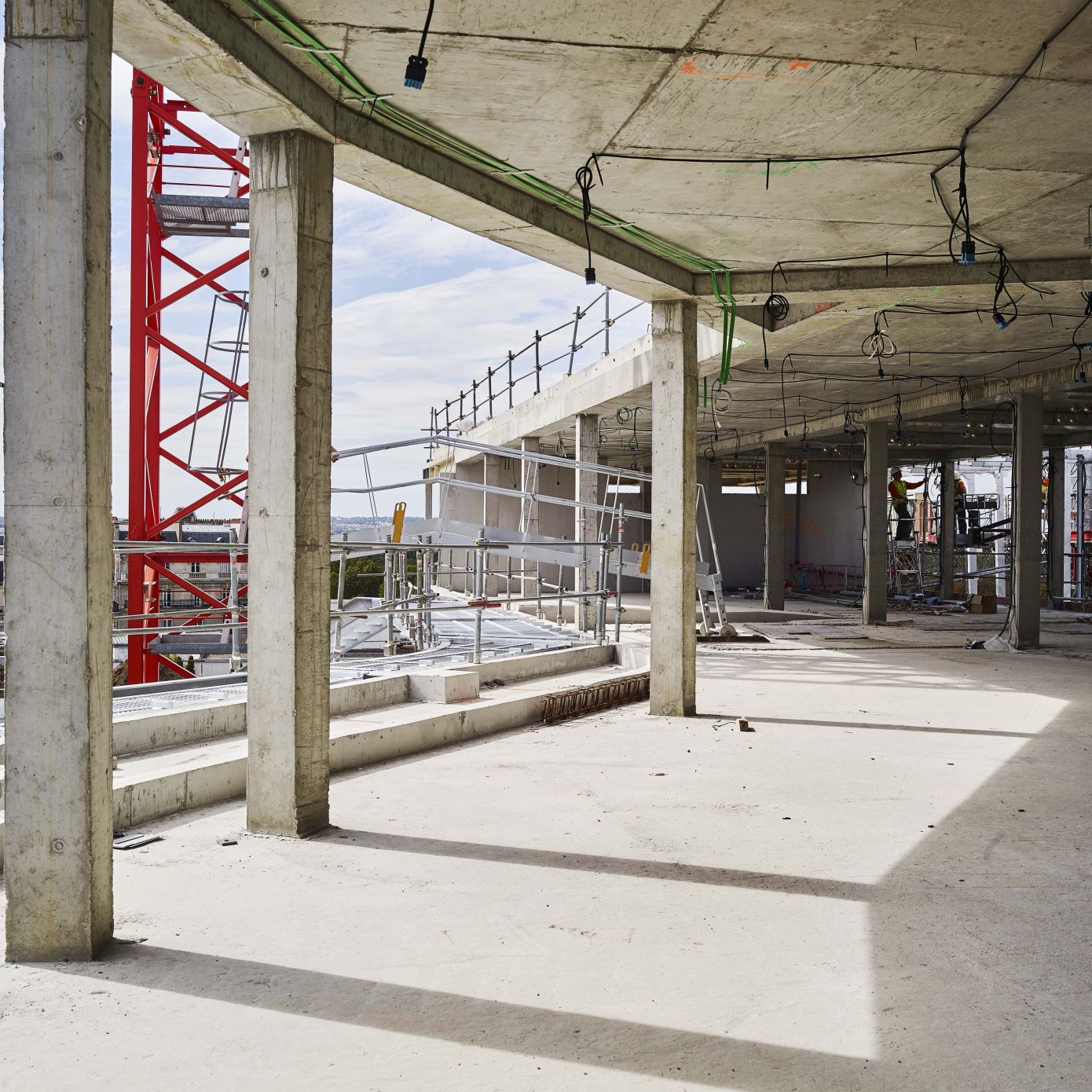
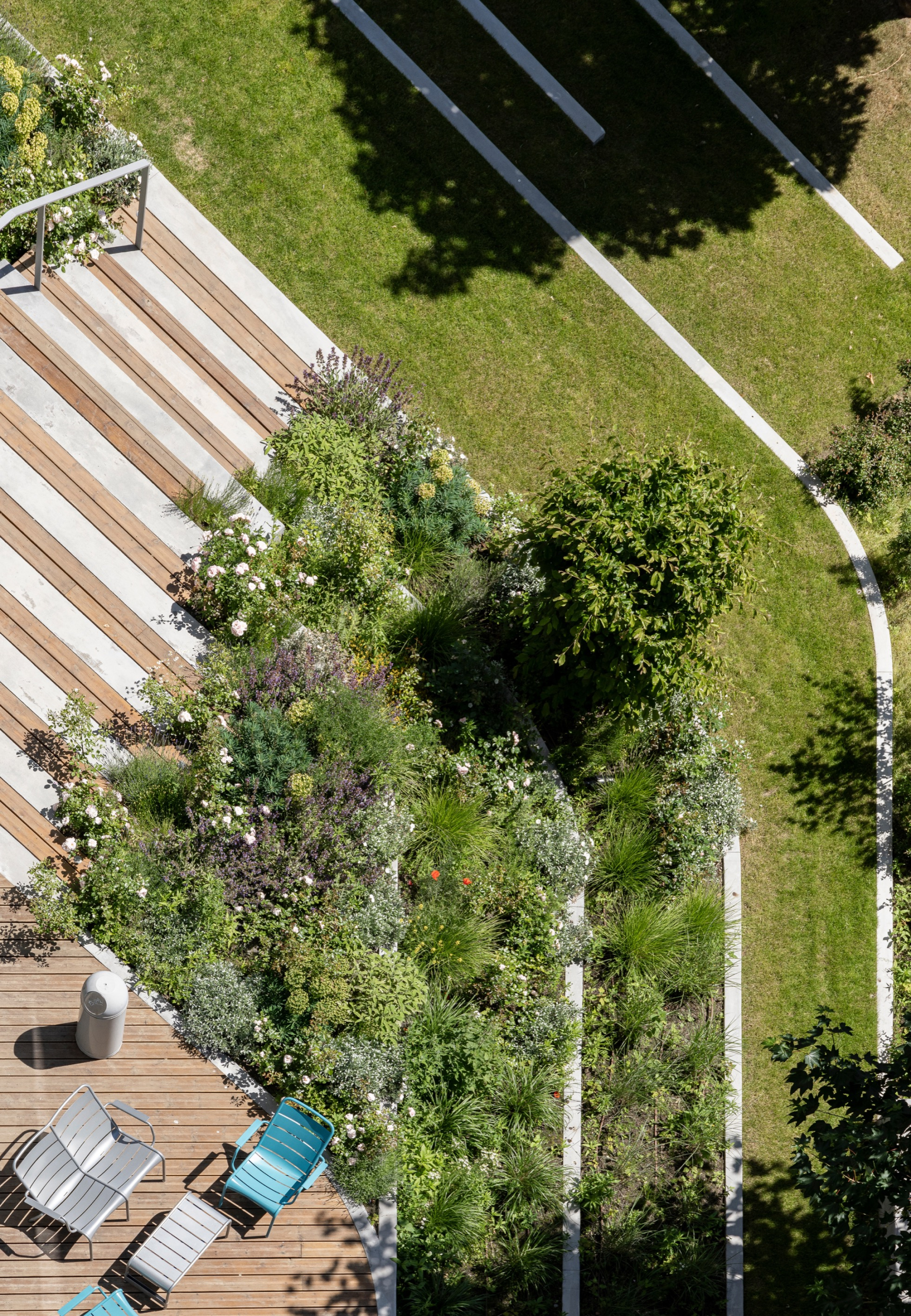
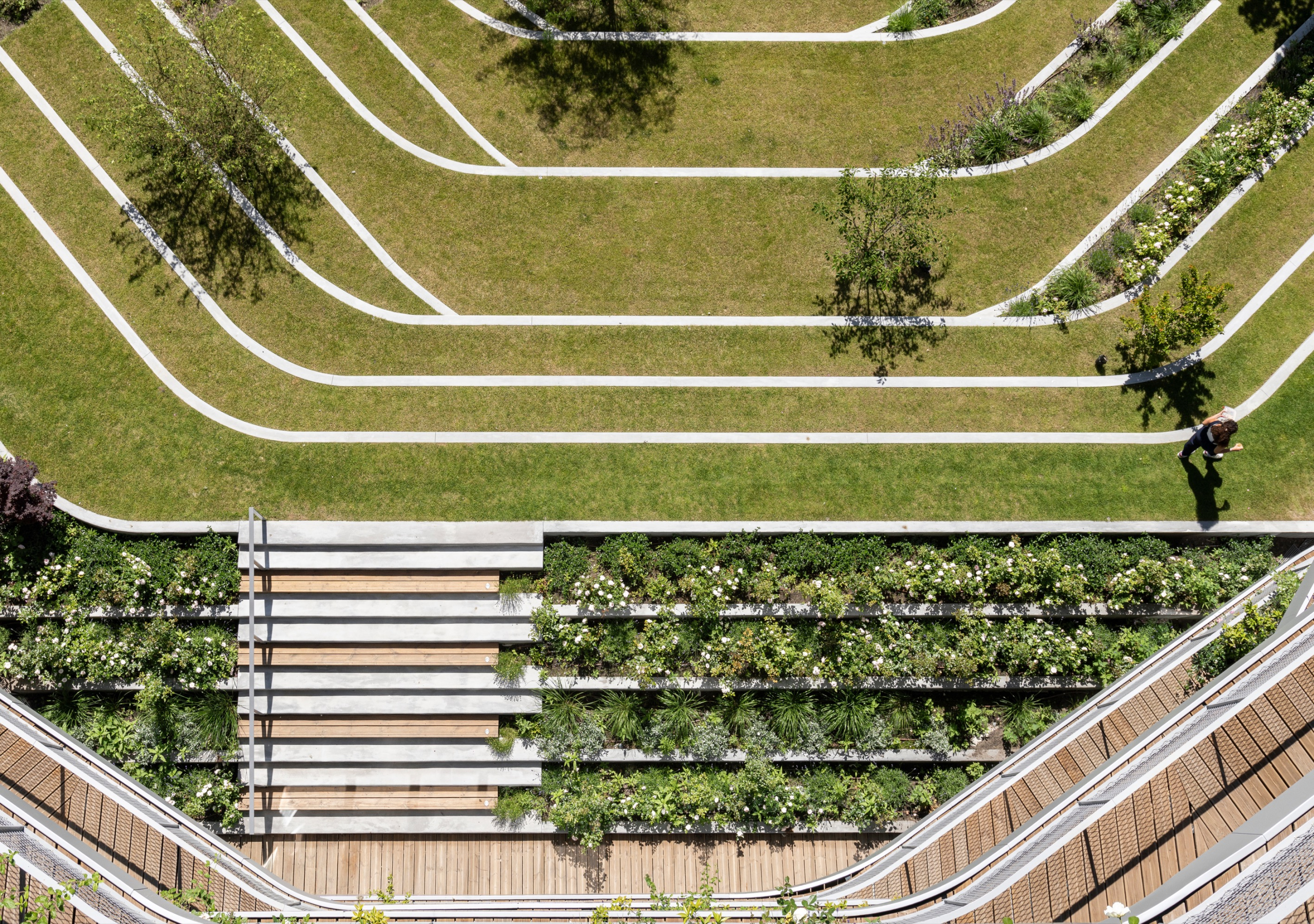
Architecture must embody the collective office experience, a prerequisite for innovation, efficiency, and serendipity in cutting-edge companies. For Freedom, the goal was to streamline the spaces and restore their clarity, particularly by optimizing circulation. Vertical circulation is provided by a central core housing elevators and Chambord staircases on the ground floor, where people will enjoy bumping into one another. A high proportion of shared and informal spaces fosters a friendly atmosphere and serendipity, while numerous meeting rooms strategically located at the top of the staircases encourage collaborative work. On the upper floors, large open and modular spaces on the first level offer pleasant and flexible working conditions, as well as access to wide walkways and landscaped terraces. Freed from vehicle access functions, the ground floor becomes a space for relaxation, leisure, and services, open to the city and the garden. On each floor, visual connections are prioritized, with terraces and walkways featuring abundant greenery, offering a moment to pause outdoors. The garden is free of technical infrastructure and features a multi-layered landscape design, incorporating relaxation and dining areas that connect with the base. A true “landscape building,” Freedom emphasizes the enhancement of biodiversity: its living façade creates a continuous green expanse, from the grassy meadows through the terrace planters—linked by climbing plants—all the way to the green roofs.